VW82 Kübelwagen | ||
|---|---|---|
| Državi | Nemčija | |
| Vrsta | Lahka vozila | |
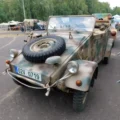
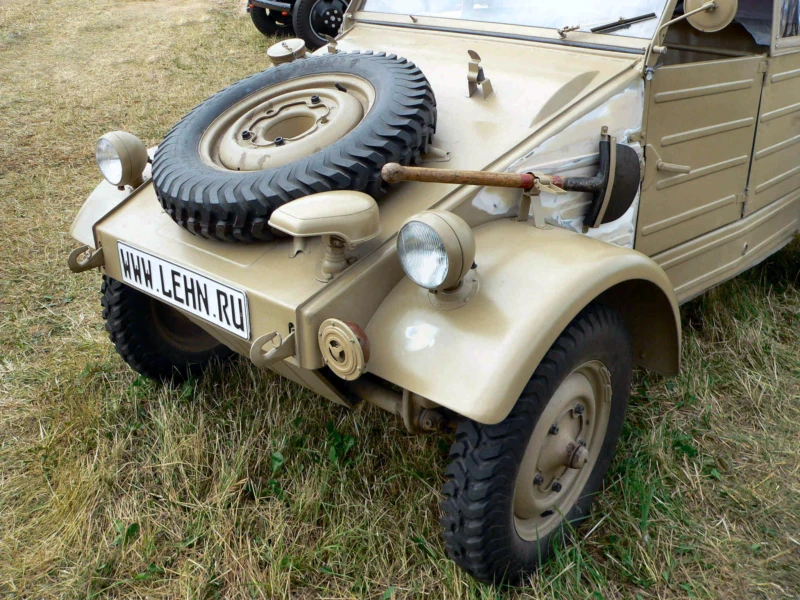
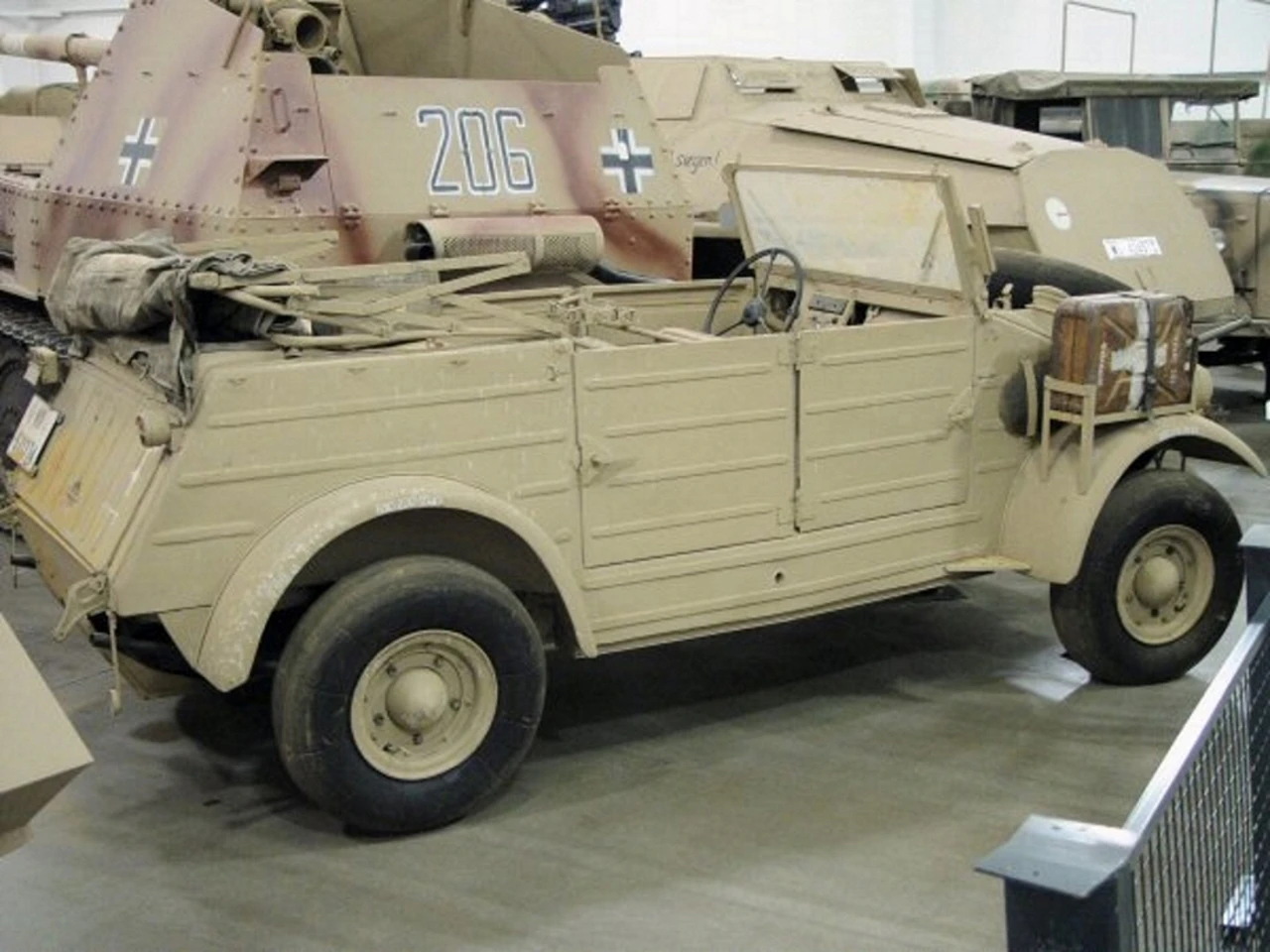
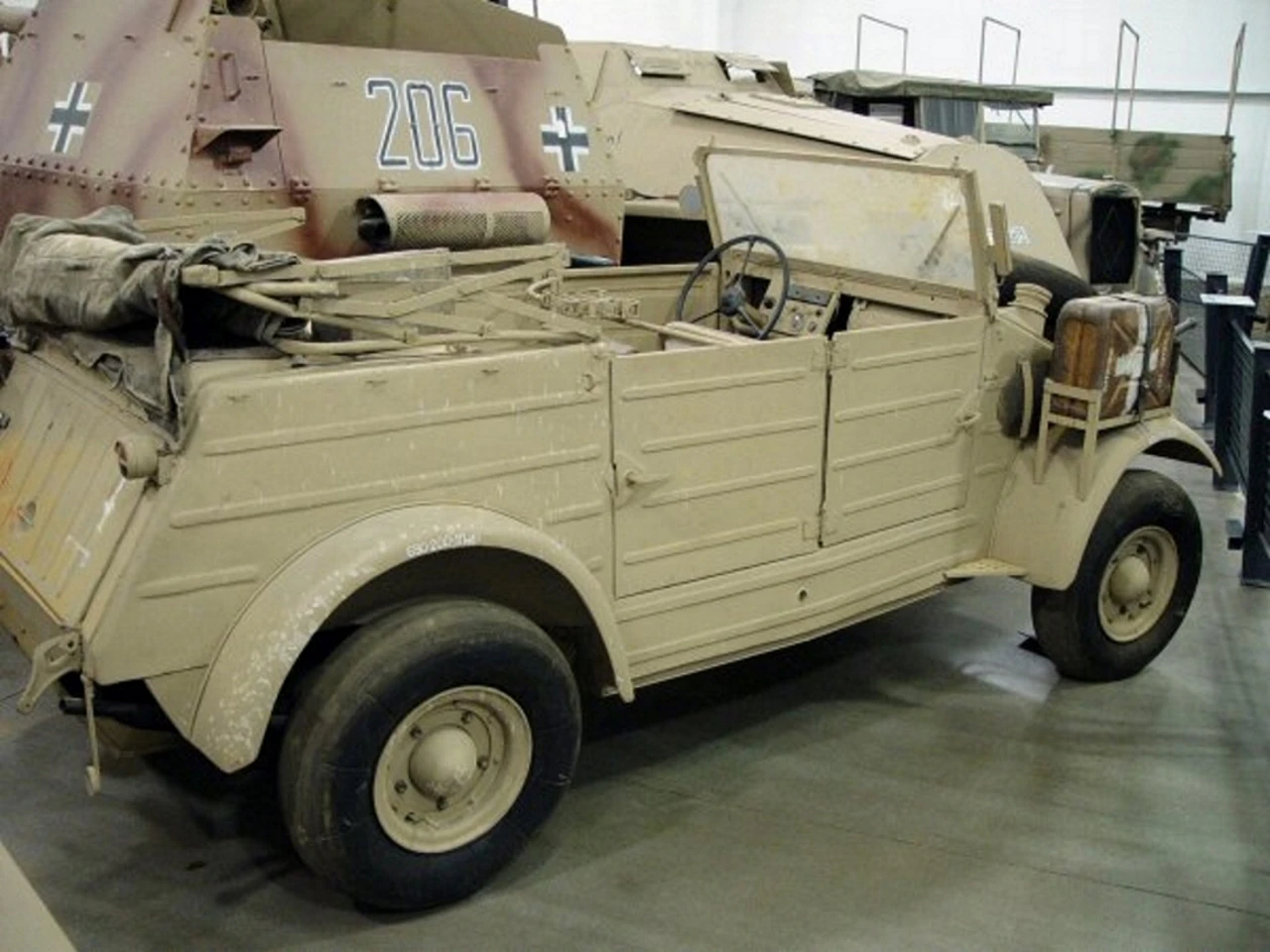
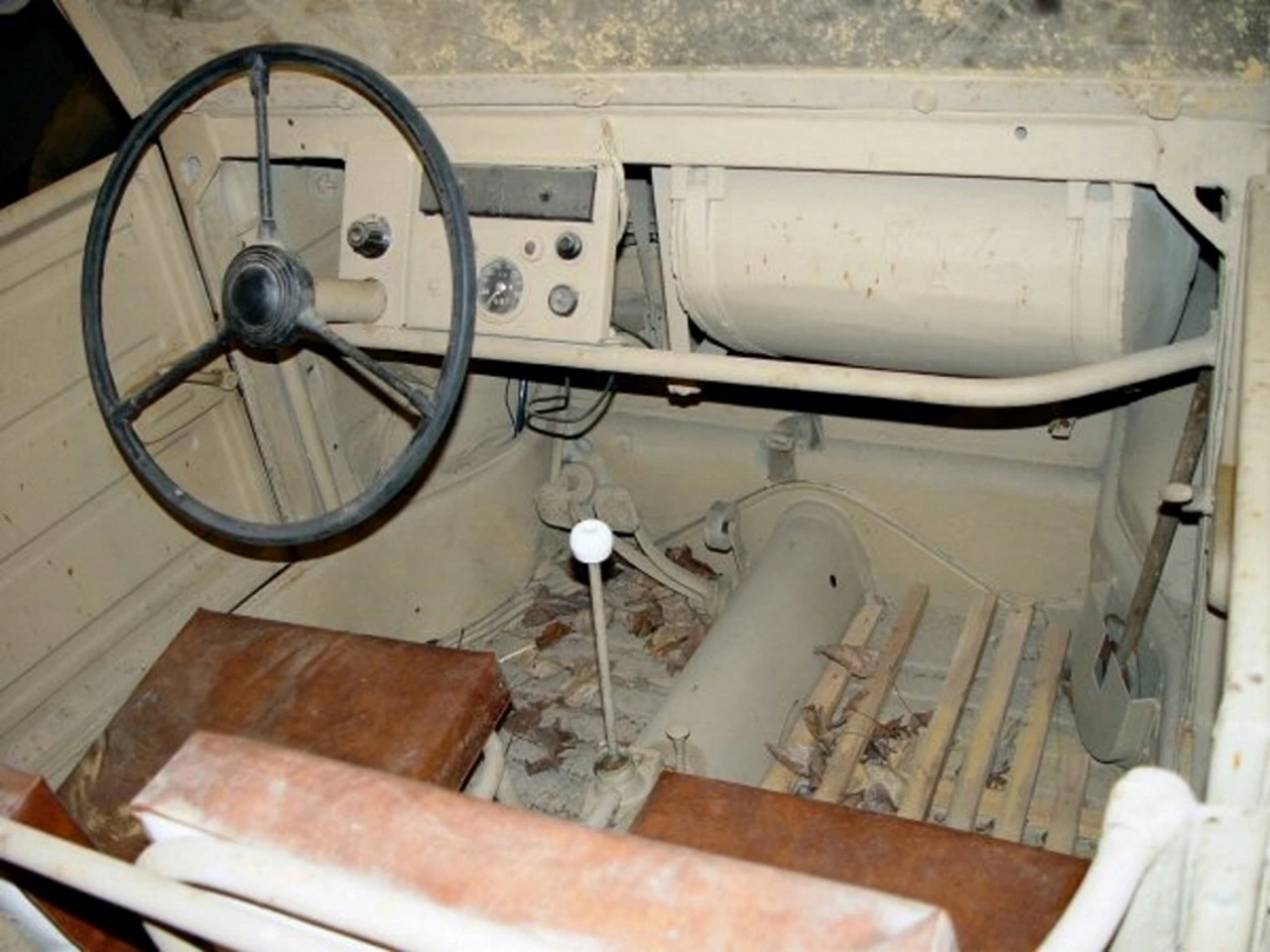
Galerie photo sur une VW 82 Kübelwagen, La VW 82 Kübelwagen (« voiture bassine ») est un véhicule léger militaire allemand conçu par Ferdinand Porsche avant la Seconde Guerre mondiale. Elle possède une carrosserie ouverte simplifiée montée sur le châssis et dotée des éléments mécaniques de la voiture appelée alors KdF-Wagen, devenue plus tard la Coccinelle. Pour améliorer ses capacités tous terrains, des réducteurs sont installés au niveau des roues, augmentant la garde au sol et le couple de traction. Elle est également équipée d’un différentiel de la société ZF (Zahnradfabrik Friedrichshafen) autobloquant à galets pour augmenter les capacités de franchissement en terrain glissant.
| VW 82 Kübelwagen | |
|---|---|
| Fotograf | Unknow |
| Lokalizacijo | Neznano |
| Fotografije | 151 |

| Kubelwagen Walk Around | |
|---|---|
| Fotografi | Michael Benolkin, Dave Manter |
| Lokalizacijo | Neznano |
| Fotografije | 18 |
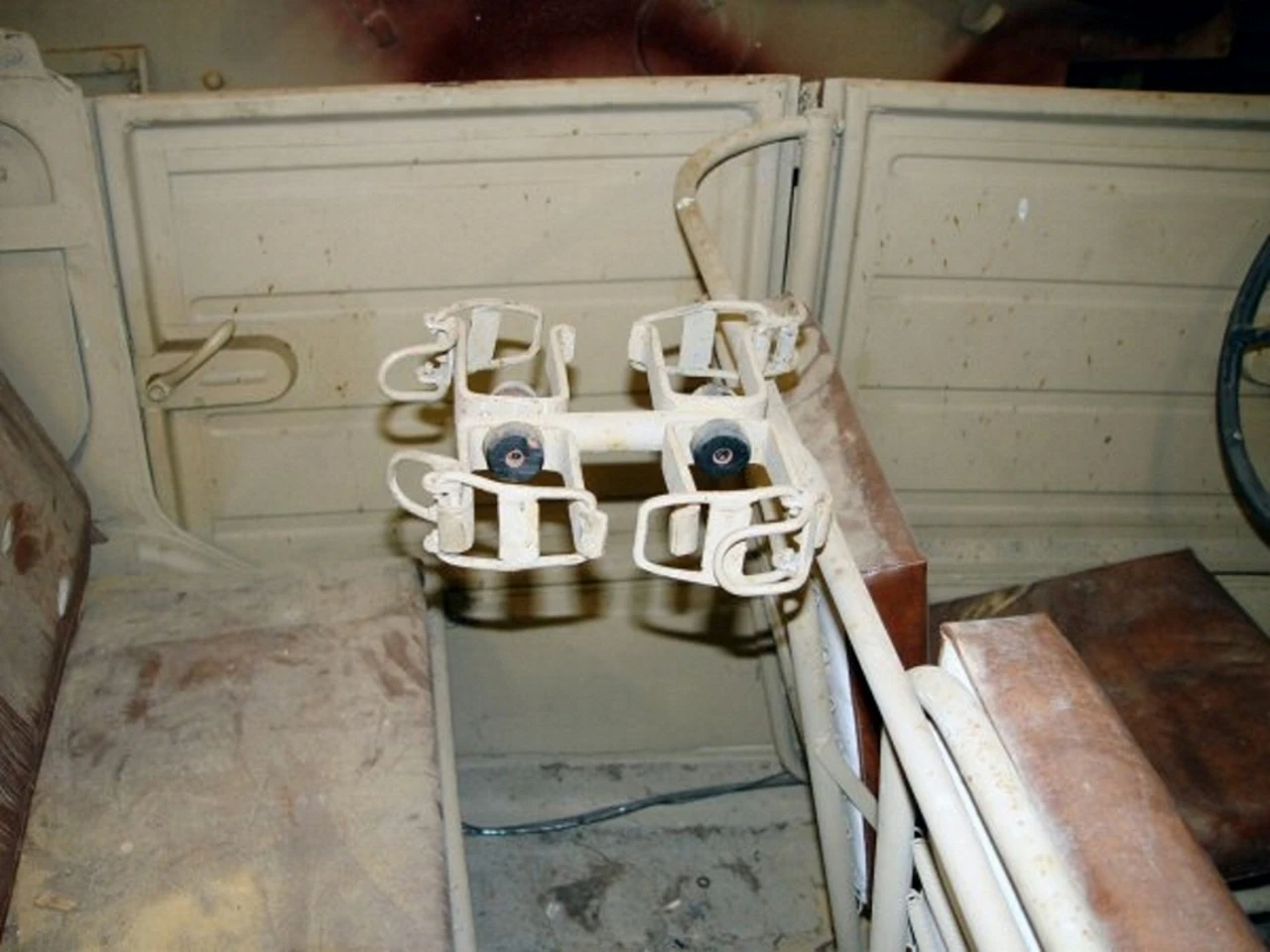
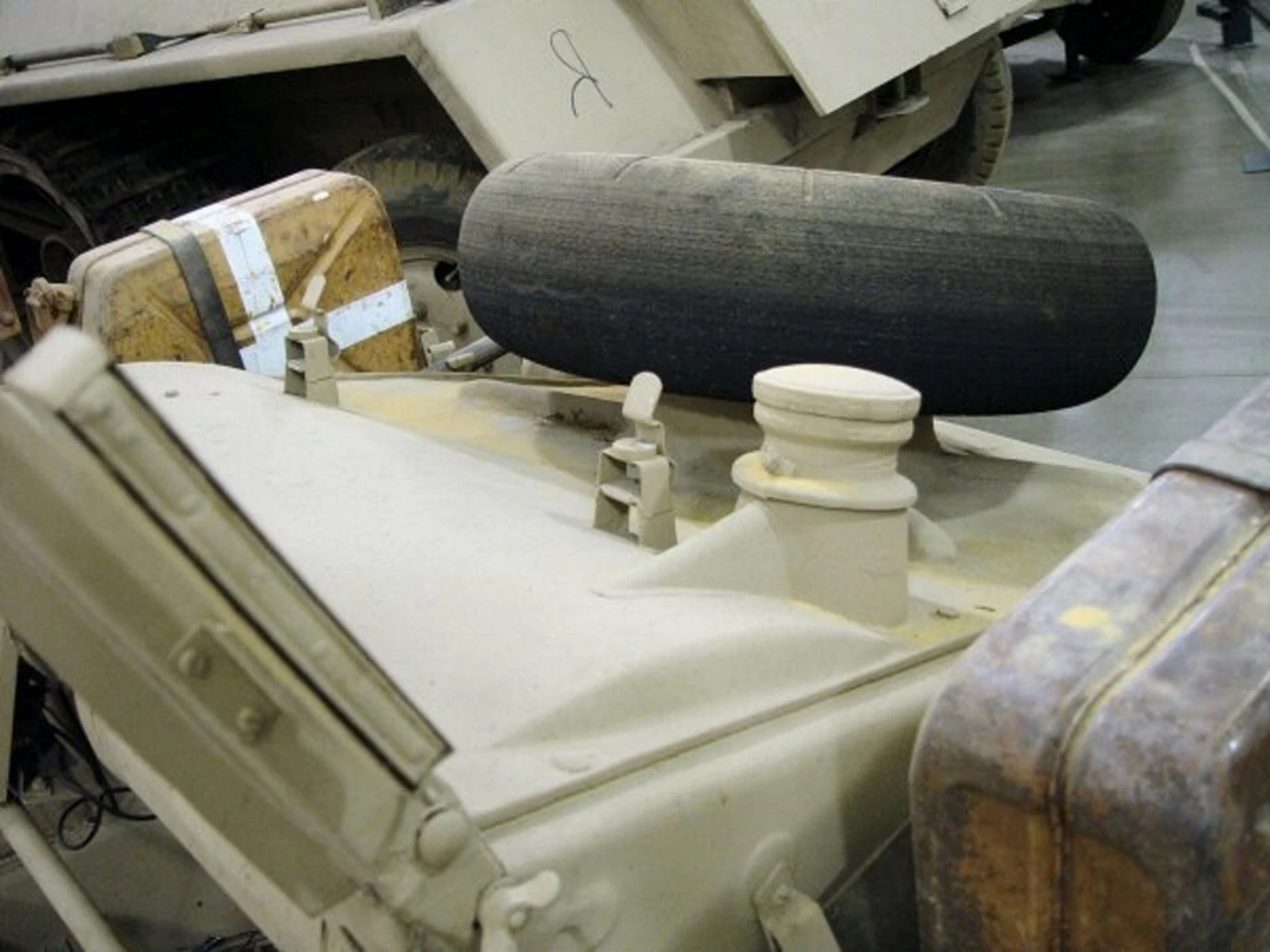
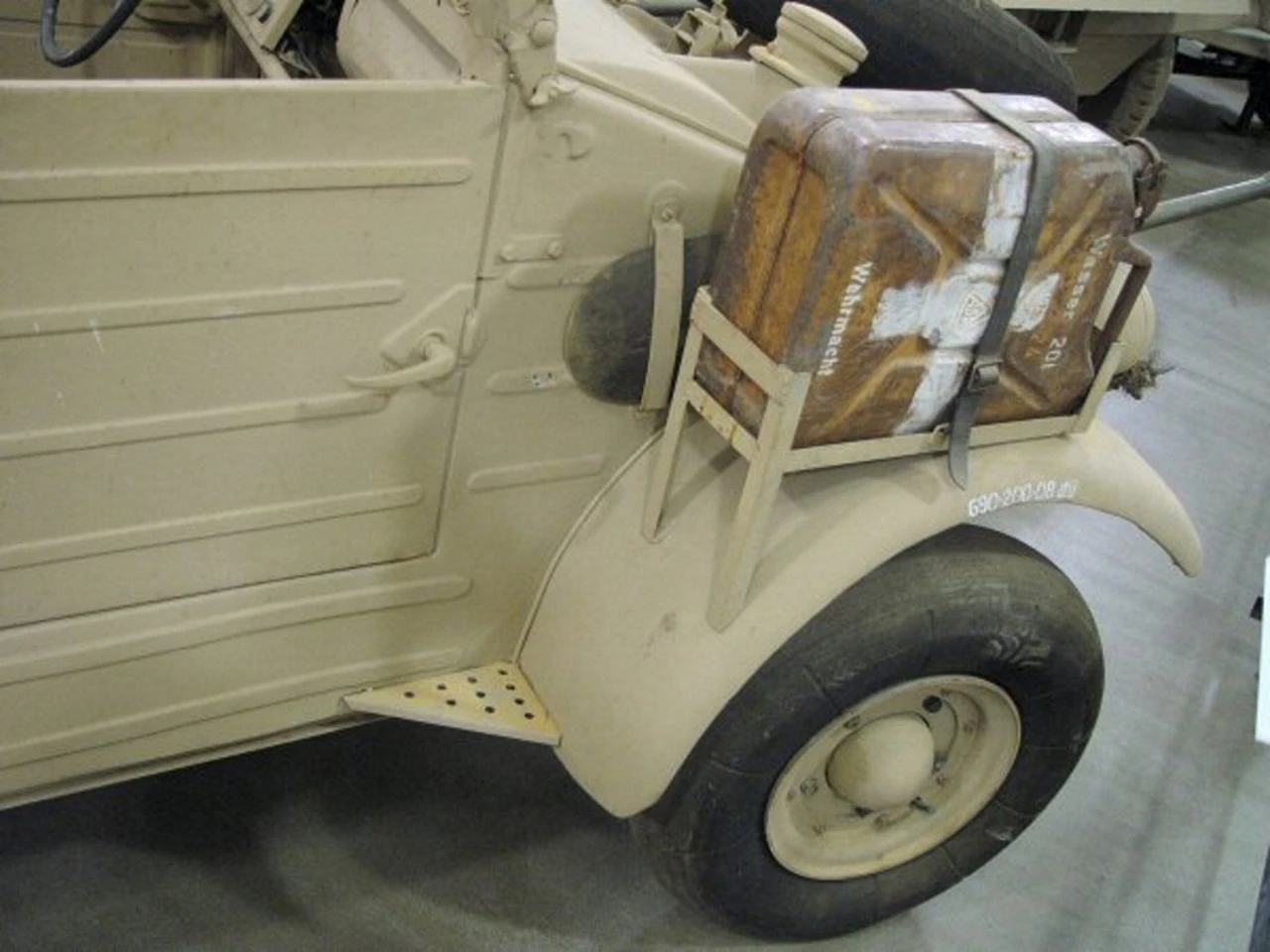
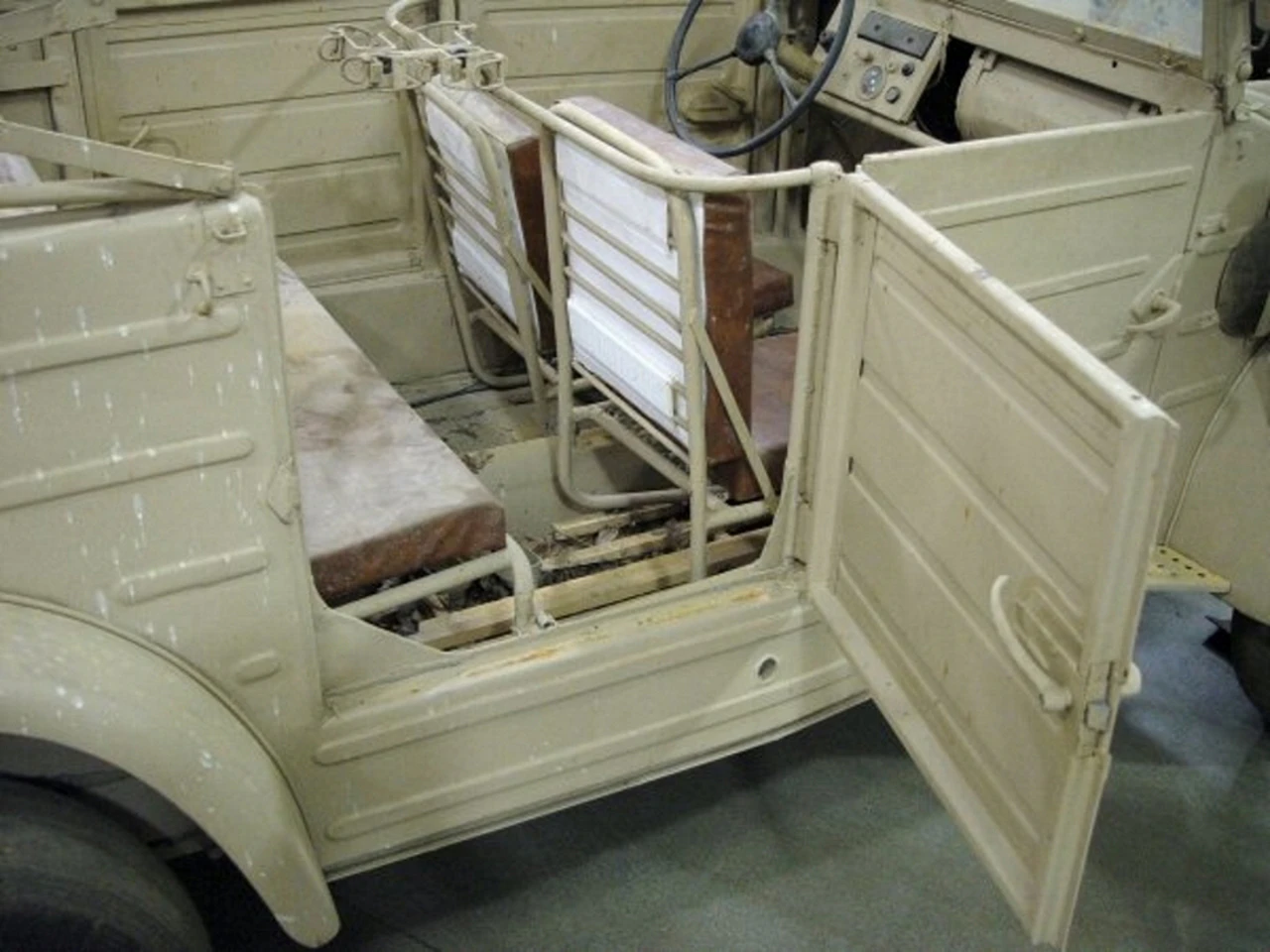
Glej tudi:


The Rugged, Air-Cooled Workhorse of the German Military
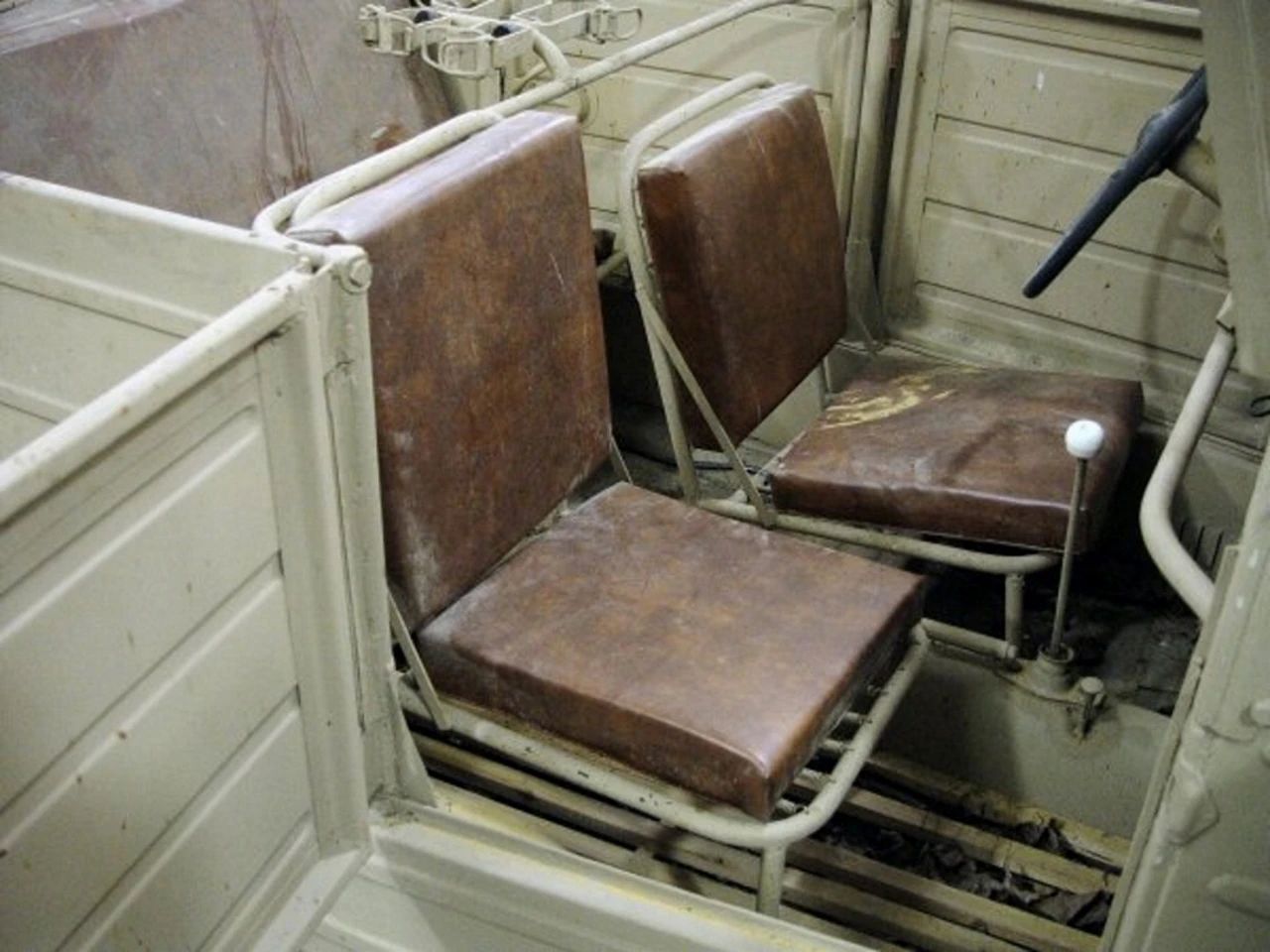
V Volkswagen Type 82 Kübelwagen (literally “Tub Car”, named for its distinctive bucket-shaped seats) was the ultimate light utility vehicle used by the German Wehrmacht throughout World War II. Designed by legendary engineer Ferdinand Porsche, the Kübelwagen was built upon the mechanical bones of the KdF-Wagen—the civilian vehicle that would later become the iconic Volkswagen Beetle. When the war broke out, the civilian production lines were immediately militarized. Much like the American Willys Jeep, the Kübelwagen served on every single front as a reconnaissance car, officer transport, radio vehicle, and light ambulance. However, unlike the 4-wheel-drive Jeep, the Kübelwagen was strictly a 2-wheel-drive vehicle. It achieved its legendary off-road capability not through brute mechanical power, but through an incredibly lightweight design, a flat smooth underbody, and a specialized rear-axle gear configuration.
| Attribute | Technical Specification (Volkswagen Type 82 Kübelwagen Standard) |
|---|---|
| Vlogo | Light Military Utility Vehicle (Personal / Reconnaissance / Transport) |
| Posadke | 4 (Driver and 3 Passengers) |
| Powerplant | 1 × Volkswagen 4-cylinder air-cooled boxer engine (Early: 985cc / 23.5 hp | Late: 1,131cc / 25 hp) |
| Maximum Speed | 80 km/h (50 mph) on paved roads |
| Empty Weight | 715 kg (1,576 lbs) |
| Maximum Payload | 445 kg (981 lbs) | Max Loaded Weight: 1,160 kg (2,557 lbs) |
| Drivetrain | Rear-wheel drive (4×2) with mechanical locking differential |
| Operational Range | ~430 km (267 miles) on roads with its 30-liter (7.9 gallon) fuel tank |
| Armor Thickness | None (Open-topped, thin sheet steel body panels, folding canvas roof) |
| Oborožitev | None standard (Often fitted with a removable pintle mount for an MG 34 or MG 42 machine gun) |
| Production Total | 50,435 units manufactured at the Fallersleben (Wolfsburg) factory between 1940 and 1945 |
Design Engineering: Air-Cooled Boxers and Portal Axle Magic
- The Brilliance of the Air-Cooled Boxer Engine: At the rear of the Kübelwagen sat a small, lightweight, air-cooled 4-cylinder engine. Because it used air blowing through cooling fins rather than a water radiator system, the Kübelwagen was entirely immune to freezing solid during brutal sub-zero Russian winters. It was equally reliable in the baking desert heat of North Africa, where standard radiators would instantly boil over and crack.
- The Ingenious Portal Hub Reductions: To give the 2-wheel-drive vehicle exceptional ground clearance without heavy, complex 4×4 components, Porsche incorporated “portal gears” directly into the rear wheel hubs. The axle shafts didn’t connect to the center of the wheels; instead, they entered the hub higher up and spun a set of internal reduction gears that drove the wheel below them. This raised the car’s underbelly high off the ground, allowing it to easily clear deep ruts, rocks, and thick mud.
- The Mechanical Locking Differential: To compensate for the lack of front-wheel drive, the Kübelwagen was equipped with a specialized ZF limited-slip differential. If one rear wheel began spinning uselessly in loose sand or wet mud, the mechanical locker automatically transferred engine power over to the opposite wheel that still had traction, allowing the feather-light vehicle to pull itself out of tricky terrain that grounded far heavier trucks.
- The Corrugated Sheet Steel Skeleton: To make the vehicle incredibly cheap, fast to assemble, and structurally rigid without adding heavy iron support frames, Porsche designed the body out of stamped, corrugated sheet steel panels. The distinct parallel ribs stamped into the metal gave the thin, paper-thin doors and side panels immense structural strength against bending, acting as a lightweight load-bearing shell that kept the vehicle’s empty weight under 1,600 pounds.
Operational History: From the Sands of El Alamein to the Mud of Ukraine
- The Desert Favorite of the Afrika Korps: During the North African Campaign, General Erwin Rommel’s forces relied heavily on the Kübelwagen. It performed so beautifully in the deep Sahara sand that captured Kübelwagens were highly prized by British and American soldiers, who frequently abandoned their own vehicles to drive the German VWs. For extreme desert conditions, Germany outfitted them as the *Type 82/2*, which swapped out standard tires for massive, smooth, low-pressure “balloon tires” that could float cleanly across soft sand dunes without digging in.
- The Mud-Sled of the Eastern Front: When the autumn and spring rains turned Soviet roads into miles of deep, liquid clay (the infamous *Rasputitsa* season), heavy German transport trucks sank to their frames and became totally trapped. The Kübelwagen, however, often managed to skitter right across the surface. Because its entire underside was flat and smooth like a toboggan sled, if it did get bogged down, two or three infantrymen could easily grab the bumpers and physically lift the light car out of the mud by hand.
- The Schwimmwagen Amphibious Sibling: The baseline design of the Kübelwagen was so incredibly versatile that it spawned a famous fully amphibious version known as the **Type 166 Schwimmwagen**. Using the same basic engine and suspension concepts, it featured a smooth, boat-like hull body, a true 4-wheel-drive system for clawing up muddy riverbanks, and a folding propeller assembly at the rear that coupled directly to the engine crankshaft for water propulsion.
- The Post-War Allied Revival: When the British Army captured the heavily bombed Volkswagen factory in 1945, they saved the company from total demolition by ordering thousands of vehicles to help with post-war logistics. While civilian Beetle production was prioritized, the leftover parts and blueprints of the Kübelwagen heavily influenced post-war European utility design, eventually directly inspiring the 1960s Volkswagen Type 181 (better known to the world as the “Thing”).
Views : 10638