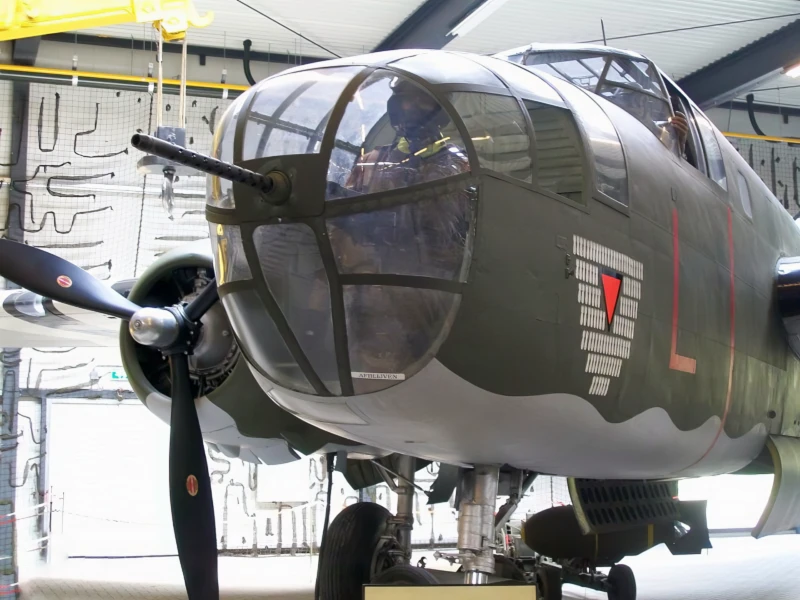
B-25D Mitchell | |
|---|---|
| Krajiny | Spojené štáty americké |
| Typ | Bombardier |
| Popis / kontrol | Album de 22 fotografie chodia okolo B-25D Mitchell |
Komisia B-25 Mitchell Severná Amerika bola stredný bombardér zapojený do druhej svetovej vojny. Počas nájazdu na Tokio zostal známy pre svoj záväzok a so svojou 75 mm zbraňou (pre verzie G a H) výrazne riadila cisárske japonské námorníctvo. Verzia B-25D: Vyrobené v 2290 kópiách.
Zdrojový: Wikipedia
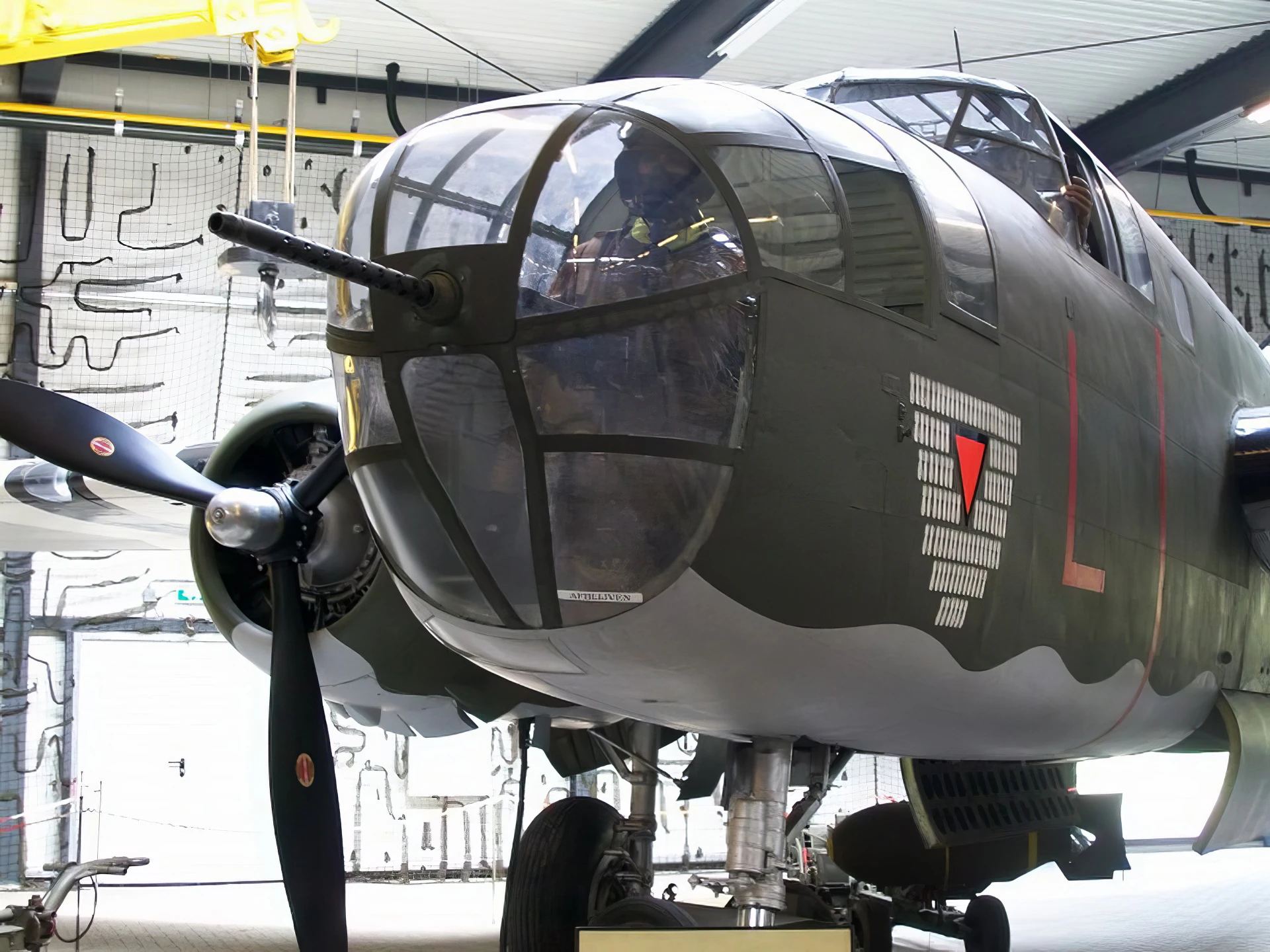
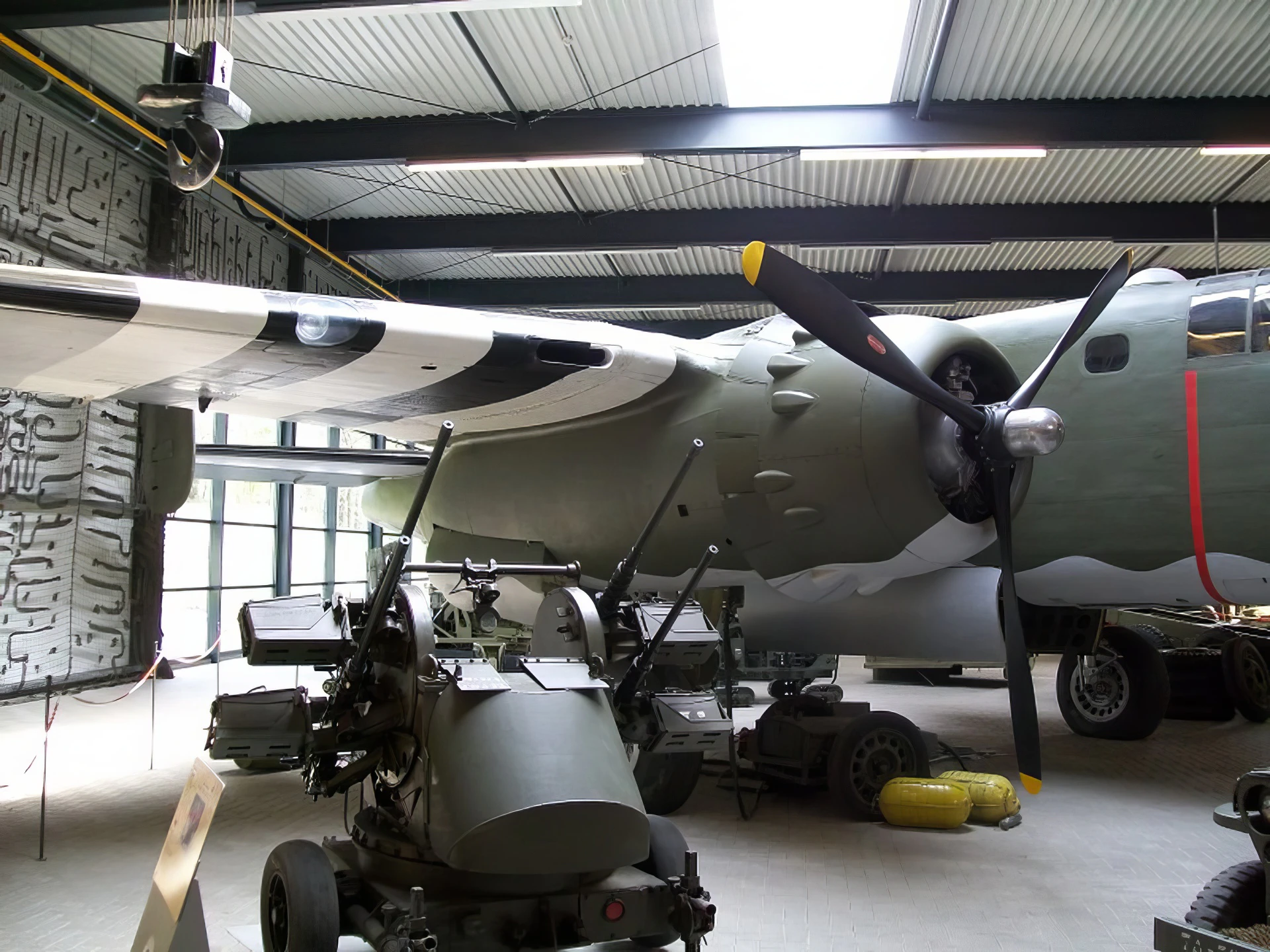

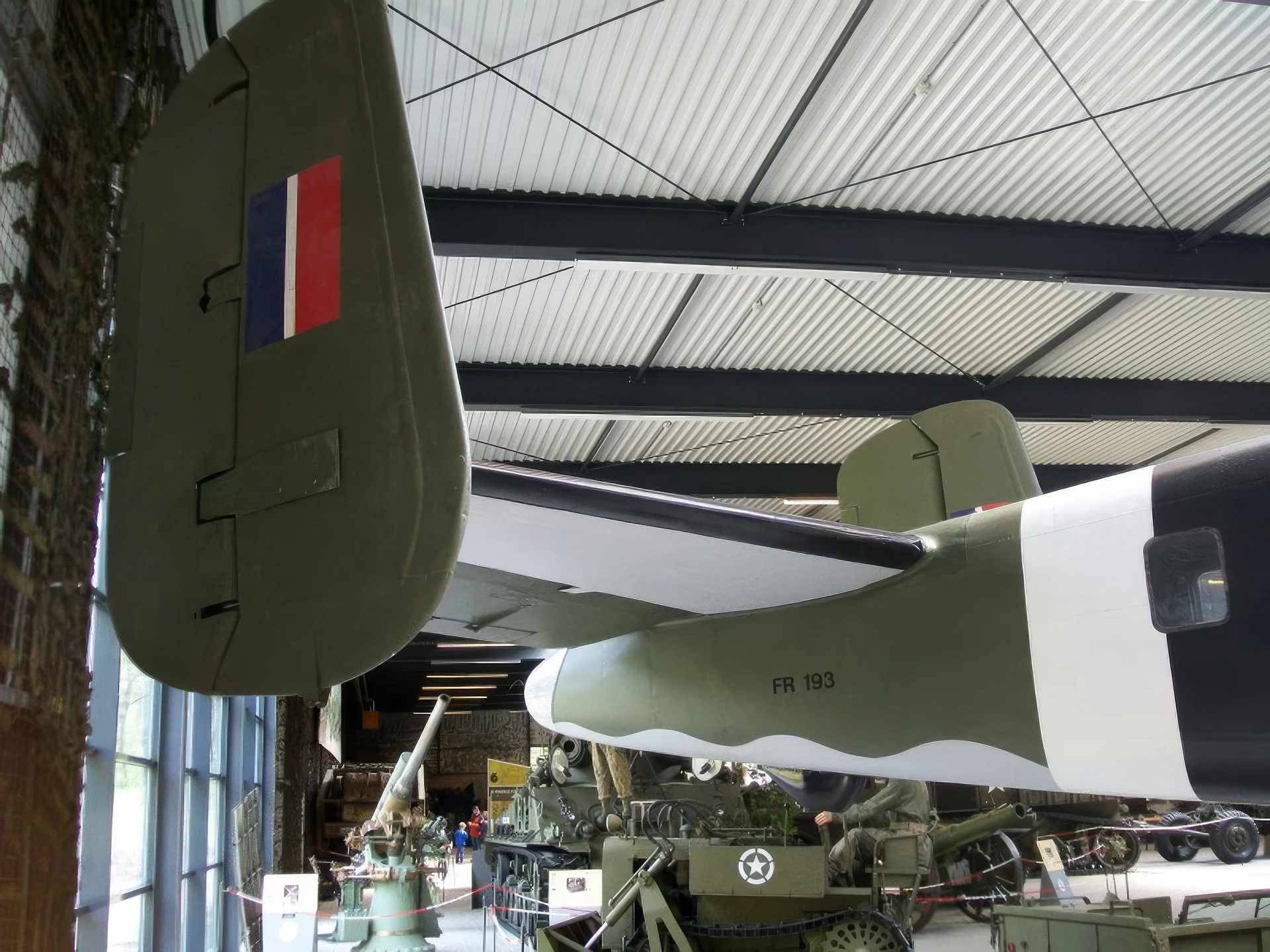
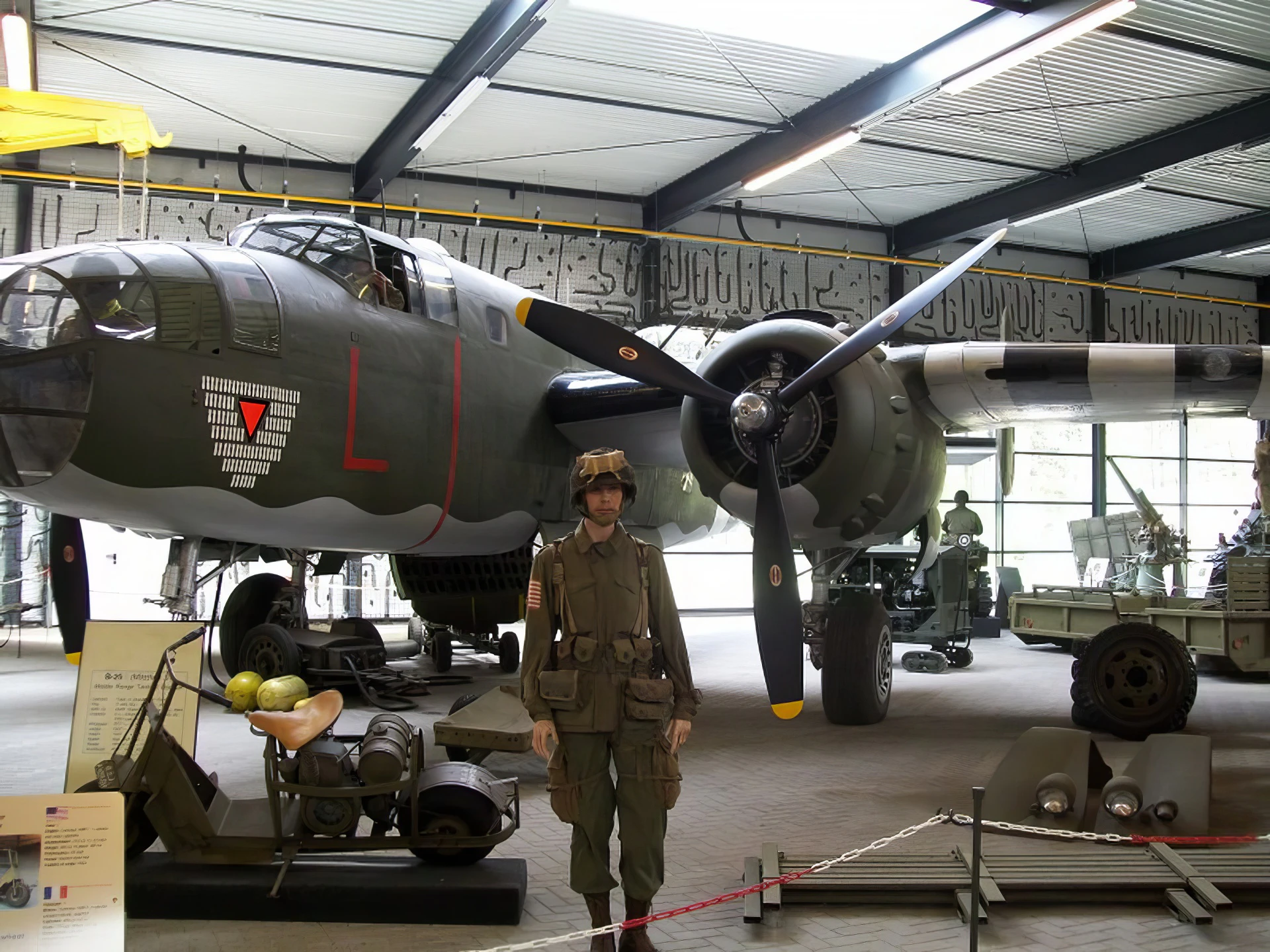


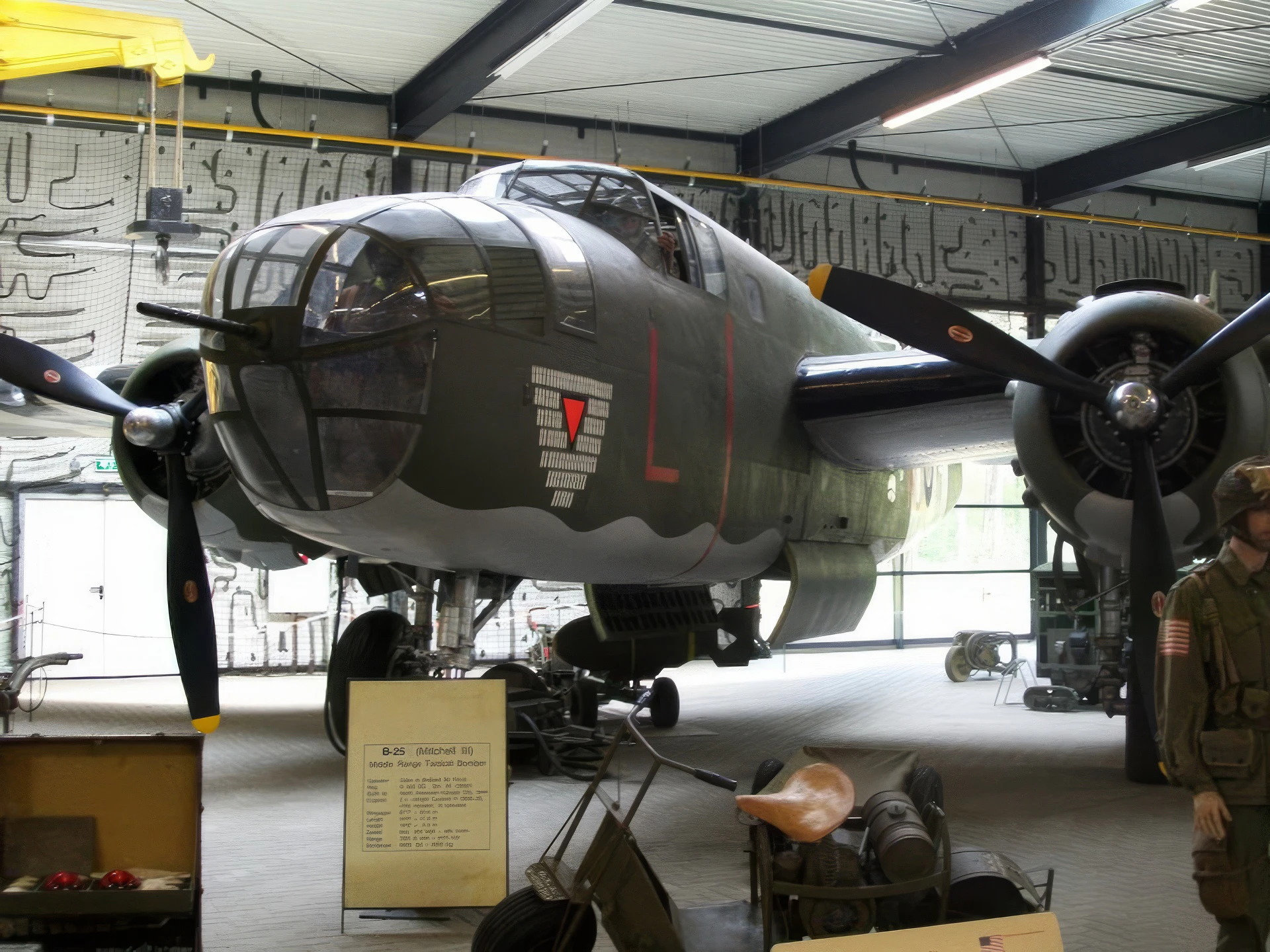
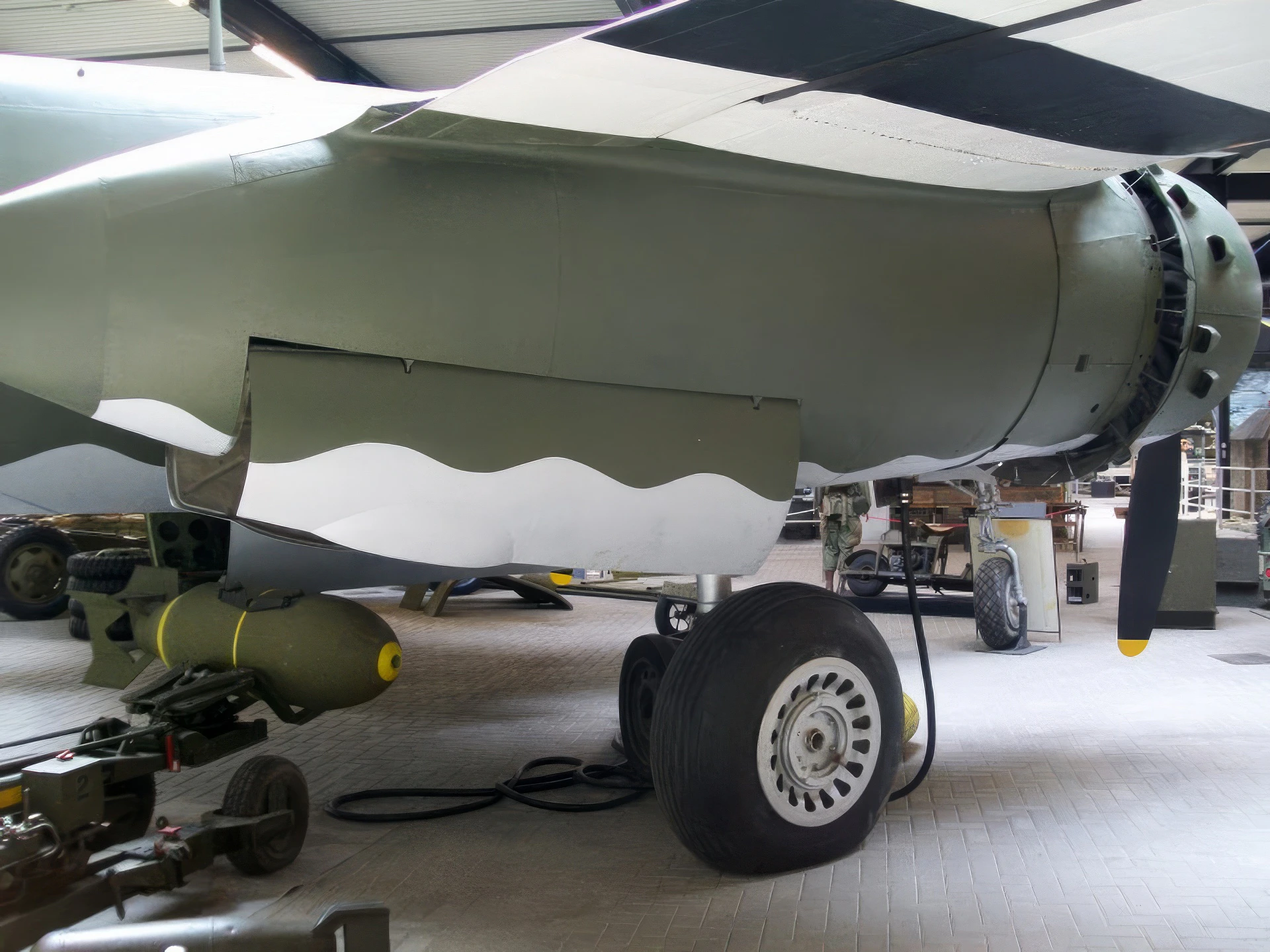

Technické vlastnosti: Équipage :8 Motorisation : Moteur Wright R-2600-92 double Cyclone Nombre : 2 Type 14 cylindres en double-étoile refroidi par air Puissance unitaire : 1 700 ch (1 250 kW) Envergure : 20,6 m Longueur : 16,54 m Hauteur : 4,8 m Surface alaire : 56,67 m2 Masse à vide : 9 060 kg Carburant : Externe : 3 875 L kg Avec armement : 16 350 kg Maximale : 19 000 kg Vitesse maximale à 3 960 m : 438 km/h (Mach 0,36) Plafond : 7 250 m Vitesse ascensionnelle : 240 m/min Rayon d’action : 2 170 km Armement Interne : 1 450 kg de bombes Externe : 1 canon de 75 mm, 14 mitrailleuses Browning M2 de 12,7 mm, 8 roquettes de 127 mm (B-25H/G)et jusqu’à 18 mitrailleuses de 12,7 mm sur les versions nez plein J
Pozri tiež:


The North American B-25D Mitchell was a highly successful, twin-engine medium bomber of the United States Army Air Forces (USAAF) that served in every theater of World War II. It was the first mass-produced variant of the Mitchell built outside of the original factory, being essentially identical to the B-25C model but produced in a different location.
Key Characteristics
- Design: The B-25 Mitchell series was named after Brigadier General Billy Mitchell, a vocal advocate for air power. It was a rugged, mid-wing monoplane featuring a distinctive gull-wing configuration (flat outer wing panels) which was an aerodynamic fix to stability issues found in earlier models. Its wide-set engines and tricycle landing gear made it a relatively safe and forgiving aircraft to fly.
- Production: The B-25D was manufactured at the North American Aviation plant in Kansas City, Kansas, while the “C” model was built in Inglewood, California. Over 2,290 units of the “D” variant were produced, making it a major contribution to the Allied air fleets.
- Powerplant: Two powerful Wright R-2600-13 or R-2600-29 “Twin Cyclone” 14-cylinder radial engines, each providing 1,700 hp (or more in emergency settings).
- Bomb Load: The aircraft could carry a maximum bomb load of up to 3,000 lbs (1,360 kg) in its internal bomb bay.
Armament and Defensive Features
The B-25D was designed as a conventional medium-altitude bomber but featured improved defensive and operational equipment over earlier models:
- Nose: It retained the glazed bombardier’s nose (or “greenhouse”) used for precise level bombing with a Norden bombsight. Armament here typically included one fixed and one flexible .50 caliber machine gun.
- Turrets:
- Dorsal Turret: A retractable Bendix turret mounted behind the cockpit, armed with twin .50 caliber machine guns.
- Ventral Turret: A remotely-operated, retractable Bendix turret under the fuselage, also with twin 50 caliber machine guns, although this was often removed in the field to save weight.
- Tail Turret: The “D” model reintroduced a manned tail gun position with twin 50 caliber machine guns for rear defense.
- Operational Upgrades: Like the B-25C, the “D” model featured essential combat upgrades such as self-sealing fuel tanks, crew armor, and de-icing/anti-icing equipment for operation in diverse climates.
Service and Legacy
The B-25D was a crucial aircraft for the Allied war effort, flying missions in North Africa, the Mediterranean, Europe, and heavily in the Pacific and China-Burma-India (CBI) theaters. Its high durability—often withstanding significant combat damage—made it popular with crews. Its legacy also benefited from the B-25B’s fame as the aircraft used in the 1942 Doolittle Raid on Tokyo.
While the B-25 was designed for medium-altitude bombing, the later development of heavily armed, low-level “strafer” variants (like the B-25G, H, and J) in the Pacific showcased the Mitchell’s versatility as an attack aircraft and ship killer.
Počet videní : 2451