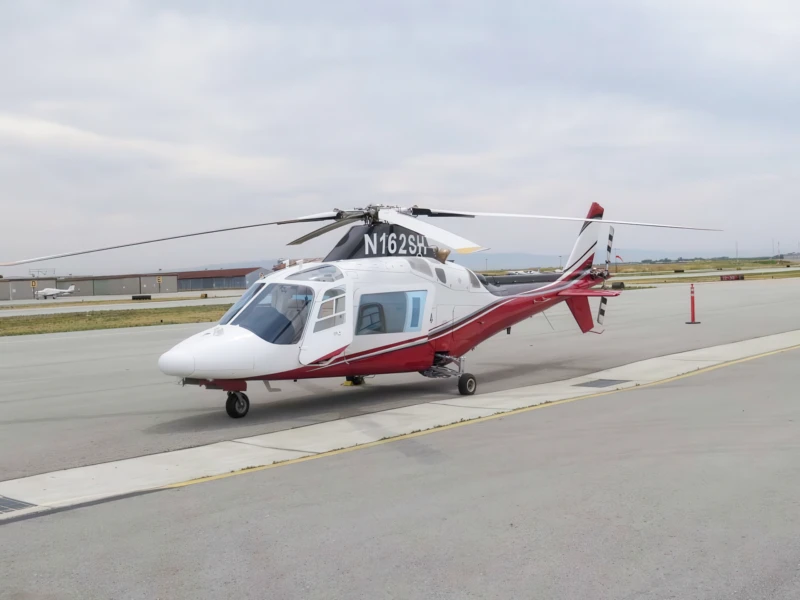
AgustaWestland AW109 | |
|---|---|
| País | EUA Itália |
| Papel | Helicóptero de busca e salvamento/utilitário |
| Primeiro voo | 4 de Agosto de 1971 |
| Construído | Desconhecido |
O AgustaWestland AW109, originalmente o Agusta A109, é um helicóptero multiuso leve, bimotor e de oito lugares projetado e inicialmente produzido pelo fabricante italiano de helicópteros Agusta.
Fonte: AgustaWestland AW109 na Wikipédia
| AgustaWestland AW109 | |
|---|---|
| Photographers | Unknow |
| Localisation | Unknow |
| Photos | 100 |

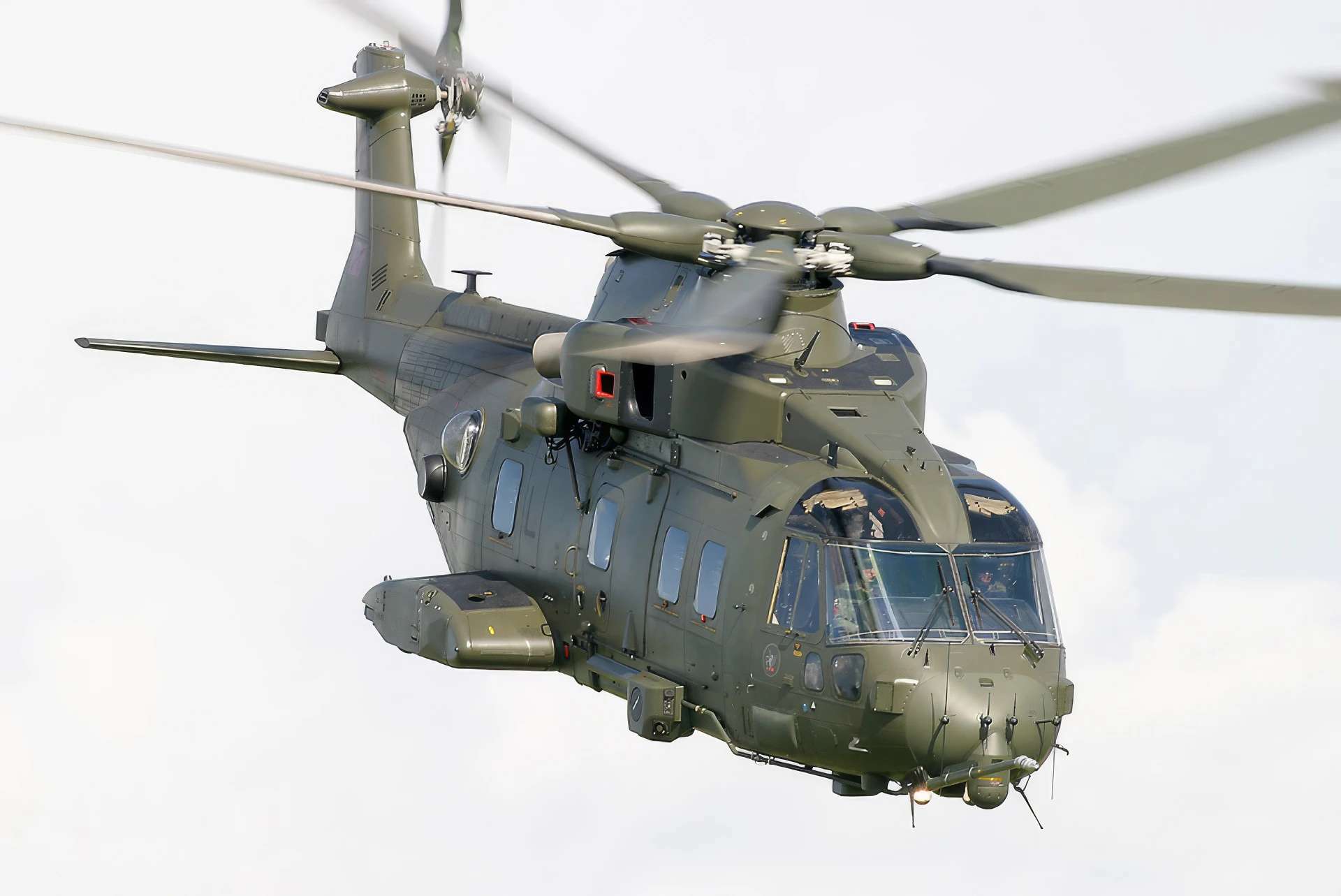
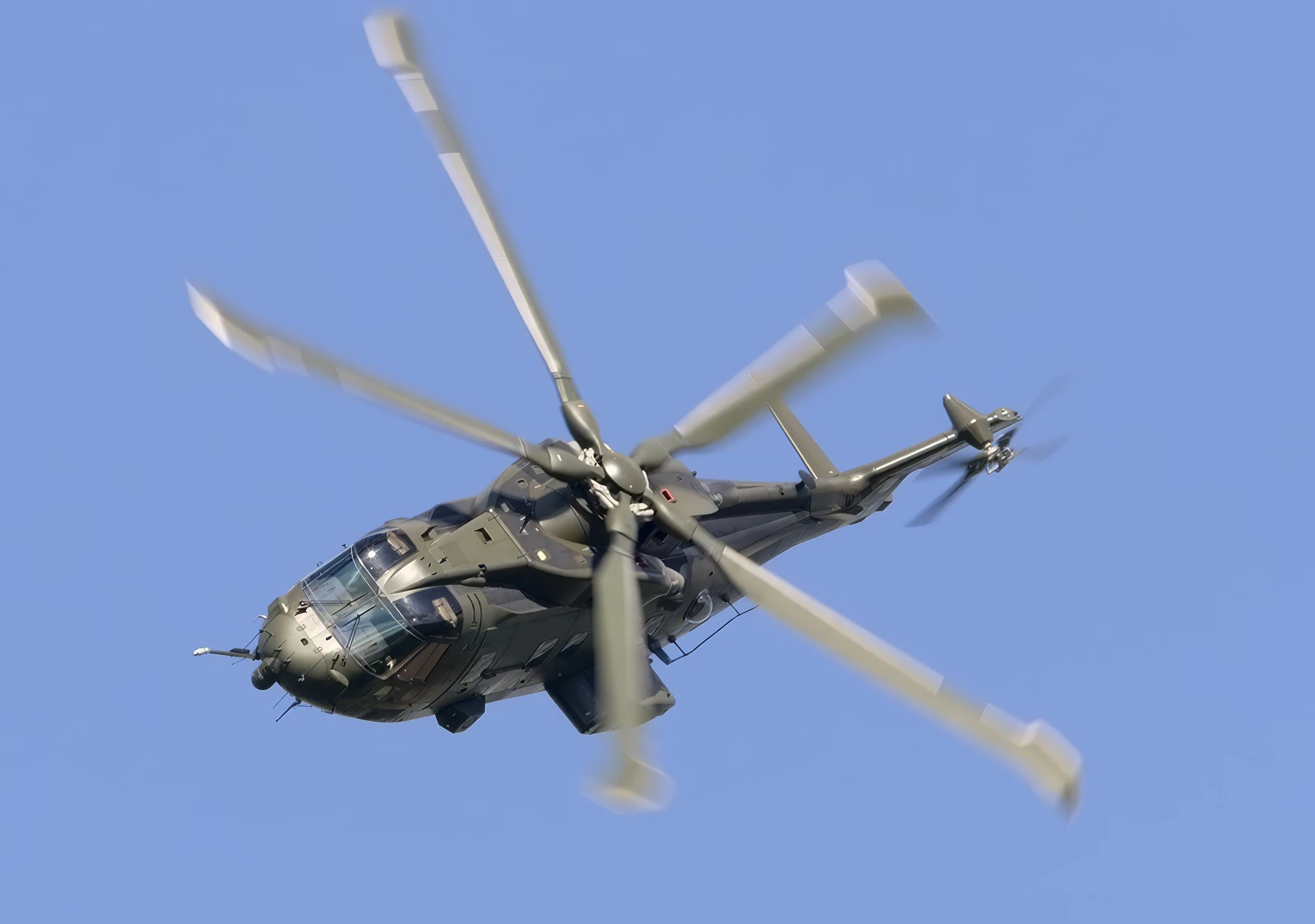
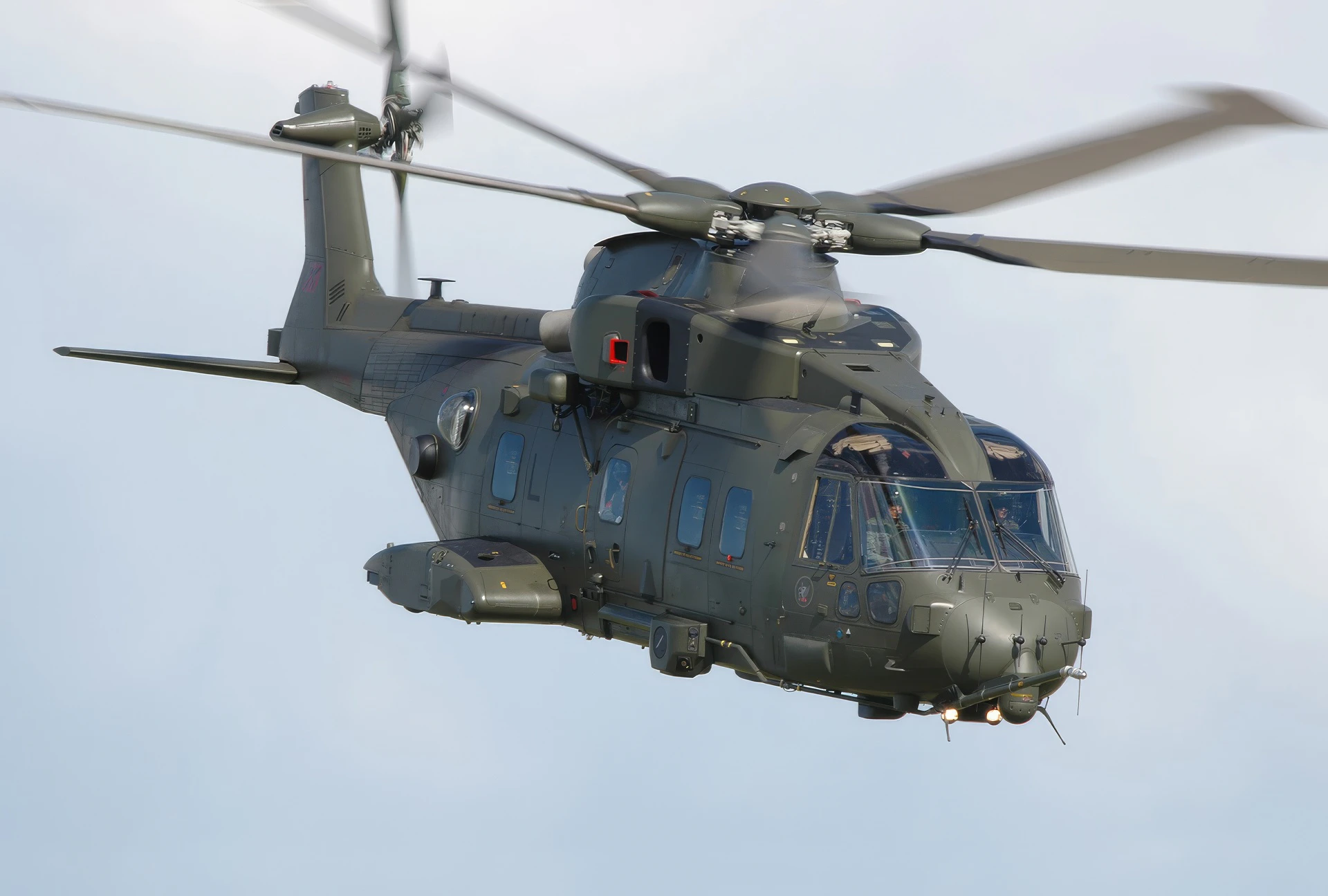

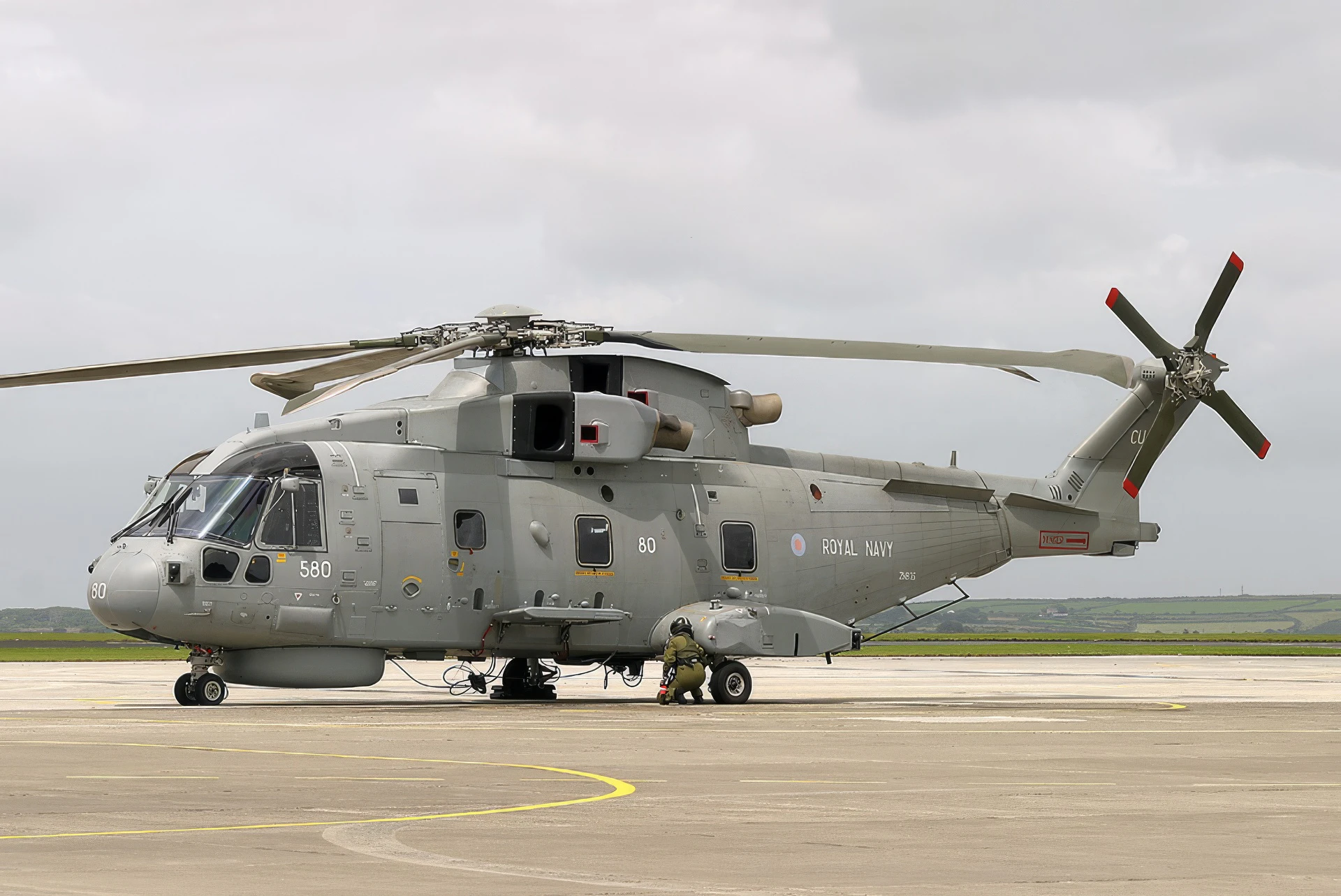

 Compre-me um café
| AgustaWestland A109C Walk Around | |
|---|---|
| Photographer | Vladimir Yakubov |
| Localisation | HeliFest 2016, Hiller Aviation Museum, San Carlos, CA |
| Photos | 50 |
Veja também:


Overview and Multi-Role Versatility
The AgustaWestland AW109 (now the Leonardo AW109) is a lightweight, twin-engine helicopter renowned for its speed, elegant lines, and high performance. Originally developed by Agusta in the late 1960s, it became the first all-Italian helicopter to be mass-produced. Its retractable landing gear and streamlined fuselage contribute to its reputation as one of the fastest helicopters in its class. The AW109 is a true multi-role platform, serving as a premier choice for executive transport, emergency medical services (EMS), and law enforcement globally.
| Property | Technical Specification (AW109 GrandNew) |
|---|---|
| Papel | Light Utility / VIP Transport Helicopter |
| tripulação | 1 or 2 Pilots |
| Capacidade | Up to 6 or 7 Passengers |
| comprimento | 12.96 meters (42 ft 6 in) |
| Rotor Diameter | 10.83 meters (35 ft 6 in) |
| Maximum Takeoff Weight | 3,175 kg (7,000 lb) |
| Maximum Cruise Speed | 289 km/h (156 knots) |
| Maximum Range | 859 km (464 nautical miles) |
Powerplant and Performance
- Engine Configuration: Powered by two Pratt & Whitney Canada PW200 series turboshaft engines (typically PW206C or PW207C depending on the variant).
- Redundancy and Safety: The twin-engine design provides critical Category A Class 1 performance, allowing for safe continued flight or landing in the event of a single engine failure, even at maximum weight.
- Speed Advantage: Its ability to cruise consistently above 150 knots makes it significantly faster than most competing light-twin helicopters, a key factor in its popularity for time-sensitive VIP and MedEvac missions.
Key Variants and Design Features
- AW109 Power: The classic high-performance variant that established the model’s global dominance in the 1990s and 2000s.
- AW109 GrandNew: Features an extended cabin for more legroom and a state-of-the-art digital glass cockpit with advanced satellite navigation and terrain awareness systems.
- AW109 Trekker: A rugged variant equipped with fixed landing skids instead of retractable wheels, designed specifically for utility and EMS roles in demanding environments.
- Specialized Interiors: The cabin can be quickly reconfigured from a 6-seat VIP layout to a medical suite featuring stacked litters and life-support equipment.
Legacy and Current Status
- Global Reach: With over 1,500 units delivered, the AW109 operates in over 50 countries across military, government, and private sectors.
- Military Service: Utilized by several nations, including the South African Air Force and the UK’s Empire Test Pilots’ School, for roles ranging from light attack to pilot training.
- Search and Rescue: Known for its high-altitude performance, the AW109 is a staple for alpine rescue organizations like Switzerland’s REGA.
Visualizações : 929
Você pode ver também:
 Aérospatiale SA 321 Super Frelon – Fotos e Vídeos
 Eurocopter AS350 Écureuil – Fotos e Vídeos
 TAI/AgustaWestland T129 ATAK – Fotos e Vídeos
 AgustaWestland AW101 – Fotos e Vídeos
 Sikorsky HH-60 Pave Hawk – Fotos e Vídeos
 Saunders-Roe Skeeter – Fotos e Vídeos
 Sikorsky S-64 Skycrane – Fotos e Vídeo
 Kaman HH-43 Huskie – Fotos e Vídeo
 Kamov Ka-50 Hokum – Fotos e Vídeo
 SA.318C Alouette II – Fotos e Vídeo