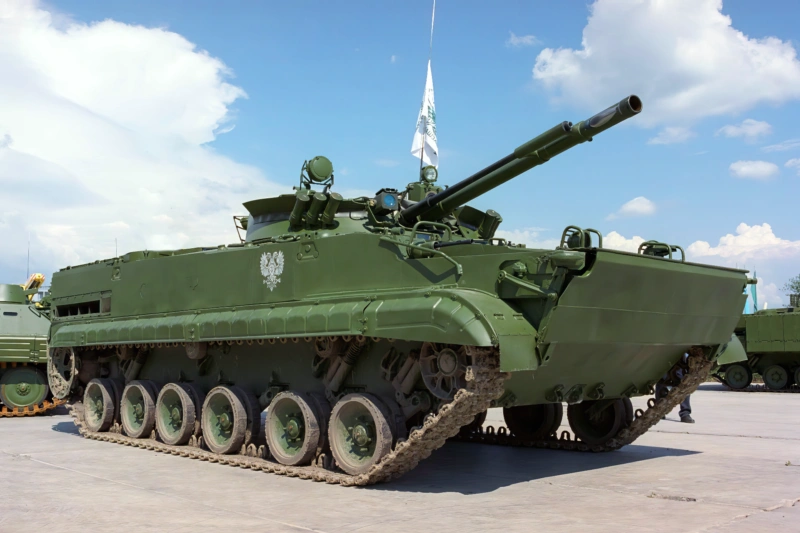
BMP-3 | |
|---|---|
| Country | Soviet Union |
| Role | Amphibious infantry fighting vehicle |
| In service | 1987–present |
| Built | 2000+ |
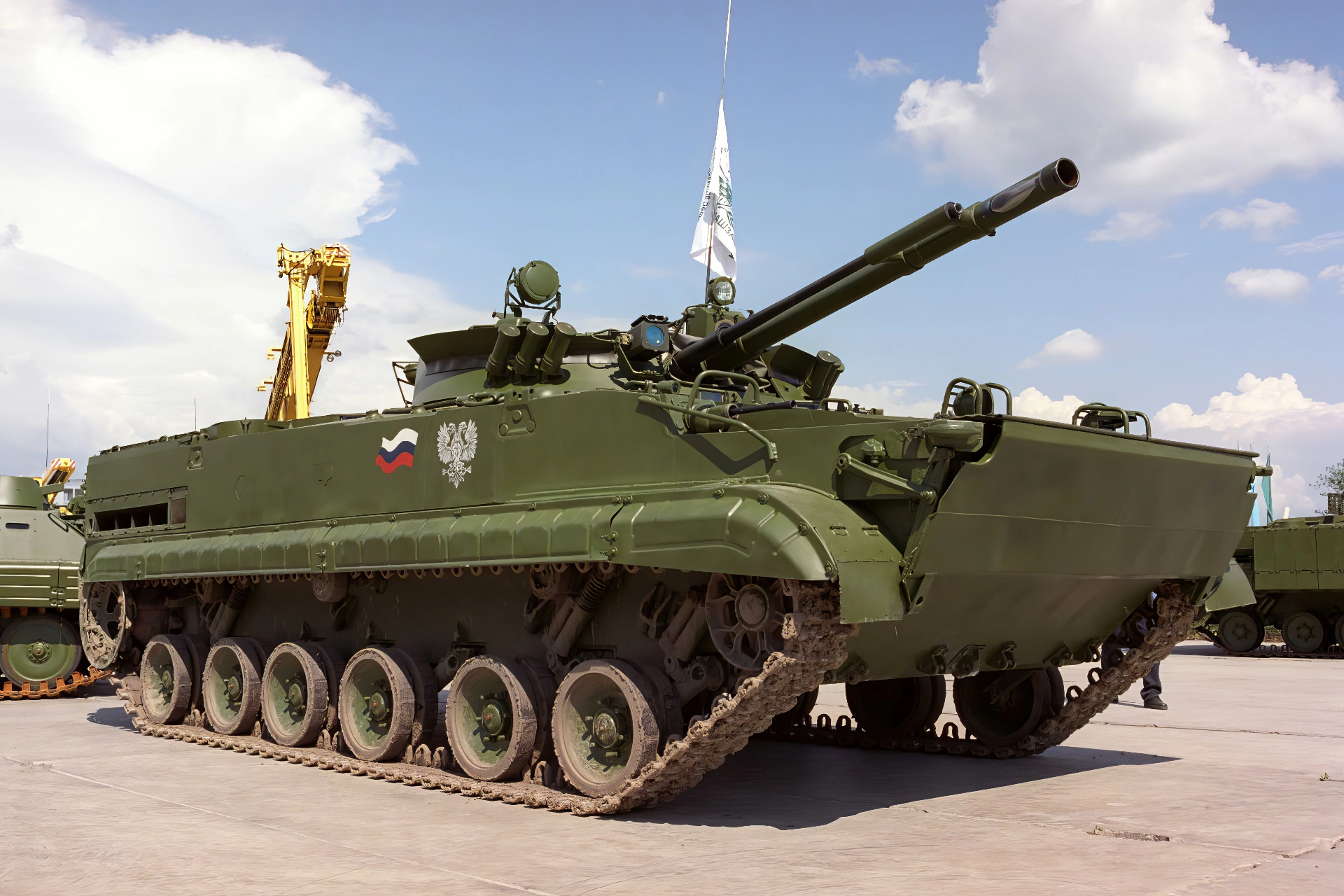
The BMP-3 is a Soviet amphibious infantry fighting vehicle, successor to the BMP-1 and BMP-2.
Source: BMP-3 on Wikipedia
| BMP-3 | |
|---|---|
| Photographer | Unknow |
| Localisation | Unknow |
| Photos | 28 |
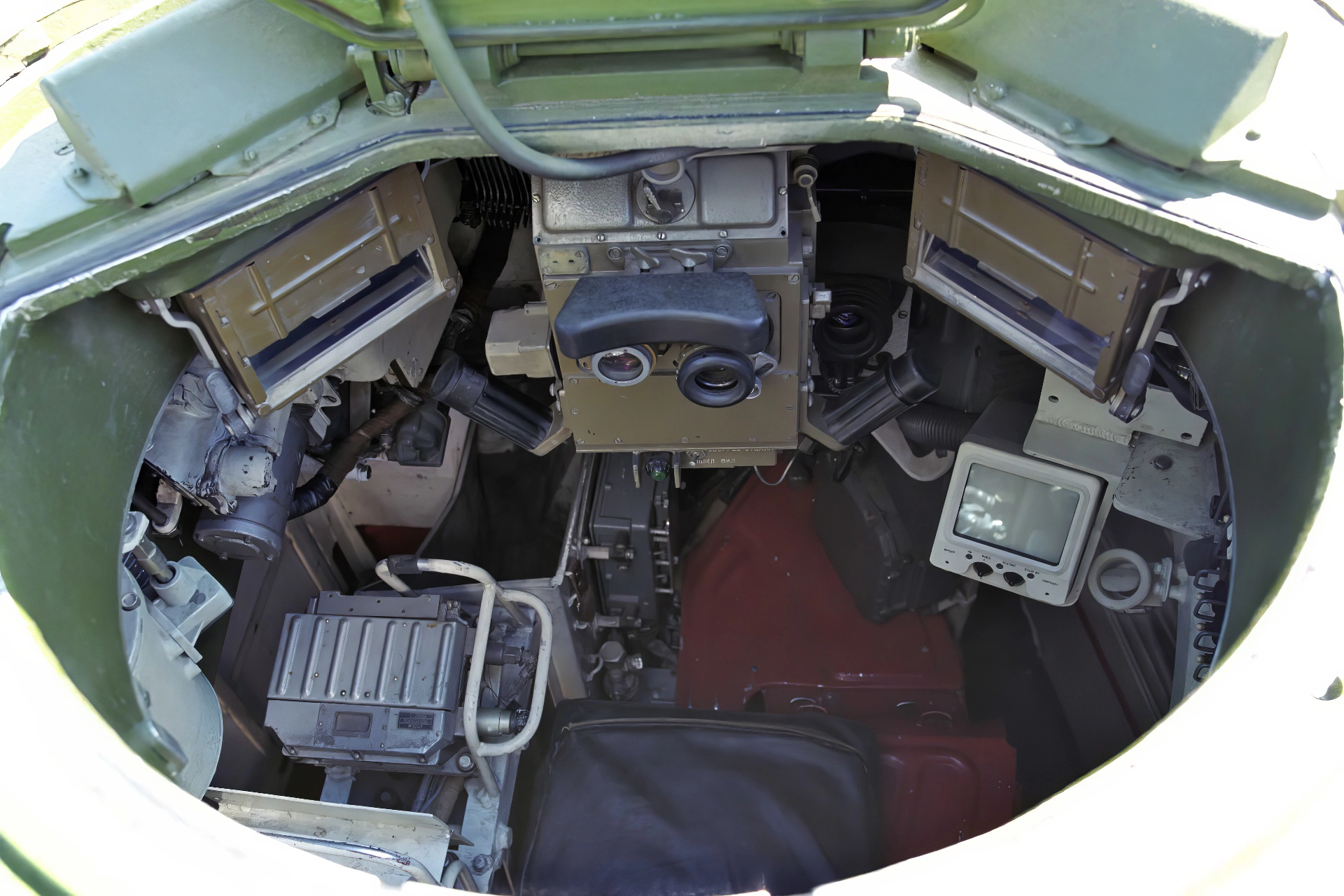
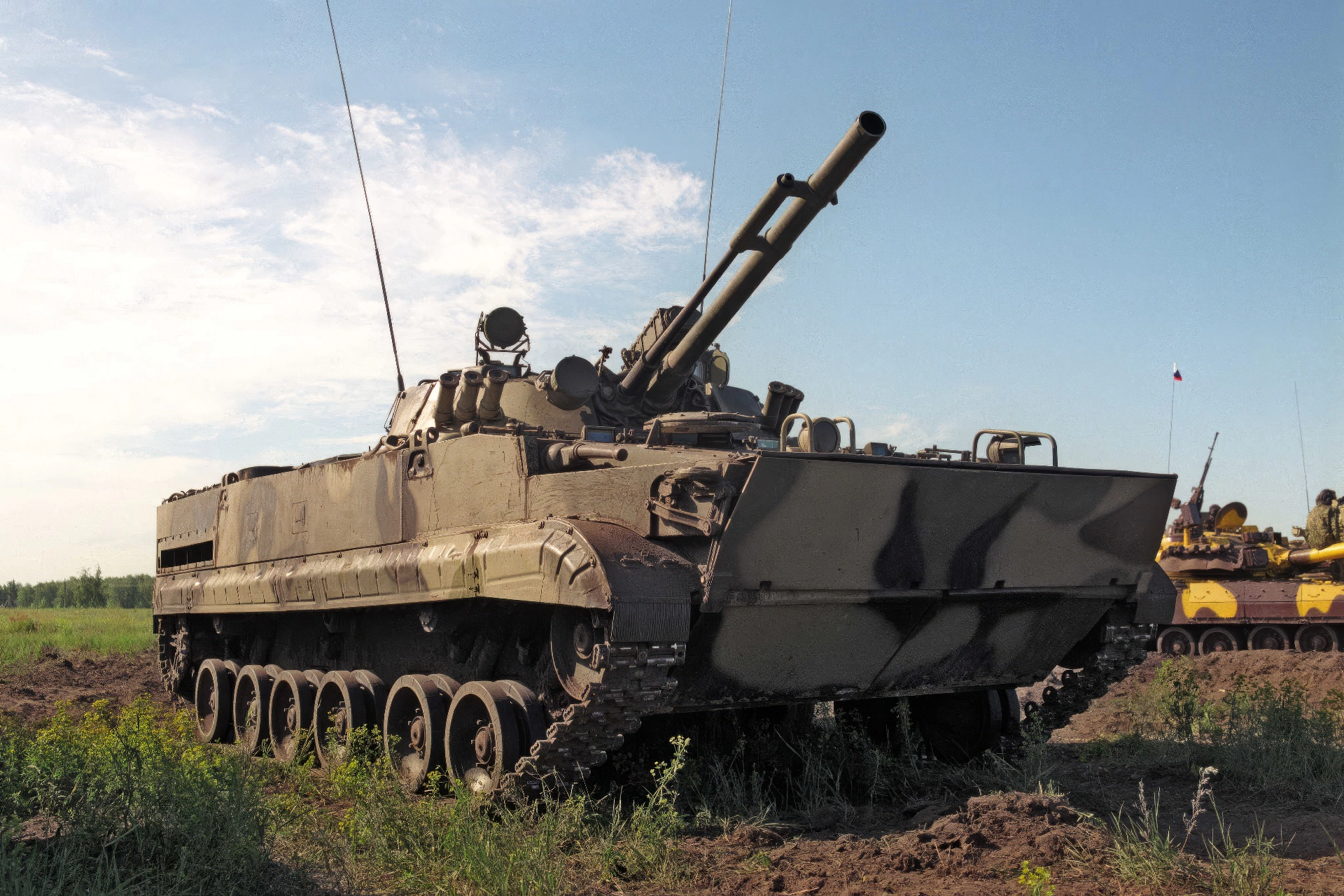

| BMP-3 Walk Around | |
|---|---|
| Photographer | Unknow |
| Localisation | Unknow |
| Photos | 79 |
See also:


| BMP-3 Walk Around | |
|---|---|
| Photographer | Vladimir Yakubov |
| Localisation | Unknow |
| Photos | 222 |
The BMP-3 (Boyevaya Mashina Pekhoty 3) is a third-generation Soviet/Russian Infantry Fighting Vehicle (IFV) that represented a radical departure in design and firepower from its predecessors (the BMP-1 and BMP-2). Introduced in the late 1980s, it remains one of the most heavily armed IFVs in the world, characterized by its unique combination of large-caliber weapons.
Design and Firepower
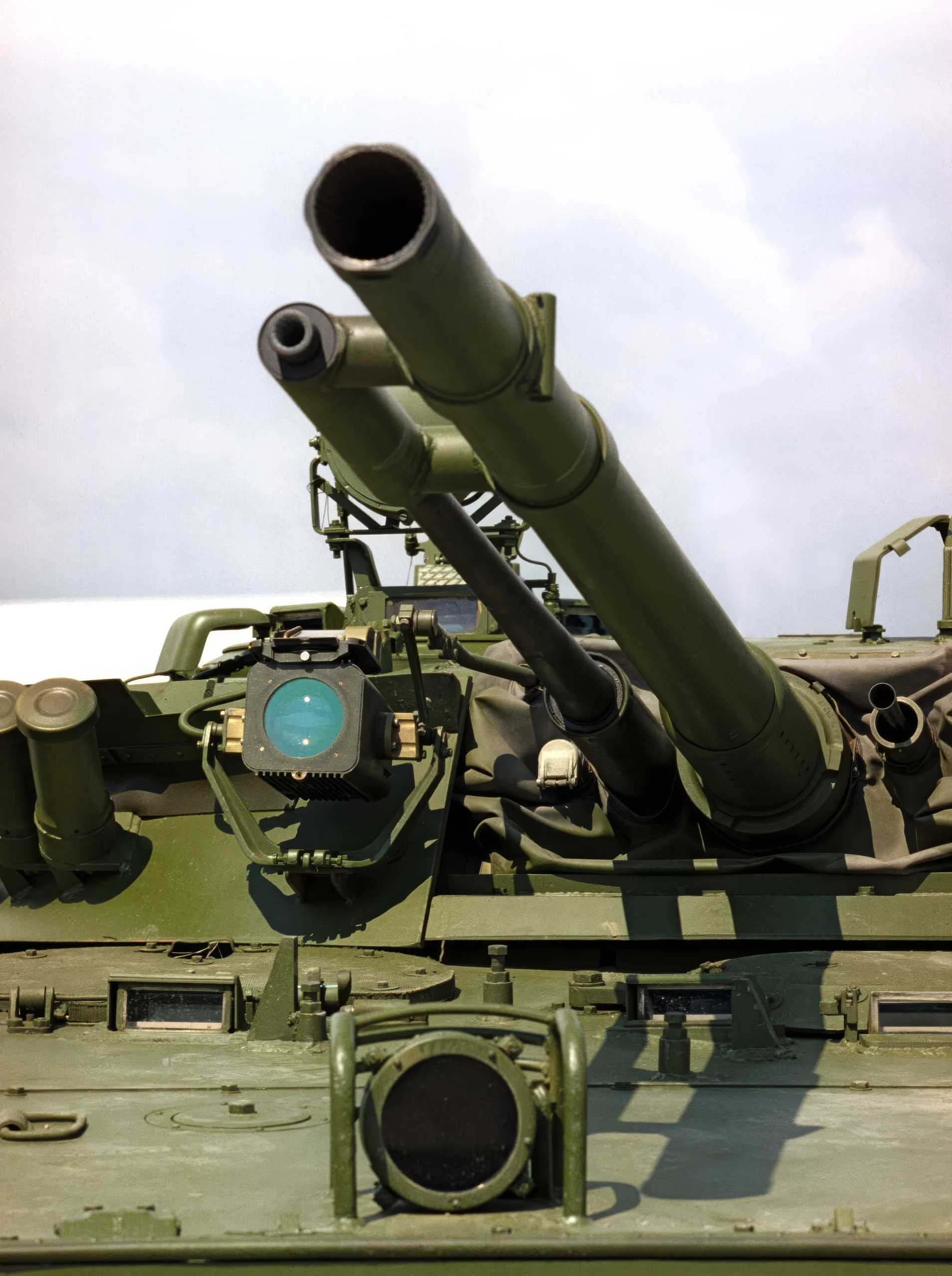
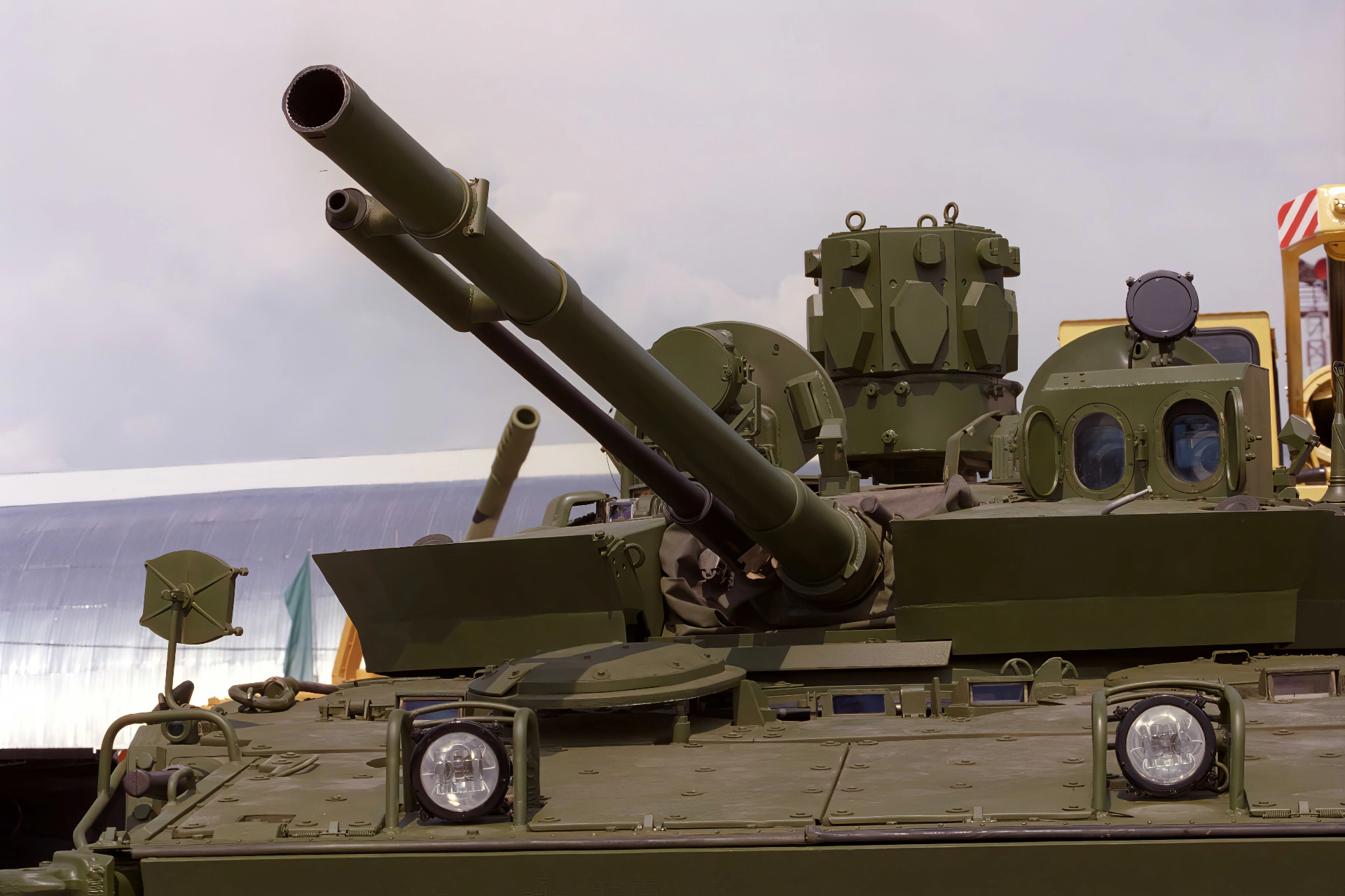
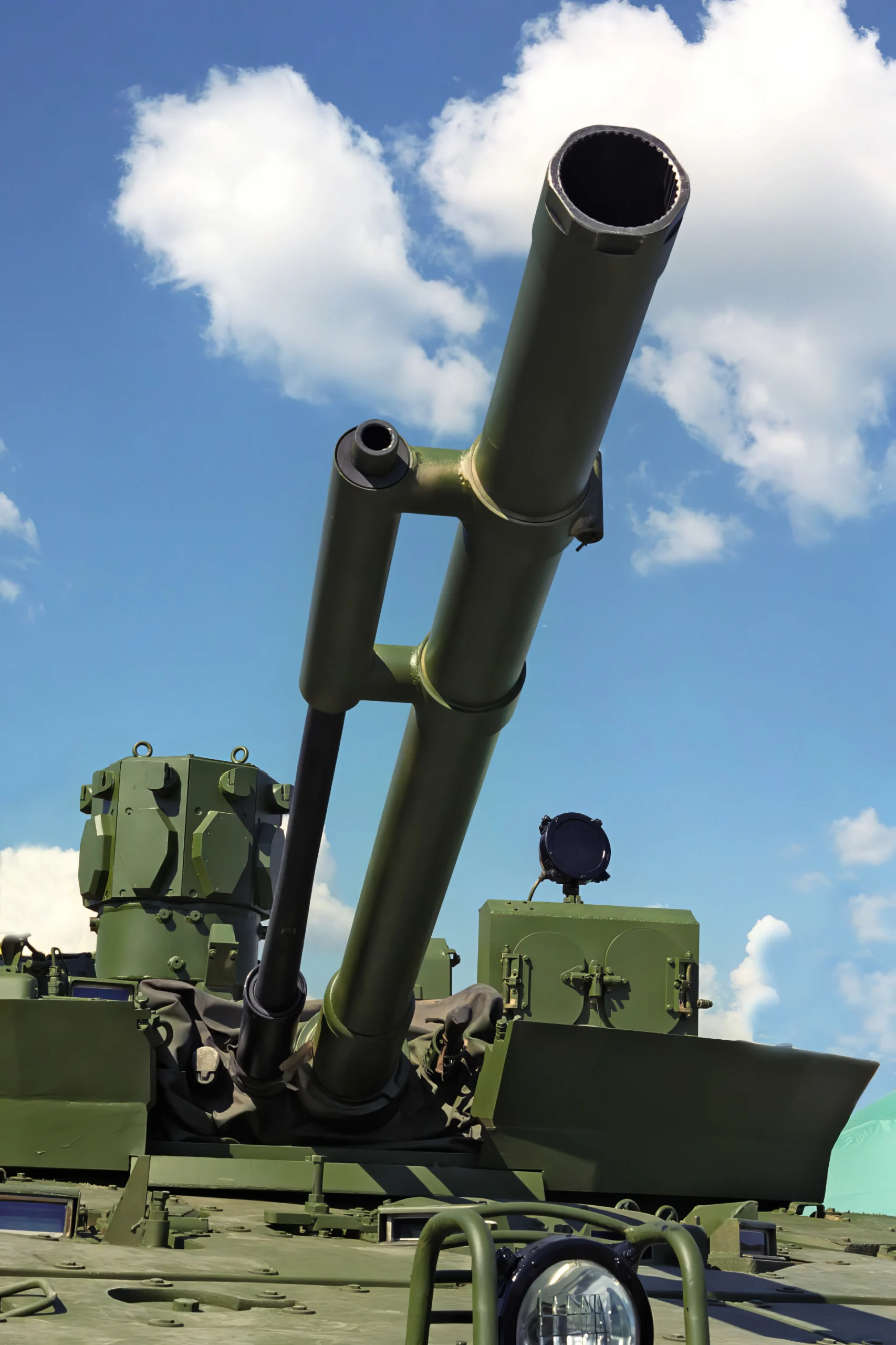
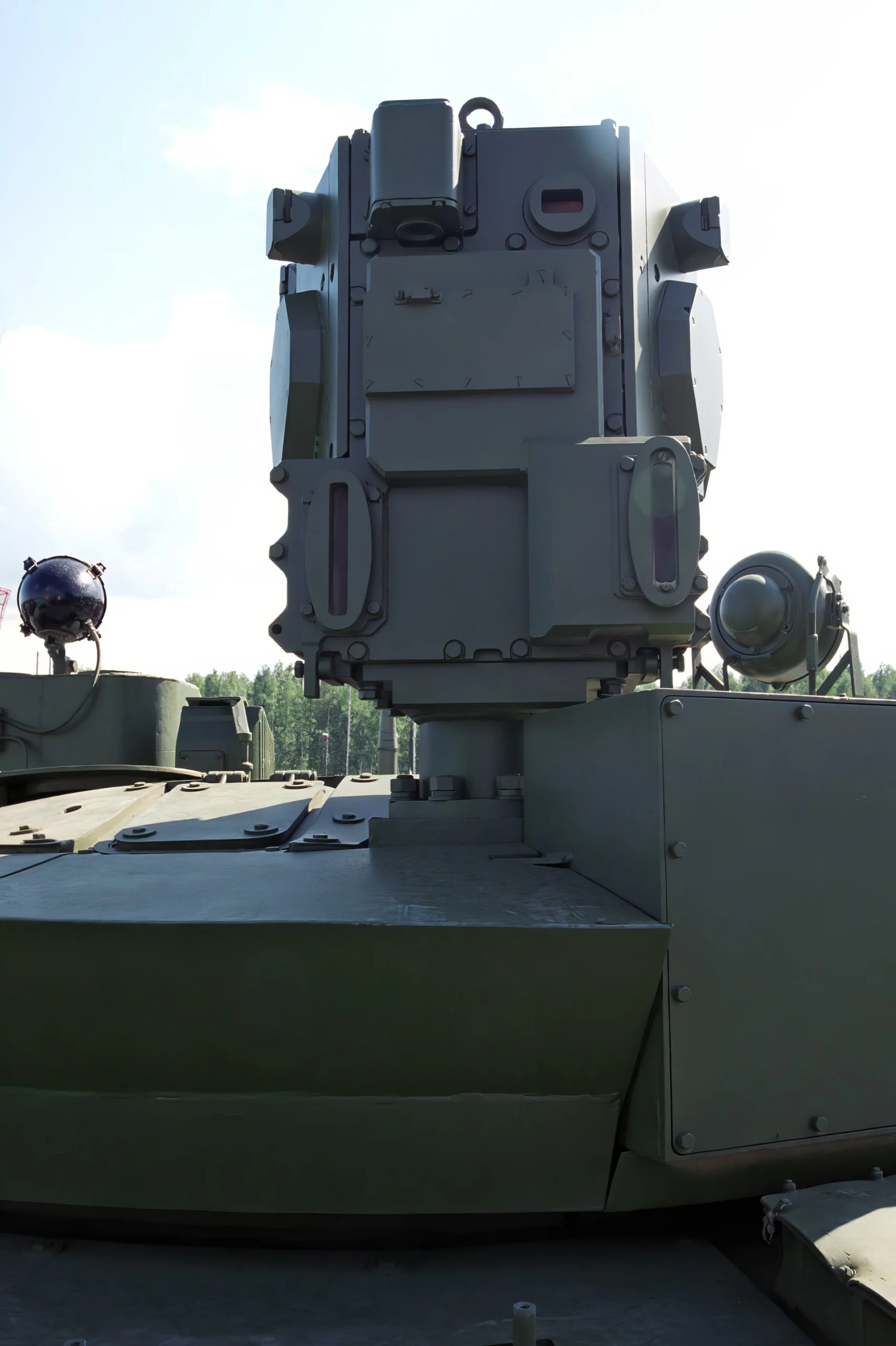
The most distinguishing feature of the BMP-3 is its turret, which mounts an unparalleled mix of three main weapon systems:
- 100 mm 2A70 Gun/Missile Launcher: This low-velocity, rifled gun serves two roles: it fires conventional **High-Explosive Fragmentation (HE-FRAG) rounds** for engaging soft targets and is the launcher for the **9M117 Bastion (AT-10 Stabber) anti-tank guided missile (ATGM)**, providing long-range anti-tank capability (up to 5,500 meters).
- 30 mm 2A72 Automatic Cannon: Mounted coaxially with the 100mm gun, this high-velocity weapon is primarily used for engaging light armored vehicles, personnel, and helicopters. It offers a high rate of fire essential for short-range combat.
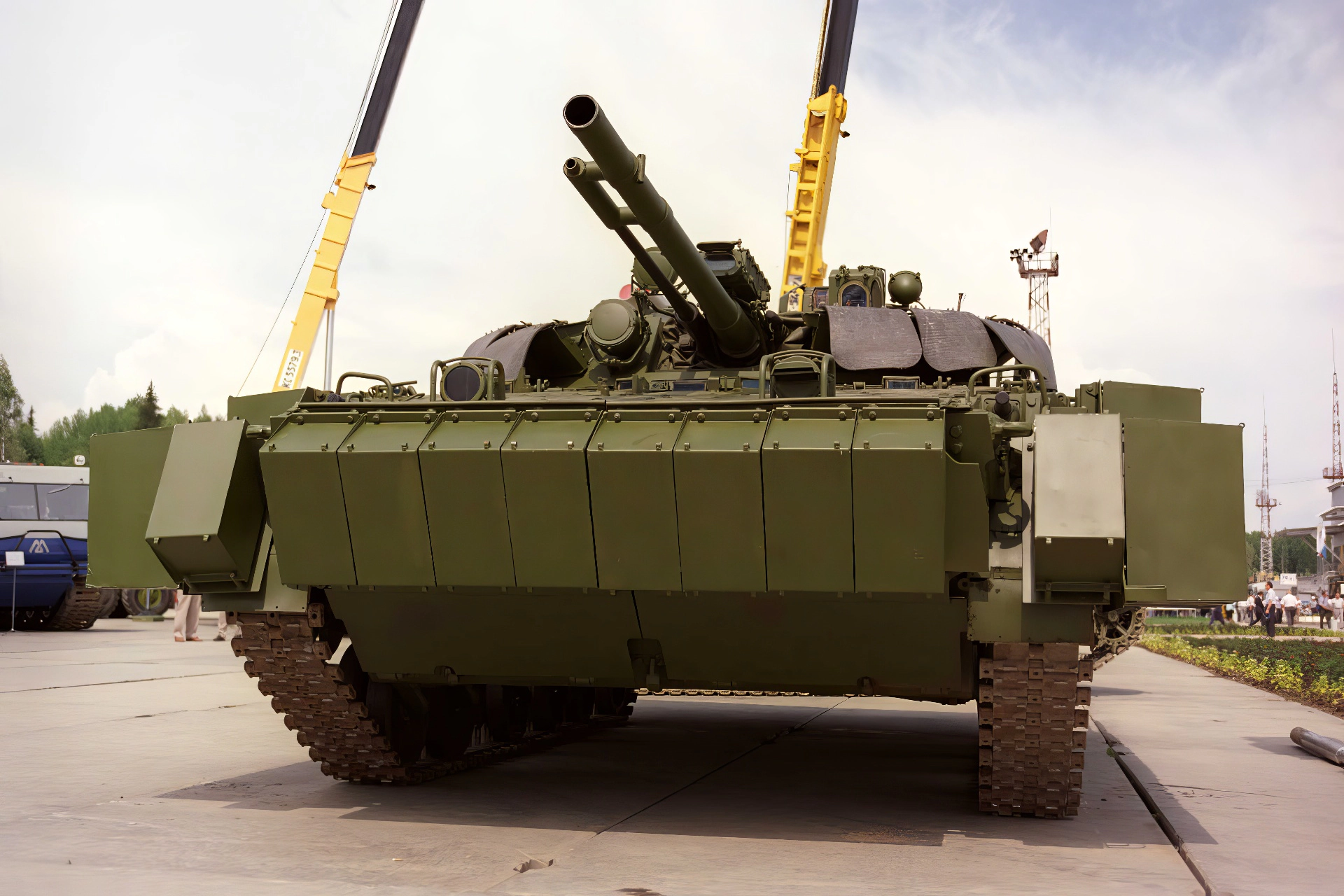
- 7.62 mm PKT Machine Guns: Three of these are carried: one coaxial with the main guns and **two in the hull front** for use by the dismounted troops, giving the vehicle excellent frontal saturation capability.
Protection and Mobility
- Chassis and Armor: The engine was moved to the **rear-right** of the chassis. The armor is a welded aluminum alloy, which is light but offers sufficient protection against small arms and shell splinters. Many BMP-3s are equipped with **Explosive Reactive Armor (ERA)** or passive composite armor packages for enhanced protection.
- Mobility: The BMP-3 is highly mobile and retains the signature **fully amphibious** capability of the BMP series. It is propelled in water by two water jets mounted at the rear, giving it a water speed of up to 10 km/h.
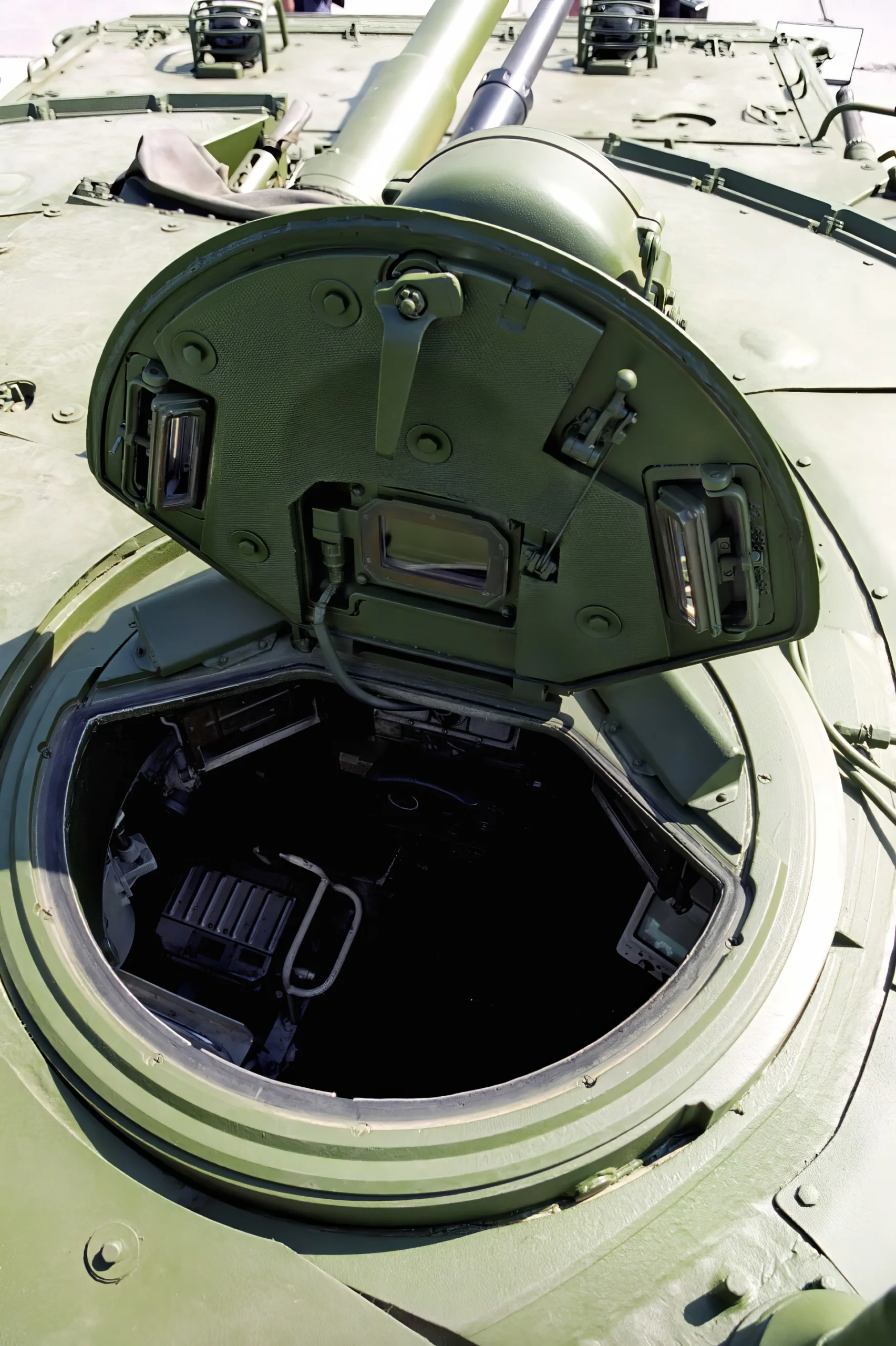
- Crew and Troops: It is operated by a crew of 3 (Driver, Commander, Gunner) and can transport **7 dismounted infantrymen**. The internal layout is unusual due to the rear-mounted engine, forcing the troops to exit through two hatches and a small space above the engine compartment.
Legacy and Service
The BMP-3 is designed to provide greater offensive power than any comparable Western IFV, capable of functioning as a light tank, an anti-tank system, and an infantry carrier simultaneously. While complex and expensive, its powerful armament mix makes it a highly effective vehicle. It is widely used by the Russian Army and has been successfully exported to several nations, including the UAE, Kuwait, and South Korea.
Views : 7884
You can see also :
 Type 63 – Photos & Videos
 Assault Amphibious Vehicle – Photos & Videos
 Panhard M3 – Photos & Videos
 BMP-1 – Photos & Video
 T-30 – Photos & Video
 FV180 Combat Engineer Tractor – Photos & Video
 OT-62 TOPAS – Photos & Video
 MT-LB Sjvpbv 4024 – Photos & Video
 PTS-M Tracked Amphibious Transport – Photos & Video
 Ford GPA – Walk Around