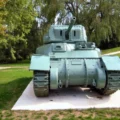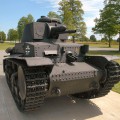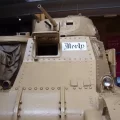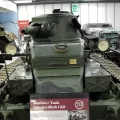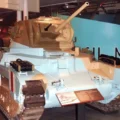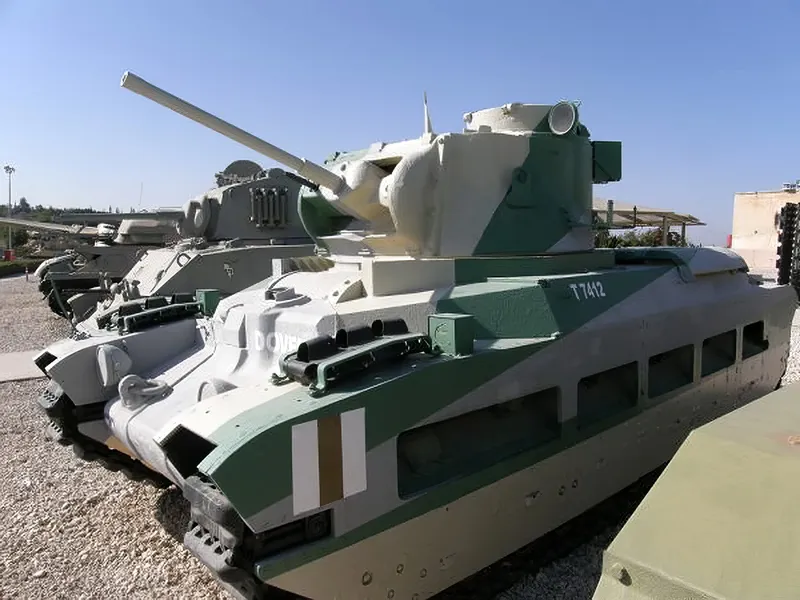
Matilda Tank | |
|---|---|
| Land | Storbritannia |
| Rolle | Infanteri tank |
| I tjeneste | 1939–1945 |
| Bygget | 2987 |
The Infantry Tank Mark II, best known as the Matilda, was a British infantry tank of the Second World War. The design began as the A12 specification in 1936, as a gun-armed counterpart to the first British infantry tank, the machine gun armed, two-man A11 Infantry Tank Mark I. The Mark I was also known as Matilda, and the larger A12 was initially known as the Matilda II, Matilda senior or Waltzing Matilda. The Mark I was abandoned in 1940, and from then on the A12 was almost always known simply as “the Matilda”.
Kilde: Matilda Tank på Wikipedia
| Matilda Tank | |
|---|---|
| Fotograf | Robert Goldman |
| Lokalisering | Unknow |
| Bilder | 40 |
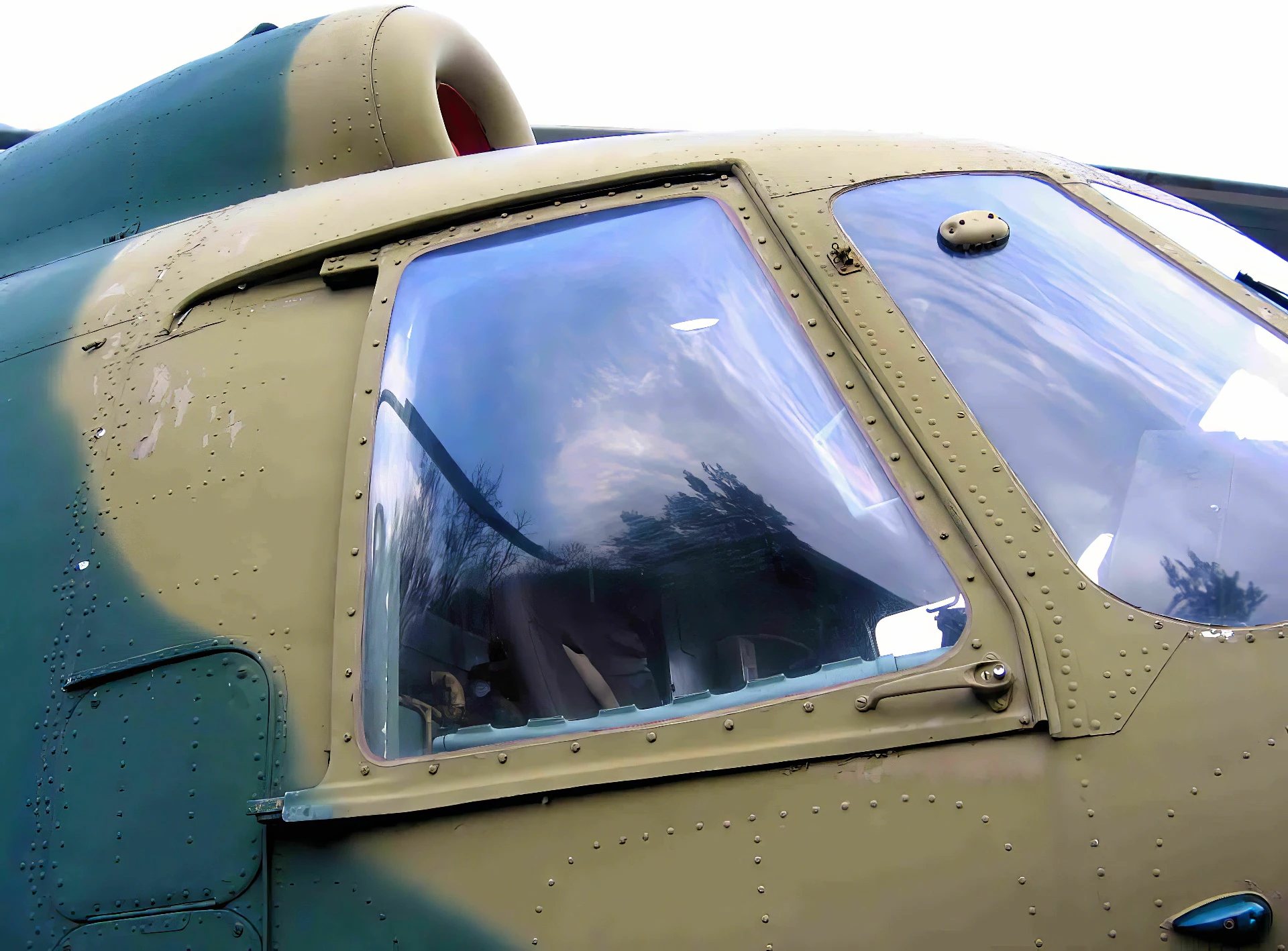
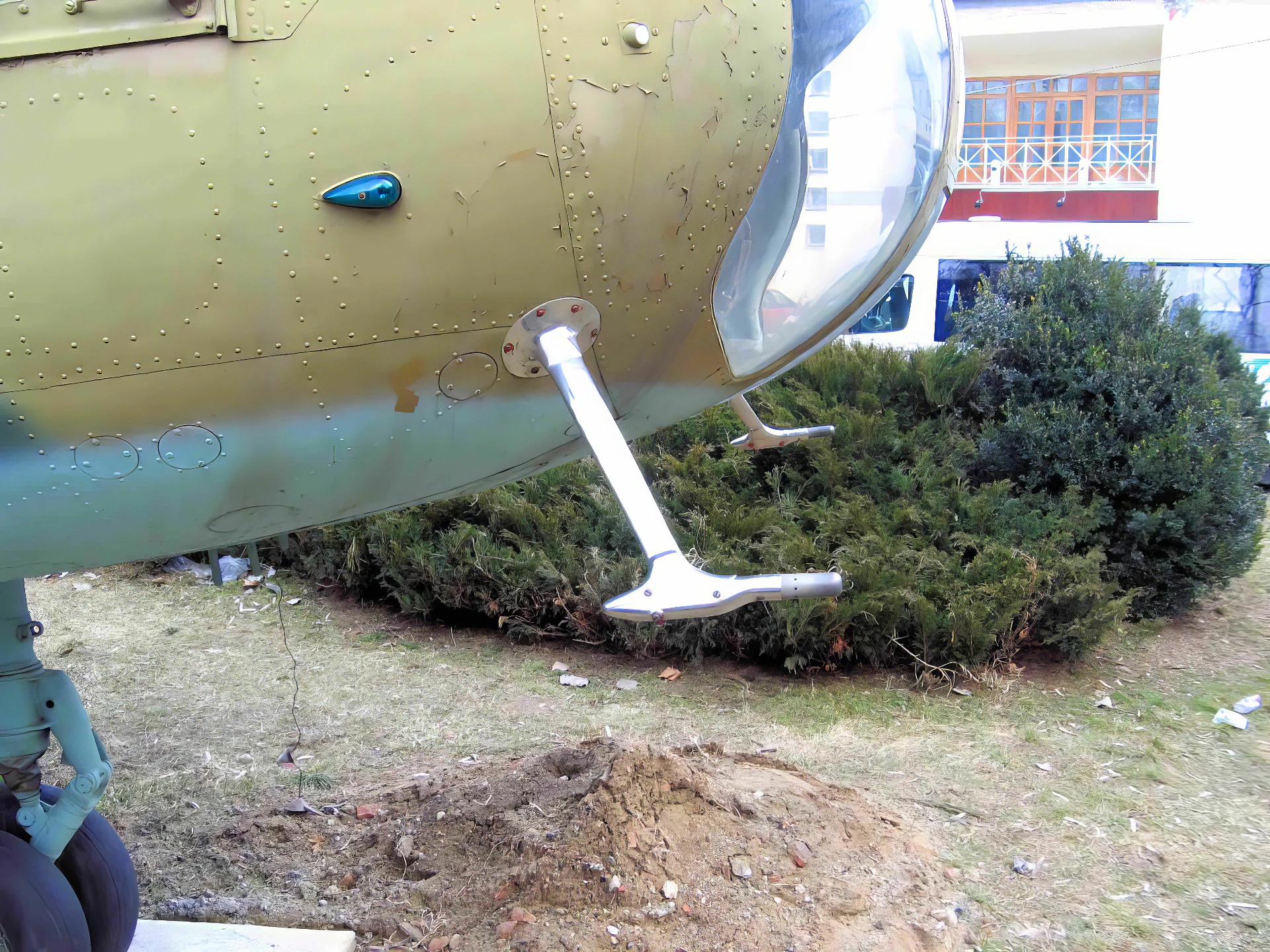
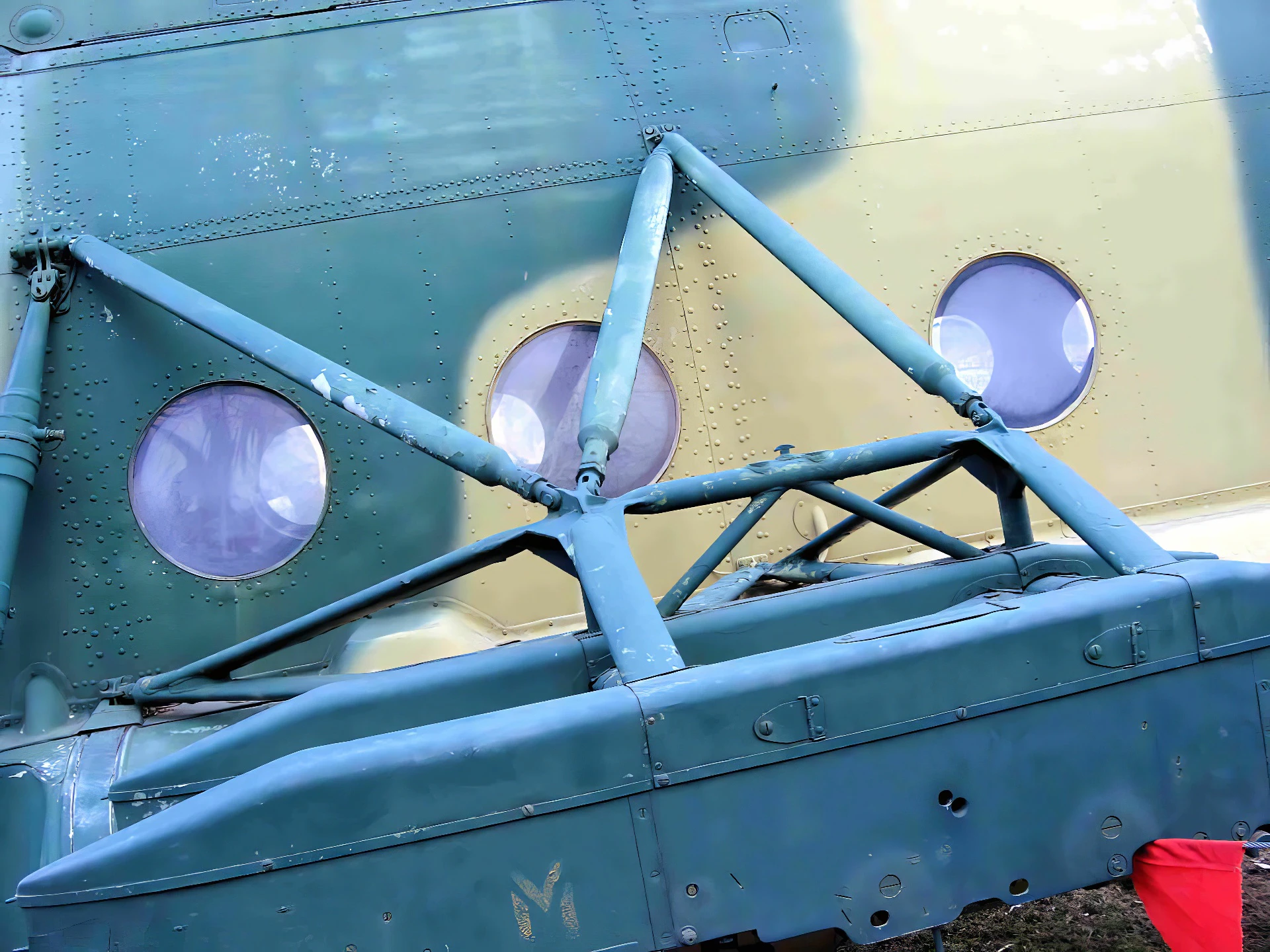
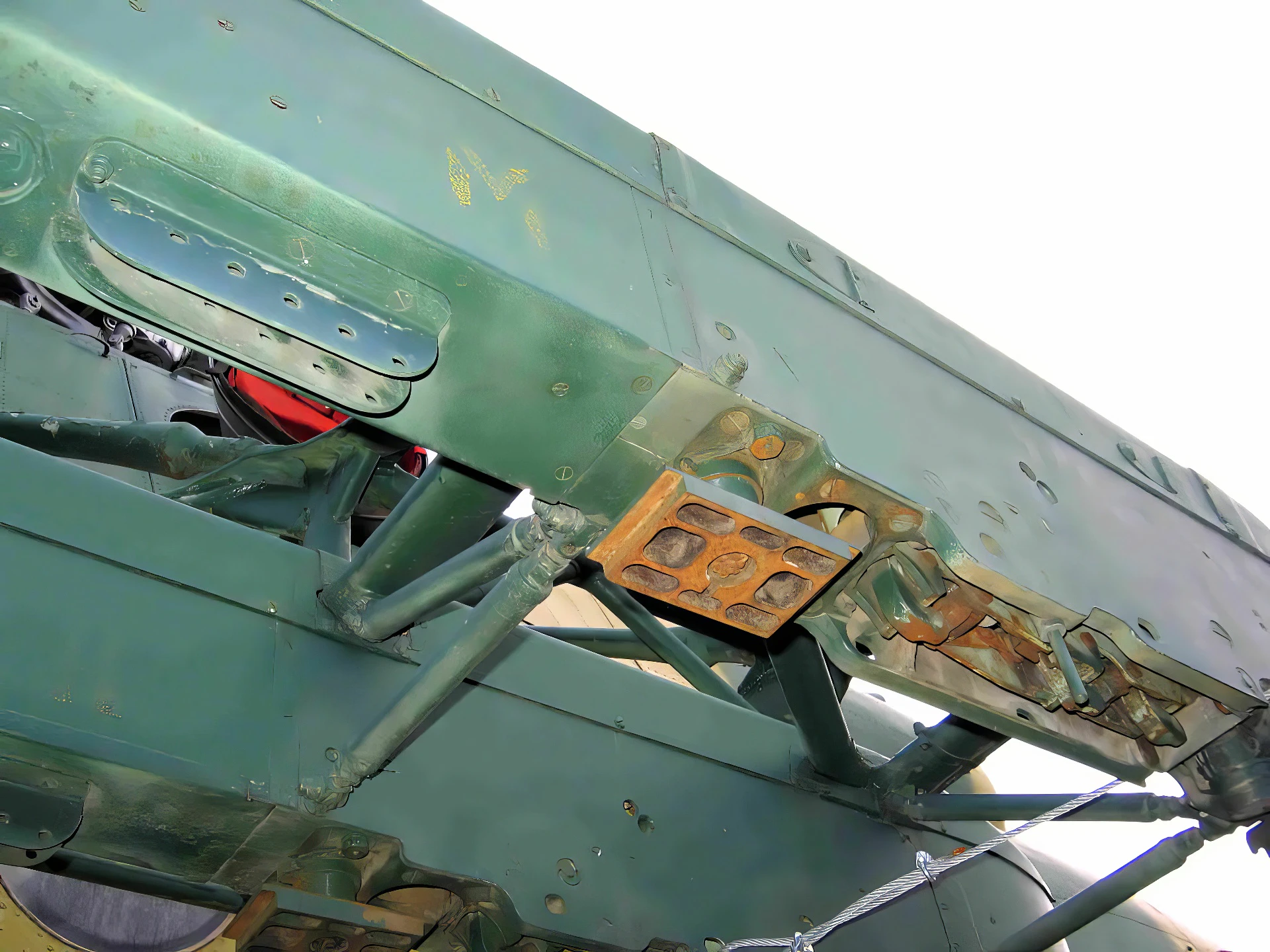

| Infantry Tank Mk.II Matilda Walk Around | |
|---|---|
| Fotograf | Don Alen |
| Lokalisering | Unknow |
| Bilder | 37 |
| Matilda Kubinka Walk Around | |
|---|---|
| Fotograf | Legion |
| Lokalisering | Unknow |
| Bilder | 45 |
Les også:


| Matilda MkII Series 4 Walk Around | |
|---|---|
| Fotograf | Vladimir Yakubov |
| Lokalisering | Jacques Littlefield-samlingen |
| Bilder | 152 |
| Matilda II Walk Around | |
|---|---|
| Fotograf | Unknow |
| Lokalisering | Unknow |
| Bilder | 57 |
| Matilda II Walk Around | |
|---|---|
| Fotograf | Unknow |
| Lokalisering | Unknow |
| Bilder | 31 |
The Matilda II (formally the Infantry Tank Mark II) was a British tank known for its exceptional armor protection during the early stages of World War II. It was the best example of the British doctrine that required Infantry Tanks to prioritize armor and close infantry support over speed, earning it the nickname “Queen of the Desert”.
Key Characteristics and Role
- Role: Designed to advance with and support infantry, prioritizing protection over mobility.
- Armor Protection: Its most famous feature was its armor, which reached up to 78 mm on the front hull. This made it virtually immune to the standard German 37 mm anti-tank guns and Italian tank fire in 1940 and 1941.
- Main Armament: It was equipped with a QF 2-Pounder (40 mm) anti-tank gun. A critical drawback was the lack of a good High-Explosive (HE) shell, limiting its effectiveness against infantry and soft targets.
- Mobility: Due to the weight of its heavy armor and a relatively weak twin-engine setup (AEC or Leyland diesel engines), its top road speed was only about 15-16 mph (24-26 km/h), leading to its obsolescence in mobile warfare.
- Service: Saw primary service in the North African Campaign (1940–1942) until countered by the formidable German 88 mm Flak gun and later, more powerful anti-tank weapons.
Matilda II (A.12) Specifications Summary
| Category | Spesifikasjon |
|---|---|
| Mannskapet | 4 (Driver, Commander, Gunner, Loader) |
| Vekt | Approx. 26.5 long tons (27 t) |
| Motor | 2 x AEC or Leyland Diesel Engines |
| Max Road Speed | 15–16 mph (24–26 km/h) |
| Max Armor Thickness | 78 mm (Front Hull) |
| Main Armament | QF 2-Pounder (40 mm) gun |
| Secondary Armament | 7.92 mm Besa machine gun |
The Matilda II’s chief design limitation was its small turret ring, which prevented engineers from installing larger guns, such as the 6-Pounder, necessary to keep up with the increasing armor of German tanks later in the war.
Views : 8399