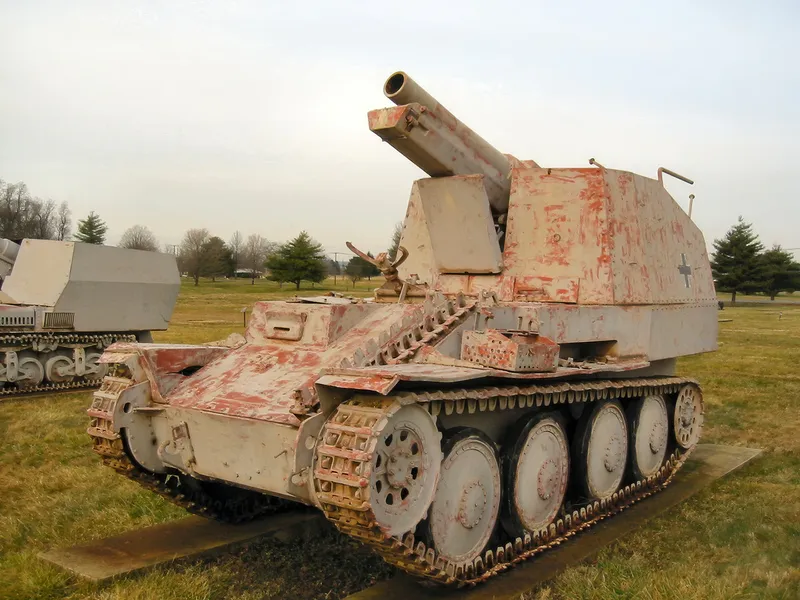
Ausf.M tinklelis – sdkfz.138/1 | |
|---|---|
| Šalies | Vokietija |
| Tipas | Savaeigis pistoletas |
| Aprašymas / kontrolė | Albumas, kuriame yra 79 nuotraukos iš SDKFZ.138/1 |
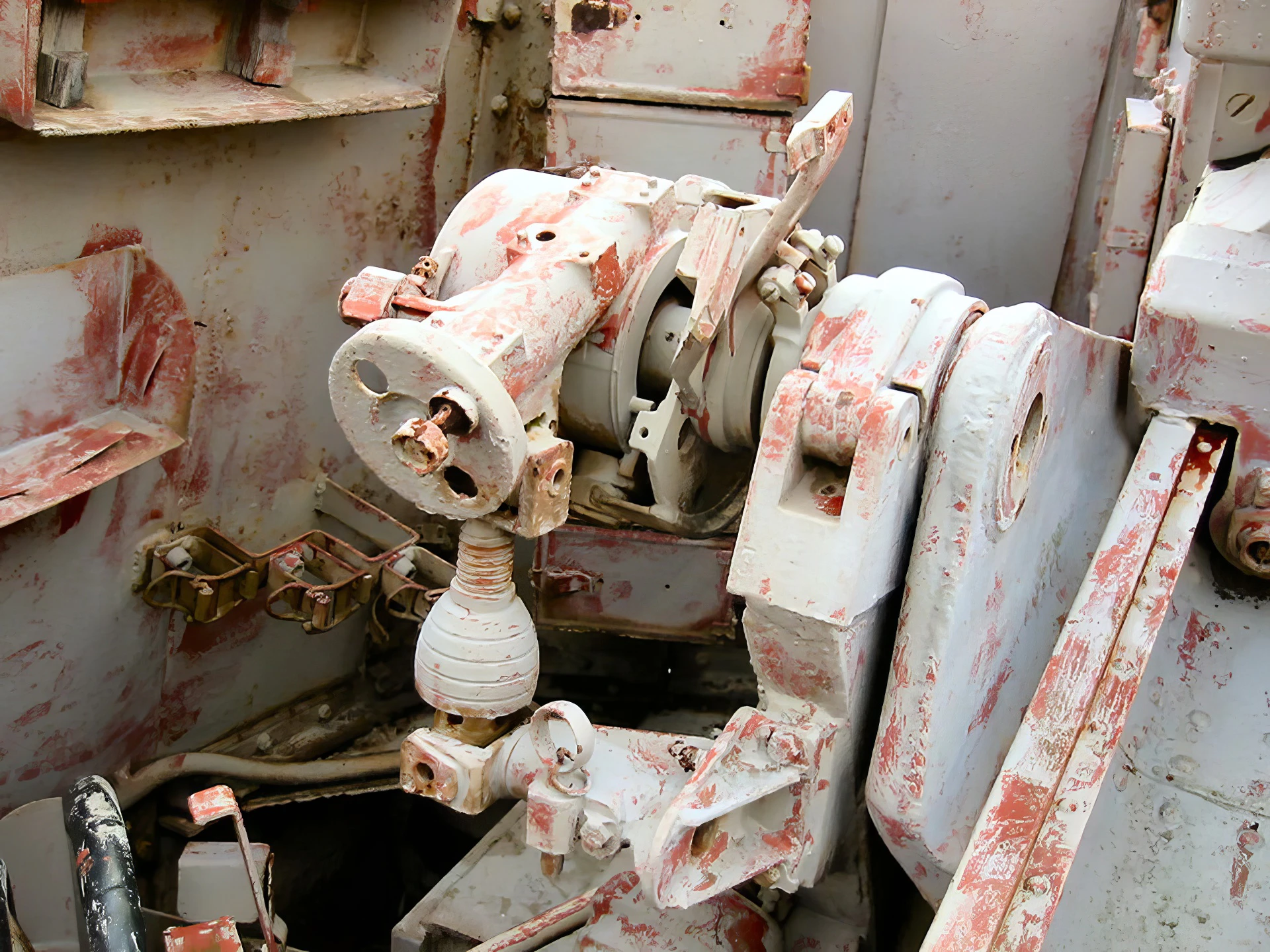
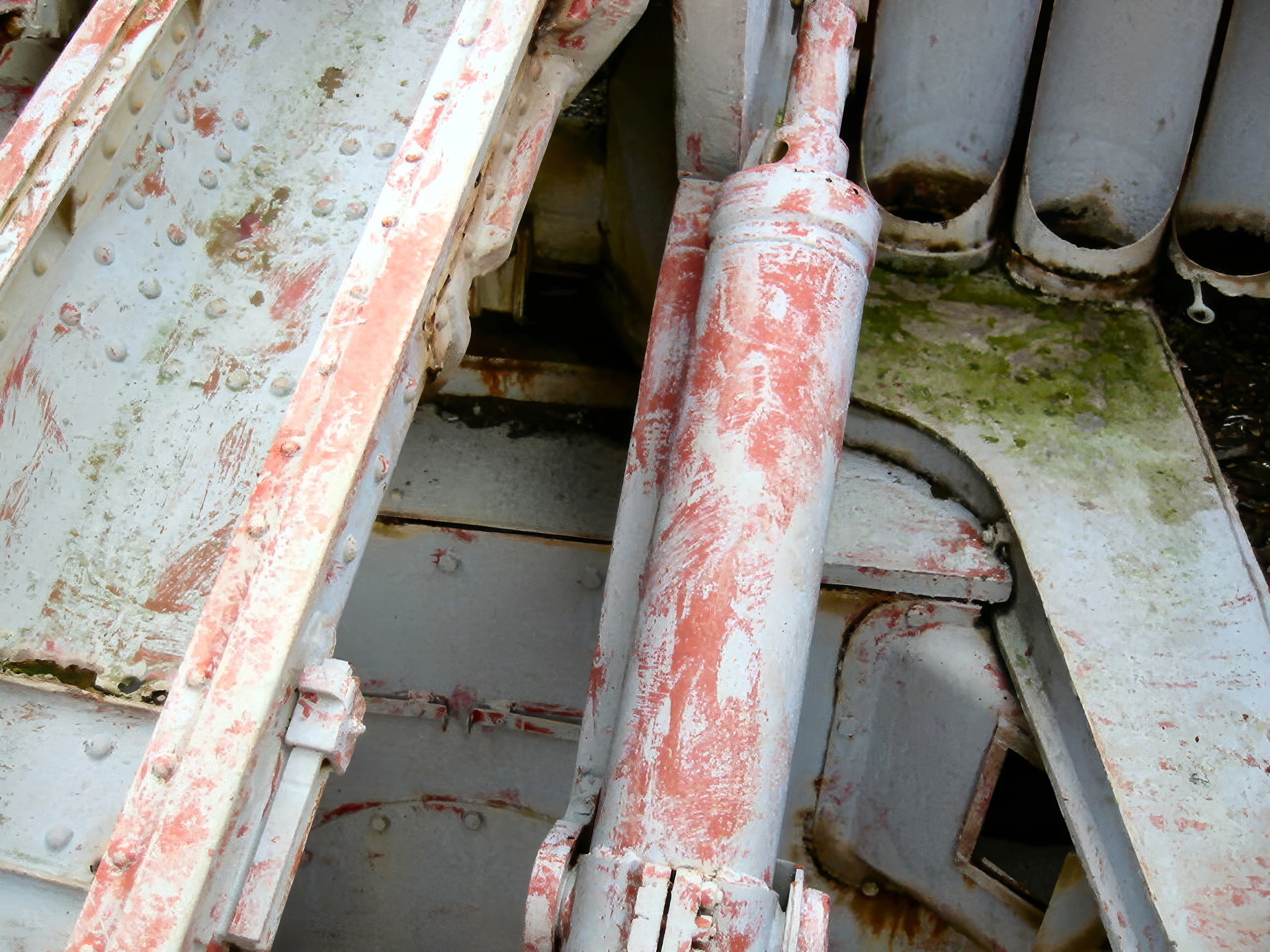
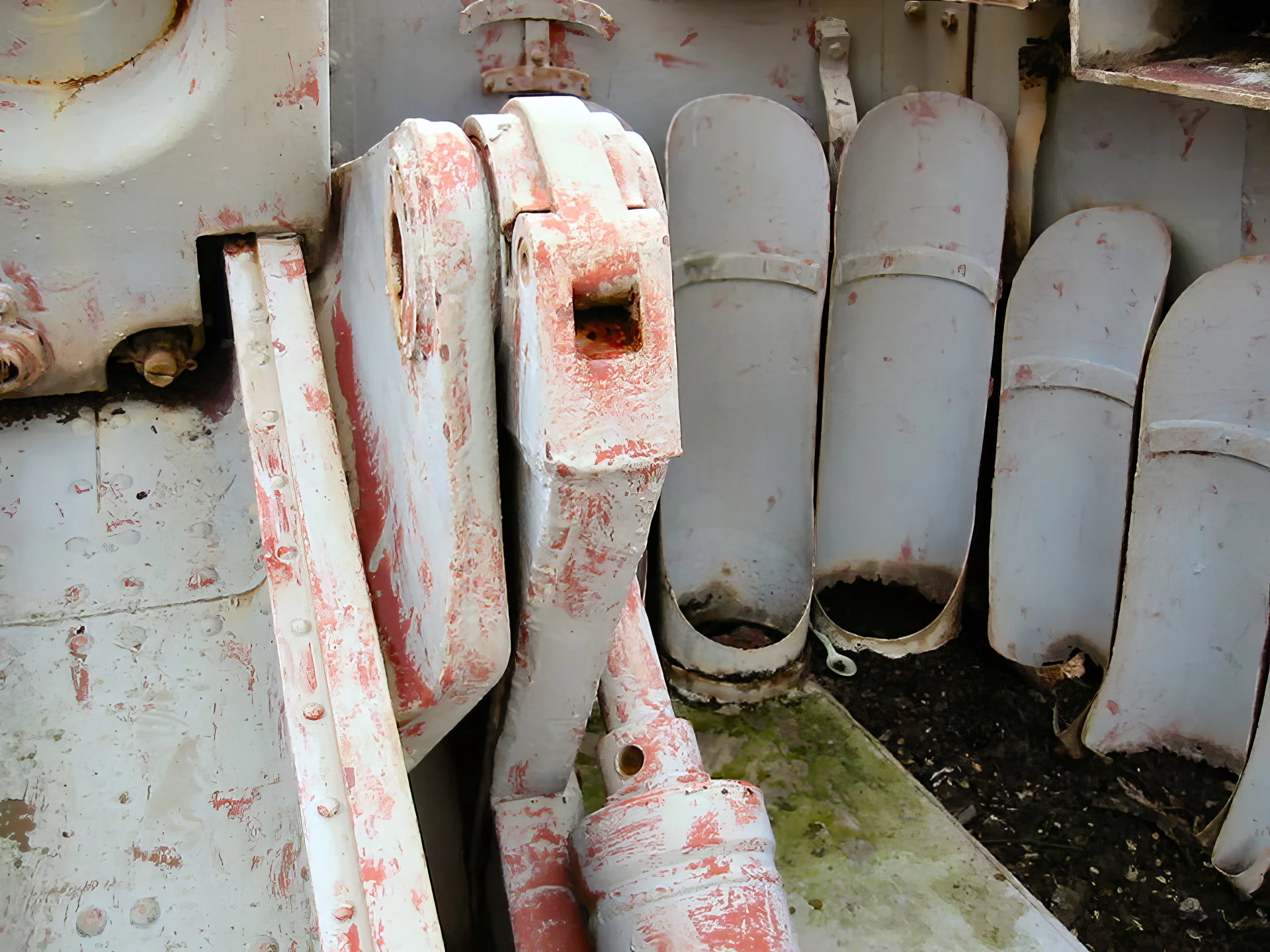
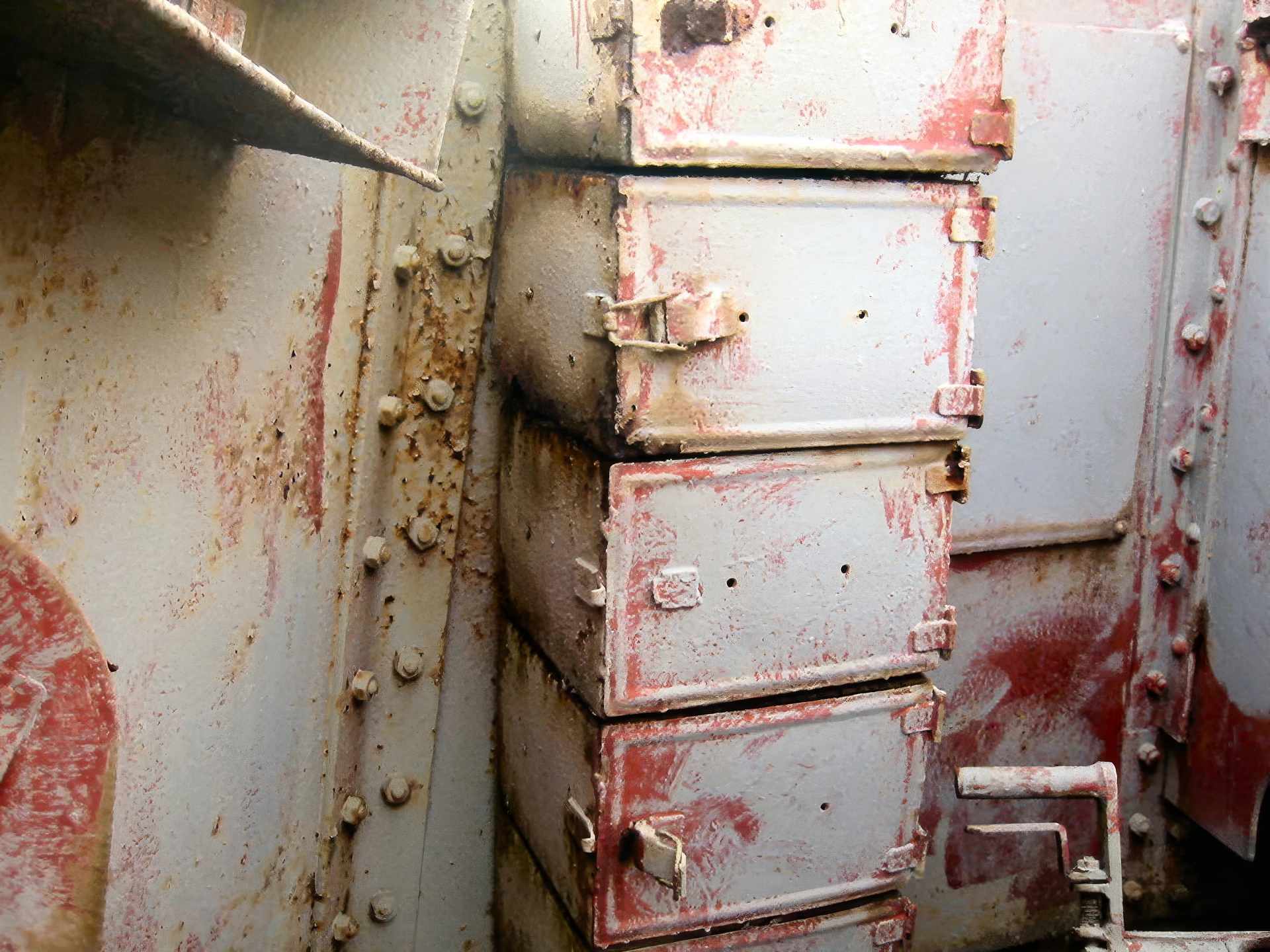
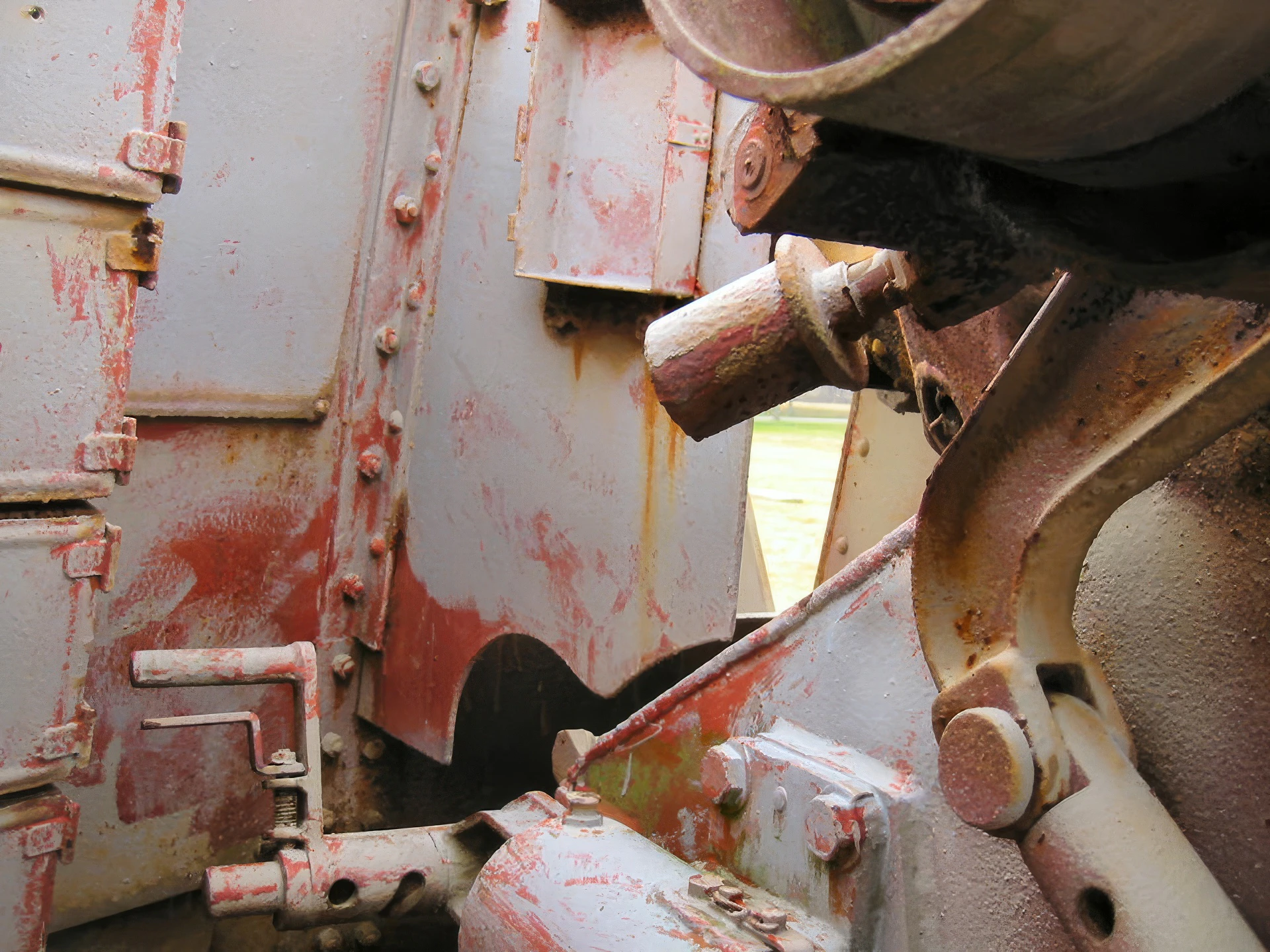
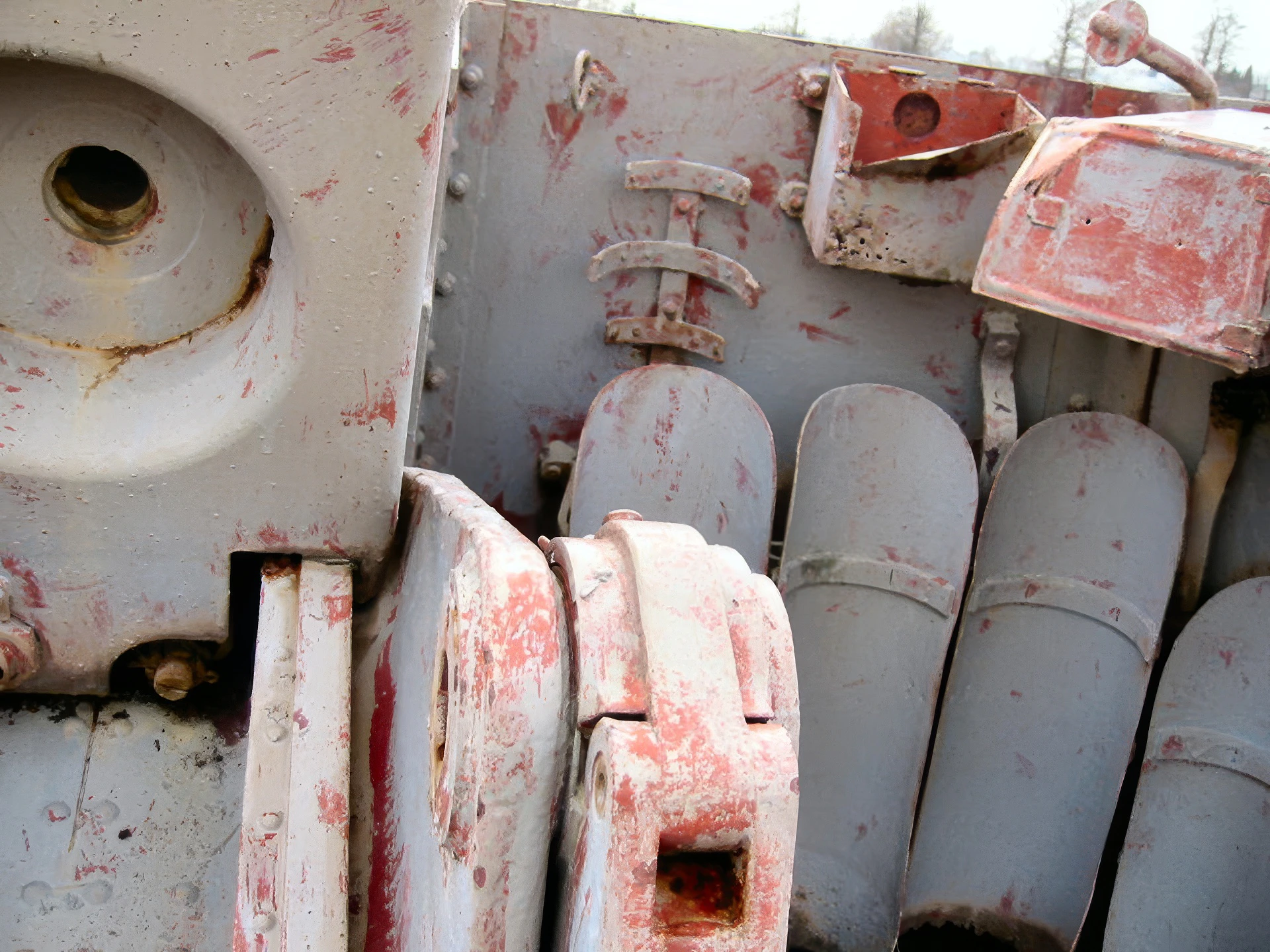
"Ausf.M Grille" nuotraukų galerija – sdkfz.138/1, Savaeigiai ginklai tinklelis (sdkfz.138/1) buvo naudojami Wehrmacht Antrojo pasaulinio karo metu. Šio tipo šarvuotos transporto priemonės buvo pagrįstos Čekijos Panzer 38(t) bako važiuokle ir įrengtu 150 mm sIG 33 pėstininkų pistoletu. Jis buvo daug sėkmingesnis nei 15 cm sIG 33 (Sf) savaeigiai ginklai auf Panzerkampfwagen I Ausf B ir 15 cm sIG 33 auf Fahrgestell Panzerkampfwagen II Bizonas.
Šaltinis: Tinklelis Vikipedijoje


Taip pat žiūrėkite:


The Mobile Infantry Hammer of the Panzer Grenadiers
2007 tinklelis (Cricket), officially designated as the 15 cm s.IG. 33/1 auf Selbstfahrlafette 38(t) (Ausf. M), was a highly effective German self-propelled heavy infantry gun deployed during the latter half of World War II. Much like the Elefant you saw earlier, the Grille was born from industrial adaptation. As the Czech-designed Panzer 38(t) light tank became hopelessly obsolete in tank-on-tank combat, its rugged and reliable chassis was repurposed to mechanically carry heavy weaponry. The Ausf. M variant represented the peak evolution of this conversion strategy. By dropping a massive, heavy-caliber 150mm infantry gun into a lightly armored, open-topped compartment, German engineers provided Panzergrenadier (motorized infantry) regiments with immediate, highly mobile firepower. Instead of waiting for towed artillery horse-teams to slowly set up, infantry commanders had a heavy bunker-busting weapon that could cruise right alongside them, dropping massive high-explosive shells directly onto enemy strongpoints.
| Attribute | Technical Specification (Grille Ausf. M Baseline Production) |
|---|---|
| Vaidmenį | Self-Propelled Heavy Infantry Gun (Geschützwagen) |
| Įgulos | 4 (Commander/Gunner, 2 Loaders, Driver) |
| Jėgainė | 1 × Praga AC 6-cylinder liquid-cooled gasoline engine (130-145 hp) |
| Maximum Speed | 35 km/h (22 mph) on roads | ~15 km/h (9 mph) cross-country |
| Combat Weight | 12 metric tons (13.2 short tons) |
| Operational Range | ~185 km (115 miles) on roads | ~130 km (81 miles) cross-country |
| Primary Armament | 1 × 15 cm s.IG. 33/1 heavy infantry gun (15 to 18 rounds carried on board) |
| Secondary Armament | 1 × 7.92mm MG 34 machine gun (stowed inside the cabin for crew defense) |
| Armor Thickness | Hull Front: 15mm | Superstructure Shielding: 10mm to 15mm (Open-topped) |
| Production Total | 282 units built from scratch (plus 93 ammunition carriers) between 1943 and 1944 |
Design Engineering: The Mid-Engine Shift and Ammunition Scarcity
- The Radical Rear-Compartment Shift (Ausf. M): The earliest version of the Grille (the Ausf. H) simply bolted the heavy 150mm gun onto the front of a standard tank chassis, making it dangerously front-heavy. The perfected Ausf. M completely reimagined the vehicle by shifting the Praga engine from the rear into the dead center of the hull. This allowed engineers to build a unified, spacious fighting compartment at the very rear of the vehicle, lowering the center of gravity and providing the gun crew with a much safer, more ergonomic platform to manipulate heavy artillery.
- The Massive Gun in a Tiny Frame: The 15 cm s.IG. 33 was the largest weapon ever systematically fitted onto a light tank chassis. The gun alone weighed nearly 4,000 pounds. To absorb the violent, chassis-shattering recoil of firing a 150mm shell, the vehicle relied on a heavily reinforced gun mount welded straight into the hull frame. This combination gave mobile infantry unprecedented firepower, though it severely restricted the gun’s manual side-to-side aim (traverse) to just a few degrees left and right.
- The Severe Ammunition Crisis: Because the 150mm shells and their accompanying powder casings were so incredibly bulky, the tiny Grille could physically hold only 15 to 18 rounds on board at any given time. In a heavy fire fight, a crew could completely shoot through their entire ammunition stock in less than ten minutes. To fix this logistical nightmare, Germany built 93 identical vehicles without the big gun, using them as armored **Munitionspanzer** (ammunition carriers) that drove directly behind the Grilles to constantly replenish their shells.
- Paper-Thin Splinter Shielding: The Grille was never designed to trade blows with enemy tanks. Its upper armor plates were only 10mm to 15mm thick—just enough to deflect basic infantry rifle bullets and flying shrapnel from nearby artillery explosions. Furthermore, the completely open-topped superstructure left the crew utterly exposed to bad weather, overhead mortar blasts, and hand grenades tossed down by hidden infantry ambushes during close-quarters fighting.
Operational History: Urban Demolition and the Desperate Retreats of the Late War
- Direct-Fire Urban Demolition: While traditional artillery fired indirectly at targets miles away over hills, the Grille was heavily prized for direct-fire support. During intense city fighting on the Eastern Front, a Grille would roll straight down a street, point its massive short barrel directly at a sniper-infested stone building or concrete machine-gun bunker, and blast it to rubble from just a few hundred yards away, saving the lives of the advancing German infantry.
- The Elite Panzergrenadier Shield: Grille batteries were assigned exclusively to the heavy gun companies of elite Panzer and Panzergrenadier divisions, including veteran formations like the *Grossdeutschland* and various Waffen-SS armored units. This gave motorized infantry regiments their own organic “pocket artillery” that didn’t answer to the main artillery command, ensuring lightning-fast response times when an infantry advance ground to a halt.
- The High Mobility Rescue: Unlike towed artillery pieces that took hours to pack up and dig out of the mud, the tracked Grille could fire a volley of heavy shells and drive away under its own power within 60 seconds. This “shoot-and-scoot” capability was vital during the massive, chaotic defensive retreats across Russia and France in 1944, allowing the crews to ambush advancing Allied scout teams and escape before enemy counter-battery fire could pinpoint their position.
- The Battle of the Bulge and Beyond: During the winter of 1944, Grilles were pushed into heavy service during the Ardennes Offensive (Battle of the Bulge). While they performed well in the dense snow-covered forests, severe fuel shortages and a total lack of replacement parts crippled the fleet. By early 1945, the remaining Grilles were fought to extinction in the collapsing pockets of Germany and Czechoslovakia, with most being blown up by their own crews after running entirely out of fuel.
Peržiūrėta: 5159
Taip pat galite pamatyti:
 B-52D Stratofortress – pasivaikščiojimas
 Gaz MM – Vaikščioti aplink
 128mm FlaK 40 Zwilling – Vaikščioti aplink
 B-17G Skraidanti tvirtovė Vol3 – WalkAround
 Char T-34/76 Modèle 1941 vol2 – WalkAround
 FV 4101 Vežimas – pasivaikščiokite
 2 Pounder anti-tankas gun Carrier - Vaikščioti aplink
 BM-13 Katioucha – pasivaikščiokite