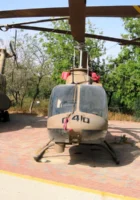
Campana 206B

Bell 206

PaeseUsa
RuoloElicottero multiuso
Primo volo8 dicembre 1962
Costruito7300+

Le Campana 206 is a family of two-bladed, single- and twin-engined helicopters, manufactured by Bell Helicopter at its Mirabel, Quebec, plant. Originally developed as the Bell YOH-4 for the United States Army’s Light Observation Helicopter program, it was not selected by the Army. Bell redesigned the airframe and successfully marketed the aircraft commercially as the five-place Bell 206A JetRanger. The new design was eventually selected by the Army as the OH-58 Kiowa. Bell also developed a seven-place LongRanger, which was later offered with a twin-engined option as the TwinRanger, while Tridair Helicopters offers a similar conversion of the LongRanger called the Gemini ST. The ICAO-assigned model designation “B06” is used on flight plans for the JetRanger and LongRanger, and the designation “B06T” is used for the twin-engined TwinRangers.

fonte: Bell 206 su Wikipedia
Continua a leggere

Visualizzazioni : 1347

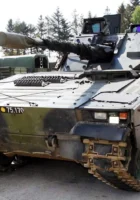
CV9035

Combat Vehicle 90

PaeseSvezia
RuoloVeicolo da combattimento di fanteria
ProdottoDal 1993 ad oggi
Costruito1280

Le Veicolo da combattimento 90 (CV90; Sw. Stridsfordon 90, Strf90) è una famiglia di veicoli da combattimento cingolati svedesi progettati dalla Defence Materiel Administration svedese (Försvarets Materielverk, FMV), Hägglunds e Bofors durante la metà degli anni 1980 ai primi anni 1990, entrando in servizio in Svezia a metà degli anni 1990. Il design della piattaforma CV90 si è continuamente evoluto in passi da Mk0 all'attuale MkIV con progressi tecnologici e in risposta alle mutevoli esigenze del campo di battaglia. La versione svedese del veicolo da combattimento principale della fanteria (IFV) è dotata di una torretta Bofors equipaggiata con un cannone automatico Bofors da 40 mm. Le versioni da esportazione sono dotate di torrette Hägglunds serie E, armate con un cannone automatico Mk44 da 30 mm o un cannone automatico Bushmaster da 35 mm.

fonte: Veicolo da combattimento 90 su Wikipedia

Continua a leggere

Views : 1927

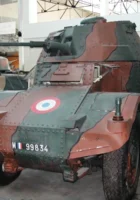
Panhard AMD 178

Panhard AMD 178

PaeseFrancia
RuoloAutoblindo
Prodotto1937-1940
Costruito729 versione A + versione 414 B

The Panhard 178 (officially designated as Automitrailleuse de Découverte Panhard modèle 1935, 178 being the internal project number at Panhard) or “Pan-Pan” was an advanced French reconnaissance 4×4 armoured car that was designed for the French Army Cavalry units before World War II. It had a crew of four and was equipped with an effective 25 mm main armament and a 7.5 mm coaxial machine gun. A number of these vehicles were in 1940 taken over by the Germans after the Fall of France and employed as the Panzerspähwagen P204 (f) for some months after the armistice of June production continued for the benefit of Germany. After the war a derived version, the Panhard 178B, was again taken into production by France.

fonte: Panhard AMD 178 su Wikipedia

Continua a leggere

Visualizzazioni : 1570

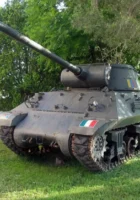
M36 Jackson

M36 tank destroyer

PaeseUsa
RuoloCacciacarri
Prodotto1944-1945
Costruito2,324

Le Cacciacarri M36, formally 90 mm Gun Motor Carriage, M36, was an American tank destroyer used during World War II. The M36 combined the hull of the M10 tank destroyer, which used the M4 Sherman’s reliable chassis and drivetrain combined with sloped armor, and a new turret mounting the 90 mm gun M3. Conceived in 1943, the M36 first served in combat in Europe in October 1944, where it partially replaced the M10 tank destroyer. It also saw use in the Korean War, where it was able to defeat any of the Soviet tanks used in that conflict. Some were supplied to South Korea as part of the Military Assistance Program and served for years, as did re-engined examples found in Yugoslavia, which operated into the 1990s. Two remained in service with the Republic of China Army at least until 2001. The vehicle is also known under the unofficial nickname Jackson, but this designation appears to be a postwar appellation that was never used by the US Army.

fonte: Cacciacarri M36 su Wikipedia

Continua a leggere

Punti di vista: 1485

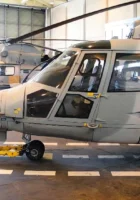
Eurocopter AS565 Panther

Eurocopter AS565 Panther

PaeseFrancia
RuoloElicottero militare di utilità
Primo volo28 febbraio 1984
CostruitoInconsapevole

Le Eurocopter AS565 Panther è la versione militare dell'elicottero bimotore multiuso Eurocopter AS365 Dauphin. Il Panther è utilizzato per una vasta gamma di ruoli militari, tra cui assalto al combattimento, supporto di fuoco, guerra anti-sottomarino, guerra anti-superficie, ricerca e soccorso ed evacuazione medica.

fonte: Eurocopter AS565 Panther su Wikipedia

Continua a leggere

Visualizzazioni : 946

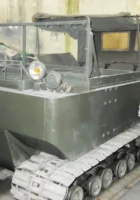
Donnola M29C Tipo A

M29 Weasel

PaeseUsa
RuoloVeicolo cingolato
Equipaggio4
CostruitoInconsapevole

Le Donnola M29 is a World War II tracked vehicle designed for operation in snow. Built by Studebaker, Weasels were also used in sandy, muddy, and desert terrains, including towing loads over terrain wheeled vehicles could not negotiate as in the US Marine invasions of Iwo Jima and Okinawa. Standard M29s were semi-amphibious, but with a very low freeboard. A M29C Water Weasel version was produced with fore and aft buoyancy cells and twin rudders. Capable of operating in inland waterways, it however also saw limited action in surf conditions in the Pacific Theatre.

fonte: Donnola M29 su Wikipedia

Continua a leggere

Views : 1927

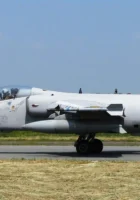
AMX AMI EBFS

AMX International AMX

PaeseItalia e Brasile
RuoloAerei da attacco al suolo
Primo volo15 maggio 1984
Costruito200

Le AMX Internazionale AMX is a ground-attack aircraft jointly developed by Brazil and Italy. The AMX is designated A-11 Ghibli by the Italian Air Force and A-1 by the Brazilian Air Force. The Italian name, “Ghibli”, is taken from the hot dry wind of the Libyan desert. During the early 1970s, Italian manufacturer Aermacchi conducted a design study on a prospective light ground attack aircraft, which was given the designation of MB-340. During early 1977, the Italian Air Force issued a requirement for 187 new-build strike fighters, which were to replace its existing Aeritalia G.91 in the close air support. During 1980, the Brazilian government announced that they intended to participate in the program in order to provide a replacement for the Aermacchi MB-326. As a result of a memorandum between Italy and Brazil for the type’s joint development in 1981, AMX International, an Italian-Brazilian joint venture, was formed to develop, manufacture, and market the aircraft.

fonte: AMX International AMX su Wikipedia

Continua a leggere

Numero visioni : 1971

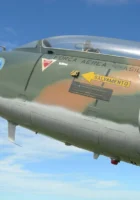
Aermacchi MB-326

Aermacchi MB-326

PaeseItalia
RuoloAddestratore avanzato/Attacco leggero
Primo volo10 dicembre 1957
Costruito800

Le Aermacchi · o Macchi MB-326 è un jet da addestramento militare leggero progettato in Italia. Originariamente concepito come addestratore biposto, sono state prodotte anche versioni da attacco leggero monoposto e biposto. È uno degli aerei di maggior successo commerciale del suo genere, acquistato da oltre 10 paesi e prodotto su licenza in Australia, Brasile e Sud Africa. Ha stabilito molti record di categoria, tra cui un record di altitudine di 56.807 piedi (17.315 m) il 18 marzo 1966. Più di 800 MB-326 furono costruiti tra il 1961 e il 1975.

fonte: Aermacchi MB-326 su Wikipedia

Continua a leggere

Visualizzazioni : 643

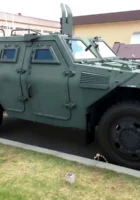
Komatsu LAV

Komatsu LAV

PaeseGiappone
RuoloAuto scout corazzata
Prodotto1997-2019
Costruito1937

Le Komatsu · light armored vehicle is a Japanese military vehicle first produced in 2002. Currently used exclusively by the Japan Self-Defense Force (JSDF), it has seen use in the Iraq War. It is built by Komatsu Ltd. Defense Systems Division in Komatsu, Ishikawa, Japan. Komatsu’s factory designator for the vehicle is KU50W. The exterior resembles the Panhard VBL, used by the French army, but the LAV has 4 doors and a large cabin for carrying soldiers. The LAV can also be transported by air in vehicles like the CH-47J and the C-130H.

fonte: Komatsu LAV su Wikipedia

Continua a leggere

Visualizzazioni: 921

Aerfer Sagittario 2

Aerfer Sagittario 2

PaeseItalia
RuoloPrototipo di caccia
Primo volo19 maggio 1956
Costruito2

Le Aerfer Sagittario 2 Il Sagittario era un prototipo di aereo da caccia leggero monoposto interamente in metallo costruito in Italia dalla Aerfer, destinato a servire come intercettore o aereo leggero di supporto tattico. Volò per la prima volta nel 1956, divenne il primo aereo italiano a rompere la barriera del suono in volo controllato quando raggiunse Mach 1,1 durante un'immersione da 13.725 m (45.000 piedi).

fonte: Aerfer Sagittario 2 su Wikipedia

Continua a leggere

Punti di vista : 687