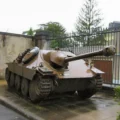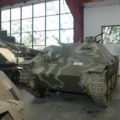
Jagdpanzer 38(t) - Hetzer- Sdkfz.138/2 | |
|---|---|
| Ország | Németország |
| Típus | Tartályvadász |
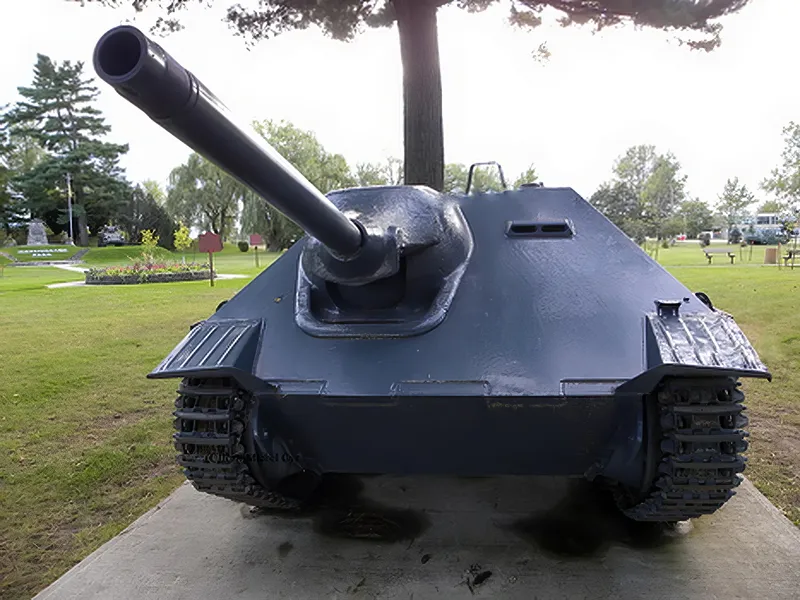
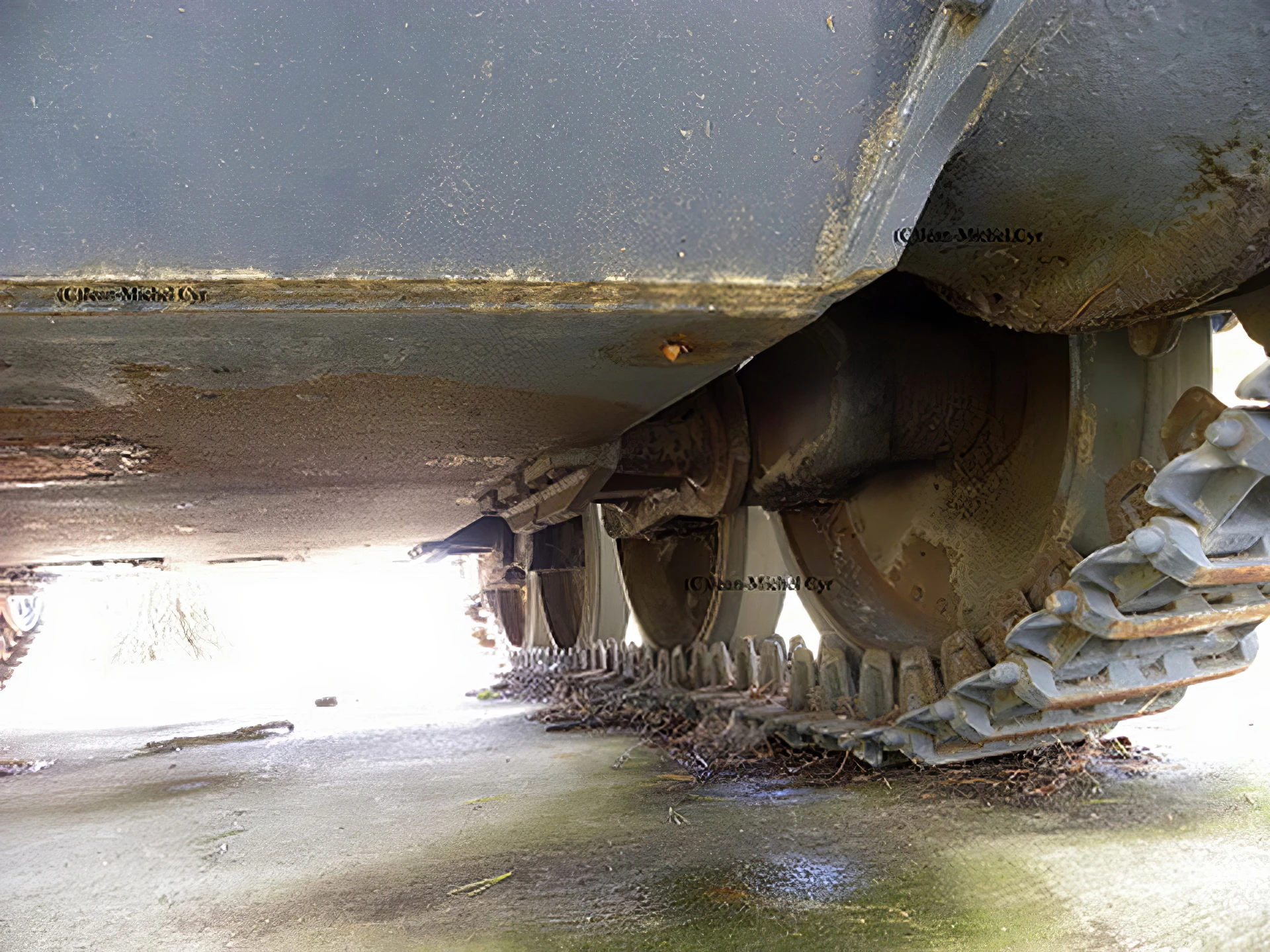
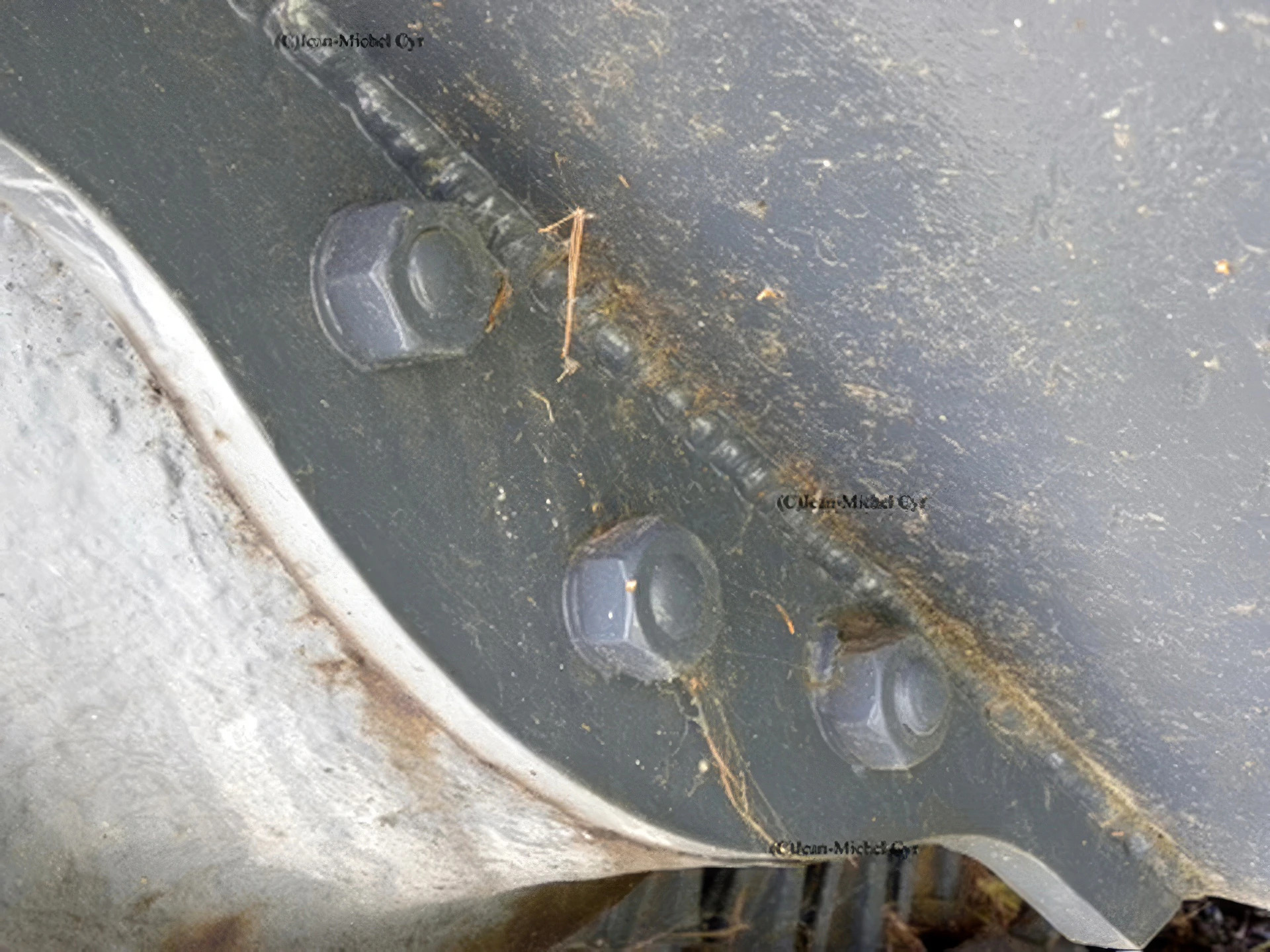
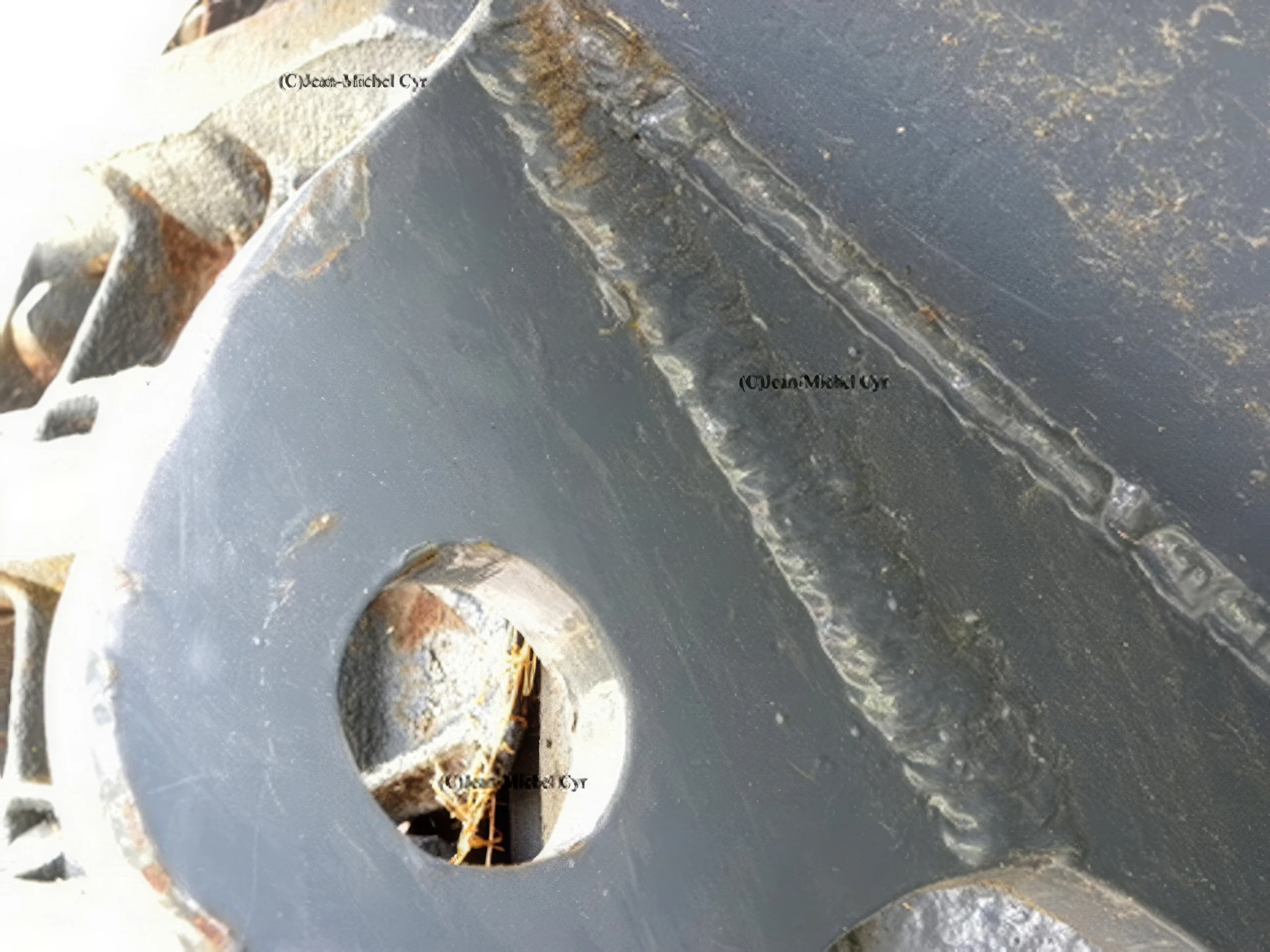
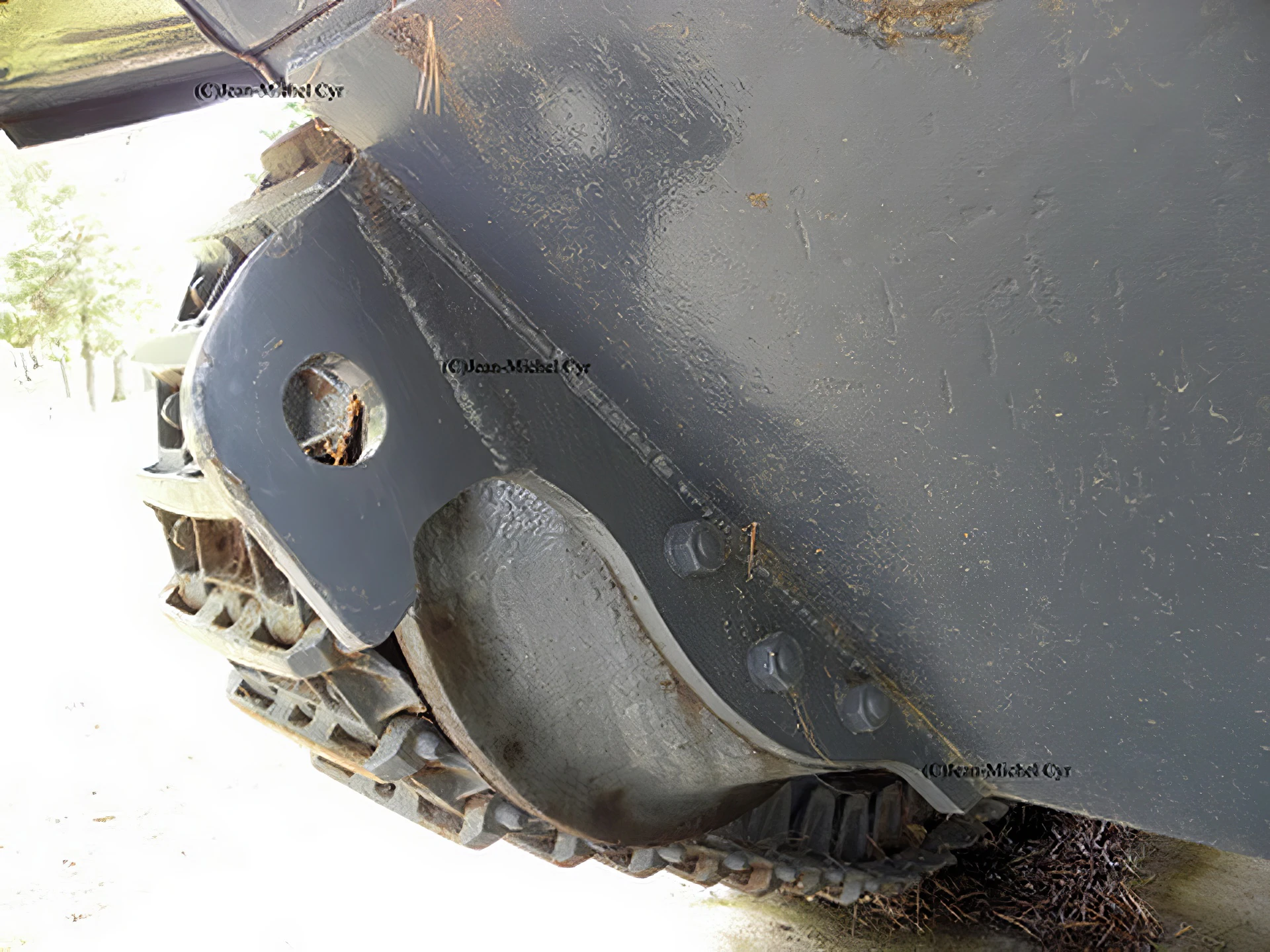
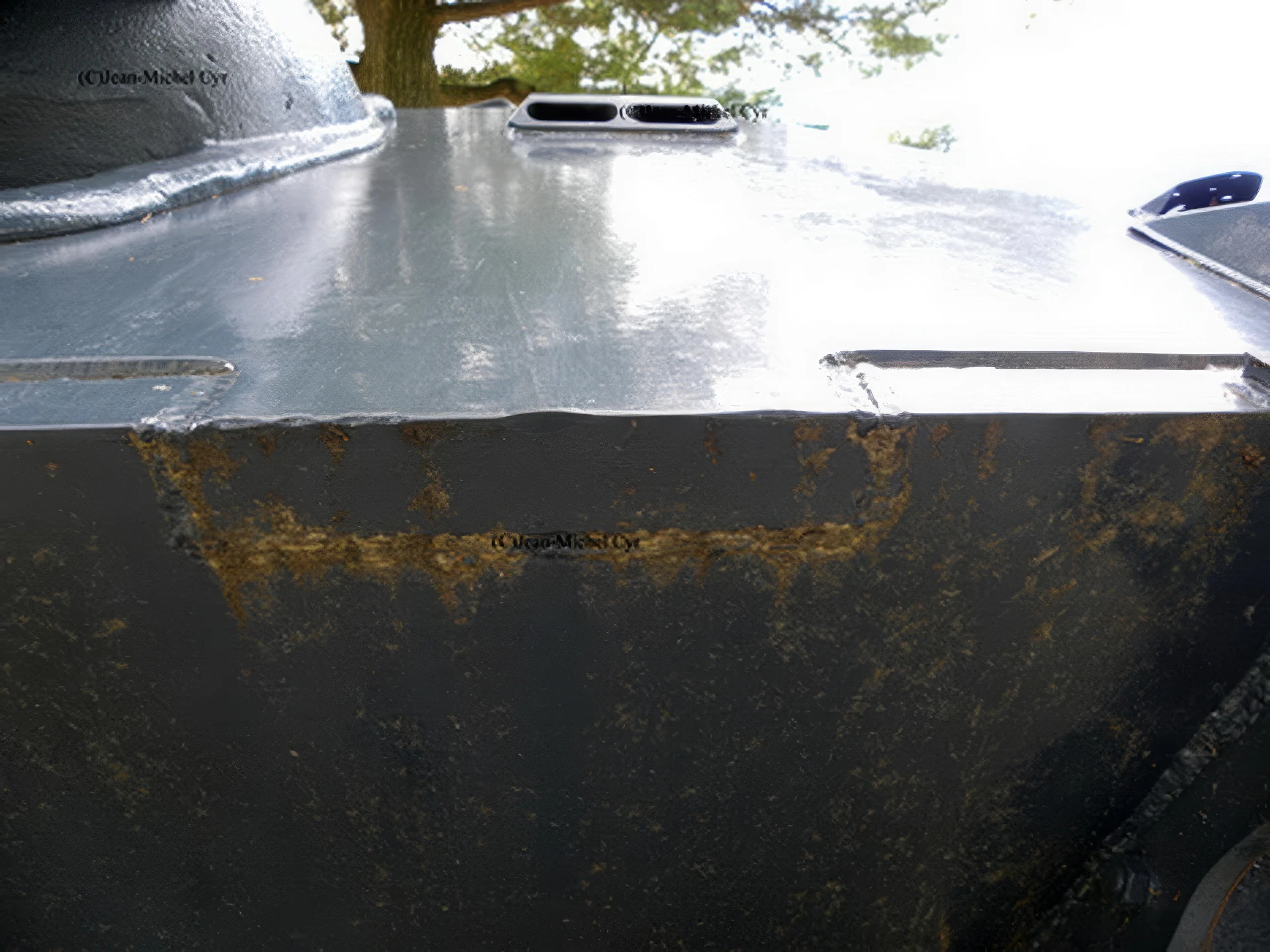
Fotógaléria egy Jagdpanzer 38(t)-ről – Hetzer, Le Jagdpanzer 38 éves(Sd.Kfz. 138/2) ismert Hetzer (que l’on peut traduire approximativement par Traqueur ou Trappeur en allemand), est un chasseur de char allemand de la Seconde Guerre mondiale, construit sur la base du châssis du Panzer 38(t) tchèque. Le Jagdpanzer 38(t) est conçu pour obtenir un meilleur rapport qualité-prix que les ambitieux programmes des jagdpanthers et jagdtigers de la même période. Basé sur un châssis existant et fiable, il évite ainsi les problèmes mécaniques inhérents aux blindés plus lourds. Entièrement fermé, il est protégé par une plaque blindée frontale supérieure de 60 mm d’épaisseur inclinée à 60°; par une plaque frontale inférieure de 60 mm inclinée à 40°; les côtés ont 20 mm d’épaisseur inclinés à 40°; le blindage du toit est de 8 mm; le blindage du plancher de 10 mm; le blindage arrière est de 2 mm. Armé d’un canon Pak 7,5 cm 39/L48 capable de percer 97 mm de blindage incliné à 0° à 1000 mètres, et d’une MG 34 sur le toit, télécommandée de l’intérieur du véhicule, ce blindé est destiné à la chasse à l’affût, profitant de son petit gabarit pour se cacher, et se retirant après avoir effectué son tir, il ne peut en aucun cas engager de longs combats à découvert, au risque d’être rapidement détruit, son blindage ne le protégeant véritablement que contre la ferraille du champ de bataille.
Forrás: Hetzer sur Wikipédia
| Jagdpanzer 38(t) – Hetzer G13-D | |
|---|---|
| Fotós | Ismeretlen |
| Lokalizáció | Ismeretlen |
| Fénykép | 125 |
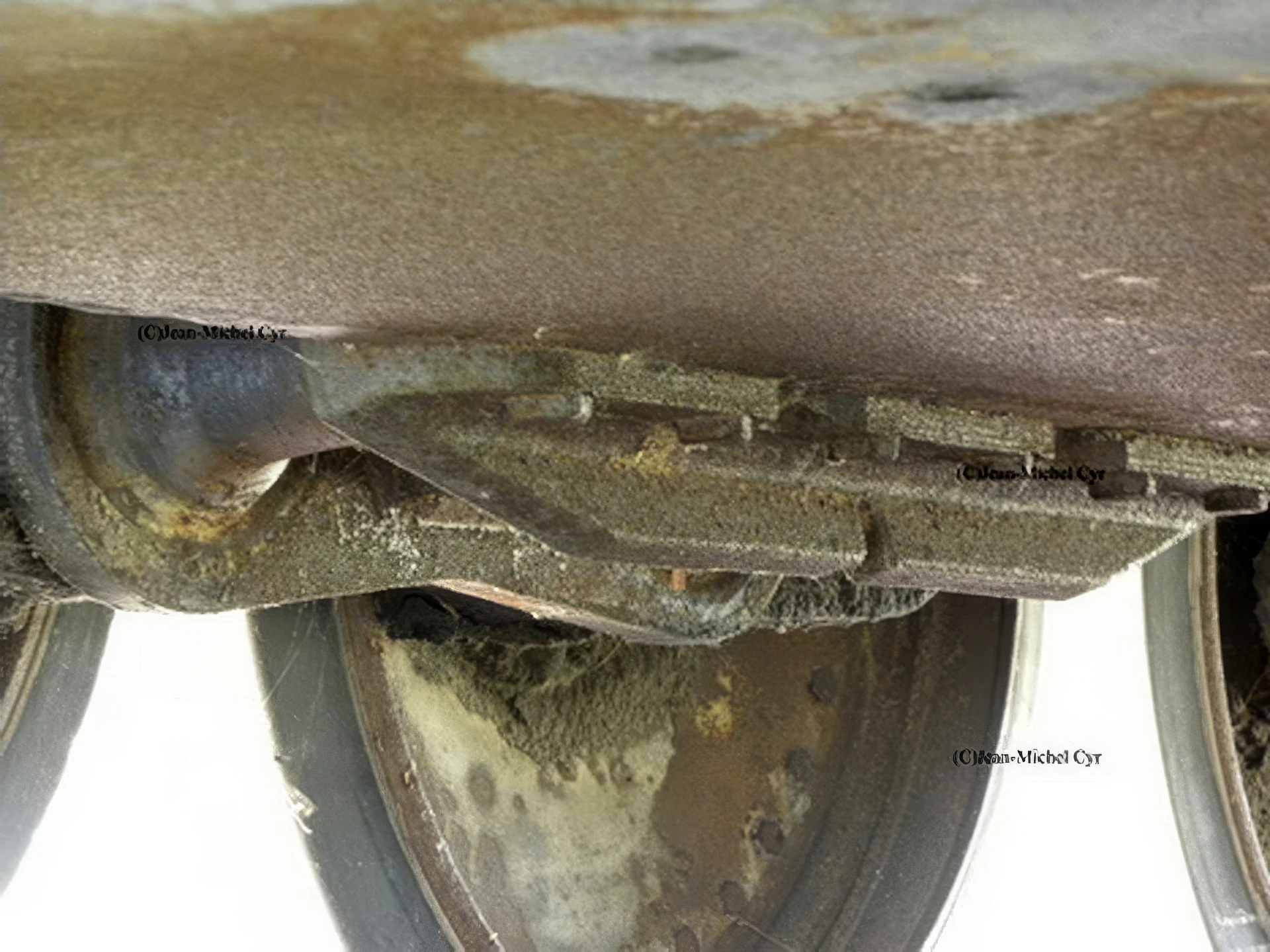
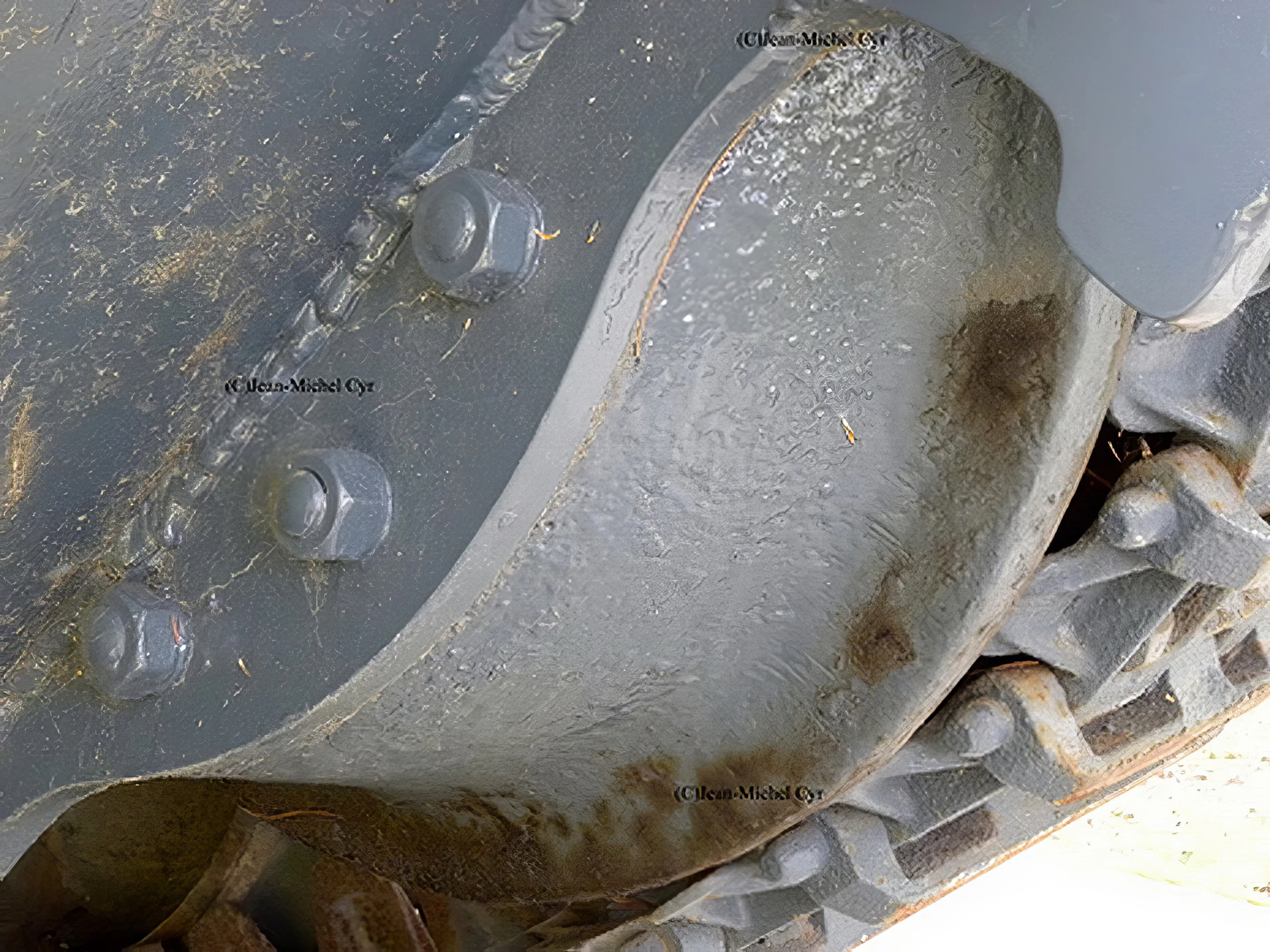
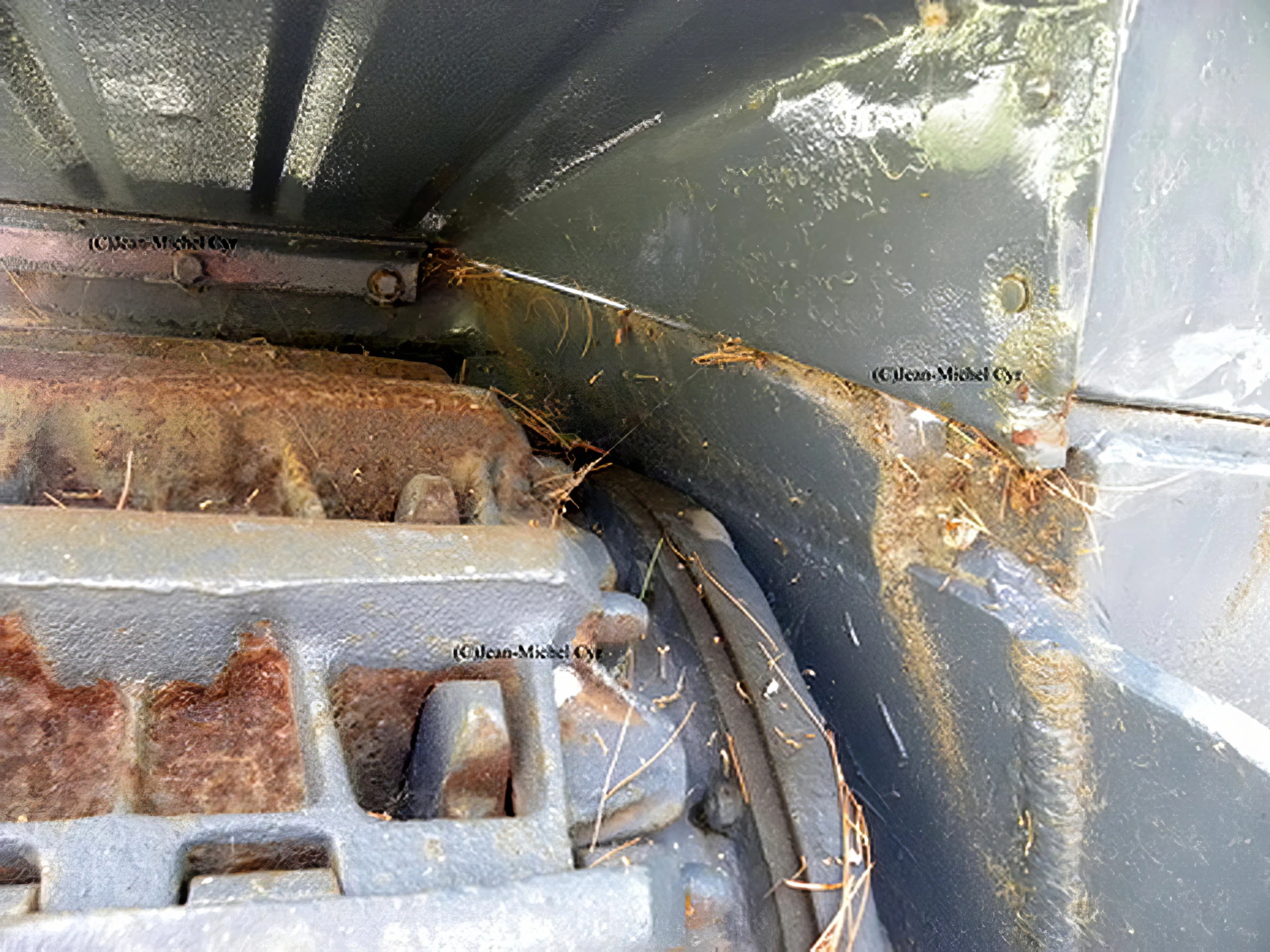
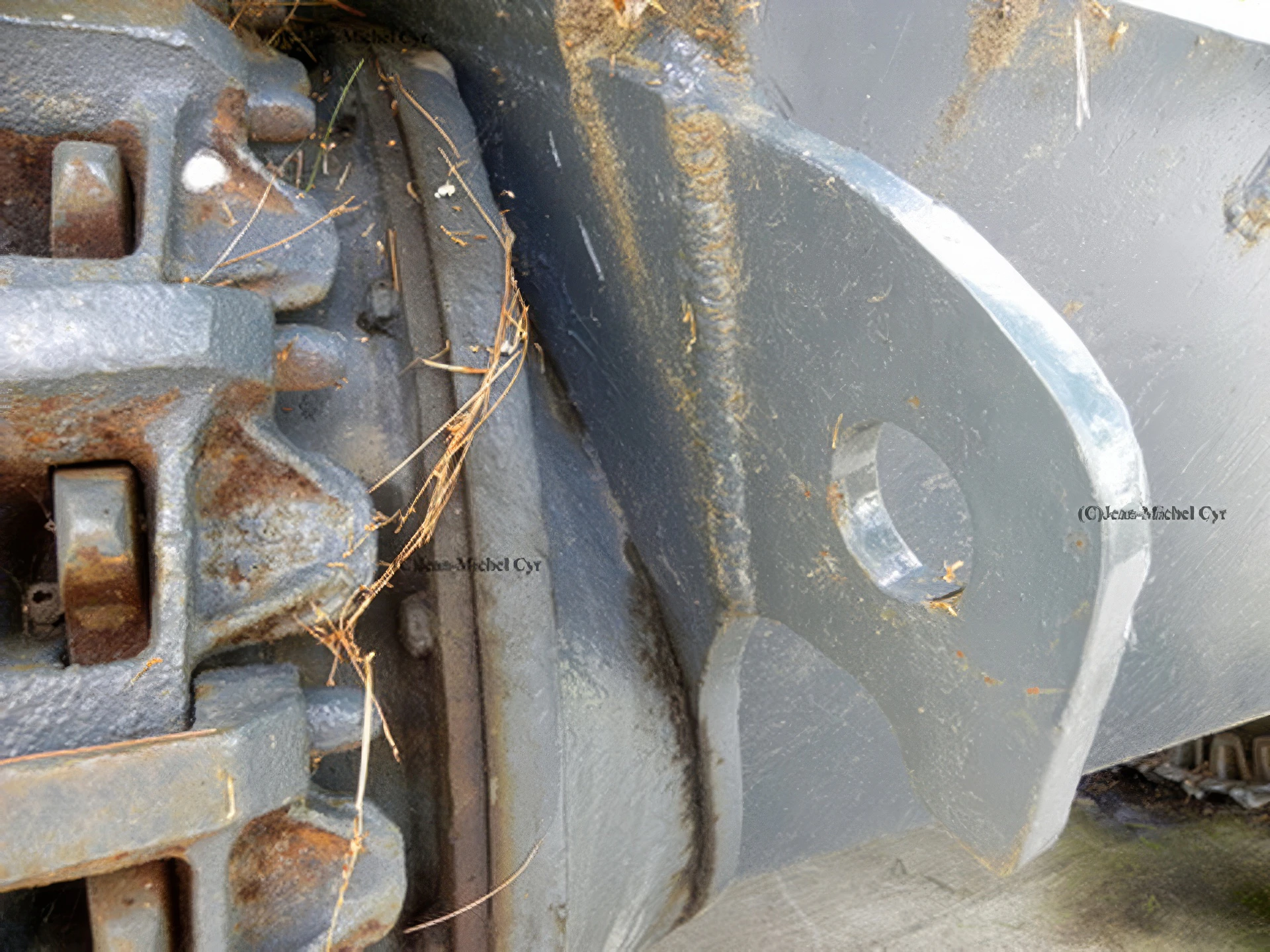

Lásd még:


The Deadly Pocket Ambusher and Its Swiss Afterlife
A Jagdpanzer 38, colloquially known as the Hetzer (Baiter/Chaser), was a highly successful, mass-produced German light tank destroyer of late World War II. Much like the Grille you just saw, the Hetzer was born out of an urgent need to maximize the reliable, Czech-designed Panzer 38(t) chassis as standard tanks became obsolete. By discarding a rotating turret and welding together sharply sloped armor plates into a compact, low-profile casemate, German engineers created an incredibly cheap, mass-producible, and stealthy ambush weapon. However, its tiny size came with severe ergonomic penalties, making it a nightmare for its crew to operate. Post-war, the design achieved a fascinating second life: Czechoslovakia continued production, selling 158 modified units to Switzerland. Operating under the Swiss designation G13, these vehicles incorporated numerous mechanical upgrades, serving as the backbone of Swiss armored defensive strategy well into the Cold War era.
| Attribute | Technical Specification (Jagdpanzer 38 Hetzer vs. Swiss G13 Variant) |
|---|---|
| Szerepet | Light Tank Destroyer (Jagdpanzer) |
| Legénység | 4 (Commander, Gunner, Loader, Driver) |
| Hajtómű | Hetzer: Praga EPA 6-cylinder gasoline (150 hp) Swiss G13: Saurer-Arbon CT2D 4-cylinder Diesel (150 hp) retrofitted to most units |
| Maximum Speed | Roads: ~40 km/h (25 mph) | Cross-Country: ~15 km/h (9 mph) |
| Combat Weight | ~15.75 metric tons (17.3 short tons) |
| Operational Range | ~180 km (112 miles) on roads | ~130 km (80 miles) cross-country |
| Primary Armament | Hetzer: 1 × 7.5 cm Pak 39 L/48 gun (41 rounds) Swiss G13: 1 × 7.5 cm StuK 40 L/48 gun (fitted with a prominent muzzle brake) |
| Secondary Armament | Hetzer: 1 × 7.62mm MG 34 on a roof-mounted remote station Swiss G13: 1 × 7.5mm Fla-MG 38 anti-aircraft machine gun on the roof |
| Armor Thickness | Upper Front Plate: 60mm angled at 60° (providing ~120mm effective thickness) | Sides: 20mm |
| Production Total | Hetzer: ~2,827 units (1944–45) | G13: 158 post-war units built for Switzerland |
Design Engineering: Geometric Invulnerability and the Reversed Interior
- Geometric Armor Protection: The Hetzer’s frontal armor was only 60mm thick, which was relatively light for 1944. However, engineers sloped the plate back at a radical 60-degree angle. By forcing incoming enemy shells to travel through the steel at a severe slant, this geometry doubled the effective thickness to over 120mm. It also caused heavy Soviet and Allied rounds to slide and bounce harmlessly off the vehicle’s nose, making it nearly invulnerable from the front against standard medium tanks.
- The Ergonomic Nightmare Interior: To accommodate the 7.5cm Pak 39 gun in such a tiny vehicle, the entire weapon assembly had to be shifted over to the far right side of the hull. This forced a completely backwards internal layout that broke standard German tank design rules. The loader, gunner, and driver were crammed in a straight line down the left side, meaning the loader had to awkwardly reach *across* the hot breech block of the gun to shove shells in from the wrong side, severely slowing down the vehicle’s rate of fire.
- The Rooftop Remote-Controlled Machine Gun: Because the Hetzer lacked a traditional turret or a bow-mounted hull machine gun, it was highly vulnerable to flanking infantry. To counter this, engineers mounted a machine gun on the roof that could be fired and spun a full 360 degrees from inside the safety of the hull via a mechanical periscope and trigger linkage system. The only drawback was its small drum magazine; once it ran empty, a crew member still had to pop their torso out of the hatch into enemy fire to physically reload it.
- The Swiss G13 Mechanical Rebirth: When Switzerland bought their post-war batch of tank destroyers (the G13), they systematically corrected the original German design flaws. They swapped the cramped crew positions, putting the commander in a better tactical spot. They replaced the scarce Pak 39 with a 7.5cm StuK 40 gun utilizing a muzzle brake to soften recoil, and eventually pulled out the finicky Praga gasoline engine in favor of a highly reliable, fuel-efficient Swiss Saurer diesel engine.
Operational History: Late-War Ambush Scourge and Cold War Alpine Sentinels
- The Invisible Ambusher of 1944: The Hetzer excelled in defensive, low-visibility warfare. Standing at less than 7 feet tall, a Hetzer could easily hide behind low hedgerows, inside dense crop fields, or within the rubble of collapsed buildings. In an ambush, it would sit completely motionless with its engine off, wait for an Allied tank column to drive past, and pick off the lead and rear vehicles at close range before the enemy could even pinpoint where the shots were coming from.
- The Catastrophic Blind Right Flank: While the Hetzer was incredibly dangerous when facing a target directly, it was a sitting duck if flanked. Because the main gun was bolted to the far right side of the chassis, it could only turn 11 degrees to the right but a measly 5 degrees to the left. If an enemy tank managed to maneuver onto the Hetzer’s right side, the gunner could not physically turn the weapon far enough to fire back, forcing the driver to violently spin the entire vehicle on its tracks to face the threat.
- The Swiss Alpine Defensive Strategy: The Swiss military integrated the G13 directly into their *National Redoubt* defensive doctrine. If a foreign power invaded Switzerland during the Cold War, the Swiss military planned to retreat into the jagged, heavily fortified Alps. The compact G13s were perfectly suited for this terrain; they were light enough to cross narrow mountain bridges, small enough to hide inside rock-carved bunkers, and highly lethal when firing down into narrow valley passes where invading tank columns would be bottlenecked.
- An Incredible Operational Lifespan: While the original German Hetzers were entirely destroyed or scrapped at the end of WWII in 1945, the Swiss G13 variants proved to be extraordinarily durable and cheap to maintain. The Swiss army kept the G13 in active, frontline service until 1973. Even after their official retirement from combat duties, many were kept in running condition for training exercises, meaning this basic 1944 Czech-German design successfully operated as a viable military asset for nearly three decades.
Views : 8114
![Jagdpanzer 38(t) Hetzer [Késői gyártási változat] – AKADÉMIA 13230](https://www.net-maquettes.com/wp-content/uploads/2012/03/Jagdpanzer-38t-Hetzer-Late-Production-Version-–-ACADEMY-13230-120x120.jpg)