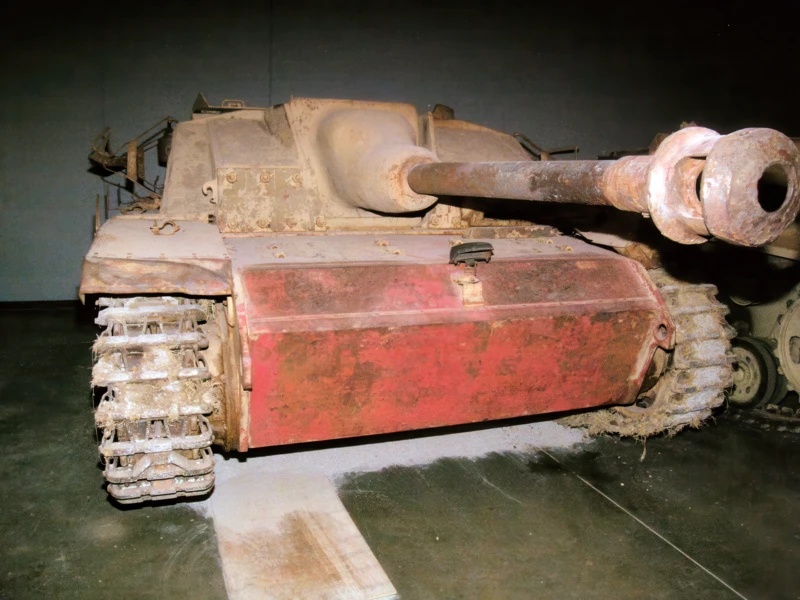
Sturmgeschütz III – Stug III | |
|---|---|
| Pays | Germany |
| Role | Chasseur de char |
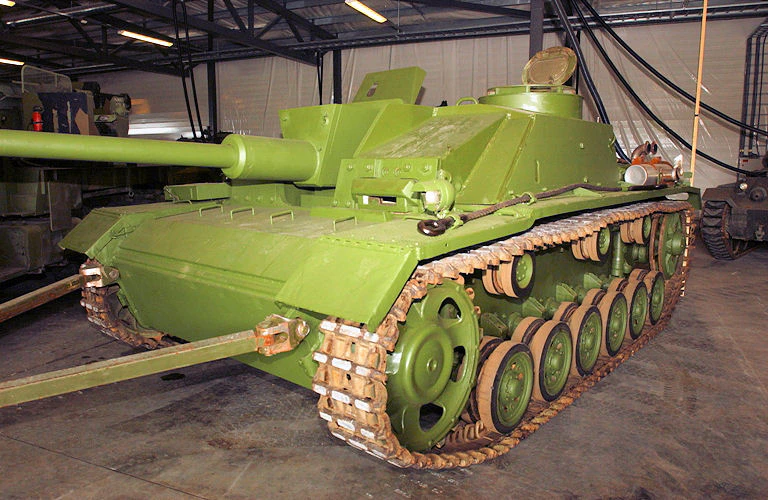
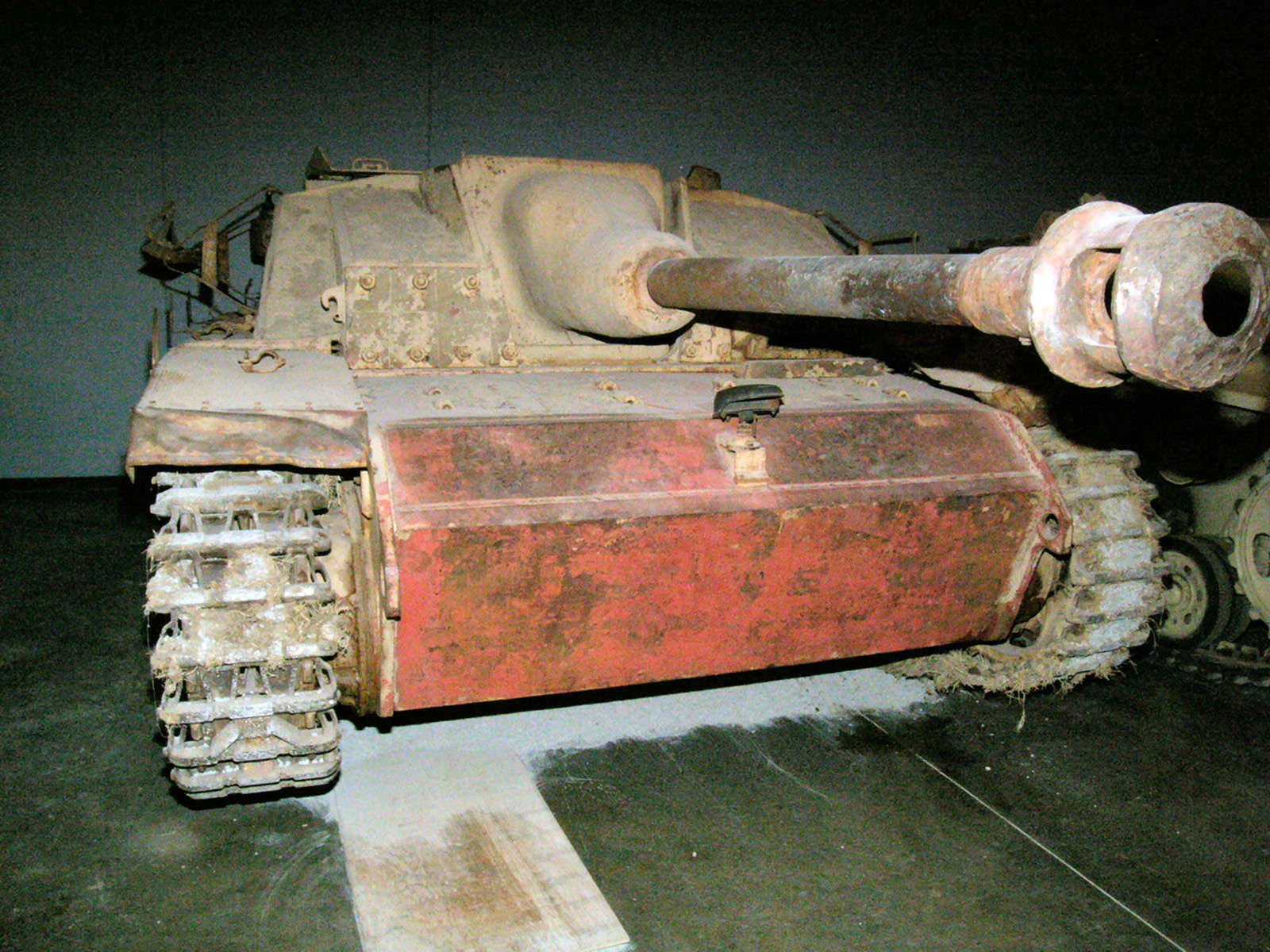
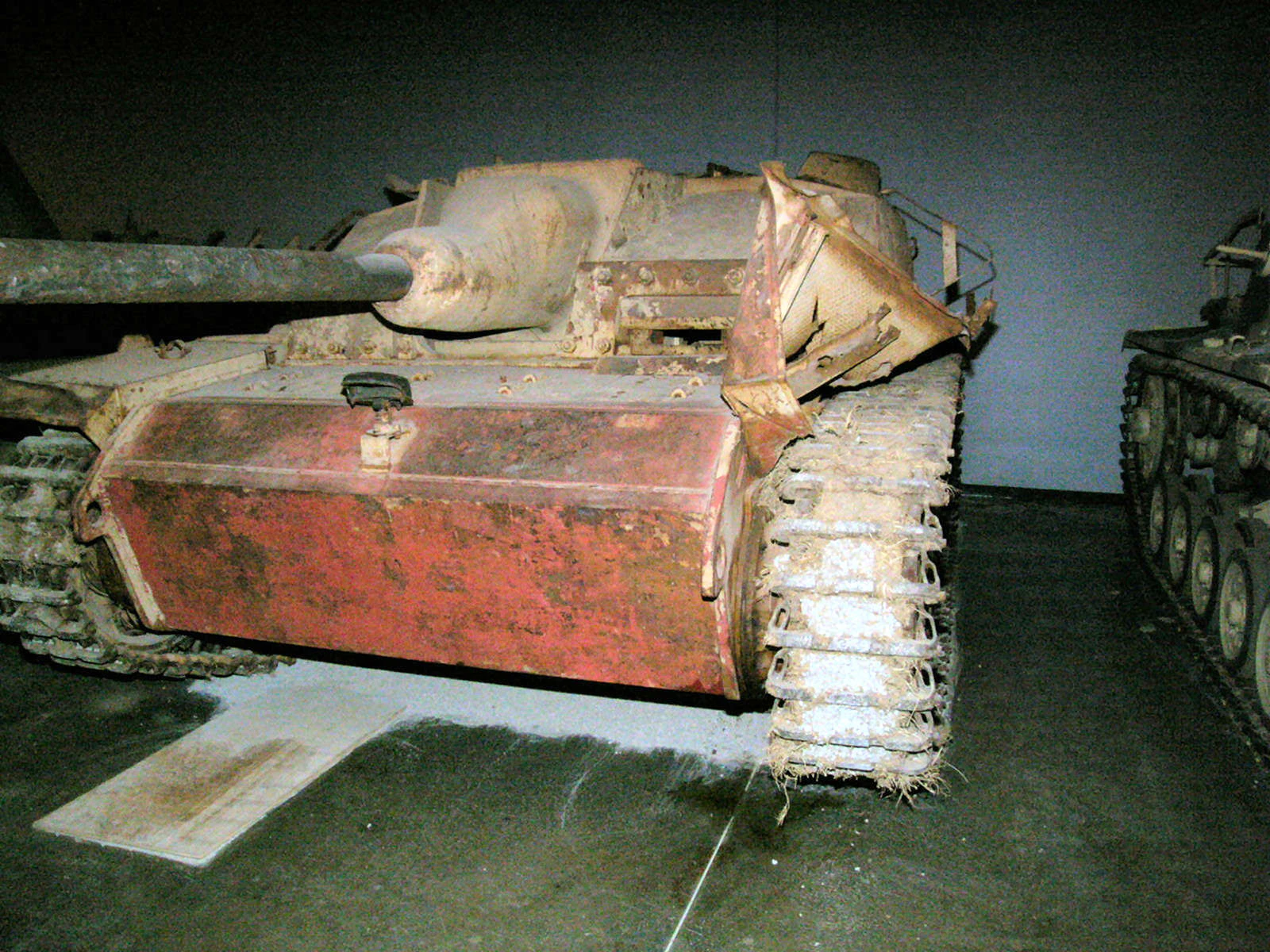
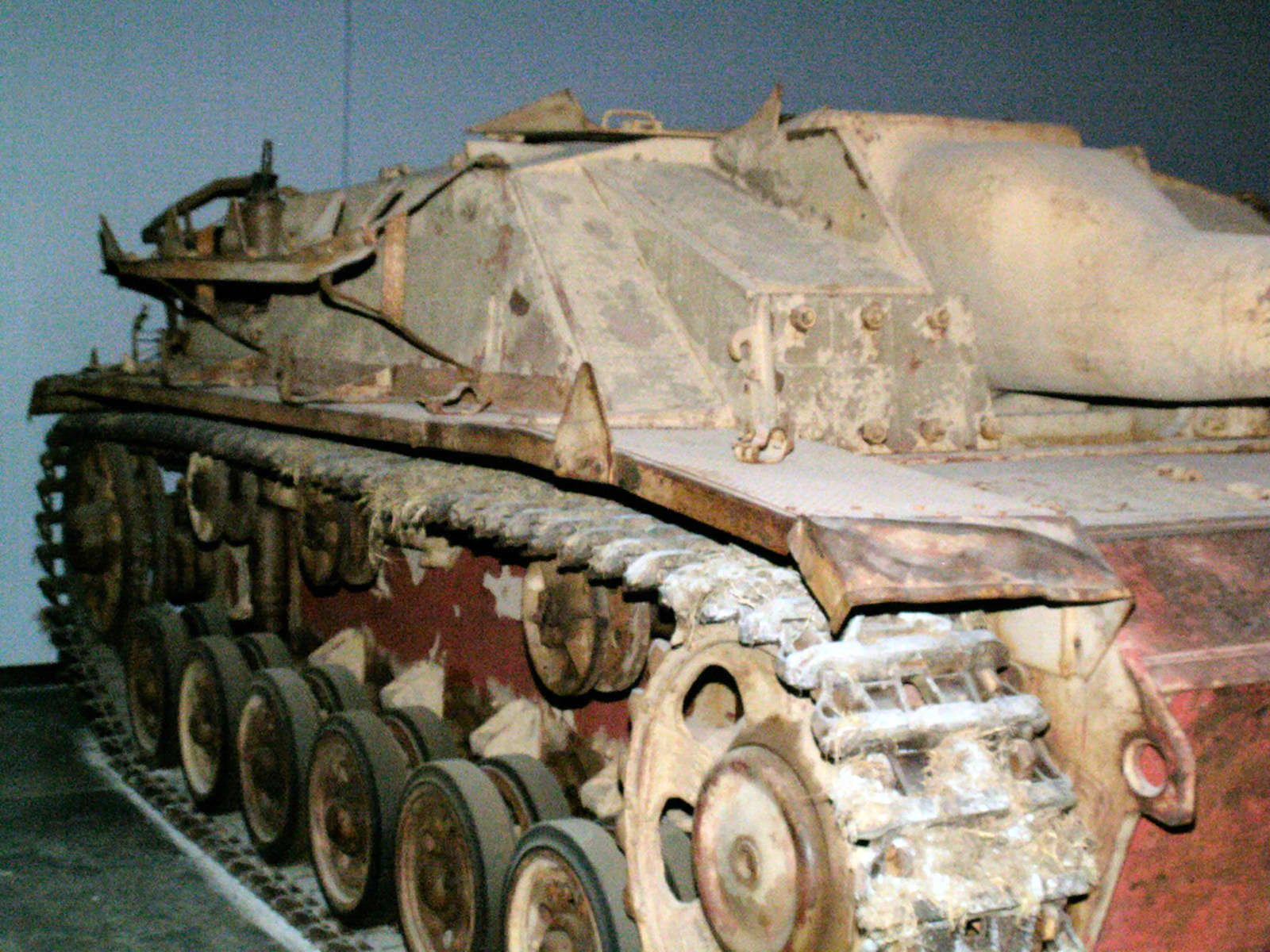
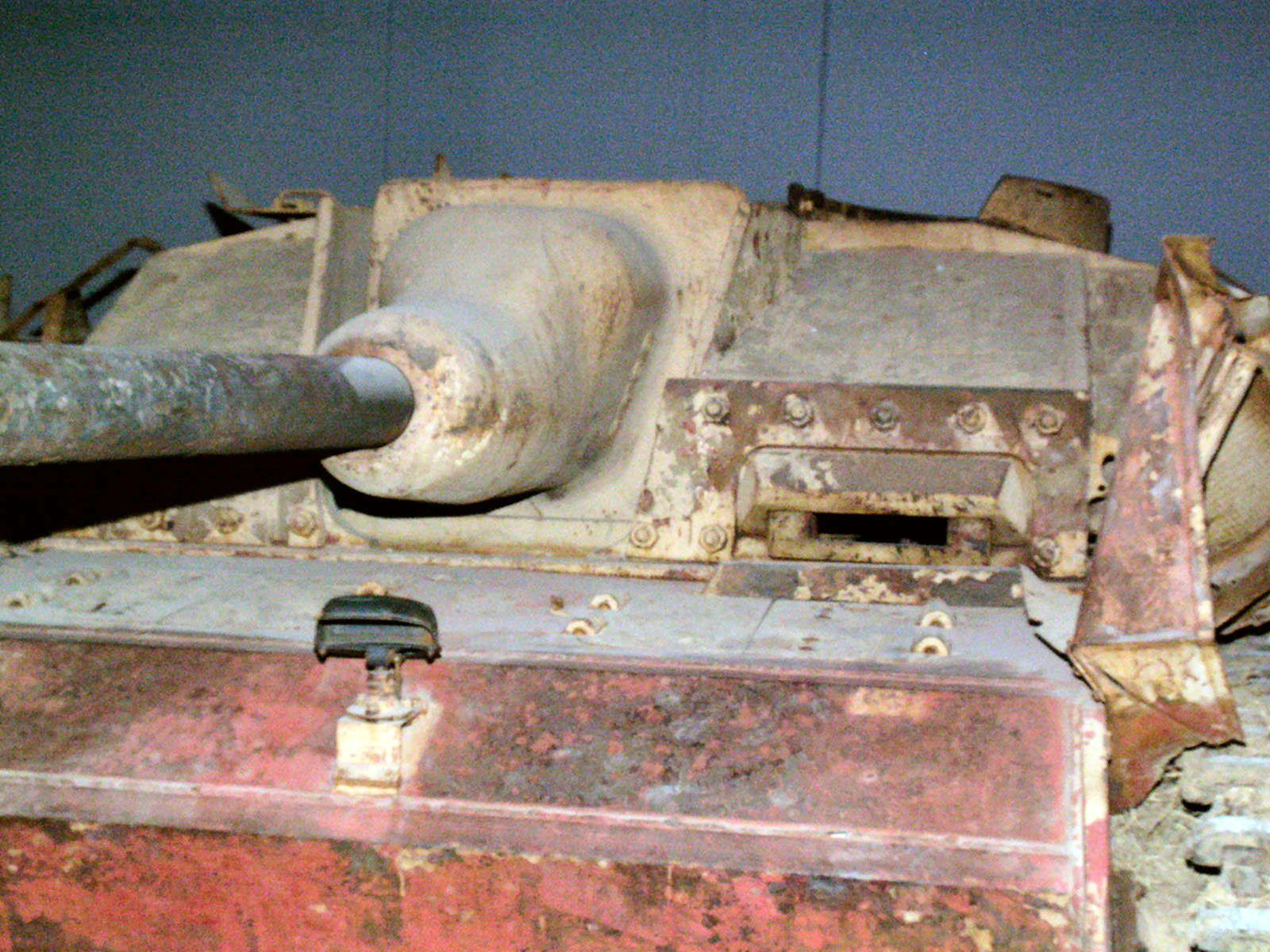
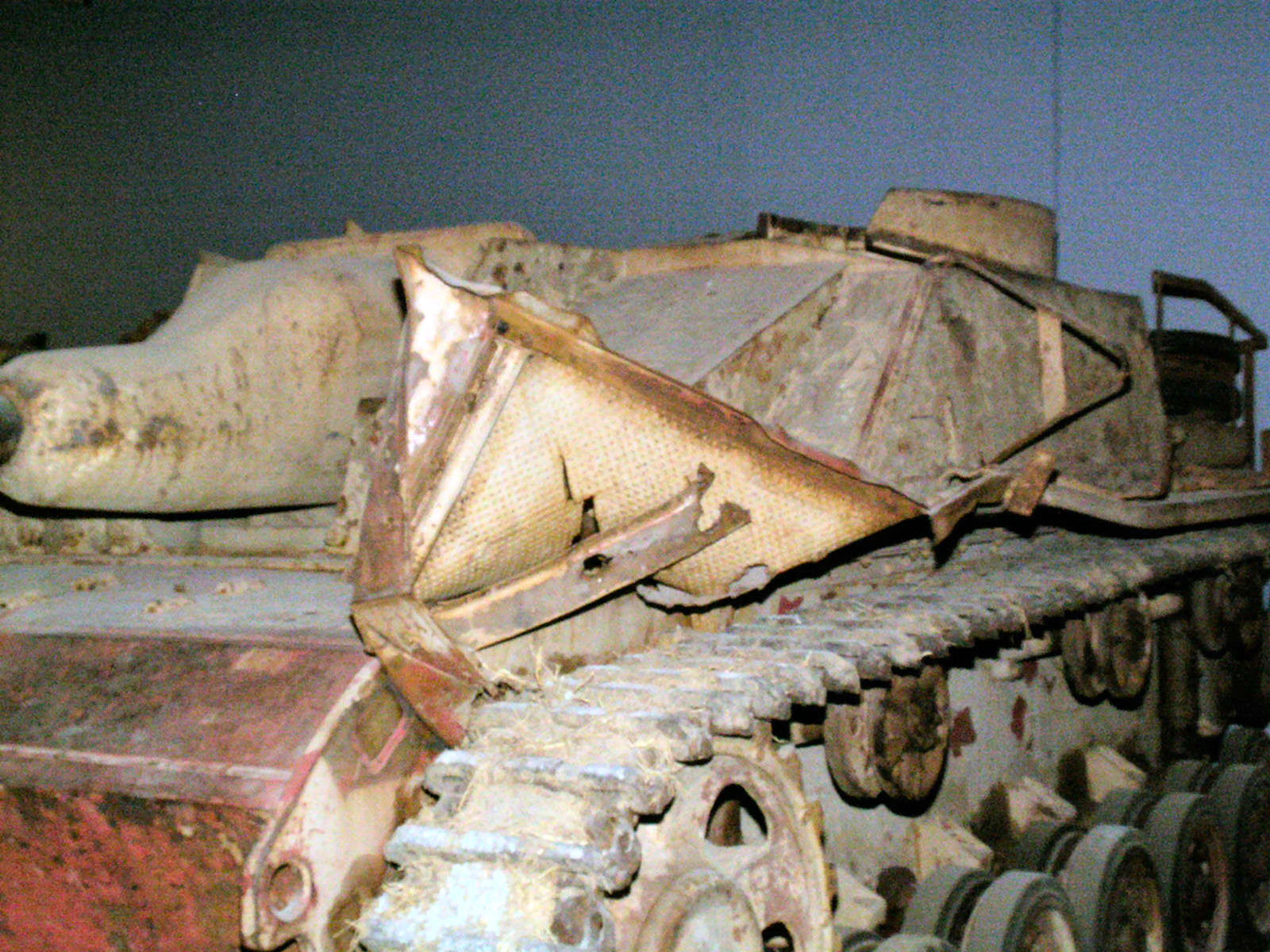
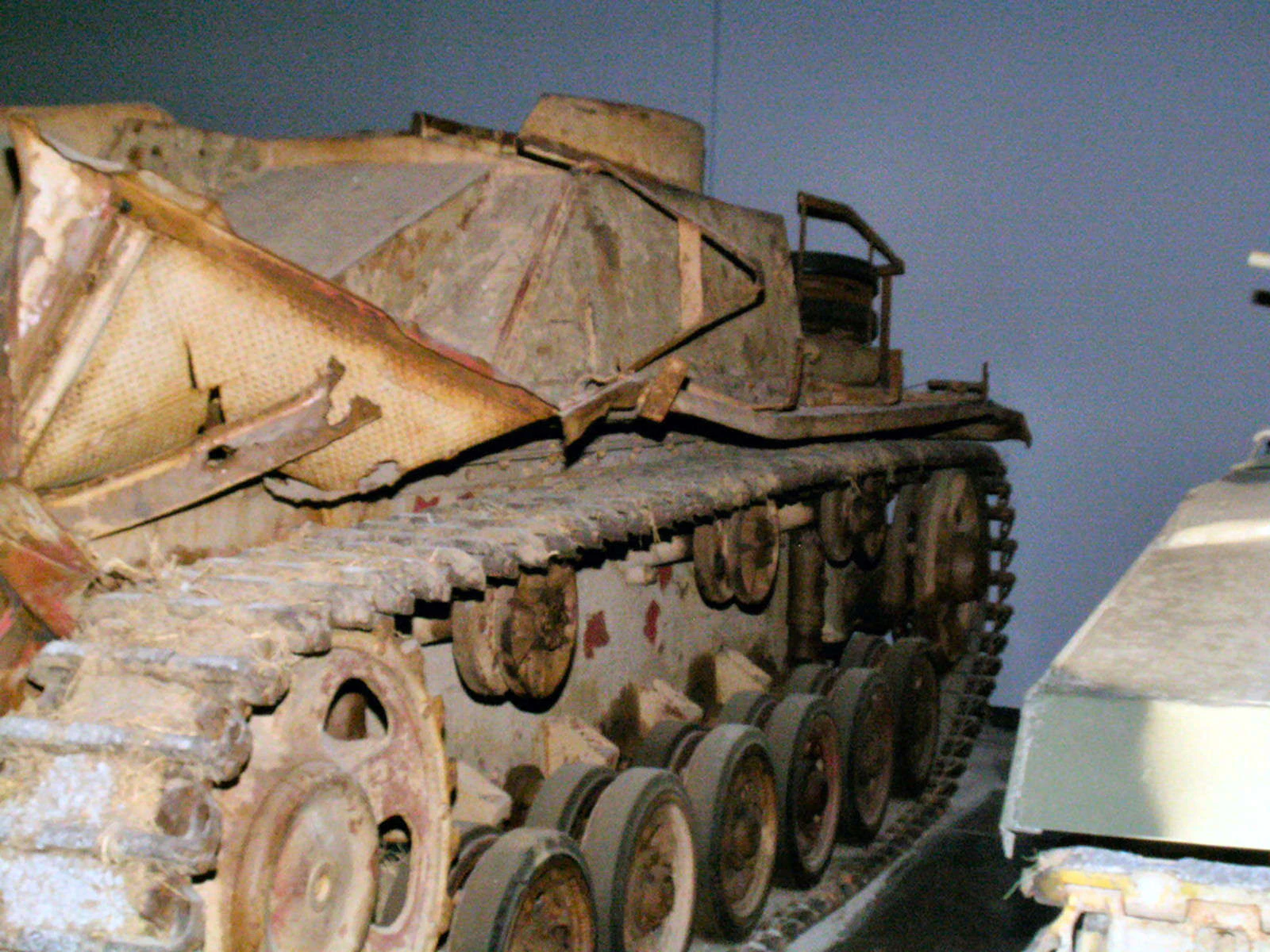
Galerie photo du StuG III, Le StuG III canon d’assaut (Sturmgeschütz III) était construit sur une base de char Panzer III, il a été le véhicule blindé de combat dont la production par l’Allemagne a été la plus massive durant la Seconde Guerre mondiale. A l’origine il était conçu comme simple un canon léger blindé d’appui à destination de l’infanterie, puis le StuG II ayant été en permanence amélioré et modifié il a été beaucoup utilisé comme chasseur de chars. Largement répandue (plus de 10000 exemplaires produits) cette série de Sturmgeschütz a beneficié d’un très bon équilibre qualité / prix.
Source: Stug III sur Wikipedia
| Sturmgeschütz III – Stug III | |
|---|---|
| Photographer | Unknow |
| Localisation | Unknow |
| Photos | 57 |
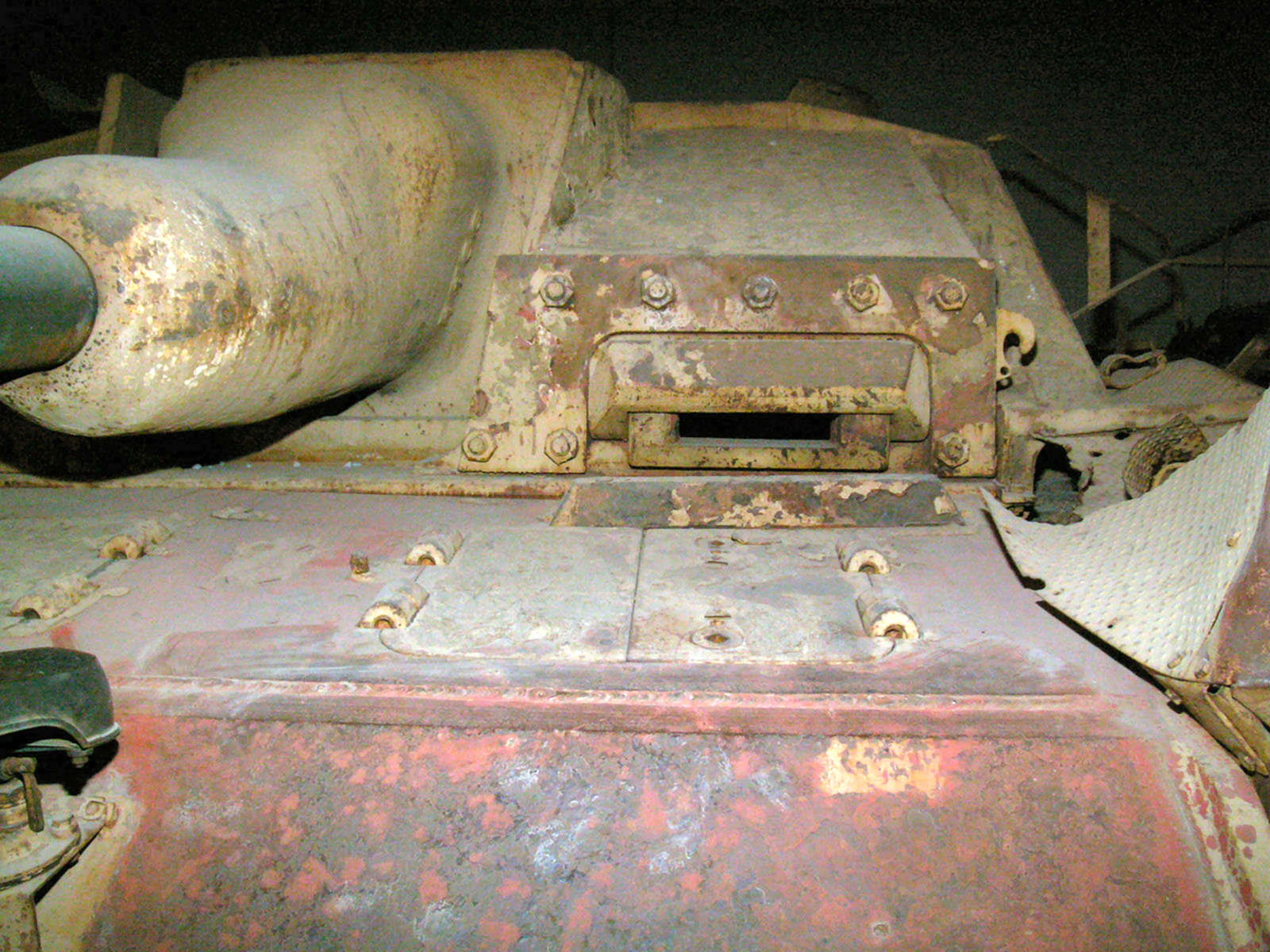
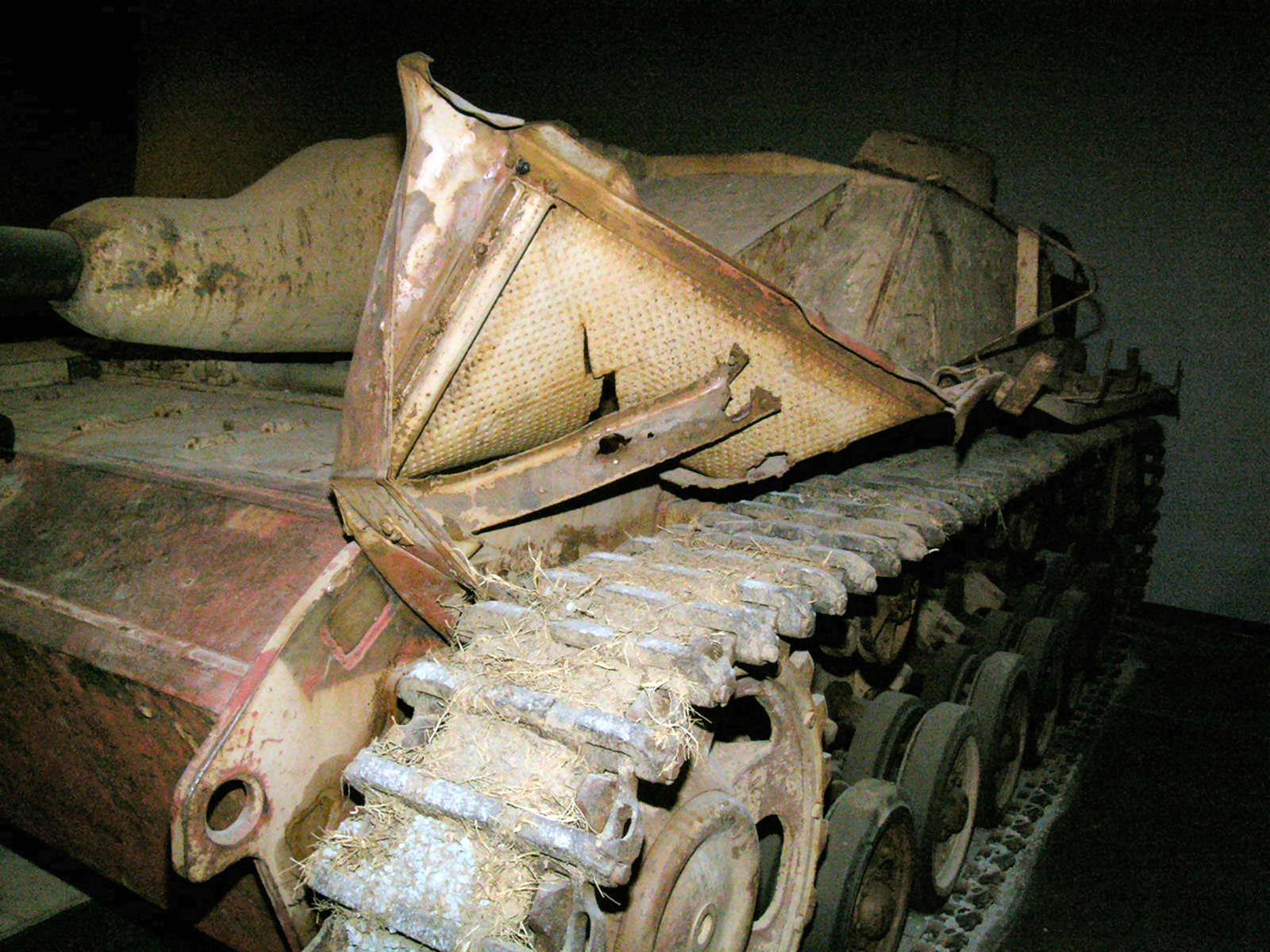

See also:


The Silent Workhorse of the Panzerwaffe
The Sturmgeschütz III (StuG III) holds the record as Germany’s most-produced fully tracked armored vehicle of WWII. Originally conceived by General Erich von Manstein as a turretless assault gun to provide direct fire support for infantry, it evolved into a lethal tank destroyer. By removing the turret and mounting the gun directly in the hull (a casemate design), engineers created a vehicle that was cheaper to build, easier to hide, and carried a much heavier gun than the Panzer III chassis was ever intended to hold.
| Attribute | Technical Specification (StuG III Ausf. G) |
|---|---|
| Role | Assault Gun / Tank Destroyer |
| Crew | 4 (Commander, Gunner, Loader, Driver) |
| Chassis | Modified Panzer III |
| Main Armament | 7.5 cm StuK 40 L/48 (54 rounds) |
| Secondary Armament | 1 or 2 × 7.92 mm MG34 machine guns |
| Frontal Armor | 80 mm (on later Ausf. G models) |
| Maximum Speed | 40 km/h (25 mph) on road |
| Production Total | Over 10,000 (including all variants) |
Design Engineering: Stealth and Simplicity
- The Casemate Advantage: By eliminating the heavy, complex rotating turret, the StuG III stood only 2.16 meters tall—roughly the height of a tall man. This low silhouette made it nearly impossible to spot when hidden in a treeline or behind a low ridge.
- The « Saukopf » Mantlet: Late-war models featured a distinctive cast gun mantlet known as the Saukopf (Sow’s Head). Its rounded shape was far more effective at deflecting incoming shells than the earlier boxy, welded designs.
- Schürzen (Side Skirts): To protect its thin 30mm side armor from Soviet anti-tank rifles and hollow-charge rounds, the StuG was often fitted with 5mm steel plates hanging from the sides, giving it a bulky, skirted appearance.
- Fixed Traverse: The gun could only move about 10 degrees to the left or right. To aim at targets further away, the entire vehicle had to be turned by the driver, a disadvantage in close-quarters combat but a non-issue for long-range ambushes.
Operational History: The Sniper of the Steppe
- Most Lethal AFV: By the end of the war, StuG units claimed to have destroyed more than 20,000 enemy tanks—more than the Tiger or Panther divisions. Their success came from defensive « shoot and scoot » tactics.
- Finnish « Sturmi »: Finland received dozens of StuG IIIs from Germany. During the 1944 battles against the Soviet Union, Finnish StuG crews achieved a staggering 8-to-1 kill ratio, cementing the vehicle’s legendary status in Finnish military history.
- Post-War Service: The StuG’s service didn’t end in 1945. Several nations continued to use them; most notably, Syria used StuG IIIs in combat against Israel as late as the 1967 Six-Day War.
- Infantry’s Best Friend: Unlike the elite Tiger battalions, StuG brigades were often attached directly to infantry divisions. The soldiers loved them because the StuG could get close enough to « knock on the door » of a bunker that was pinning them down.
Views : 4638
You can see also :
 StuG III Ausf. G – Photos & Video
 StuG.III Ausf.A, Michael Wittmann, ‘LAH’ (Barbarossa 1941) – Cyber-Hobby 9143
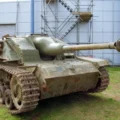 Sturmgeschutz 40 – WalkAround
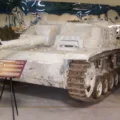 SturmHaubitze 42 – WalkAround
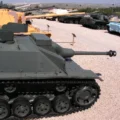 Sturmgeschutz III G – WalkAround
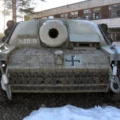 Sturmgeschutz III G – WalkAround
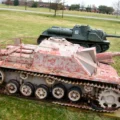 Stug III – WalkAround
 StuG III Ausf G Walk Around – Squadron Signal SS5702
 StuG.III Ausf.F/8 Late Production – DRAGON 6644