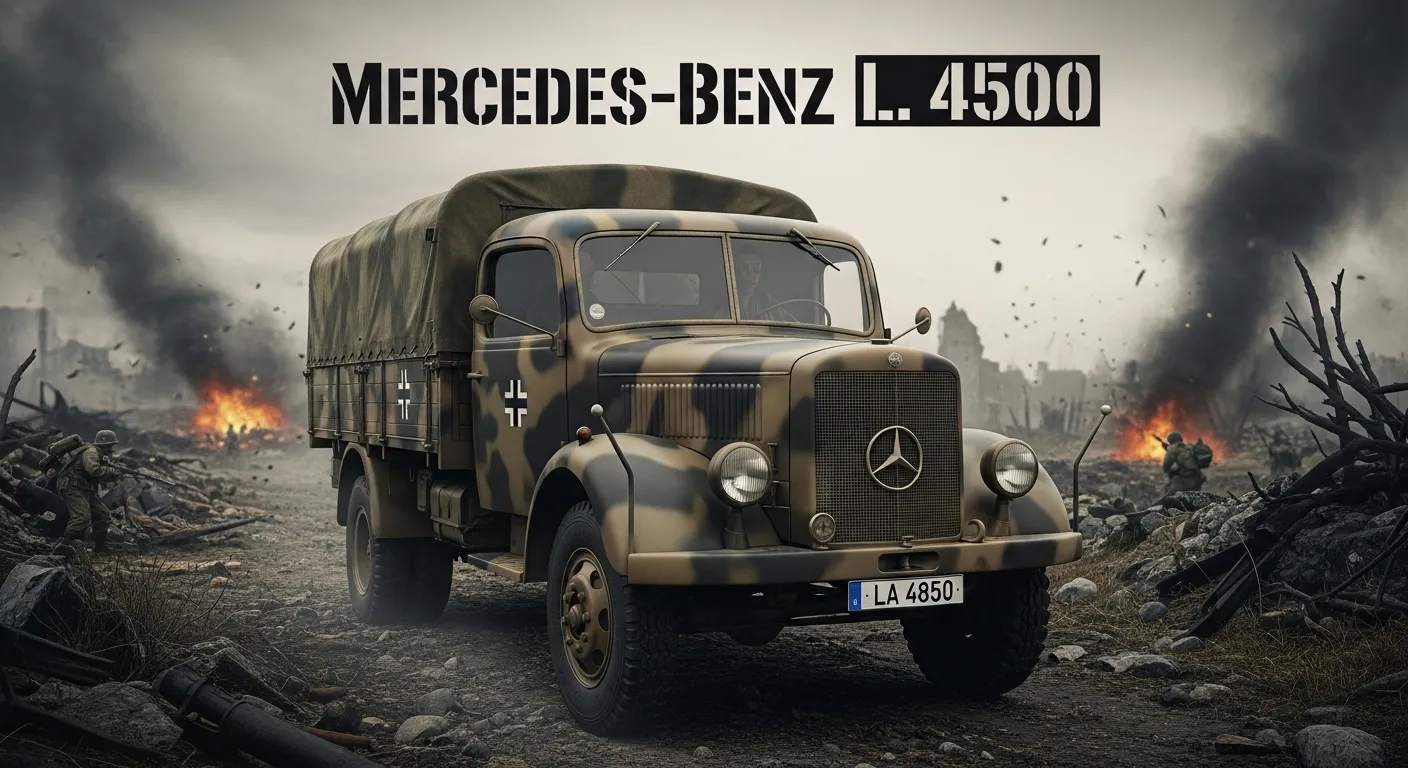
Mercedes-Benz L 4500 | |
|---|---|
| Pays | Germany |
| Type | Camion |
| Production | 1939 – 1945 |
| Construit | Inconnu |
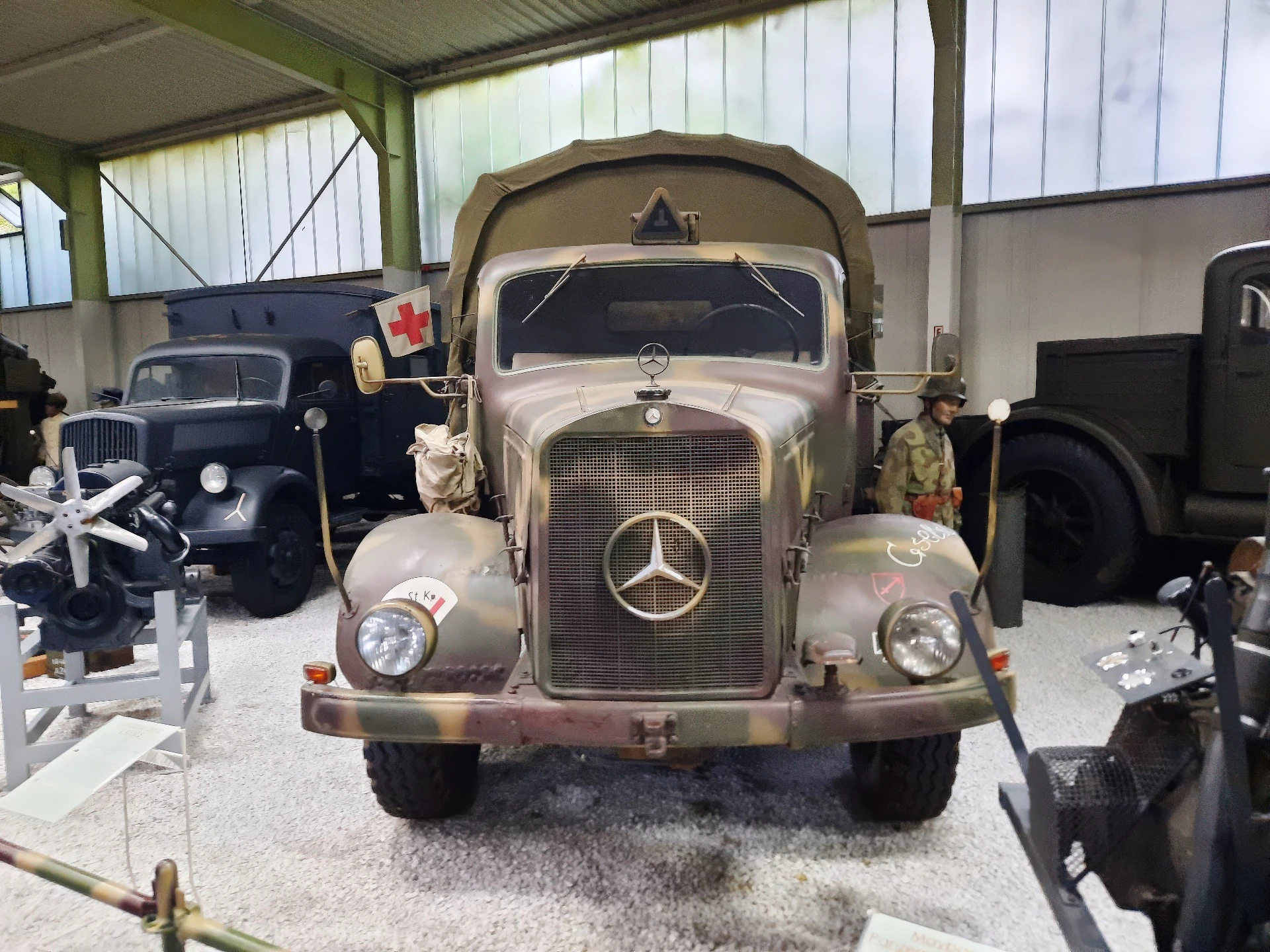
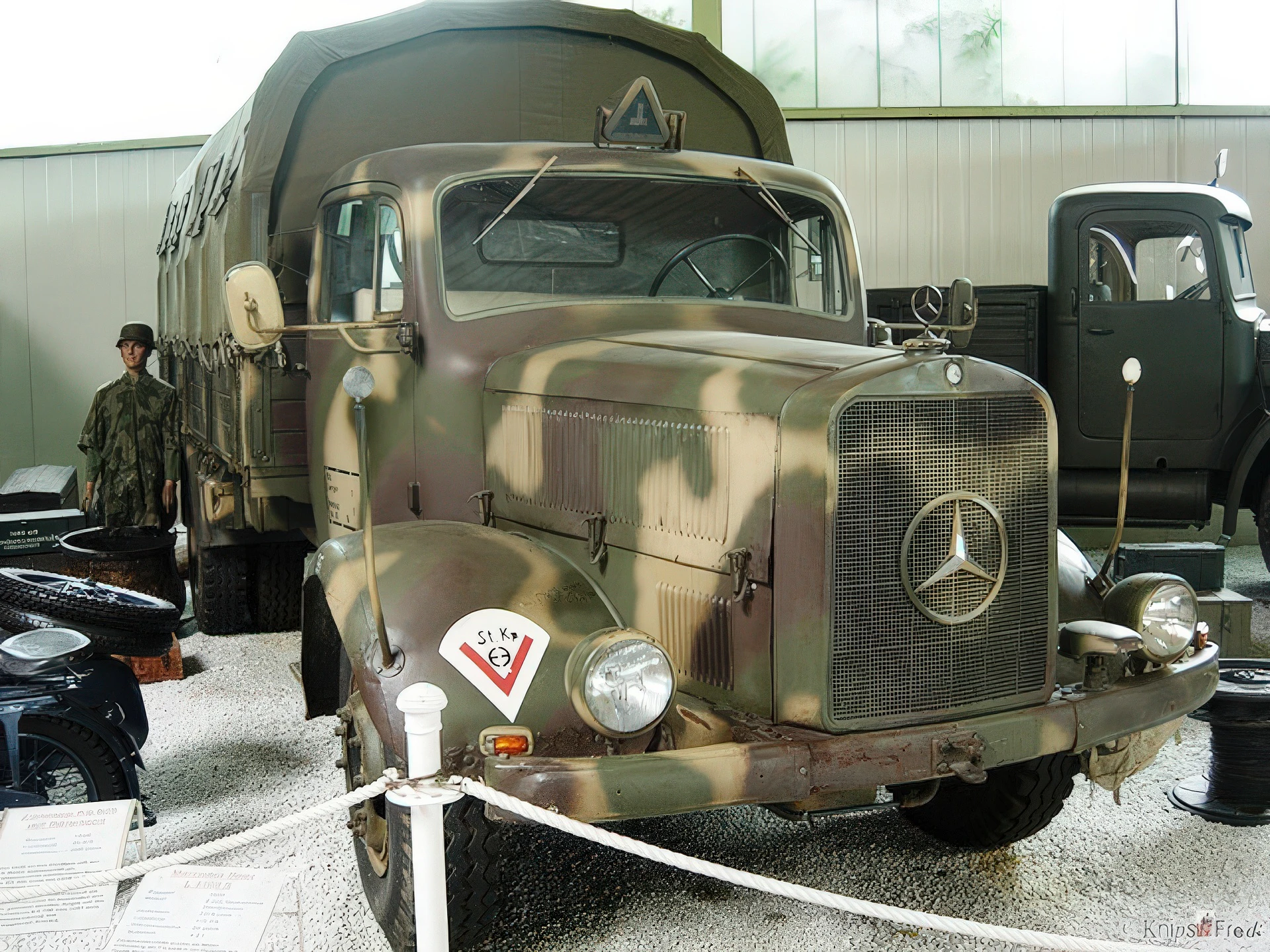
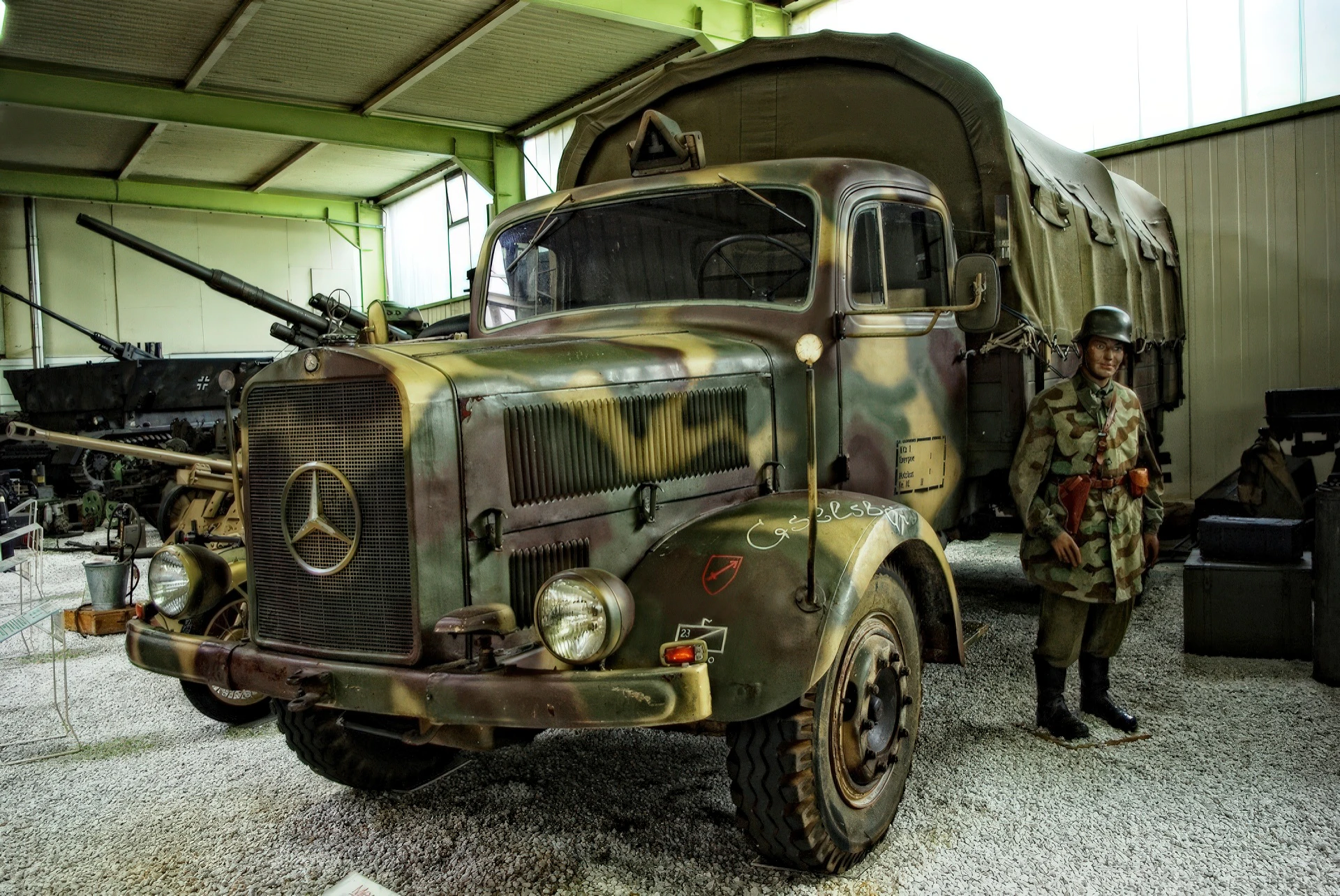
Lla Mercedes-Benz L 4500 was a heavy duty truck by Mercedes-Benz. It was built by Daimler-Benz from 1939 – 1944 in the Mercedes-Benz plant Gaggenau, and from 1944 – 1945 by Saurer. The vehicle is a long-bonnet truck and was offered as a rear-wheel-drive truck (L 4500 S) and as an all-wheel-drive truck (L 4500 A). The German Wehrmacht used the L 4500 with armoured cabins as Flak trucks during World War II.
Source: Wikipedia
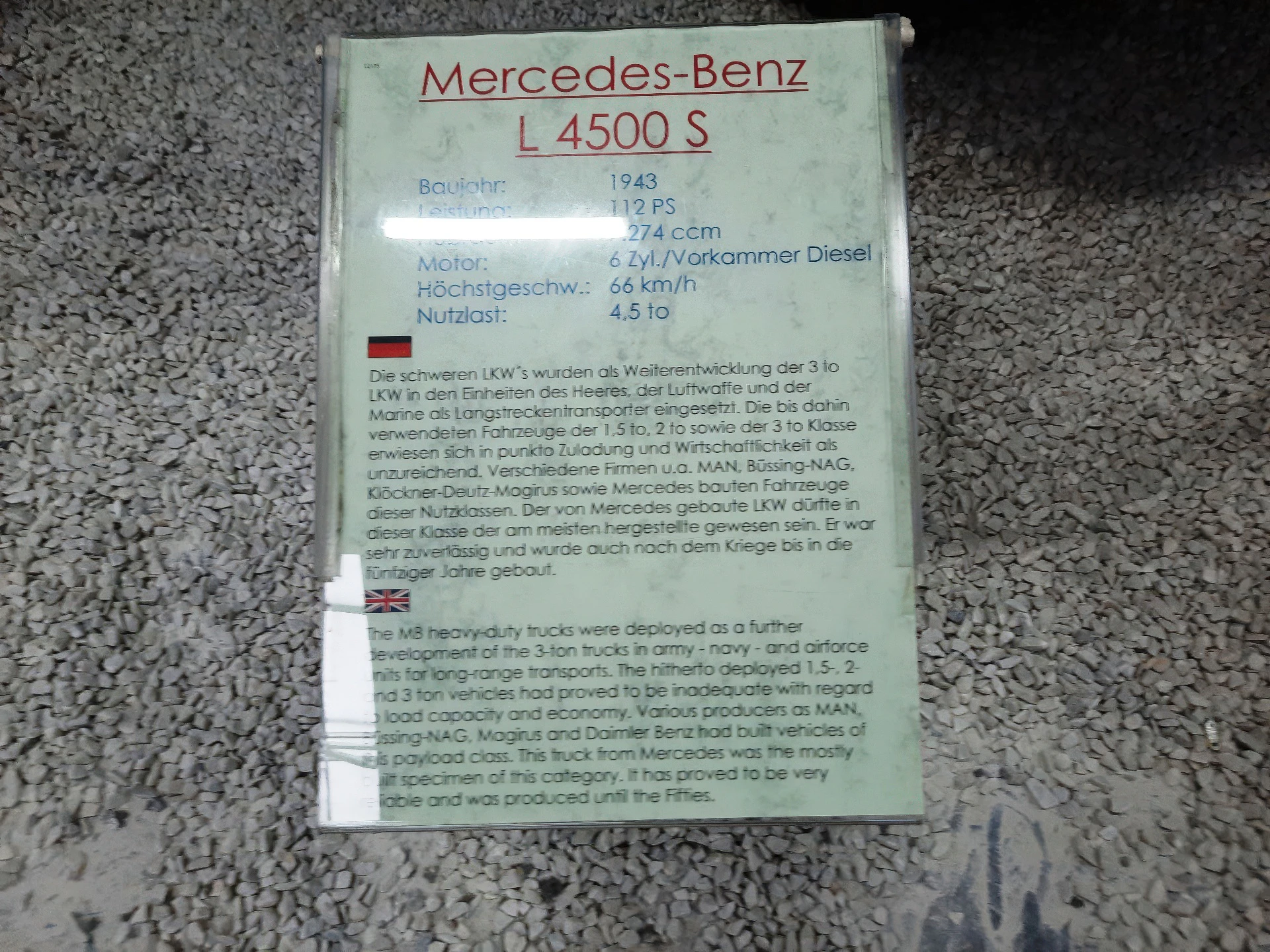
| Mercedes Benz L4500S 4.5t Walk Around | |
|---|---|
| Photographe | Unknow |
| Localisation | Inconnu |
| Photos | 9 |
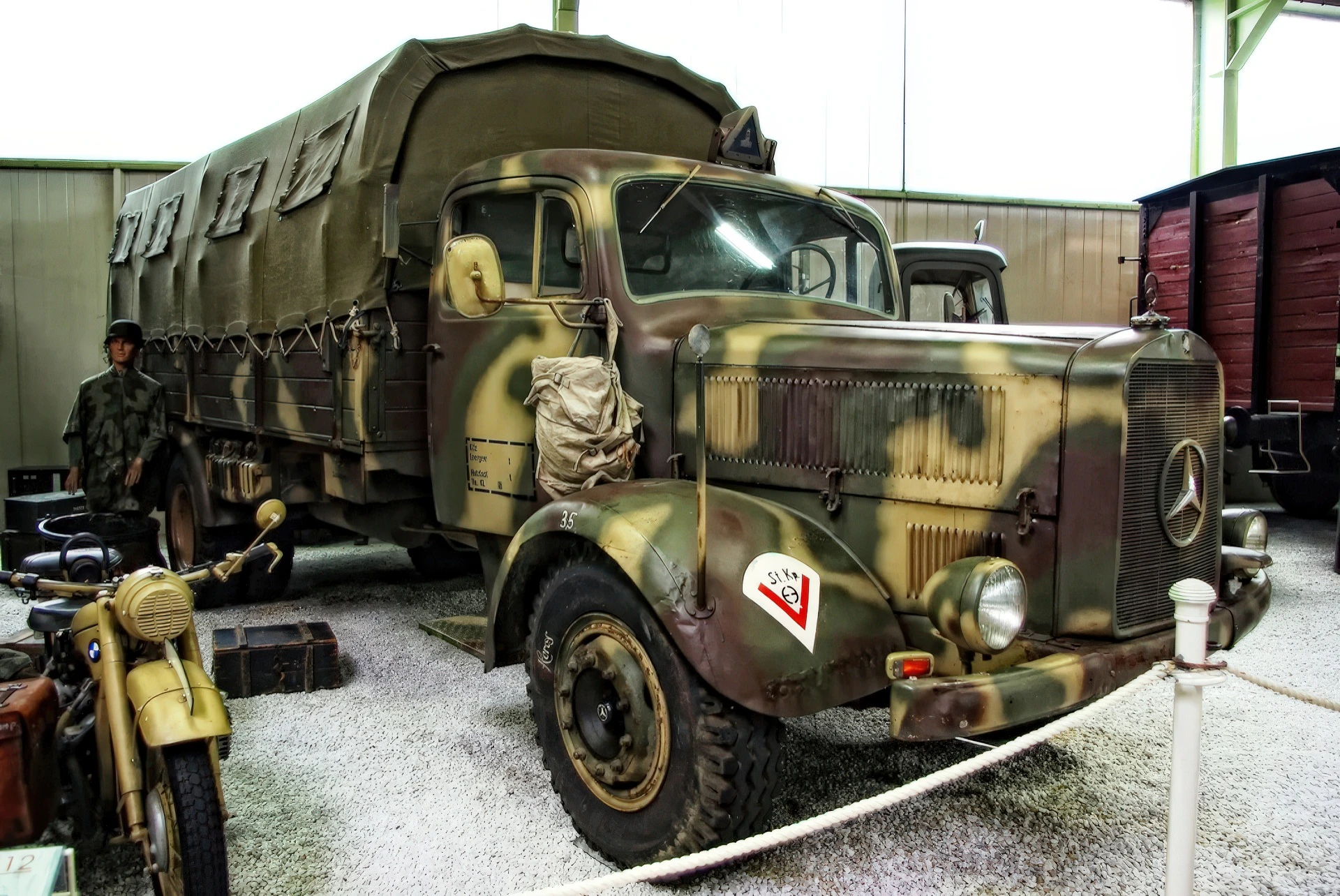
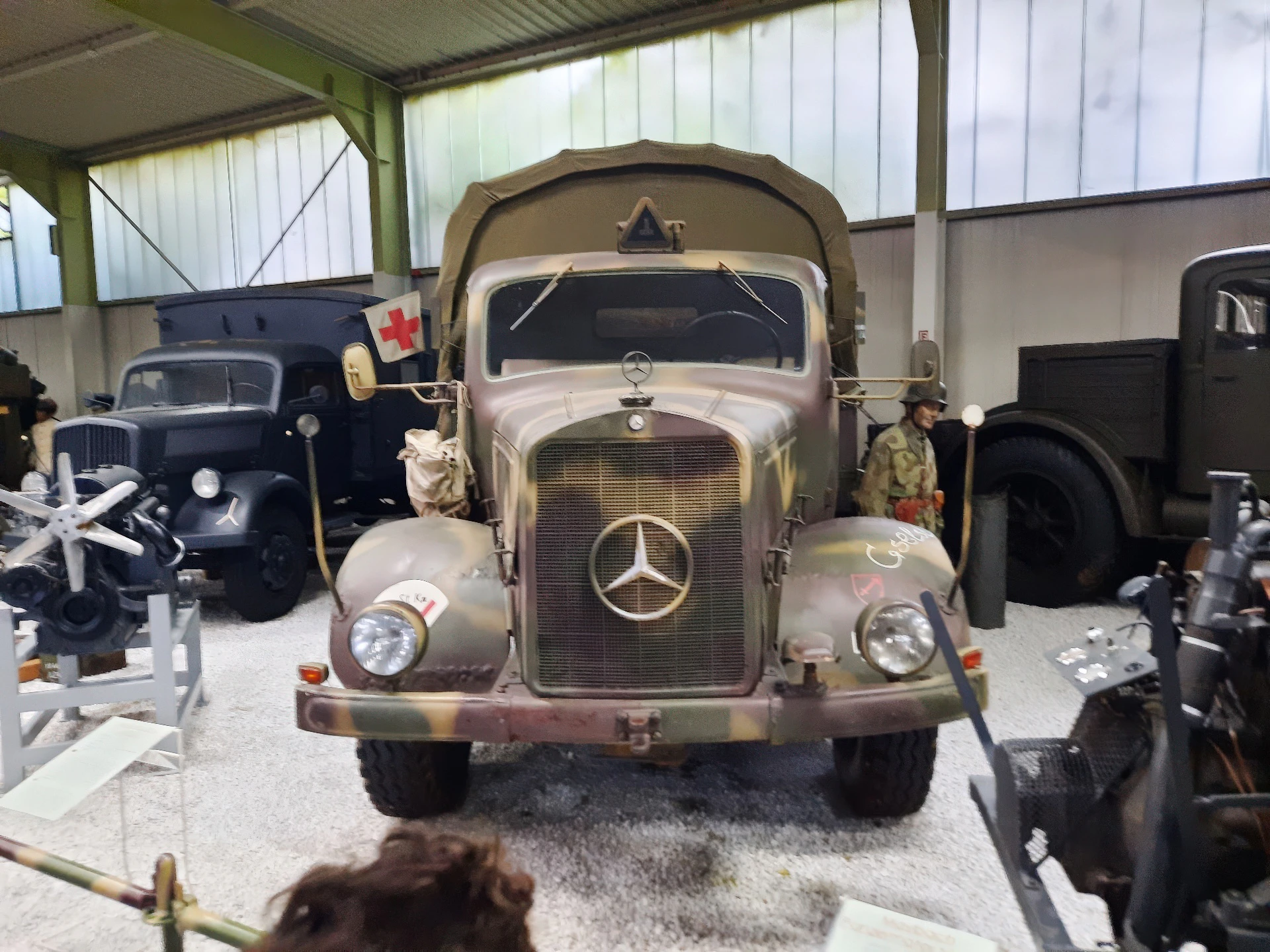
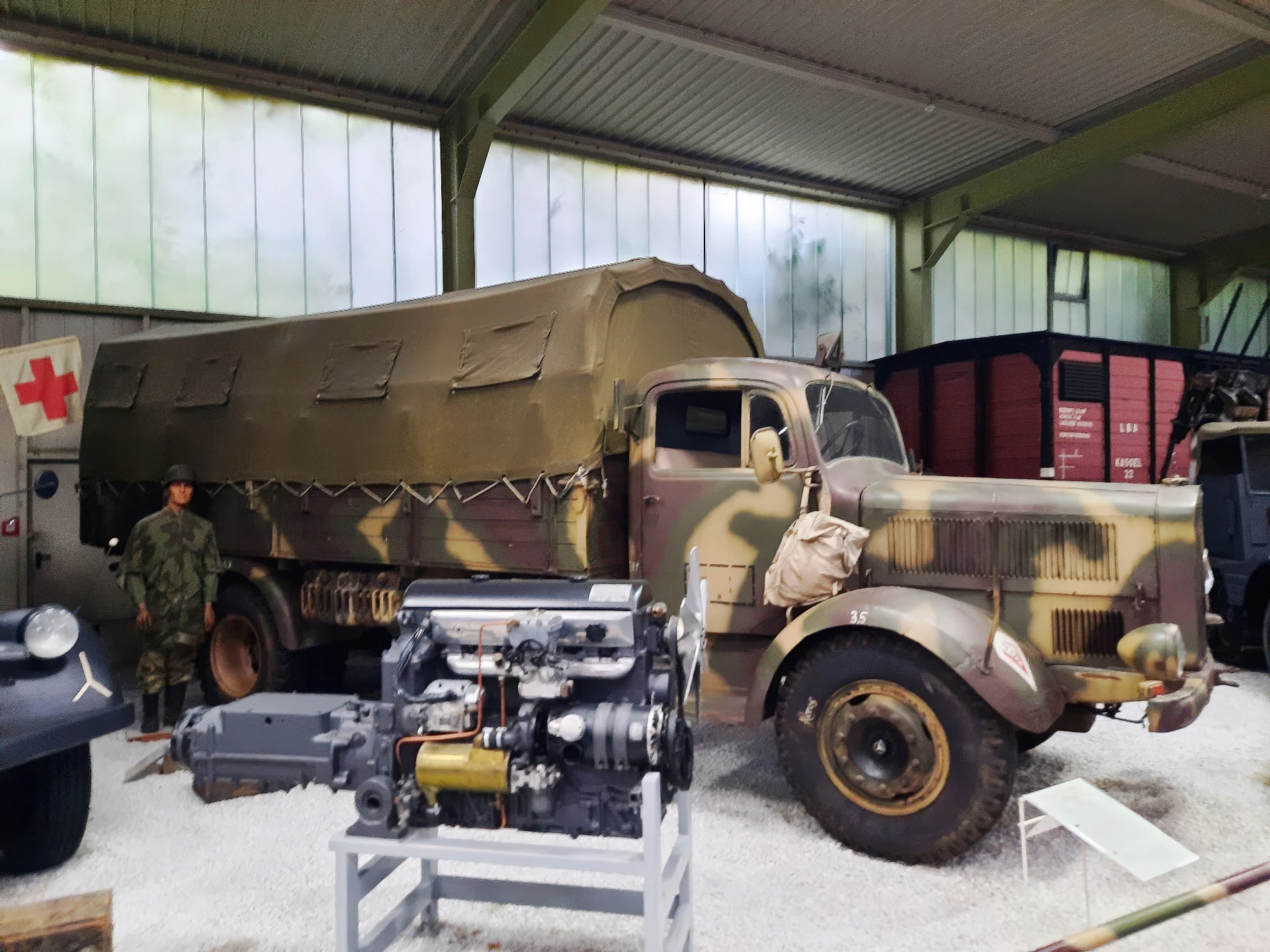
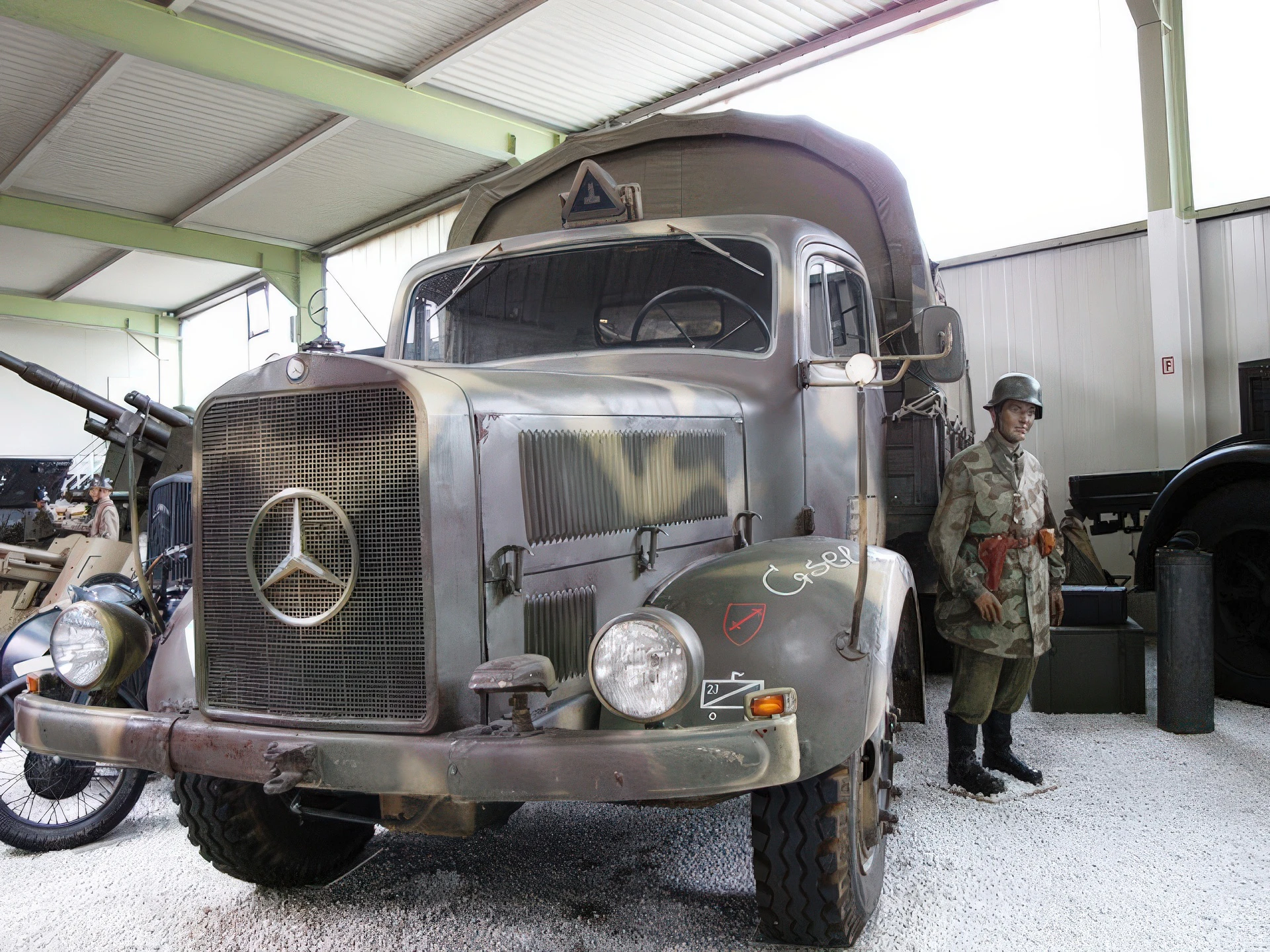
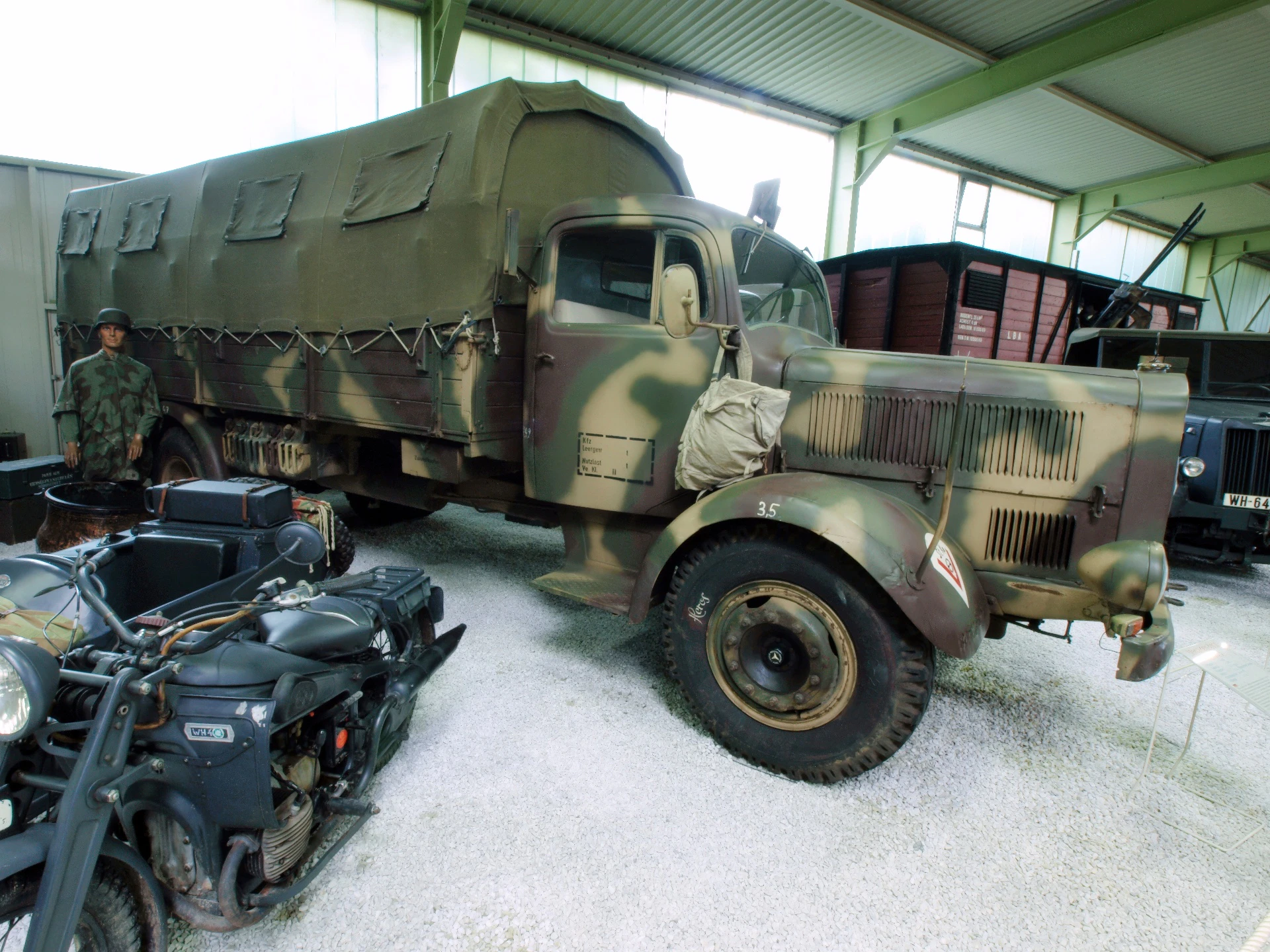

Voir aussi :


Design Philosophy and Heavy-Lift Capability
The Mercedes-Benz L4500 was a heavy-duty truck produced between 1939 and 1944. While the lighter « Opel Blitz » handled the majority of general transport, the L4500 was the « heavy lifter » designed for massive payloads and grueling long-distance supply runs. The S in the designation stands for Standard (rear-wheel drive), while the Un version was the Allrad (all-wheel drive). Its robust chassis made it an ideal platform for specialized equipment, including anti-aircraft guns and even conversion into a half-track to deal with the mud of the Eastern Front.
| Attribute | Standard Specification (Mercedes-Benz L4500S) |
|---|---|
| Rôle | Heavy Utility / Cargo Truck |
| Payload Capacity | 4,500 kg to 4,950 kg (approx. 4.5–5 Tonnes) |
| Groupe motopropulseur | Mercedes-Benz OM 67/4, 6-cylinder Diesel |
| Déplacement | 7.3 Liters (7,274 cc) |
| Horsepower | 112 hp at 2,250 rpm |
| Transmission | 5-speed Manual |
| Vitesse maximale | 66 km/h (approx. 41 mph) |
| Fuel Capacity | 140 Liters |
Diesel Innovation: The OM 67 Engine
- Efficiency: At a time when many military trucks still used petrol, the L4500 utilized the OM 67/4 diesel engine. This provided superior fuel economy and higher torque, which was vital for pulling heavy trailers or navigating rough terrain.
- Durability: The 6-cylinder engine was known for its longevity, capable of running for thousands of kilometers with basic maintenance, provided the diesel fuel was of sufficient quality.
- Torque: With 112 horsepower, it wasn’t fast, but it possessed enough pulling power to move its own 4.9-ton weight plus a full load and an auxiliary trailer simultaneously.
Variants and Field Modifications
- L4500A (All-Wheel Drive): Featuring a transfer case and driven front axle, the 4500A was much rarer but highly prized for its ability to traverse deep mud and snow.
- L4500R « Maultier ( Maultier ) » (Mule): One of the most famous variants involved replacing the rear wheels with a Carden-Loyd track assembly (from captured British Bren Carriers or Panzer II tanks). This transformed the truck into a half-track specifically for the Soviet « Rasputitsa » mud seasons.
- Flak Platform: Due to its stability and weight, the L4500 was frequently used as a mobile platform for the 3.7 cm Flak 36 anti-aircraft gun, often with armored plating added to the cab.
- Lla « Einheitsfahrerhaus »: Late in the war, the metal cab was replaced with a simplified wooden and pressed-cardboard « Standardized Cab » to save on strategic materials like steel.
Historical Impact
- Production Numbers: Approximately 9,500 units were built (including both S and A variants) before production was disrupted by Allied bombing.
- Post-War Service: Because the design was so robust, many surviving L4500s were used in the reconstruction of Germany, serving in construction and firefighting roles well into the 1960s.
Views : 525
Vous pouvez voir aussi :
 Pavesi P4 – Photos & Videos
 Phénomène Granit 1500 – Photos et vidéos
 MAZ-537 – Photos et vidéos
 Système de gestion de charge HEMTT M1120 - Photos et vidéos
 Camion Mack M123 – Photos et vidéos
 Radar P-18 – Photos & Vidéos
 M274 1/2-ton 4×4 plate-forme utilitaire – Photos & Vidéos
 WC52 – Photos & Vidéo
 Ford CMP 15cwt 4×4 GS - Walk Around
 Pétrolier Bedford OYC – Promenez-vous