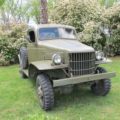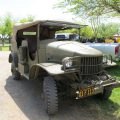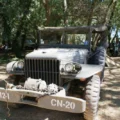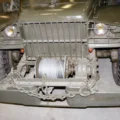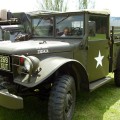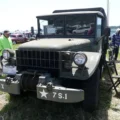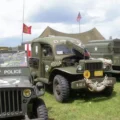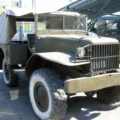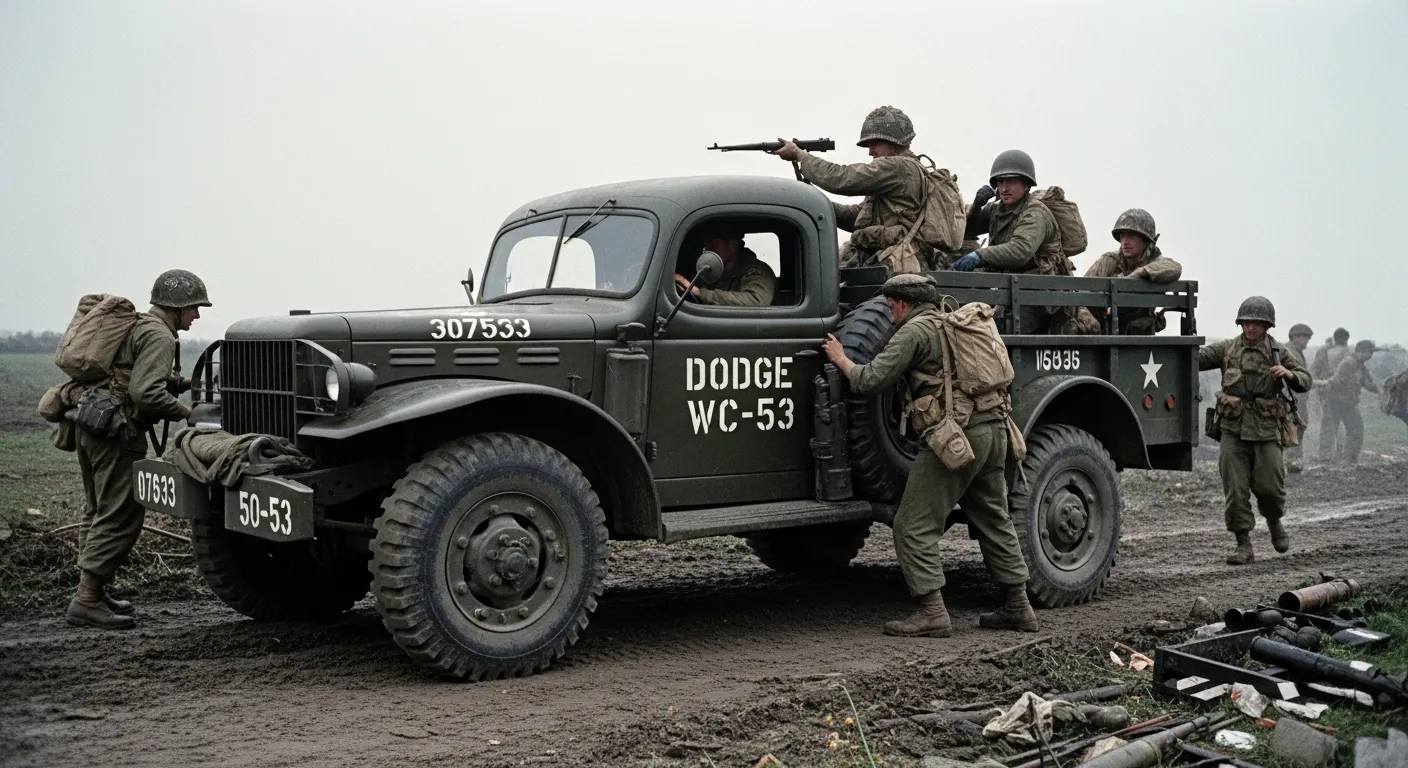
Dodge WC-53 |
|
|---|---|
| Pays | Usa |
| Type |
4×4 camion léger |
| Fabricant | Dodge (Chrysler) |
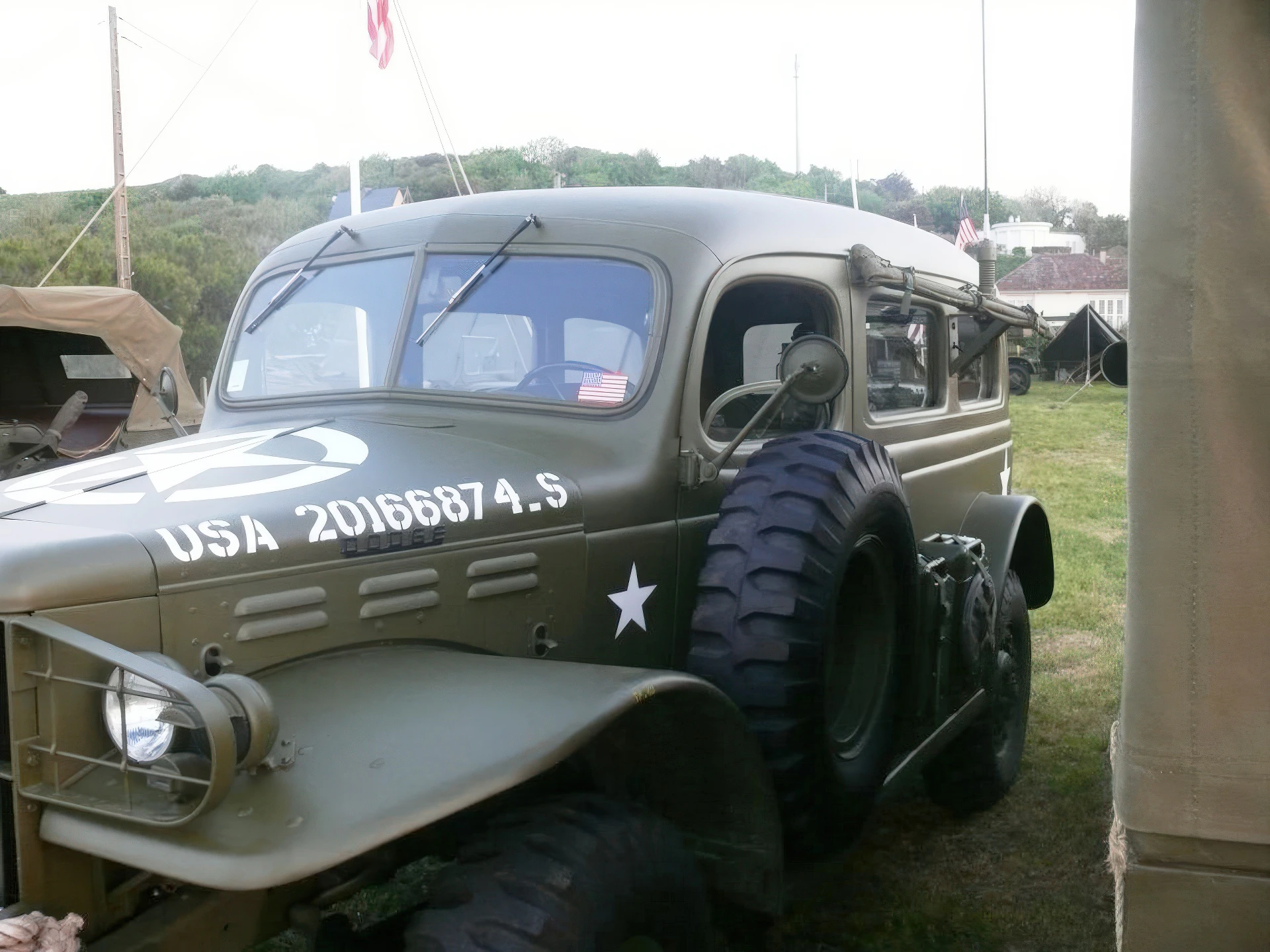
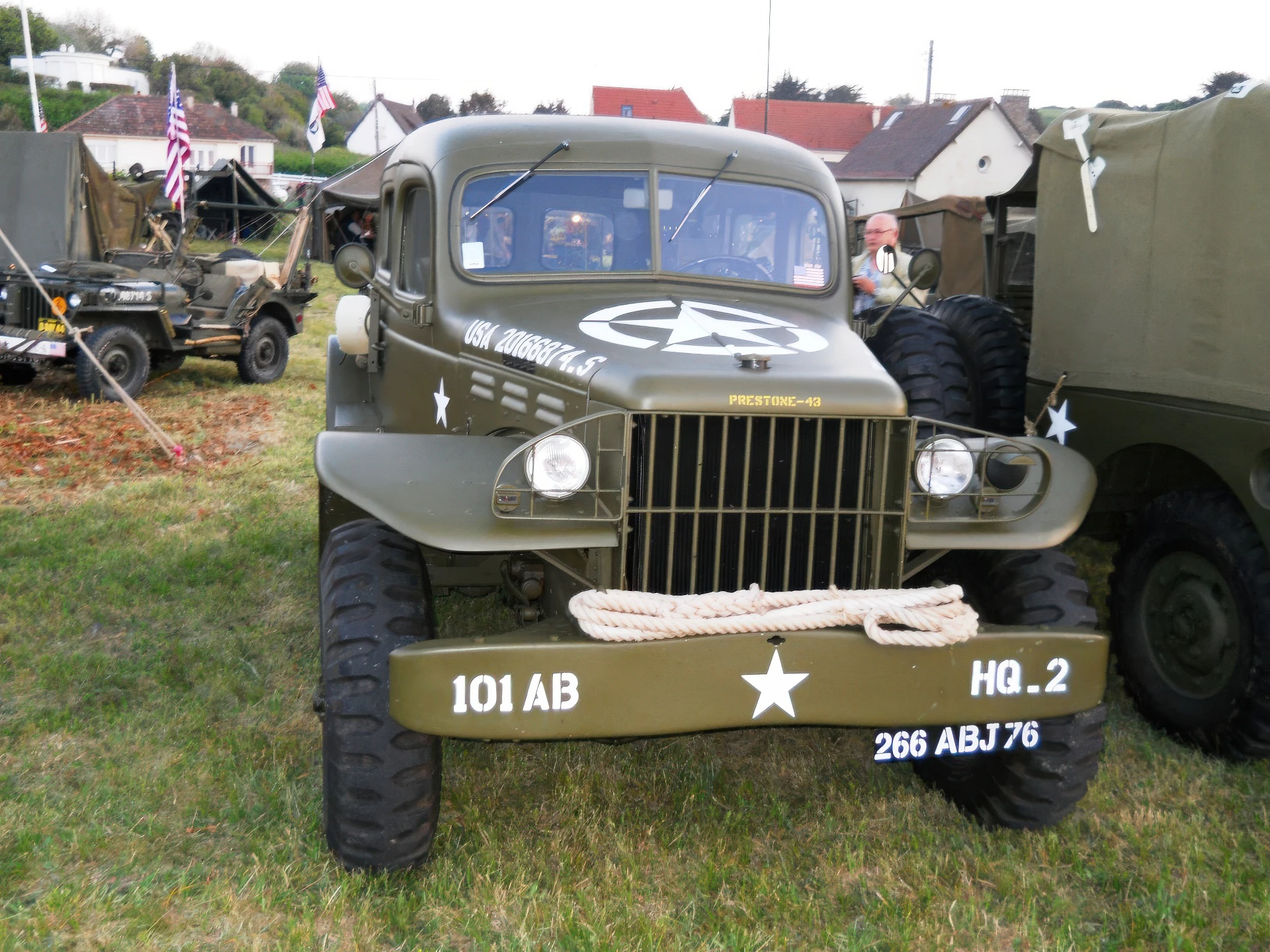
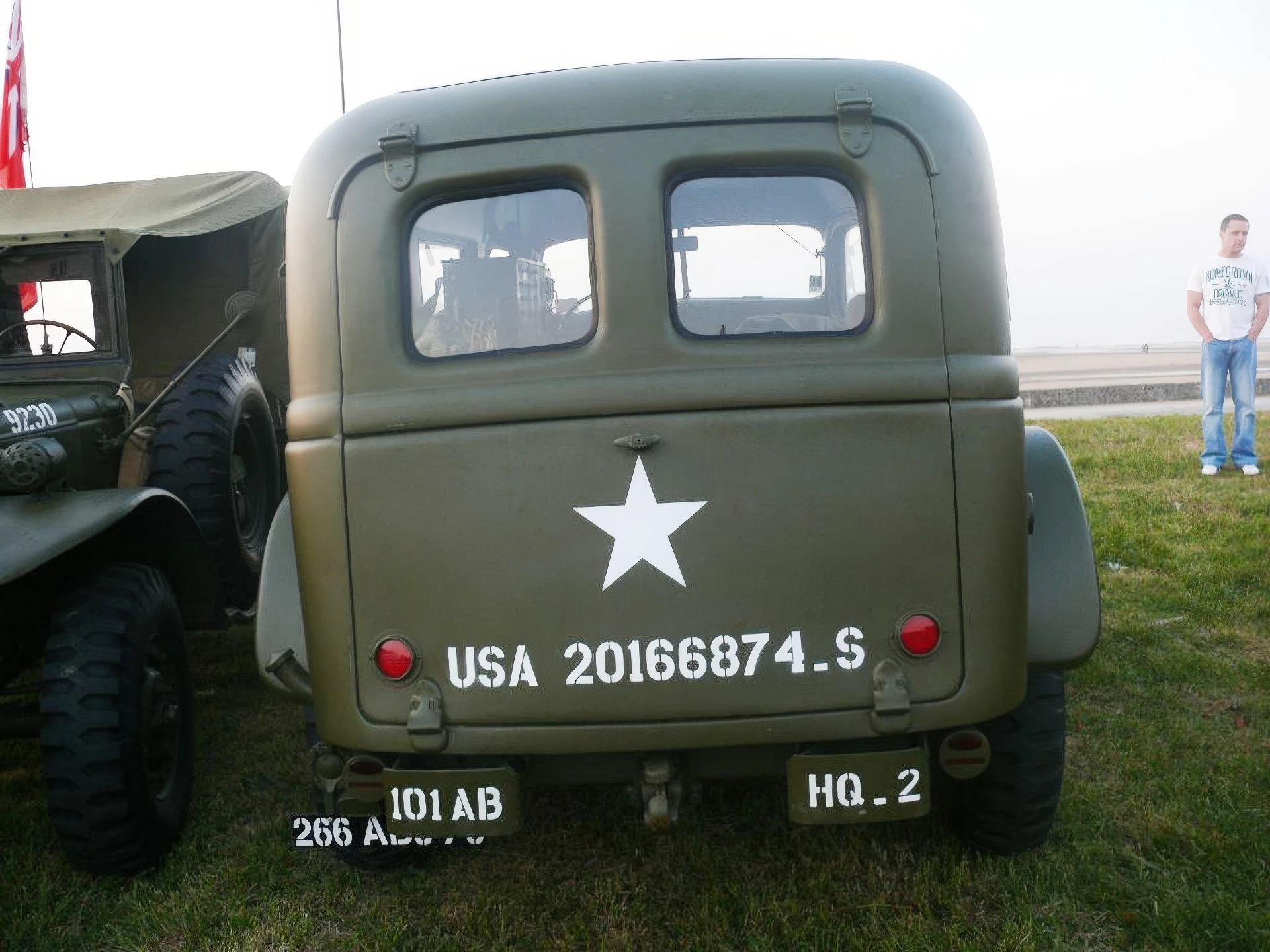
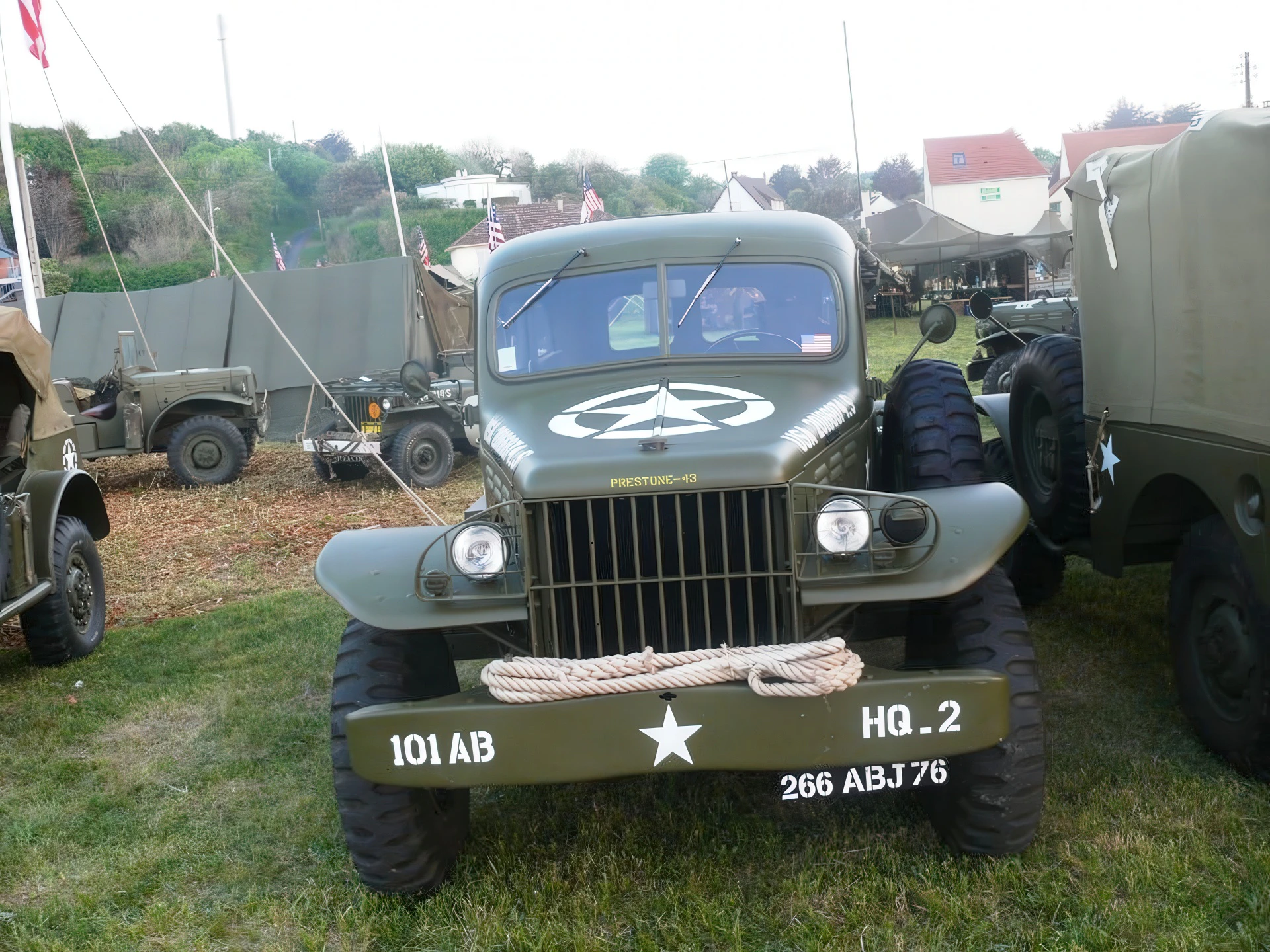
Un fourre-tout, mécaniquement le WC-53 était pratiquement identique au WC-54, mais était équipé d’un corps qui était le fourre-tout civil de 1939 modifié selon les spécifications militaires. Les quatre vitres latérales arrière étaient à ouverture à remontage automatique et les sièges se composaient d’un siège passager avant rabattable pour permettre l’accès à l’arrière, d’une deuxième rangée pour deux personnes laissant de l’espace pour accéder au siège arrière pleine largeur pour trois personnes. La roue de secours était portée sur un support sur le conducteur’et bien que la porte soit pleinement opérationnelle, elle ne pouvait pas être ouverte et le conducteur a dû entrer du côté passager. L’arrière avait un hayon fendu horizontalement
Source: Dodge WC-53 sur Wikipédia
| Dodge WC-53 Carryall Walk Around | |
|---|---|
| Photographe | Inconnu |
| Localisation | Inconnu |
| Photos | 21 |
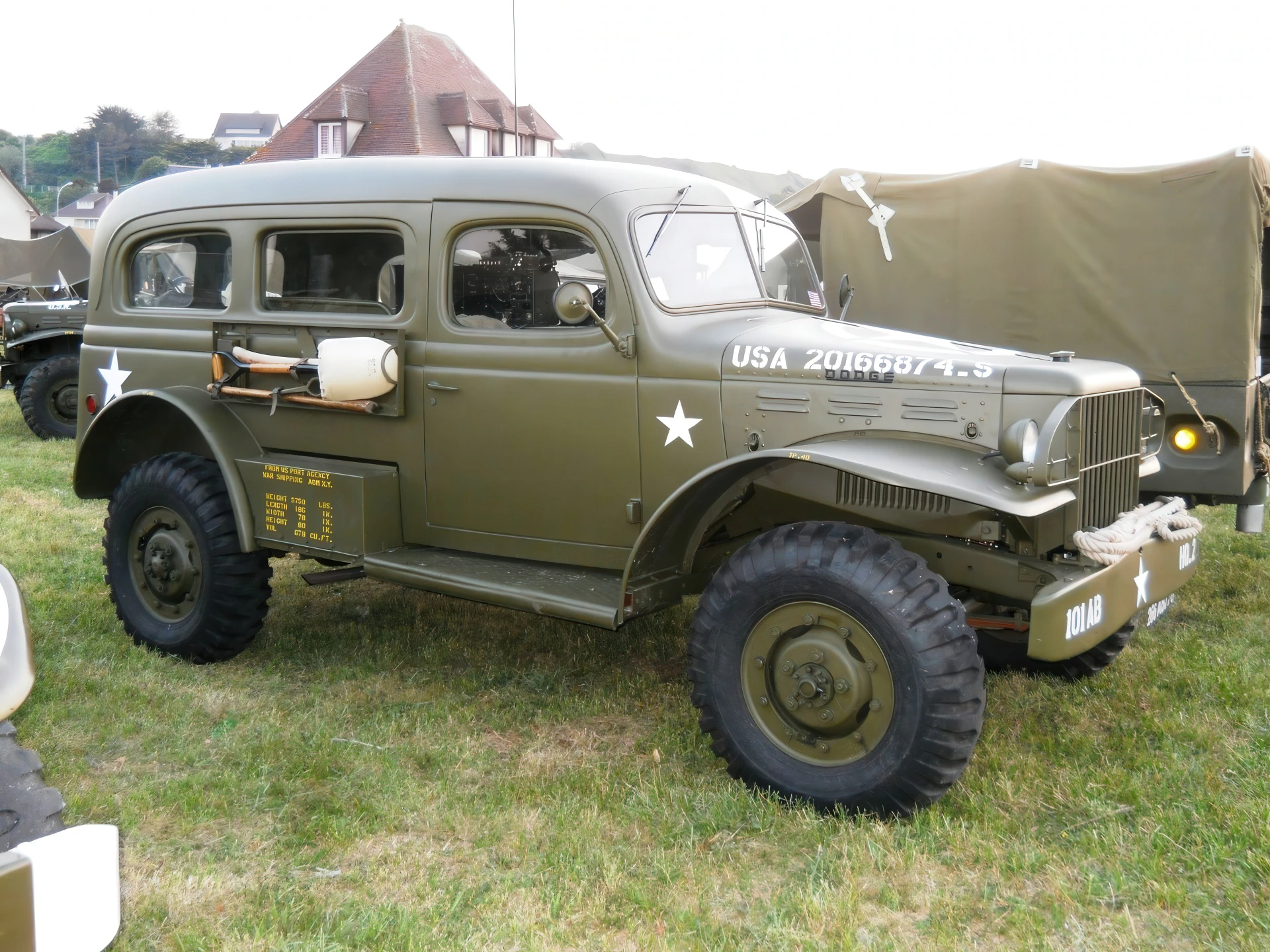
Dodge WC-53 01
Dodge WC-53 02
Dodge WC-53 03
Dodge WC-53 04
Dodge WC-53 05
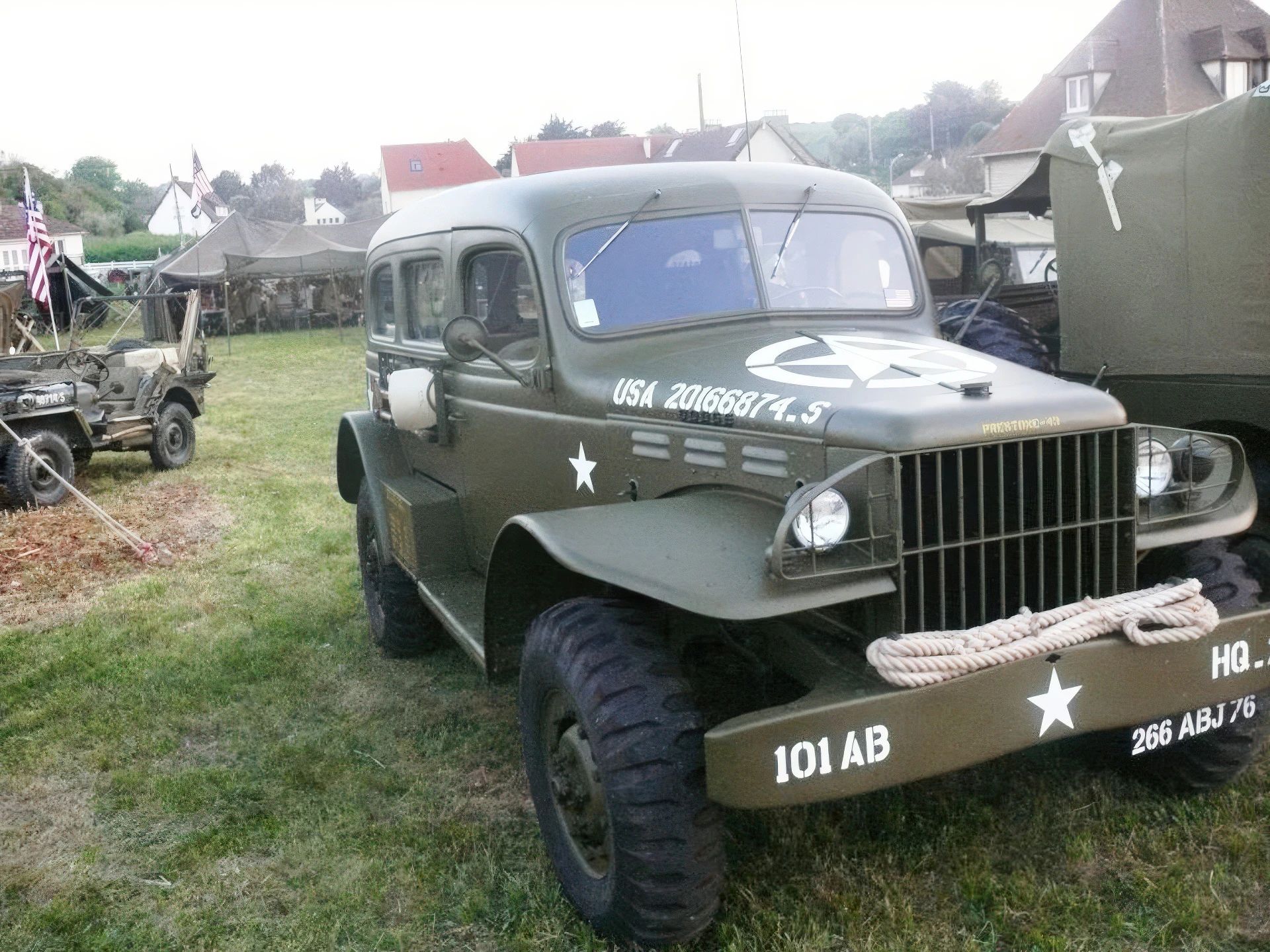
Dodge WC-53 06
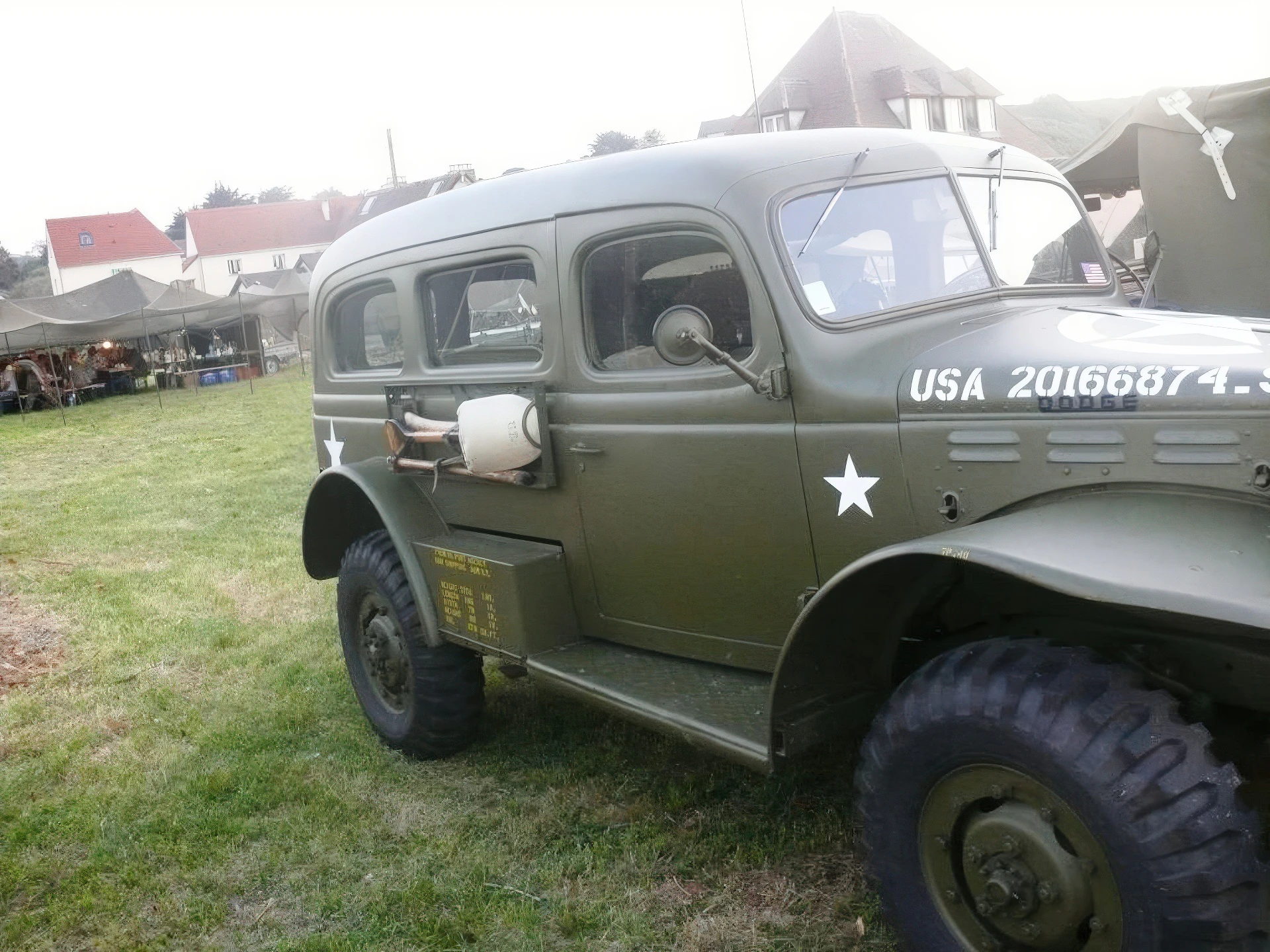
Dodge WC-53 07

Dodge WC-53 08
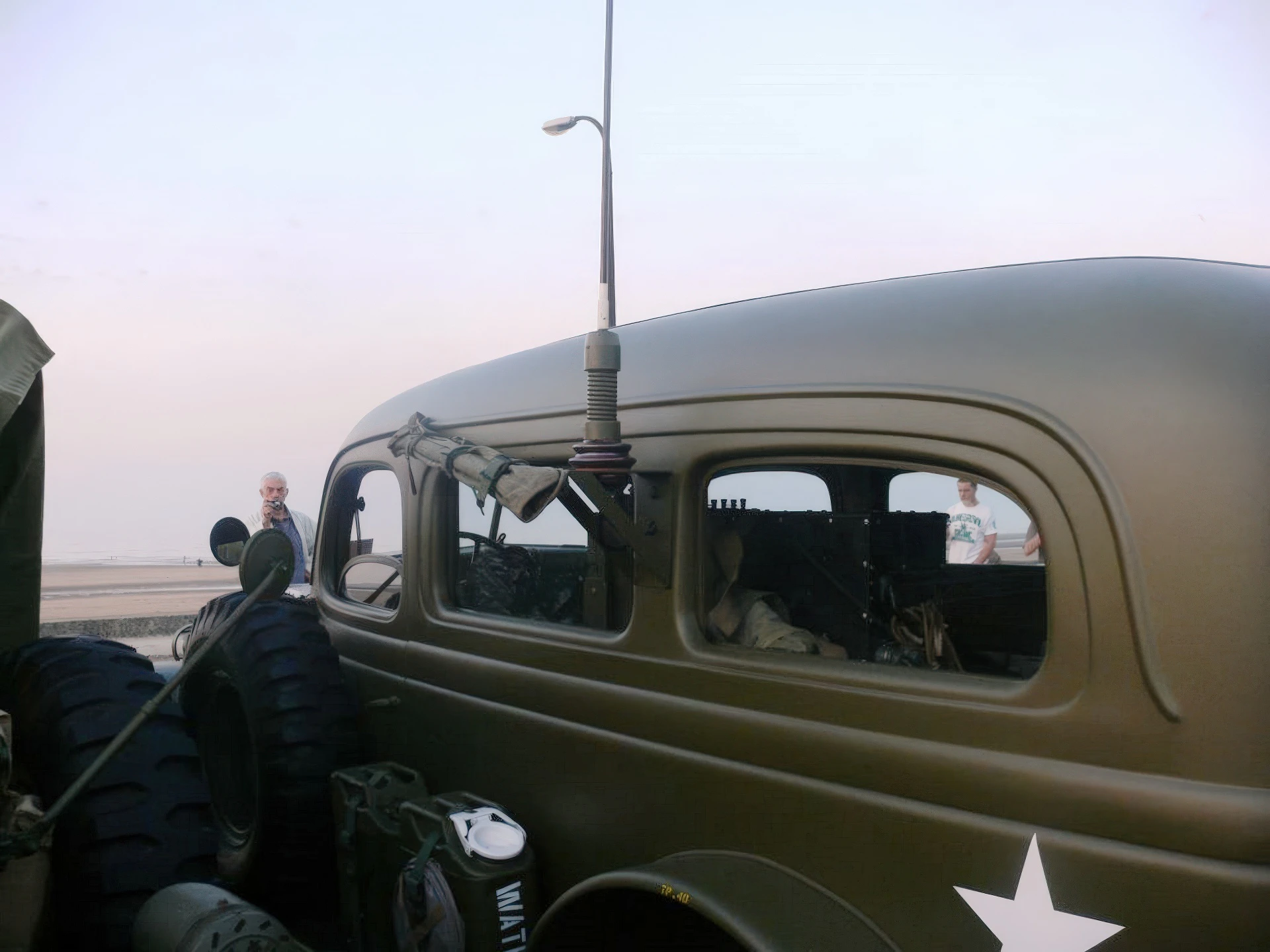
Dodge WC-53 10
Attendez, à la recherche de photos de Dodge WC-53 pour vous...

Voir aussi :


A Specialized Member of the WC Series
The Dodge WC-53 was a part of the famous WC series of light military trucks (the « 3/4 ton » range) produced by Dodge during World War II. While most WC models were open-cab pickups or ambulances, the WC-53 Carryall featured a fully enclosed, all-steel body. Designed to carry up to seven passengers or specialized radio equipment, it was essentially the military ancestor of the modern Chevrolet Suburban or SUV. Because of its enclosed nature, it was frequently used by high-ranking officers as a command vehicle or converted into a mobile radio station for front-line communications.
| Attribute | Standard Specification (Dodge WC-53) |
|---|---|
| Rôle | Light Personnel and Radio Transport |
| Crew / Capacity | 1 Driver + 6 Passengers |
| Groupe motopropulseur | Dodge T214 6-cylinder, side-valve (L-head) engine |
| Déplacement | 3.8 Liters (230 cubic inches) |
| Horsepower | 92 hp at 3,200 rpm |
| Drive Configuration | 4×4 (Four-wheel drive) |
| Vitesse maximale | 89 km/h (55 mph) |
| Production Total | 8,400 units (approx.) |
Engine and Drivetrain Reliability
- The T214 Engine: The WC-53 utilized the legendary Dodge « flathead » six-cylinder. It was prized for its simplicity and the fact that it produced high torque at low speeds, which was essential for navigating deep mud or steep inclines.
- Four-Wheel Drive: The vehicle featured a single-speed transfer case. Unlike some civilian 4x4s, the Dodge WC series was built with military-grade axles and a robust frame that could handle significantly more weight than its 3/4-ton rating suggested.
- Electrical System: Many WC-53s were fitted with a 12-volt electrical system (rather than the standard 6-volt) to power the heavy radio equipment used by signal corps and command units.
Interior and Body Features
- All-Steel Construction: The body was a modified version of the civilian 1939 Dodge carryall body, reinforced for military use. It provided better protection from the elements than the canvas-topped WC-51/52 models.
- Folding Seats: The interior featured three rows of seats. The rear two rows could be folded or removed entirely to make room for crates of supplies or a radio operator’s desk.
- Split Tailgate: To facilitate easy loading, the rear featured a « clamshell » opening with a top hatch that swung up and a bottom tailgate that dropped down.
- Visibility: Large windows provided excellent 360-degree visibility for officers to observe the battlefield while remaining under cover.
Historical Legacy
- Limited Production: Compared to the 123,000 units of the WC-51 pickup, the WC-53 was relatively rare with only 8,400 produced, making it a highly sought-after prize for military vehicle collectors today.
- Lla « Bip »: While the 1/4-ton Willys was the « Jeep, » soldiers often referred to the larger 3/4-ton Dodge trucks as the « Bip » (Big Jeep).
- Post-War Influence: The ruggedness of the WC series led directly to the development of the civilian Dodge Power Wagon, which remained in production for decades and helped spark the American obsession with 4×4 trucks.
Vues : 706