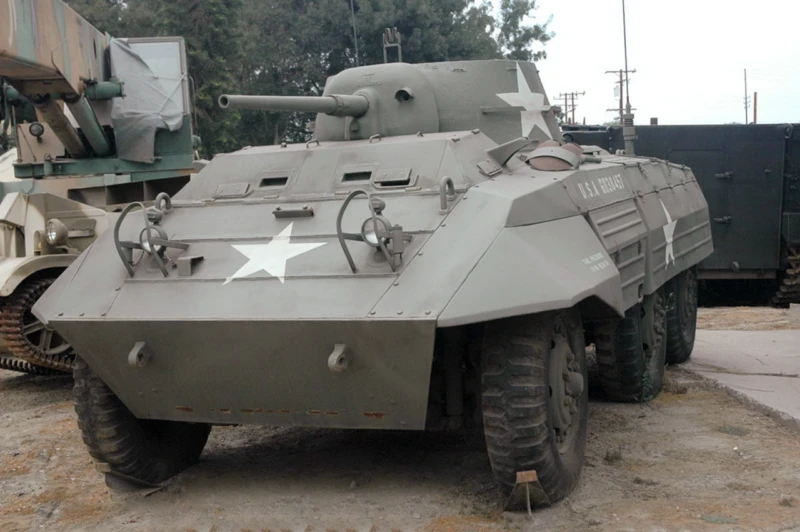
M8 Greyhound | |
|---|---|
| Pays | Usa |
| Rôle | Voiture blindée |
| En service | 1943-présent |
| Construit | 8523 |
Lla M8 Voiture blindée légère est une voiture blindée de 6×6 produite par la Ford Motor Company pendant la Seconde Guerre mondiale. Il a été utilisé par les troupes américaines et britanniques en Europe et en Extrême-Orient jusqu’à la fin de la guerre. Le véhicule a été largement exporté et, en 2006, il est resté en service dans certains pays du tiers monde.
Source: M8 Greyhound sur Wikipedia
| M8 Greyhound | |
|---|---|
| Photographe | Inconnu |
| Localisation | Inconnu |
| Photos | 133 |

| M8 Greyhound Walk Around | |
|---|---|
| Photographe | Vladimir Yakubov |
| Localisation | Musée militaire du sud de la Nouvelle-Angleterre |
| Photos | 47 |
| M8 Greyhound Walk Around | |
|---|---|
| Photographe | Gino Marcomini |
| Localisation | Inconnu |
| Photos | 28 |
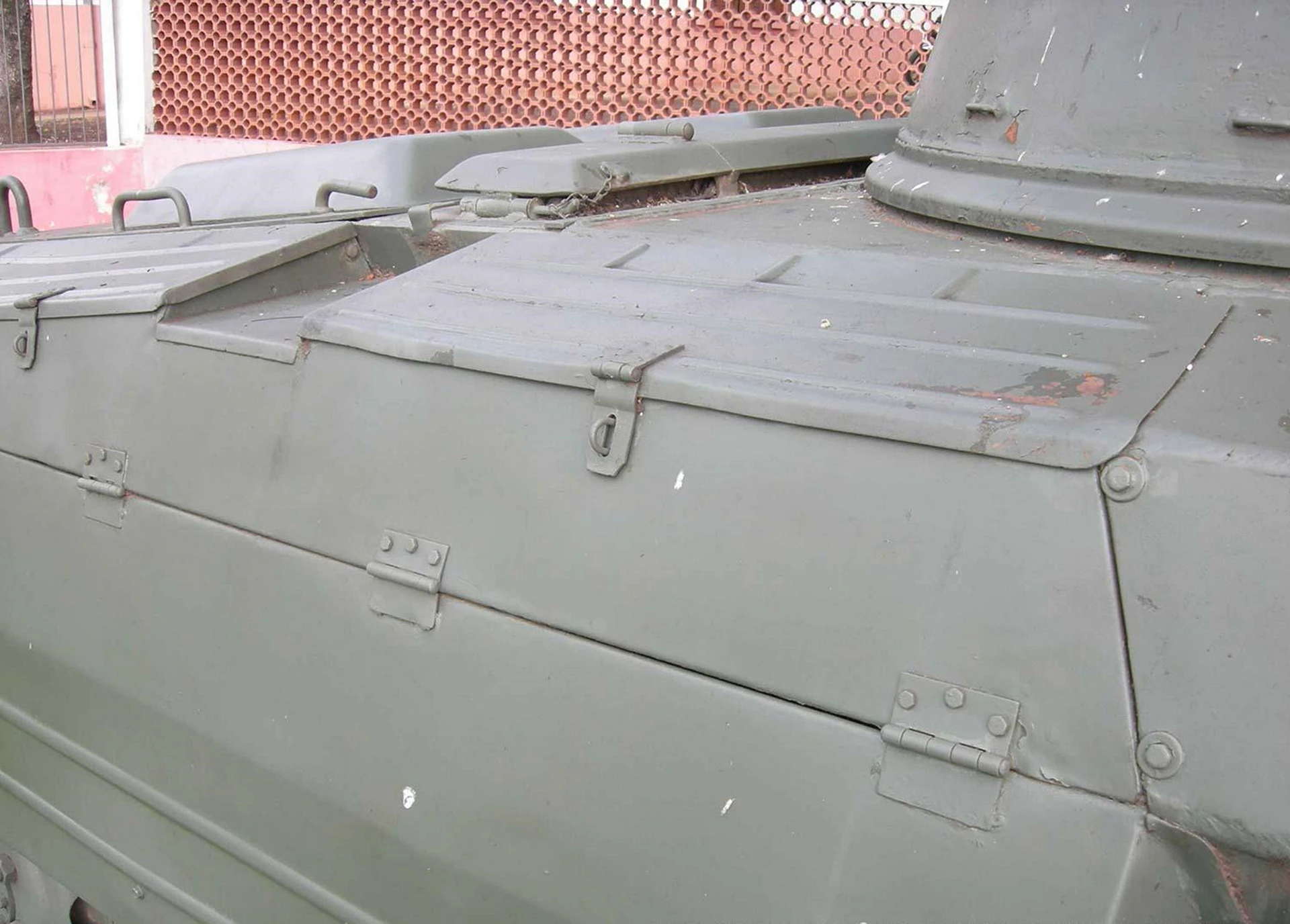
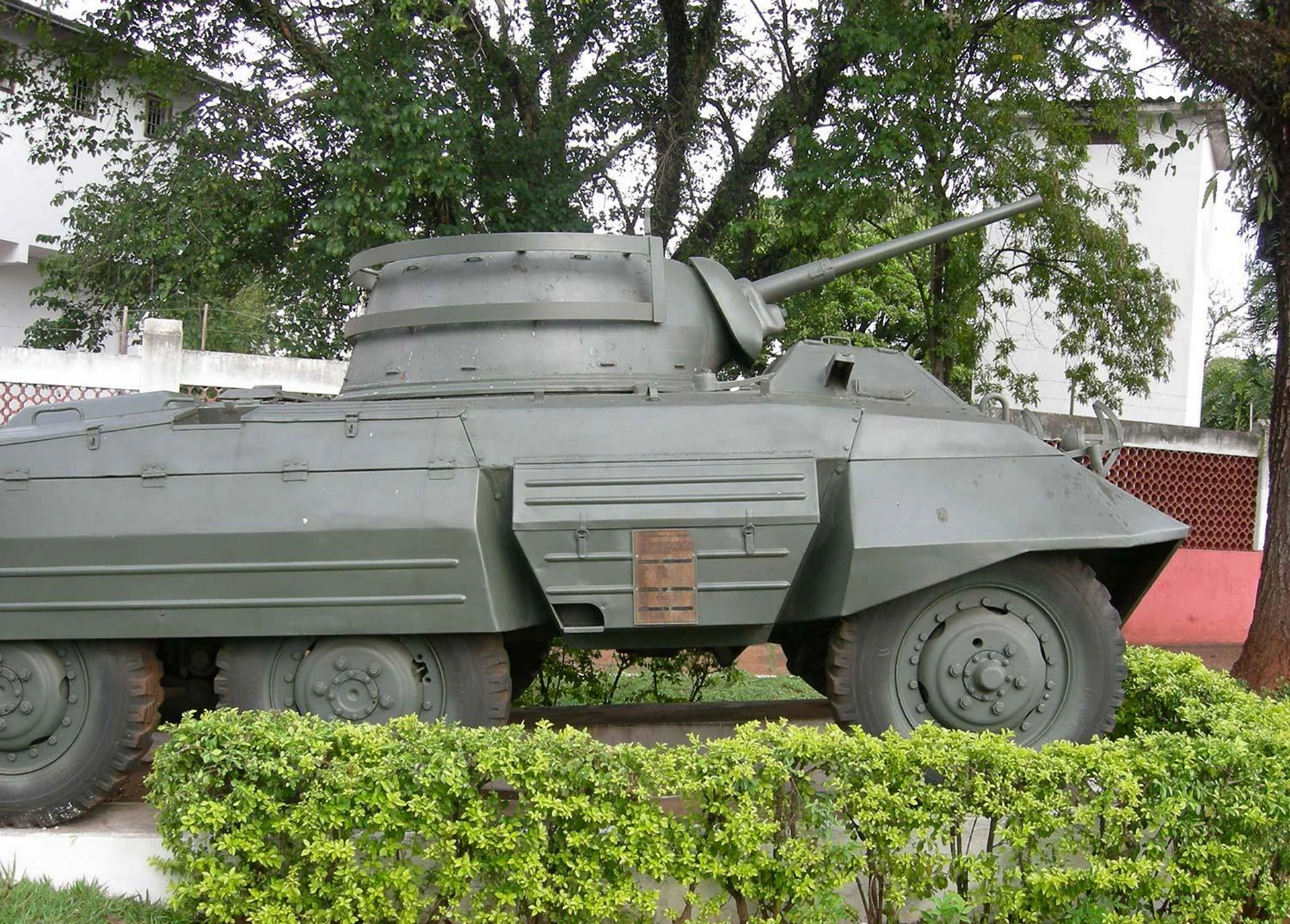
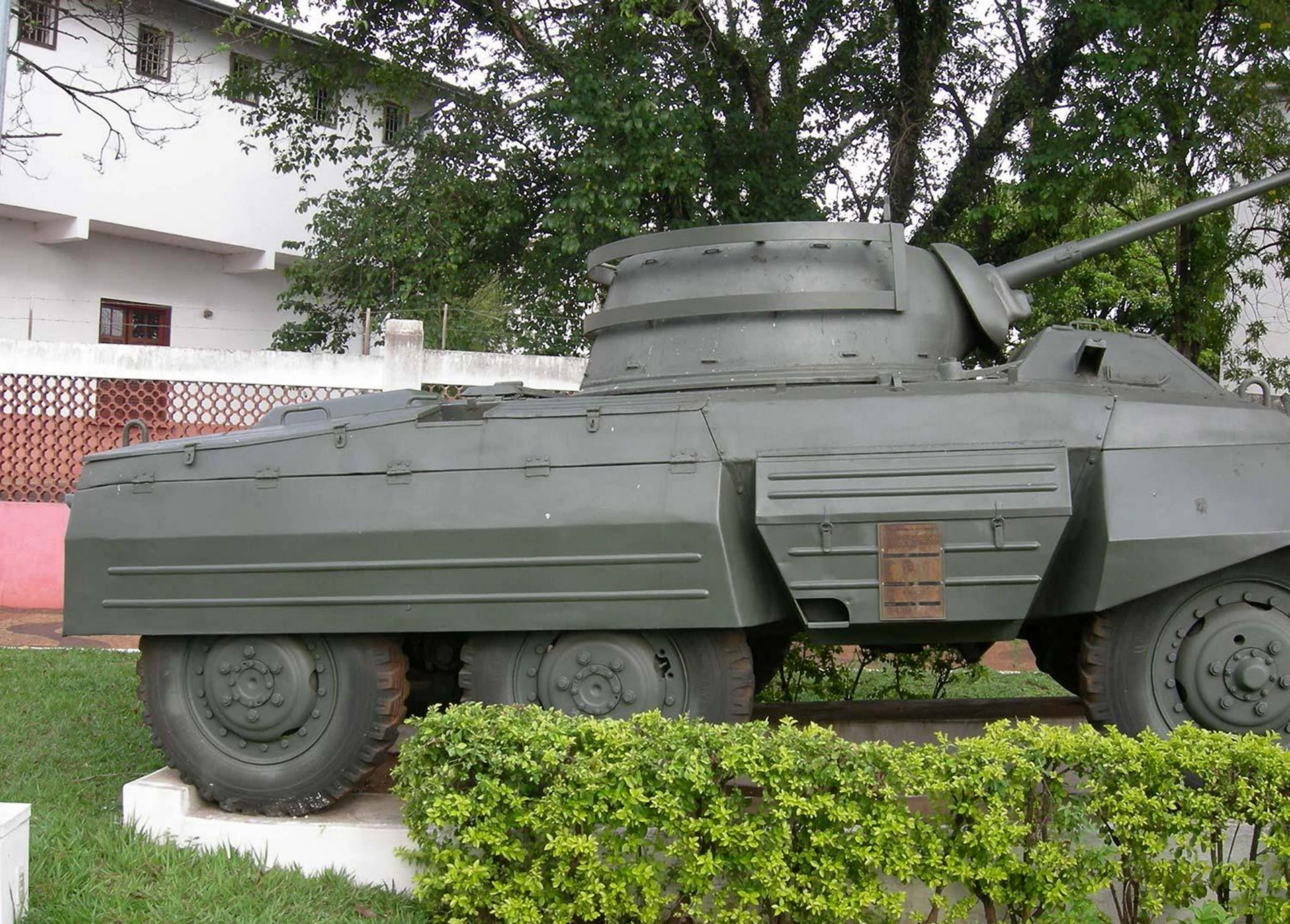
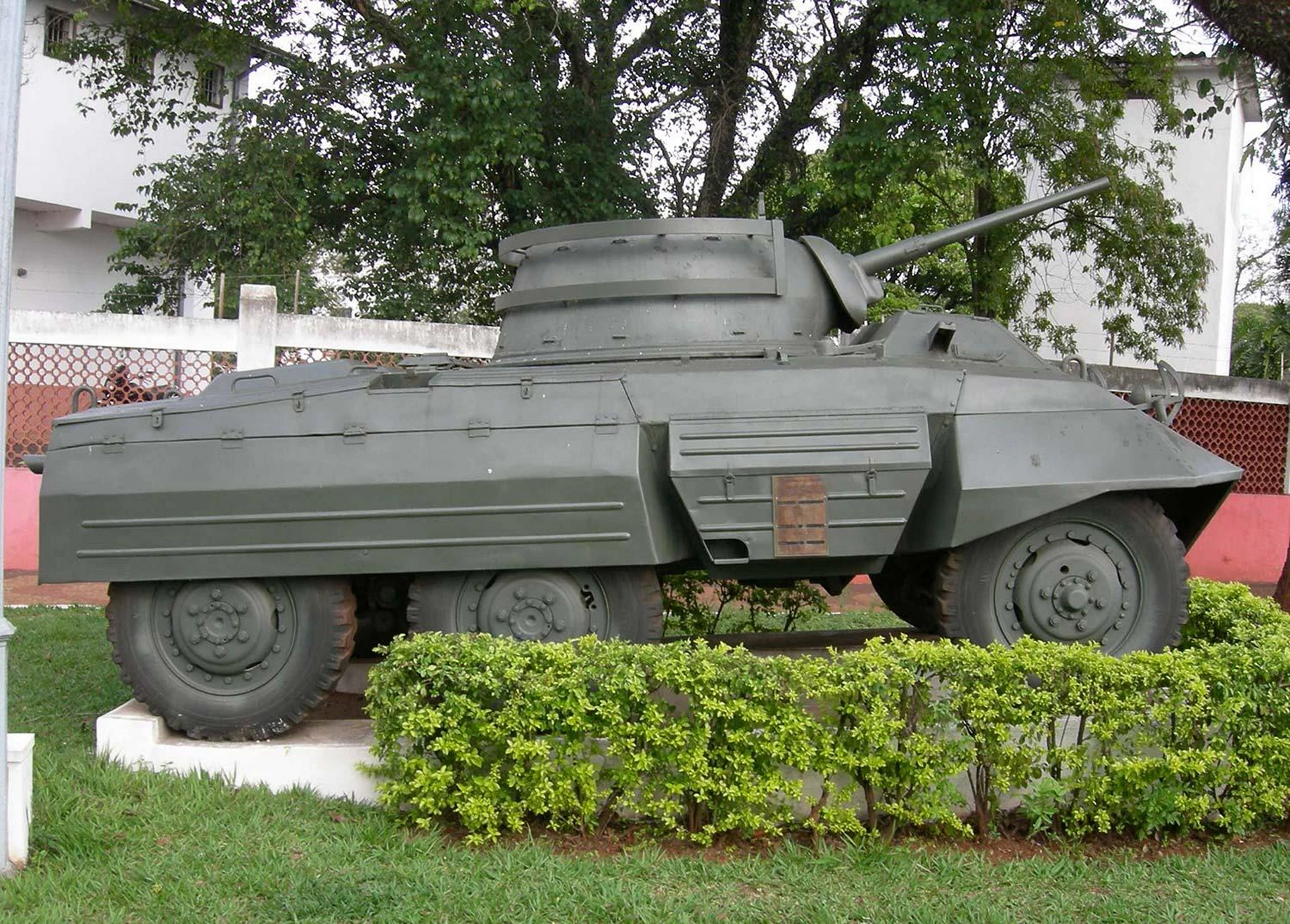
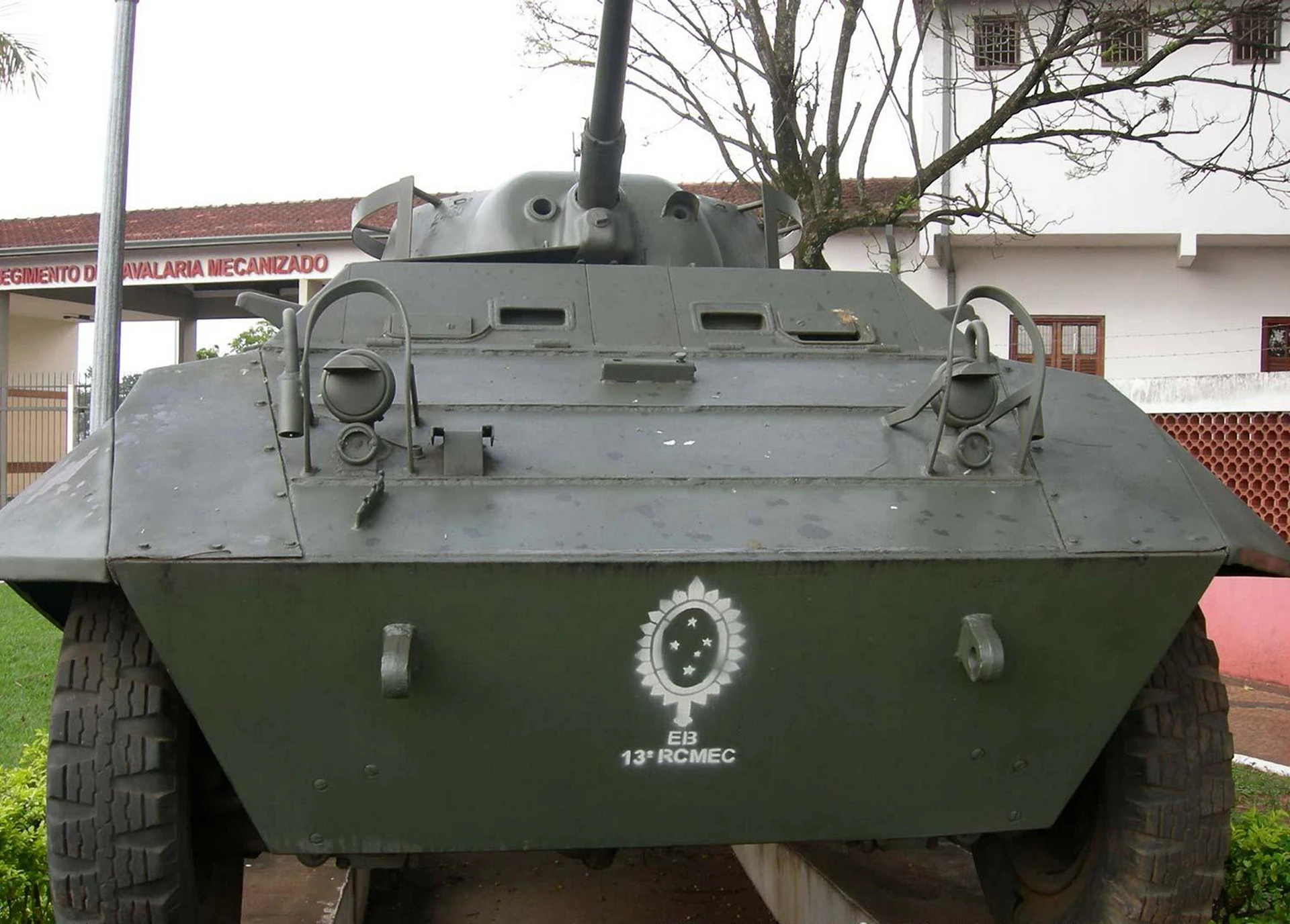
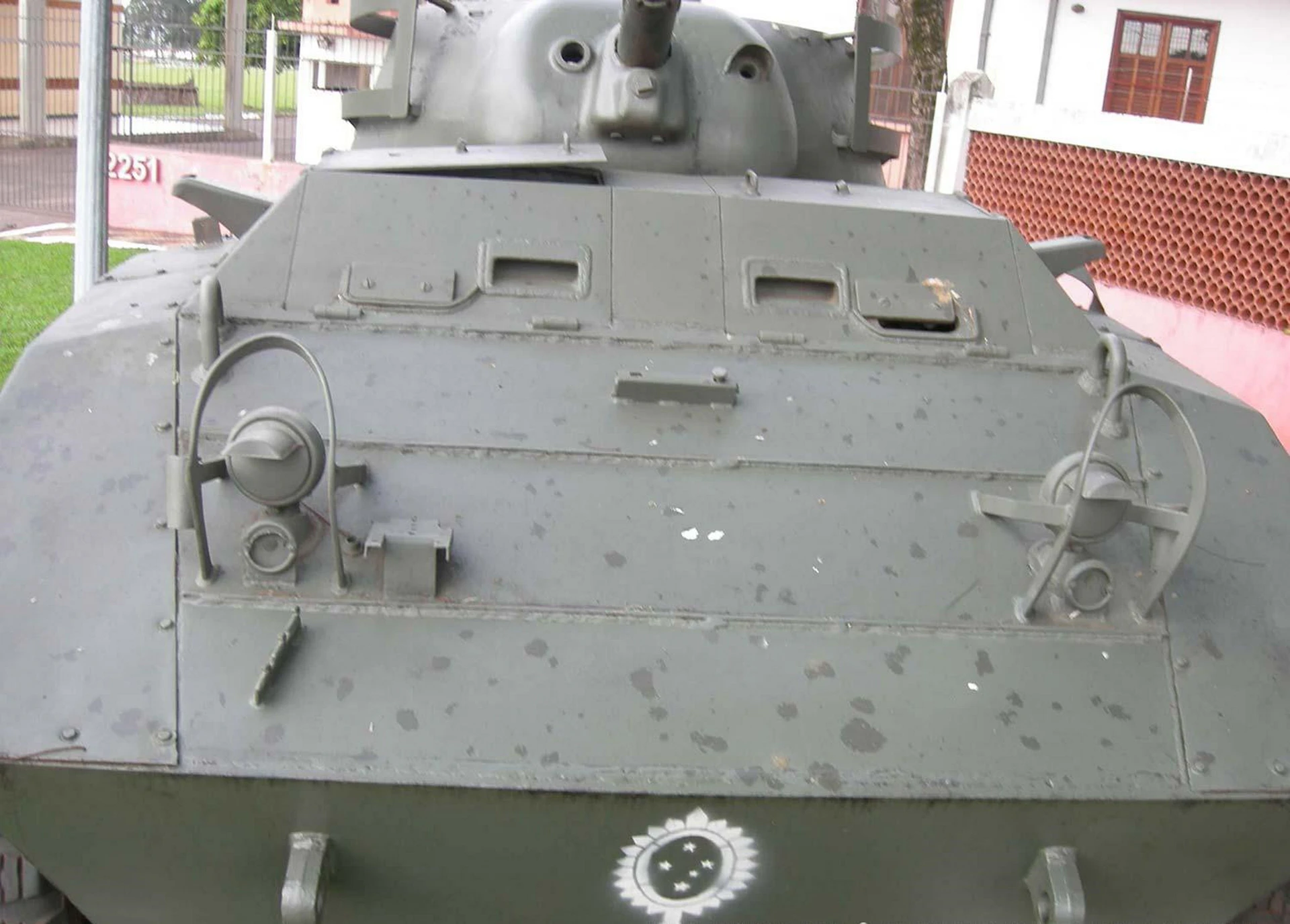
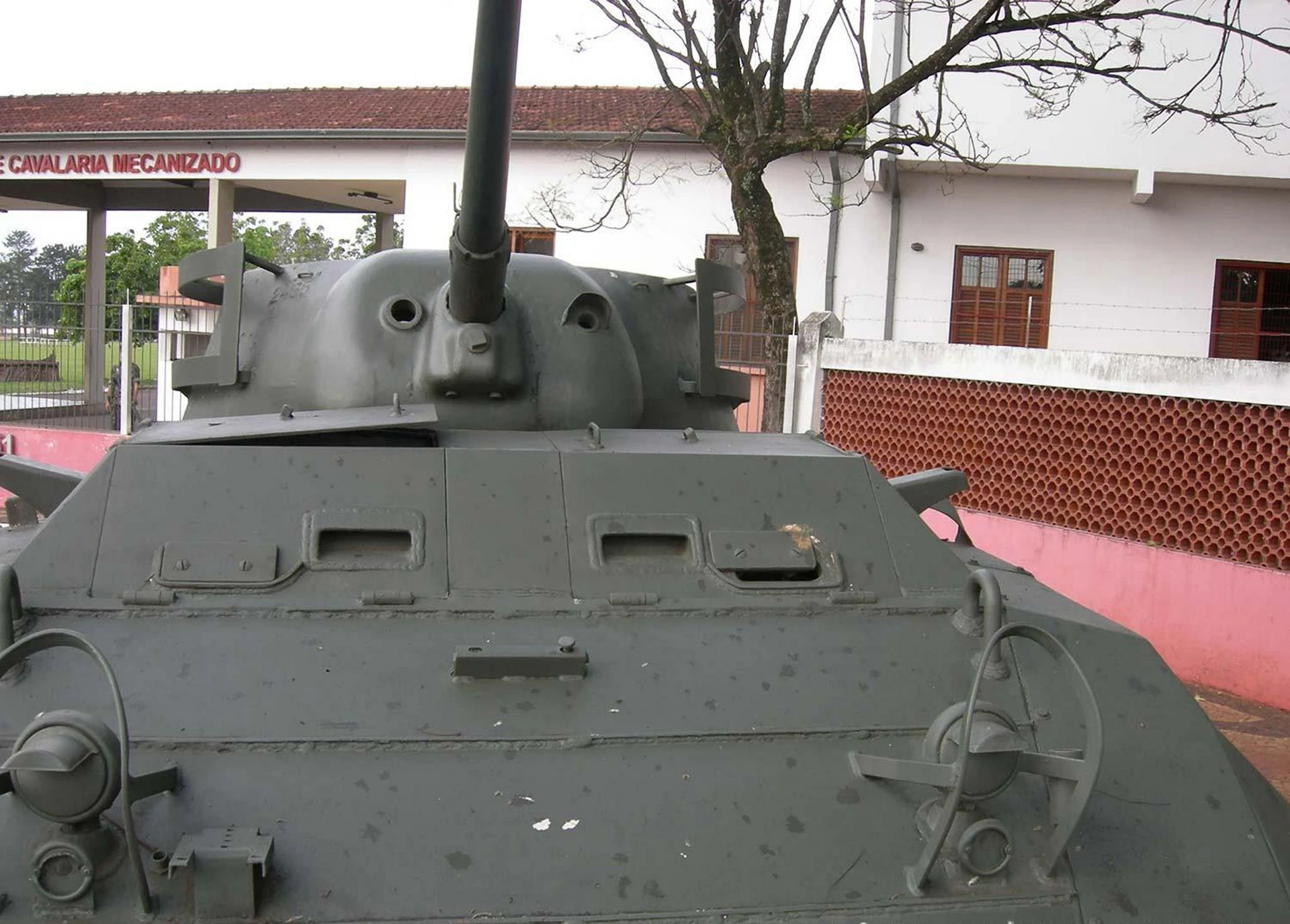
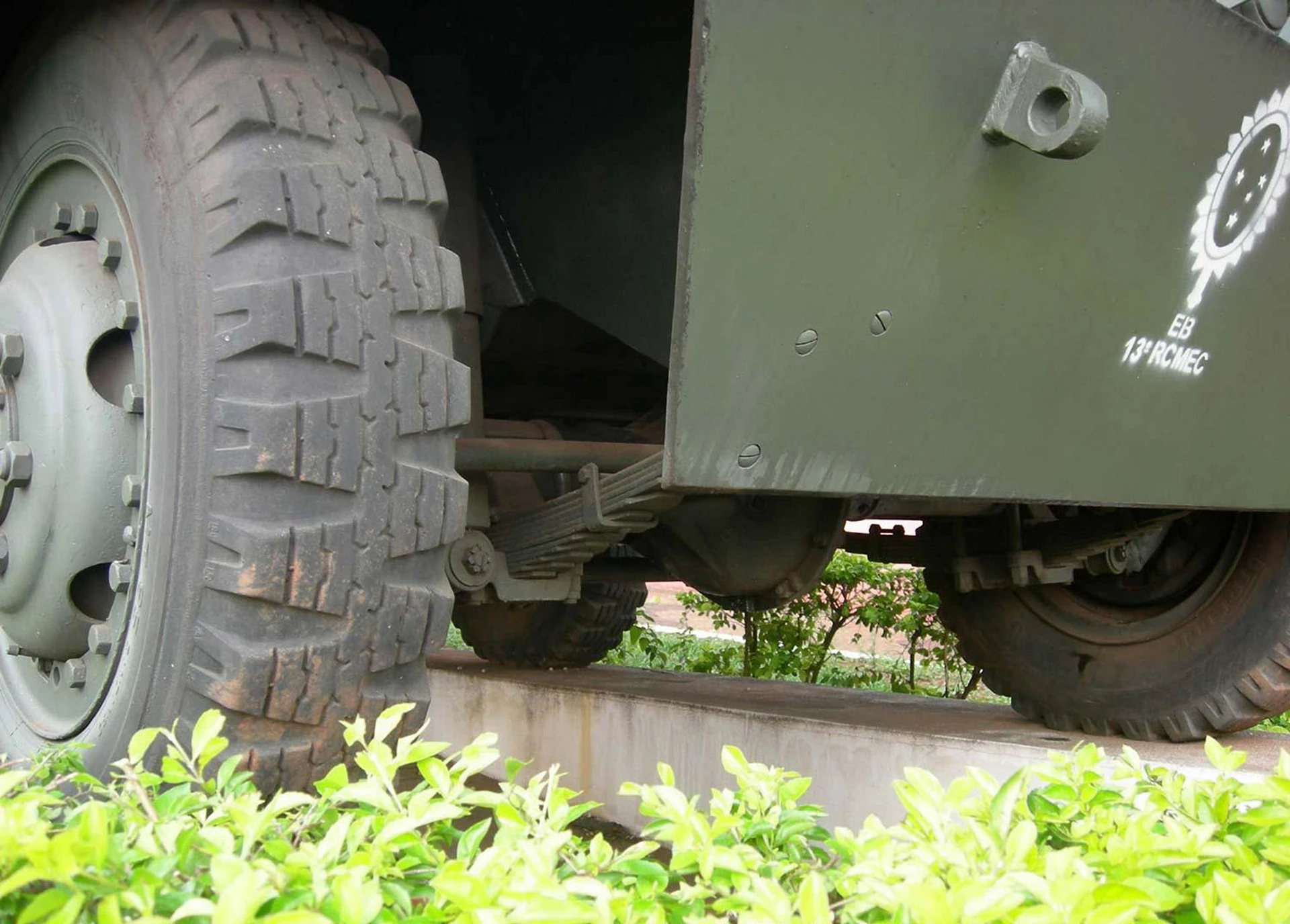
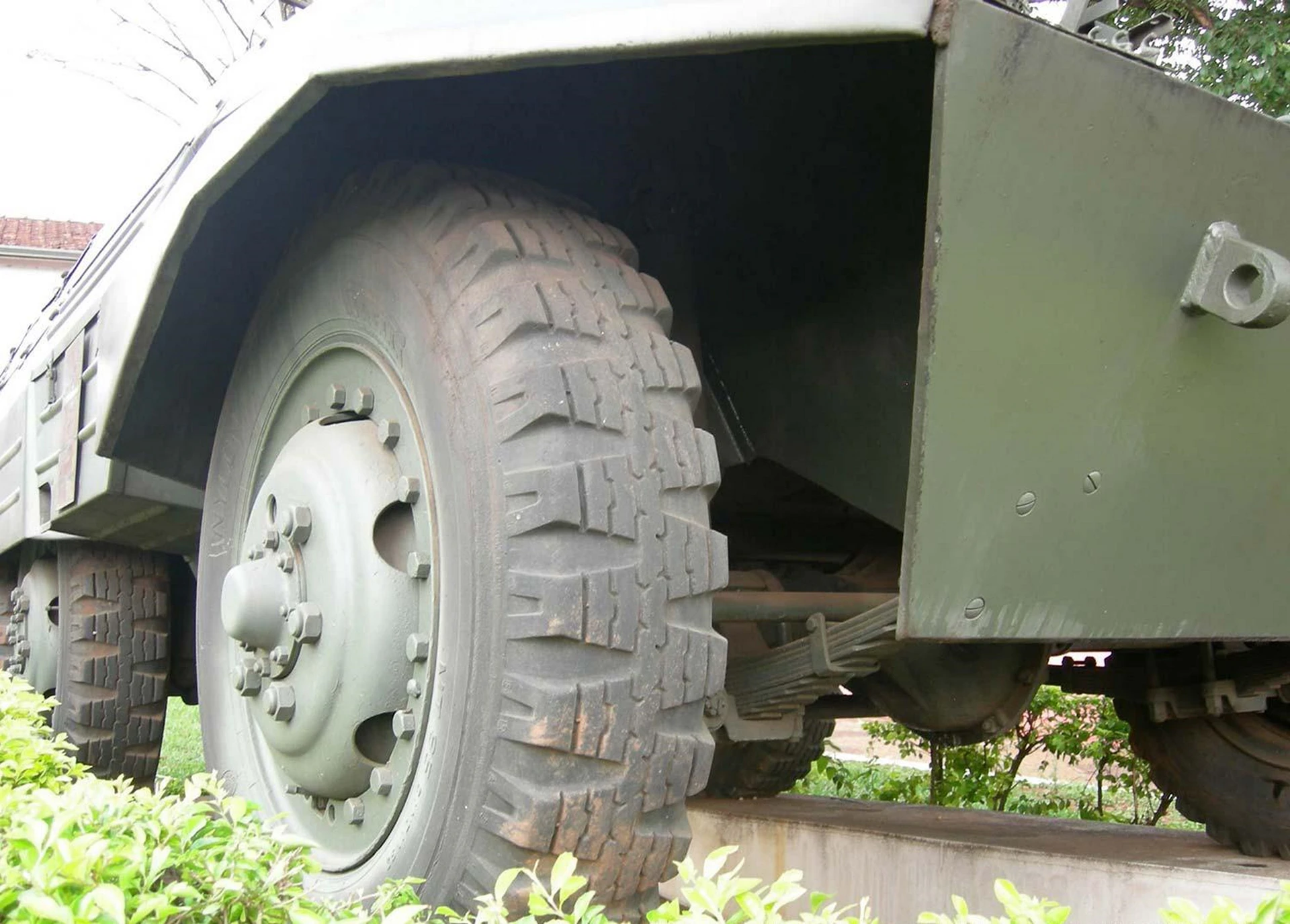
Voir aussi :


The Swift Scout of the Liberation
Lla M8 Voiture blindée légère « Greyhound » was the premier swift-strike reconnaissance vehicle deployed by the United States and its Allies during World War II. Originally engineered by Ford as a dedicated wheeled tank destroyer, its lightweight armor and small 37mm gun were quickly deemed inadequate for frontline anti-tank warfare. However, its exceptional on-road speed and silent mechanical signature made it an absolute masterpiece for the Cavalry Reconnaissance Squadrons. Given the nickname « Greyhound » by British forces due to its sleek profile and high-speed mobility, the M8 became the eyes and ears of Allied armies. It raced ahead of the heavy tank columns across Western Europe, probing enemy lines, mapping safe advance corridors, and radioing back vital battlefield intelligence.
| Attribute | Technical Specification (M8 Greyhound Baseline) |
|---|---|
| Rôle | Armored Reconnaissance / Scout Car |
| Crew | 4 (Commander, Gunner, Driver, Radio Operator/Assistant Driver) |
| Groupe motopropulseur | 1 × Hercules JXD 6-cylinder liquid-cooled gasoline engine (110 hp) |
| Vitesse maximale | 88 km/h (55 mph) on paved roads | 48 km/h (30 mph) cross-country |
| Combat Weight | 7.8 metric tons (17,400 lbs) |
| Portée opérationnelle | ~480 km (300 miles) on roads | 160-240 km cross-country |
| Primary Armament | 1 × 37mm M6 gun in an open-topped turret (80 rounds carried) |
| Armement secondaire | 1 × .30-06 Browning M1919A4 coaxial machine gun | 1 × .50 BMG Browning M2 anti-aircraft machine gun |
| Armor Hull | Hull Front: 19mm (sloped) | Sides: 9.5mm | Turret Front: 19mm |
Design Engineering: The 6×6 Drivetrain and Open-Topped Turret
- The Silent 6×6 Wheeled Layout: Unlike noisy, metal-clattering tracked tanks, the M8 Greyhound utilized a 6×6 all-wheel-drive configuration riding on giant combat tires. Powered by a rear-mounted Hercules gasoline engine, the drivetrain was remarkably quiet. Reconnaissance crews took advantage of this silence, frequently turning off the engine and coasting down roads at dusk to listen for enemy troop movements without giving away their own position.
- The Open-Topped Situational Awareness Turret: The M8 featured a small, manually traversed turret that was entirely open at the top. While this left the gunner and commander exposed to artillery airbursts, enemy snipers, and hand grenades thrown from upper-story windows, it provided the crew with 360-degree, unobstructed battlefield vision. For a dedicated scout vehicle, this extreme situational awareness was prioritized over thick, heavy steel roofs.
- The Vulnerable Belly and Sandbag Retrofits: Because it was built to minimize weight, the underbelly of the M8 was shielded by just 4.8mm (less than a quarter-inch) of steel plating. This left the vehicle completely defenseless against German Teller mines, which would easily rupture the floor and injure the crew. Frontline troops quickly adapted by lining the entire cabin floor with thick layers of sandbags to absorb the upward kinetic blast of landmines.
- The No-Doors Armored Hull: To maximize structural rigidness and eliminate weak weld points, the M8’s sloped hull lacked any side door entries. The driver and radio operator had to climb into their seats through two small, hinged armor hatches on the front glacis plate. Meanwhile, the turret crew had to vault directly over the armored sides to enter or exit the vehicle.
Operational History: From Saint-Lô Breakouts to the Battle of St. Vith
- Stealing a March Across France: Following the brutal trench-style fighting of the Normandy hedgerows, Allied armies executed Operation Cobra to break out into the open French countryside. M8 Greyhounds spearheaded General Patton’s Third Army, racing dozens of miles ahead of the main infantry lines to exploit gaps in the German defenses, cutting communication wires, and capturing vital bridges before they could be rigged to explode.
- The David vs. Goliath Clash at St. Vith: During the opening days of the Battle of the Bulge in December 1944, a lone M8 Greyhound from the 7th Armored Division pulled off one of the most miraculous combat feats of the war. Positioned in a hide site near St. Vith, the scout car ambushed a massive German Tiger II (King Tiger) tank. The M8 maneuvered behind the behemoth and fired three 37mm rounds into the Tiger’s thin rear engine armor, causing it to catch fire and explode.
- The M20 Utility Car Offshoot: The chassis of the M8 was so fundamentally versatile that the military created a specialized variant called the **M20 Armored Utility Car**. This version deleted the 37mm turret entirely, replacing it with an open-topped passenger compartment and a ring-mounted .50 caliber machine gun. The M20 served as a fast command vehicle for generals, a forward artillery spotter, and a high-speed cargo carrier.
- A Long Post-War Global Deployment: After WWII, the United States distributed thousands of surplus Greyhounds to allied nations across the globe. The M8 saw extensive combat with French colonial forces during the First Indochina War and Algerian War. Its mechanical simplicity and ease of maintenance meant that many police forces and paramilitary units in Africa and South America kept the vintage WWII vehicle operational deep into the late 20th century.
Views : 13036