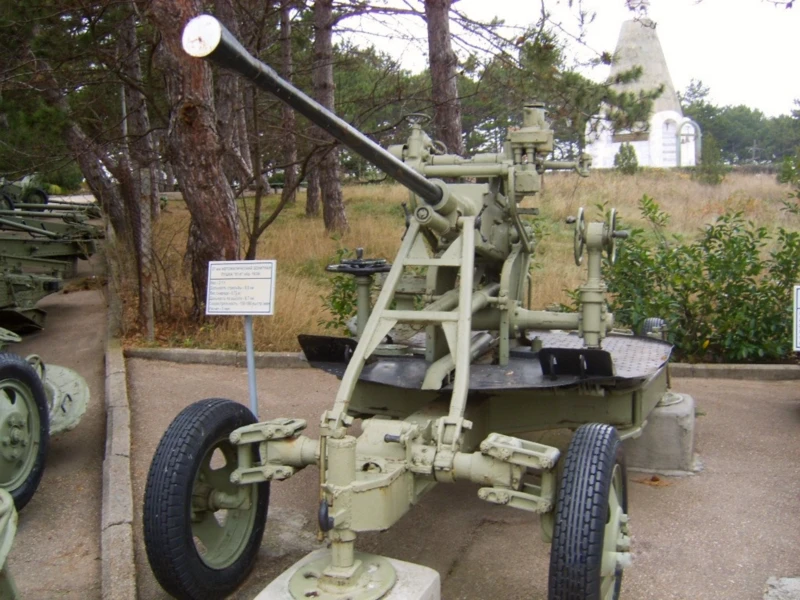
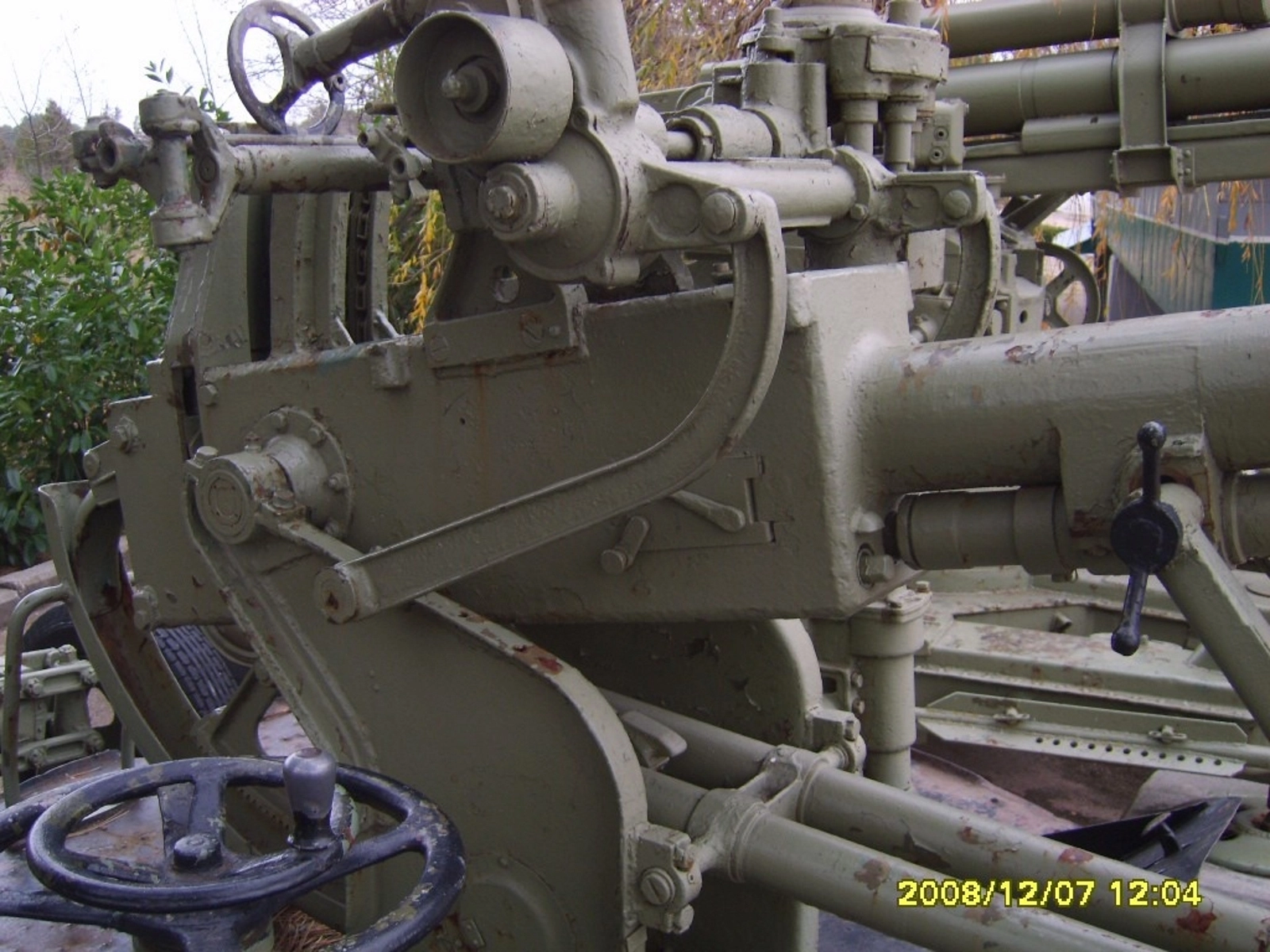
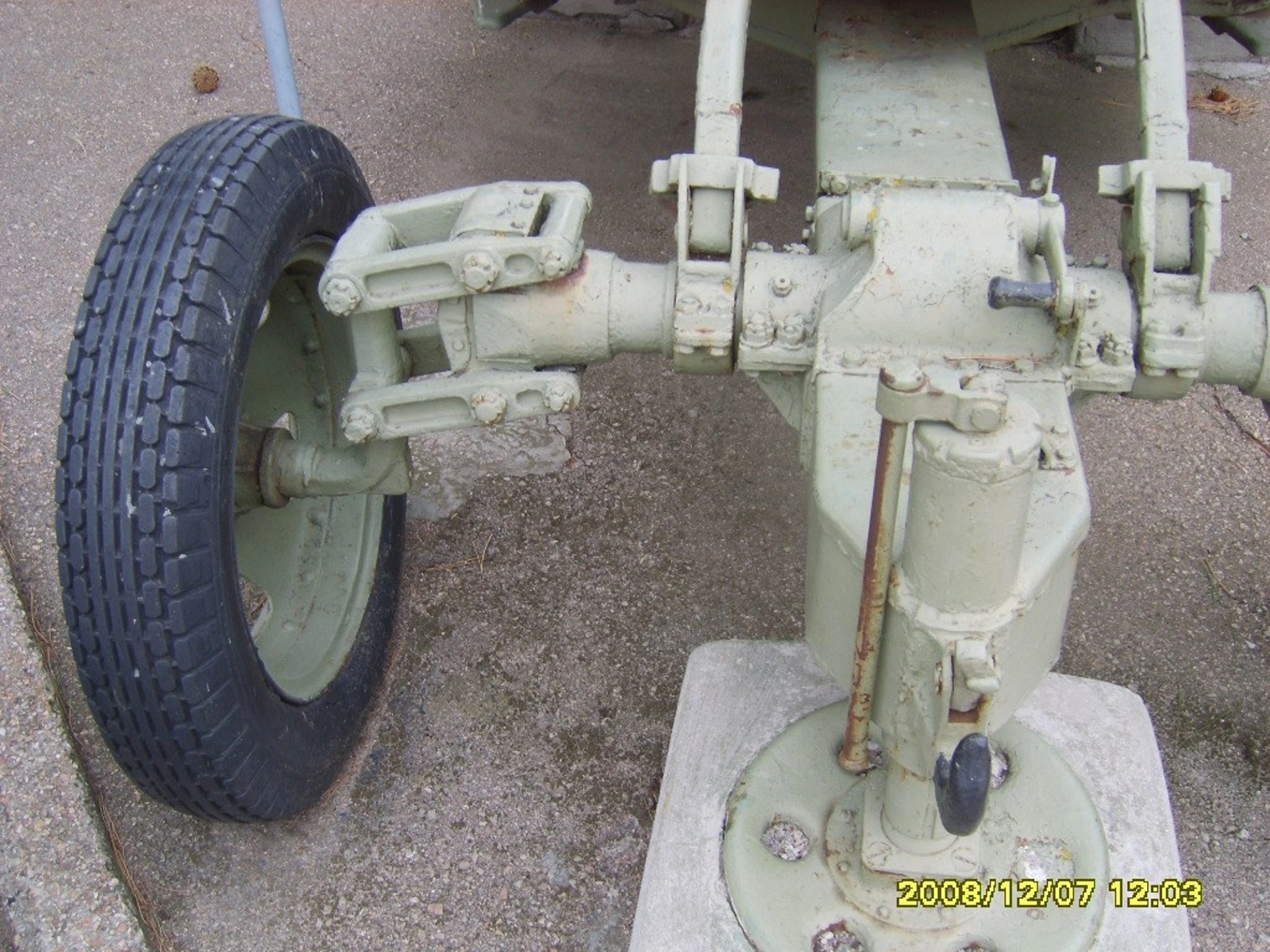
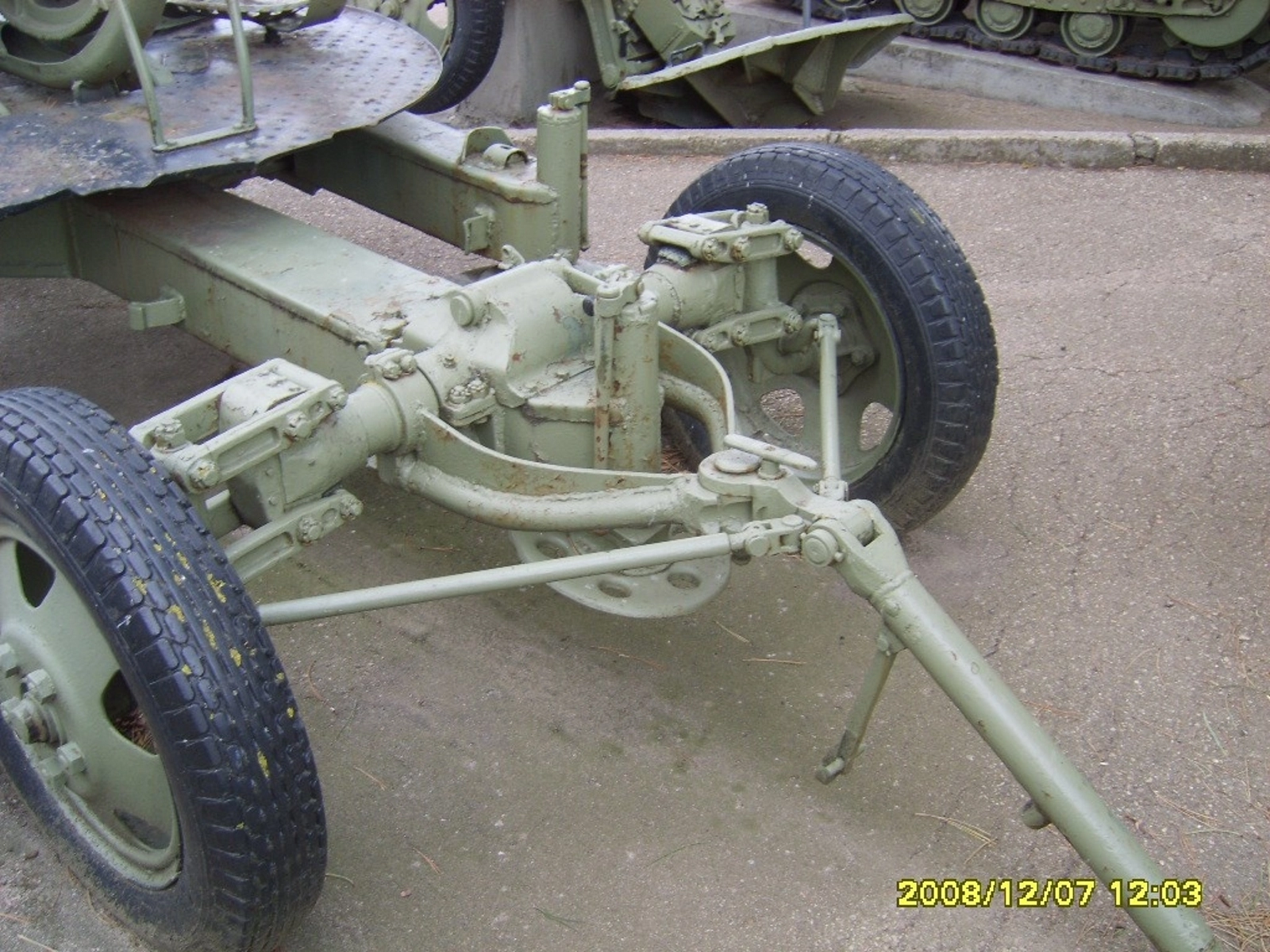
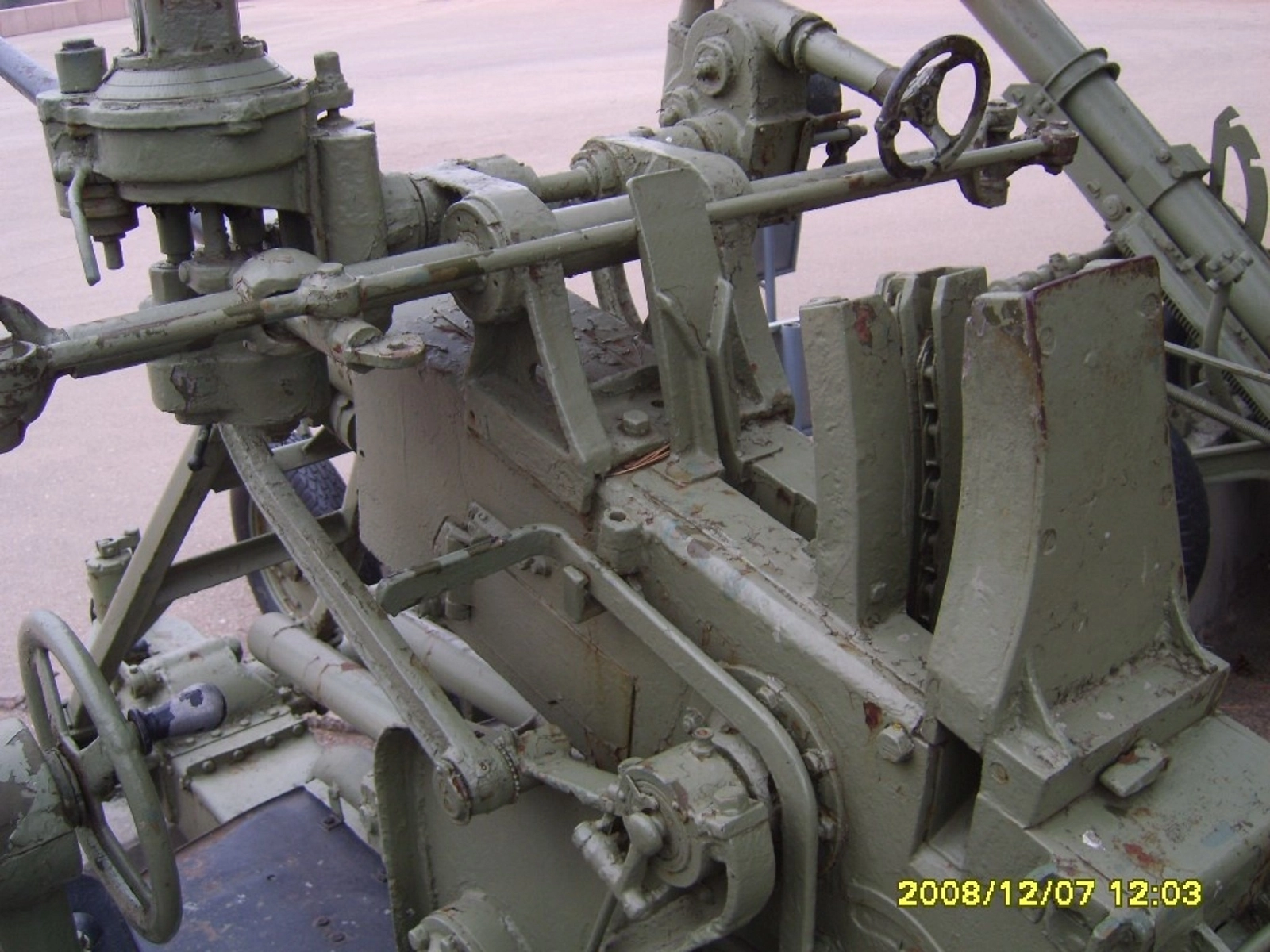
37mm ilmatorjunta-ase | |
|---|---|
| Maa | Neuvostoliiton |
| Tyyppi | Ilmapuolustusase |
| Kausi | 1939-1945 |
| Rakennettu | 20.000 |
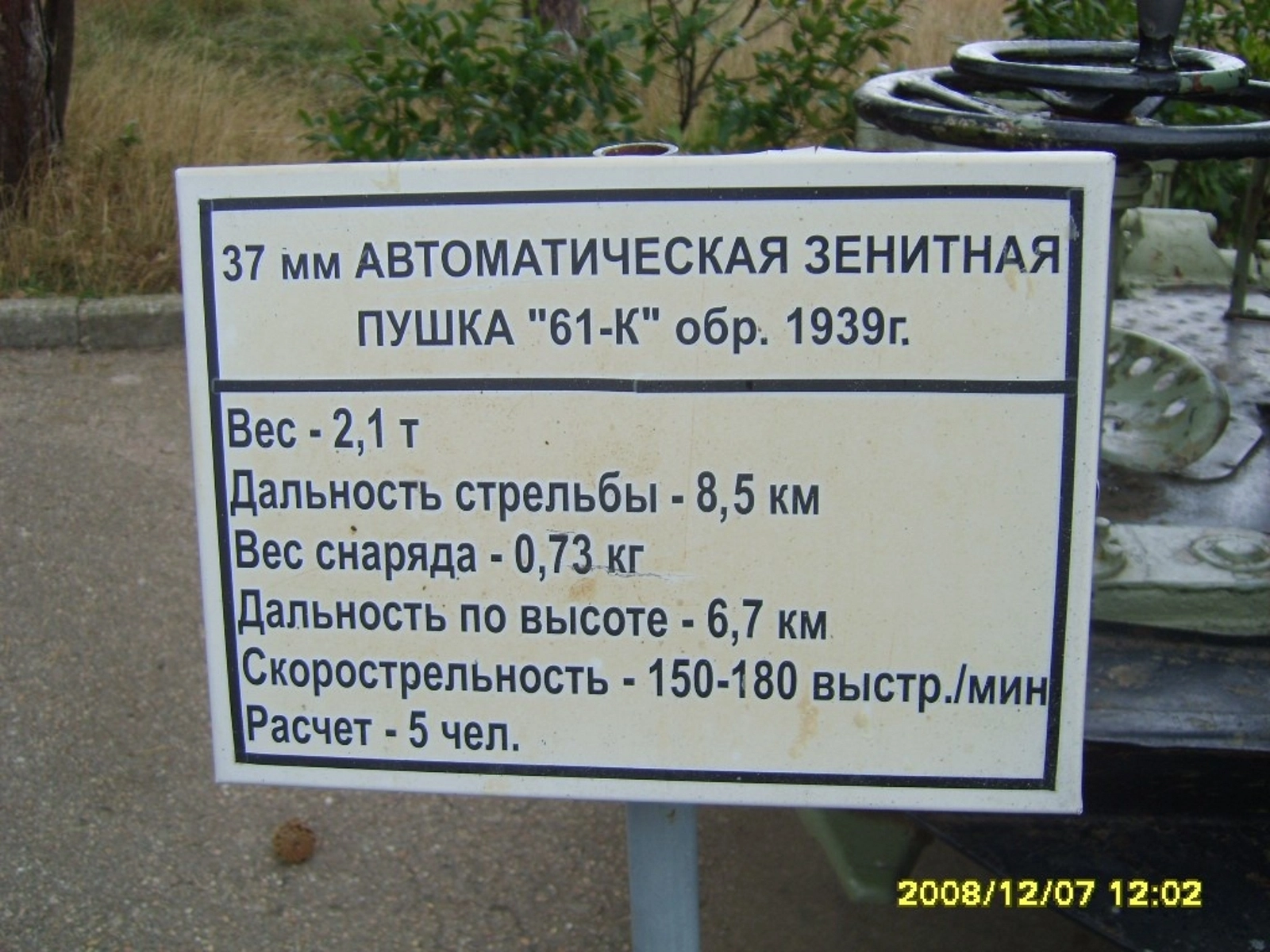
37 mm automaattinen ilmatorjunta-ase M1939 (61-K) (venäjäksi: 37-ммм автоматическая зенитная пушка образца 1939 года (61-К)) oli neuvostoliittolainen 37 mm kaliiperinen ilmatorjunta-ase, joka kehitettiin 1930-luvun lopulla ja jota käytettiin toisen maailmansodan aikana. Maapohjainen versio korvattiin Neuvostoliiton palveluksessa ZSU-57-2:lla 1950-luvulla. Tämäntyyppisiä aseita käytettiin menestyksekkäästi koko itärintamalla sukelluspommittajia ja muita matalan ja keskikorkeuden kohteita vastaan. Siitä oli myös jonkin verran hyötyä kevyesti panssaroituja maakohteita vastaan. 37 MM AD-tykin miehistö ampui alas 14 657 akselikonetta. 37 mm:n ammusten määrä yhden viholliskoneen alas ampumiseen oli 905 patruunaa.
Lähde: 37mm M1939 Wikissä
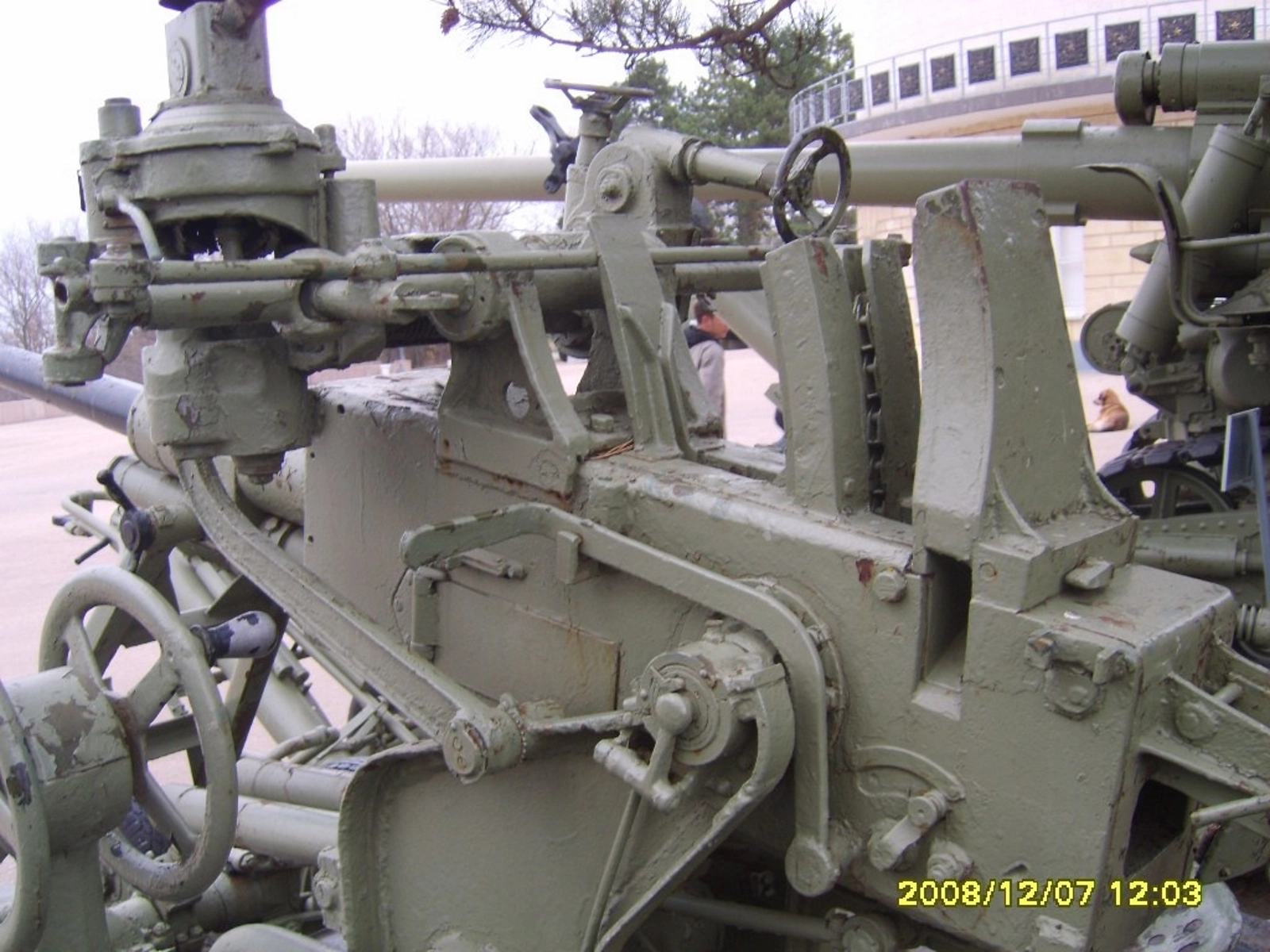
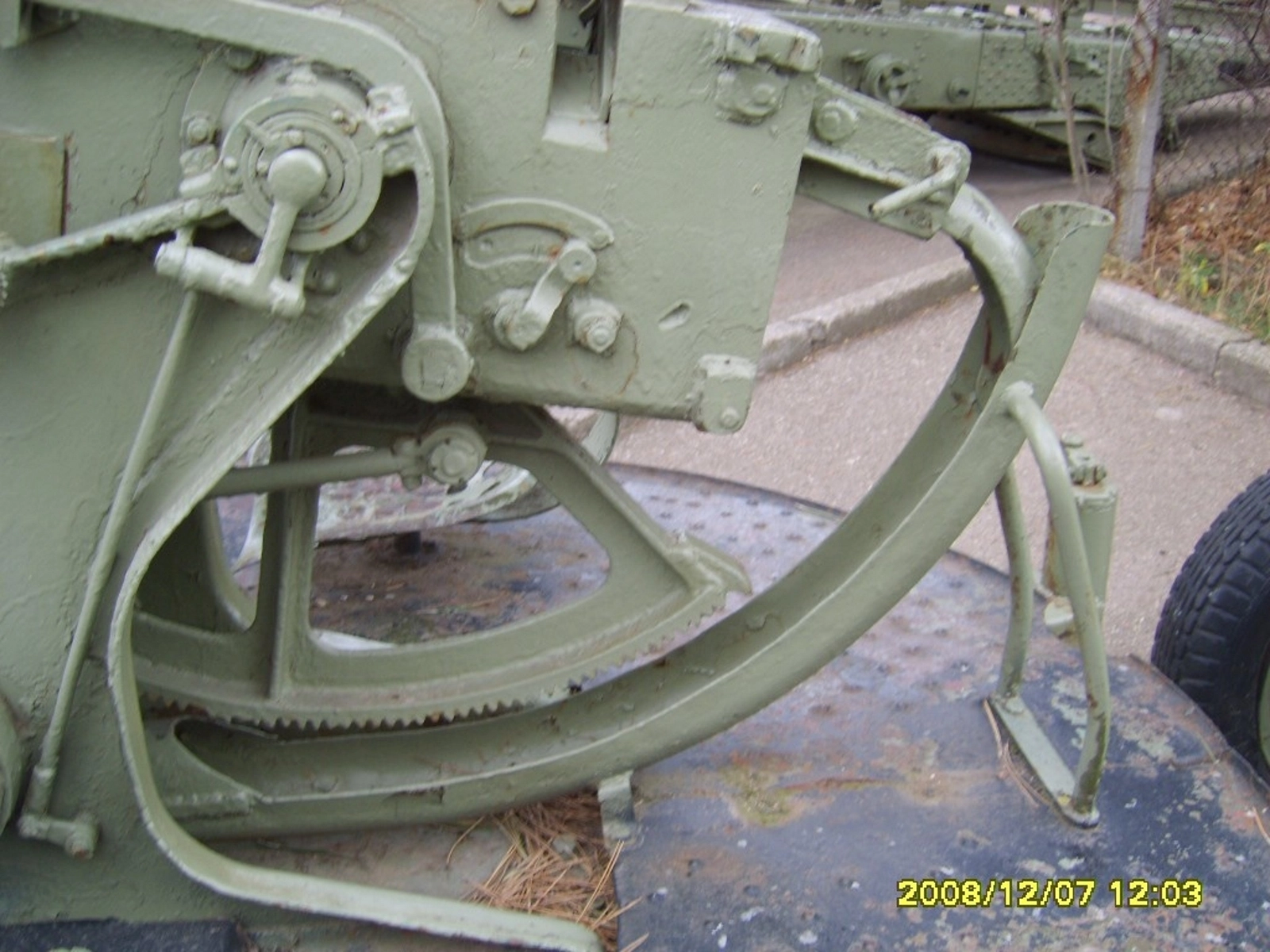
| 37 mm ilmatorjuntatykki Kävele ympäri | |
|---|---|
| Valokuvaaja | Verwolf-niminen |
| Lokalisointi | Ei tietää |
| Valokuvat | 16 |
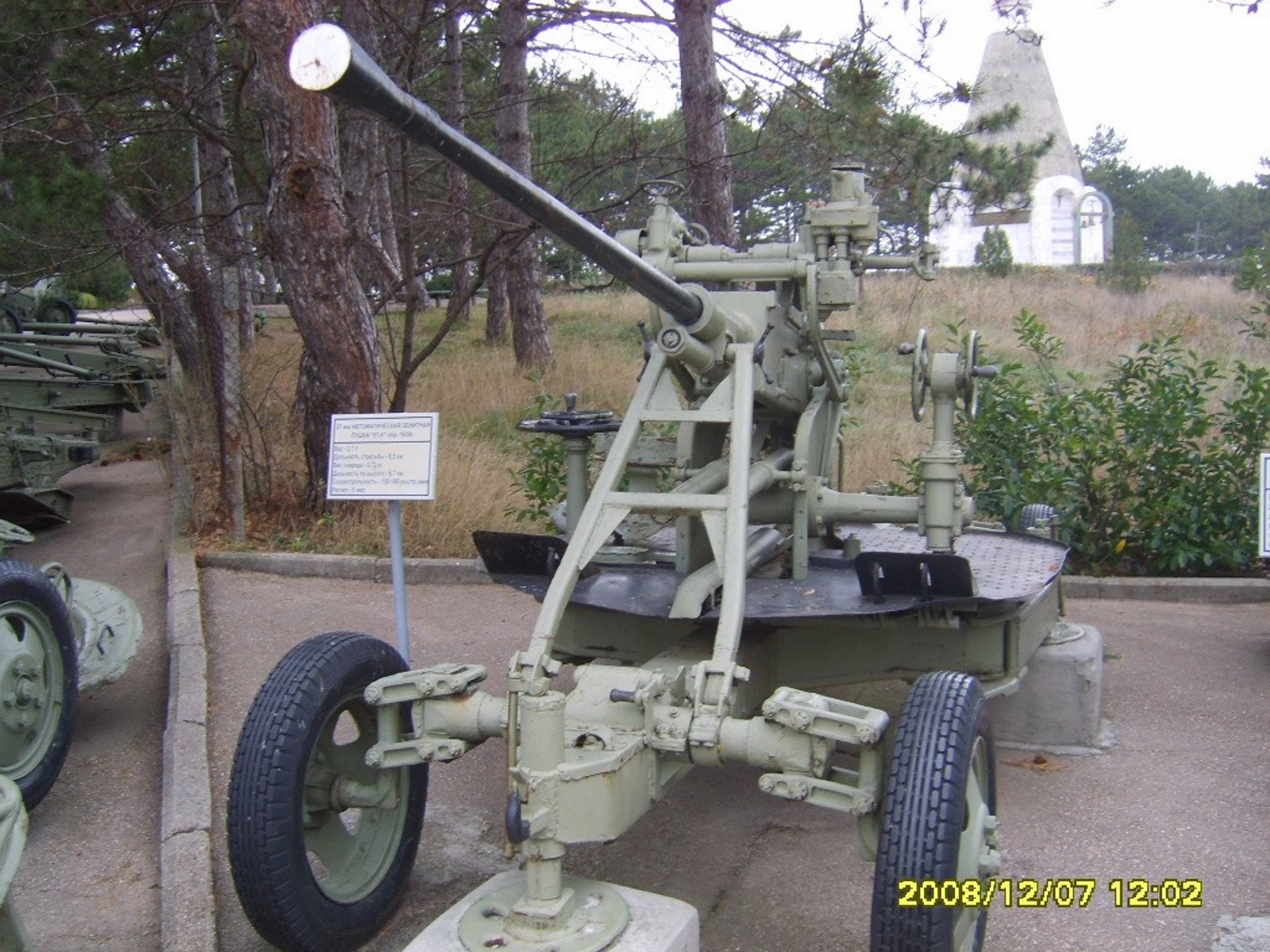

Katso myös:


The Bofors of the East
Nniiden 37mm Automatic Air Defense Gun M1939 (61-K) was the Soviet Union’s most prolific and successful light anti-aircraft weapon of World War II. Developed in the late 1930s under the leadership of Mikhail Loginov, it was heavily influenced by the Swedish Bofors 40mm design but adapted for Soviet manufacturing and the 37mm caliber. It filled the critical gap between heavy machine guns and large-caliber 85mm cannons, specializing in downing dive bombers and ground-attack aircraft. By the end of the war, 61-K crews were credited with destroying nearly 15,000 Axis aircraft.
| Attribute | Technical Specification (61-K) |
|---|---|
| Tyyppi | Automatic Anti-Aircraft Gun |
| miehistö | 8 men |
| Production Years | 1939 – 1945 (USSR) |
| Ammunition | 37 × 252 mmSR (Clip-fed, 5 rounds) |
| Rate of Fire | 160–170 rpm (Cyclic) / 80 rpm (Practical) |
| Muzzle Velocity | 880 m/s (2,887 ft/s) |
| Effective Ceiling | 4,000 m (13,123 ft) |
| Horizontal Range | 8,500 m (Maximum ballistic range) |
Engineering: Ruggedness and Versatility
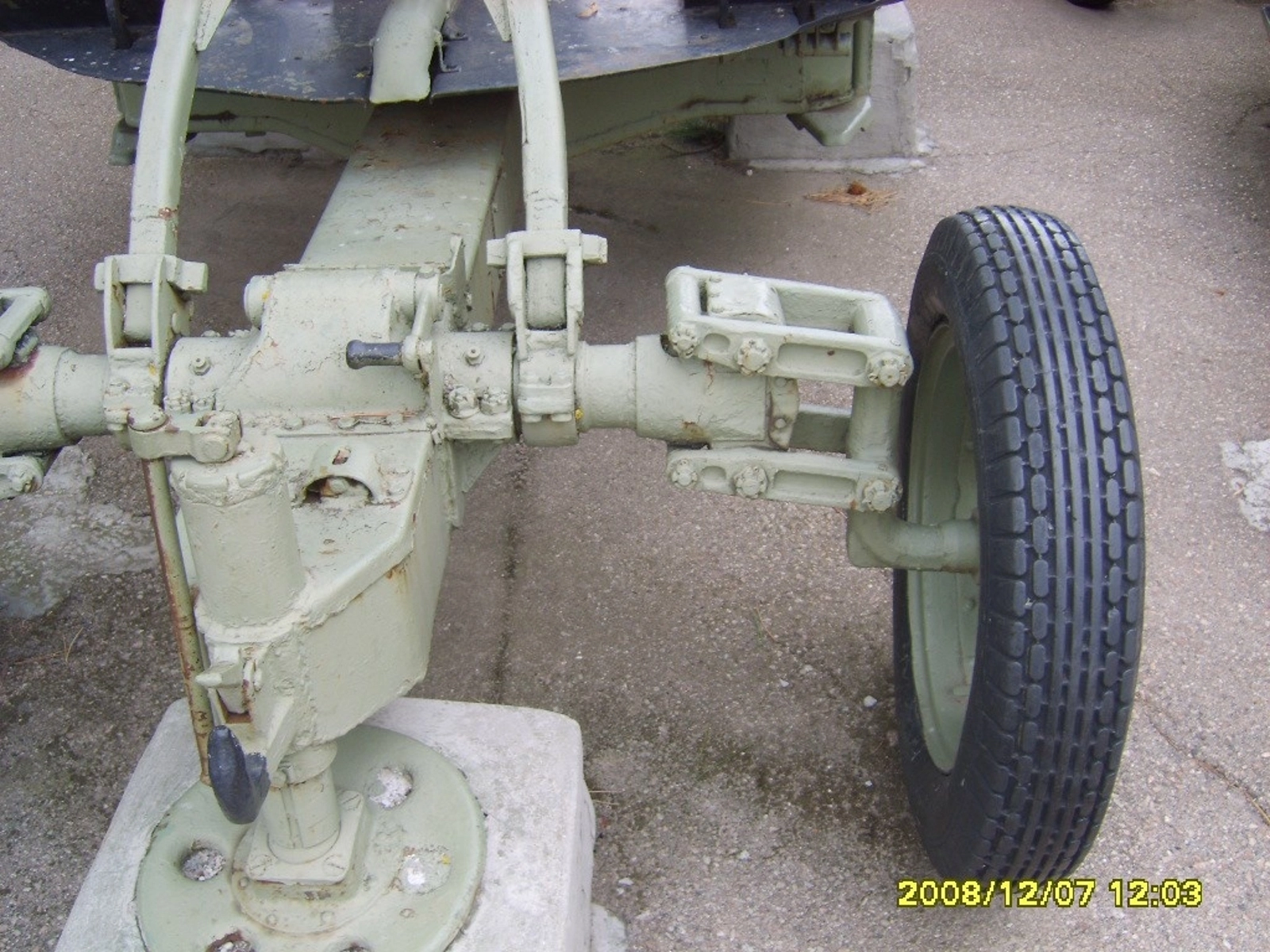
- The ZU-7 Carriage: The gun sat on a four-wheeled towed carriage with outriggers that could be deployed in under 30 seconds. This allowed the 61-K to be rapidly moved to protect advancing tank columns or critical river crossings.
- Short-Recoil Operation: The weapon used a short-recoil automatic system with a vertical sliding breech block. This design was famously reliable even in the extreme cold and mud of the Eastern Front.
- Dual-Purpose Capability: While primarily an AA gun, the 61-K was frequently used against ground targets. Its Armor-Piercing (AP) rounds could penetrate 37mm of armor at 500 meters, making it a nightmare for German light tanks and half-tracks.
- 5-Round Clips: Ammunition was fed into a hopper using 5-round clips. This allowed for a continuous “stream” of fire as long as the loaders could keep up, creating a literal wall of lead in the path of incoming Junkers or Stukas.
A Legacy Across Continents
- The “70-K” Naval Variant: A single-barrel naval version was developed for Soviet warships, eventually replacing older semi-automatic guns. It became the primary short-range defense for the Soviet Navy during the war.
- ZSU-37 Self-Propelled Gun: Toward the end of the war, the 61-K was mounted on an open-topped SU-76 chassis, creating the ZSU-37—the Soviet Union’s first dedicated tracked anti-aircraft vehicle.
- The “Type 55” and Global Reach: After WWII, the design was exported and licensed widely. China produced it as the Type 55 (single) and Type 65 (twin). It has seen action in nearly every major conflict of the 20th century, from the Korean War to the Vietnam War and beyond.
- Dien Bien Phu: During the 1954 battle, Viet Minh 37mm crews famously neutralized the French airstrip, preventing resupply and sealing the fate of the garrison—demonstrating how effective towed AA could be when hidden in jungle terrain.
Views : 5772
Uusi