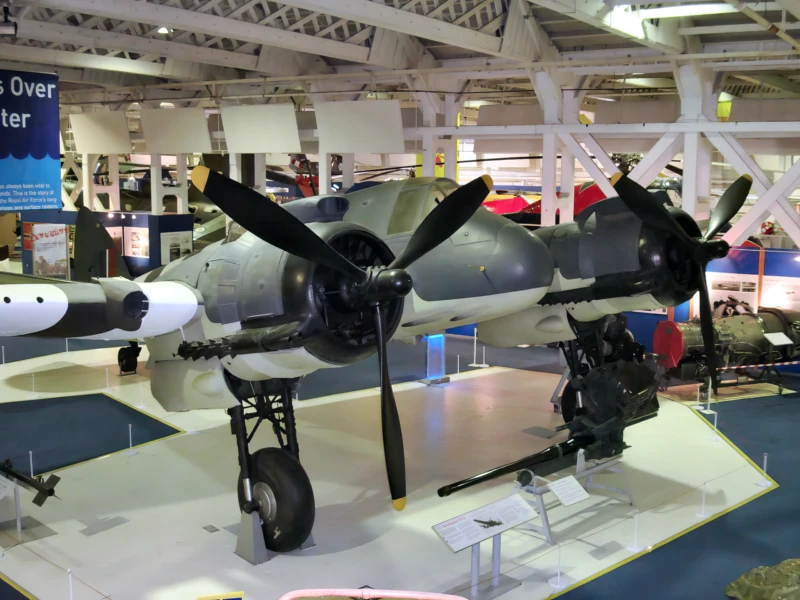
Bristol Beaufighter | |
|---|---|
| Χώρα | Ηνωμένο βασίλειο |
| Ρόλο | Βαρύ μαχητικό / απεργιακό αεροσκάφος |
| Πρώτη μύγα | 17 Ιουλίου 1939 |
| Χτισμένο | 5928 |
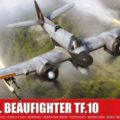
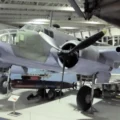
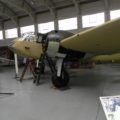
Teh Μπρίστολ Τύπου 156 Beaufighter (συχνά αναφέρεται απλώς ως "Beau") είναι ένα αεροσκάφος πολλαπλών ρόλων που αναπτύχθηκε κατά τη διάρκεια του Δευτέρου Παγκοσμίου Πολέμου από την Bristol Plane Company στο Ηνωμένο Βασίλειο. Αρχικά σχεδιάστηκε ως μια βαριά παραλλαγή μαχητών του βομβαρδιστικού Bristol Beaufort. Κατά την είσοδό του στην υπηρεσία, ο Beaufighter αποδείχθηκε κατάλληλος για το ρόλο του νυχτερινού μαχητικού, για τον οποίο η Βασιλική Πολεμική Αεροπορία (RAF) ανέπτυξε αρχικά τον τύπο κατά τη διάρκεια του ύψους της Μάχης της Βρετανίας, εν μέρει λόγω του μεγάλου μεγέθους του που του επέτρεψε να φιλοξενήσει τόσο βαρύ οπλισμό όσο και πρώιμο αερομεταφερόμενο ραντάρ αναχαίτισης χωρίς σημαντικές κυρώσεις απόδοσης.
Πηγή: Μπομάχερ στη Βικιπαίδεια
| Μπομάχερ ΓουόκερΑρούντ | |
|---|---|
| Φωτογράφος | Αγνοώ |
| Εντοπισμού | Αγνοώ |
| Φωτογραφίες | 21 |
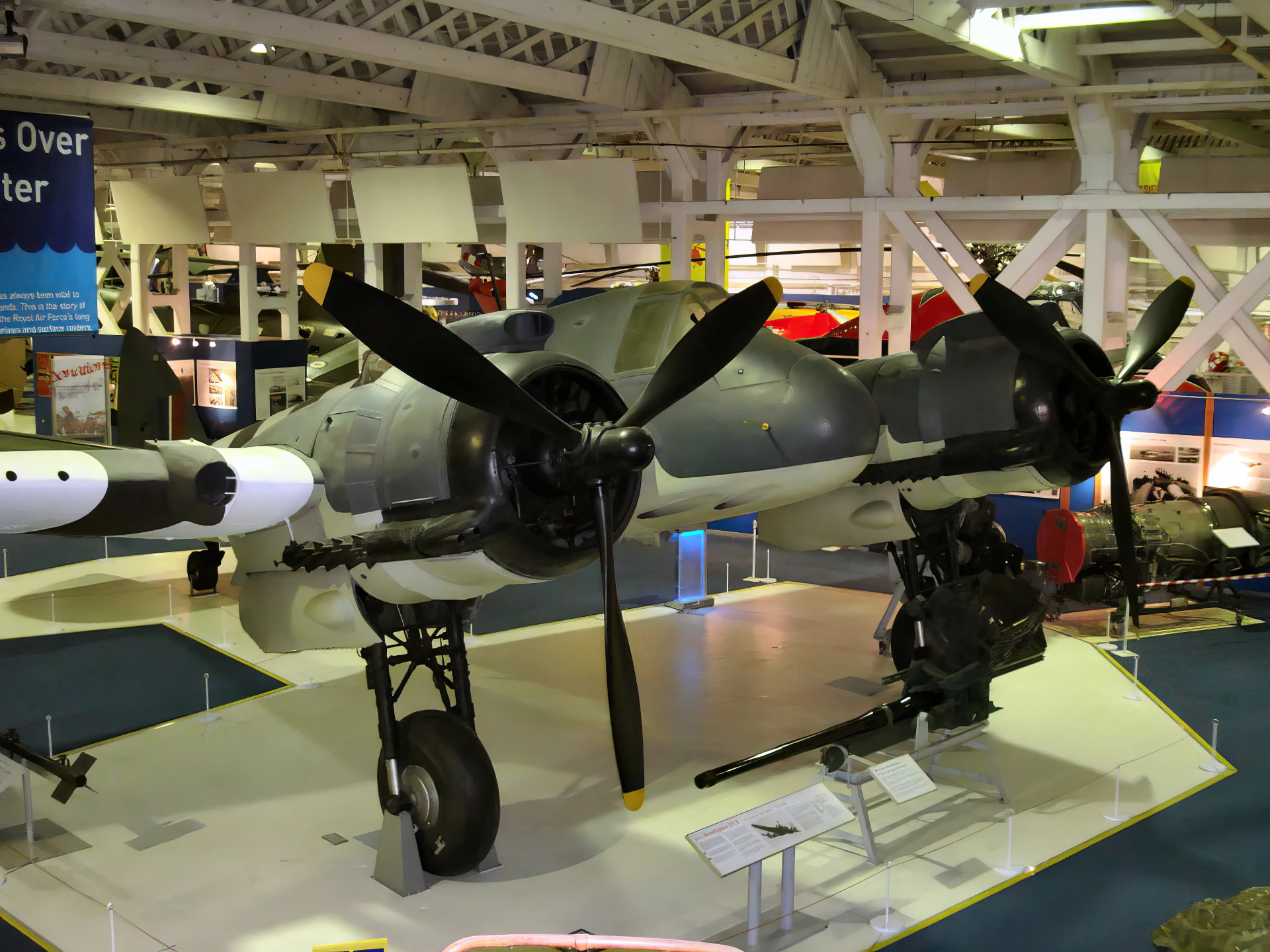
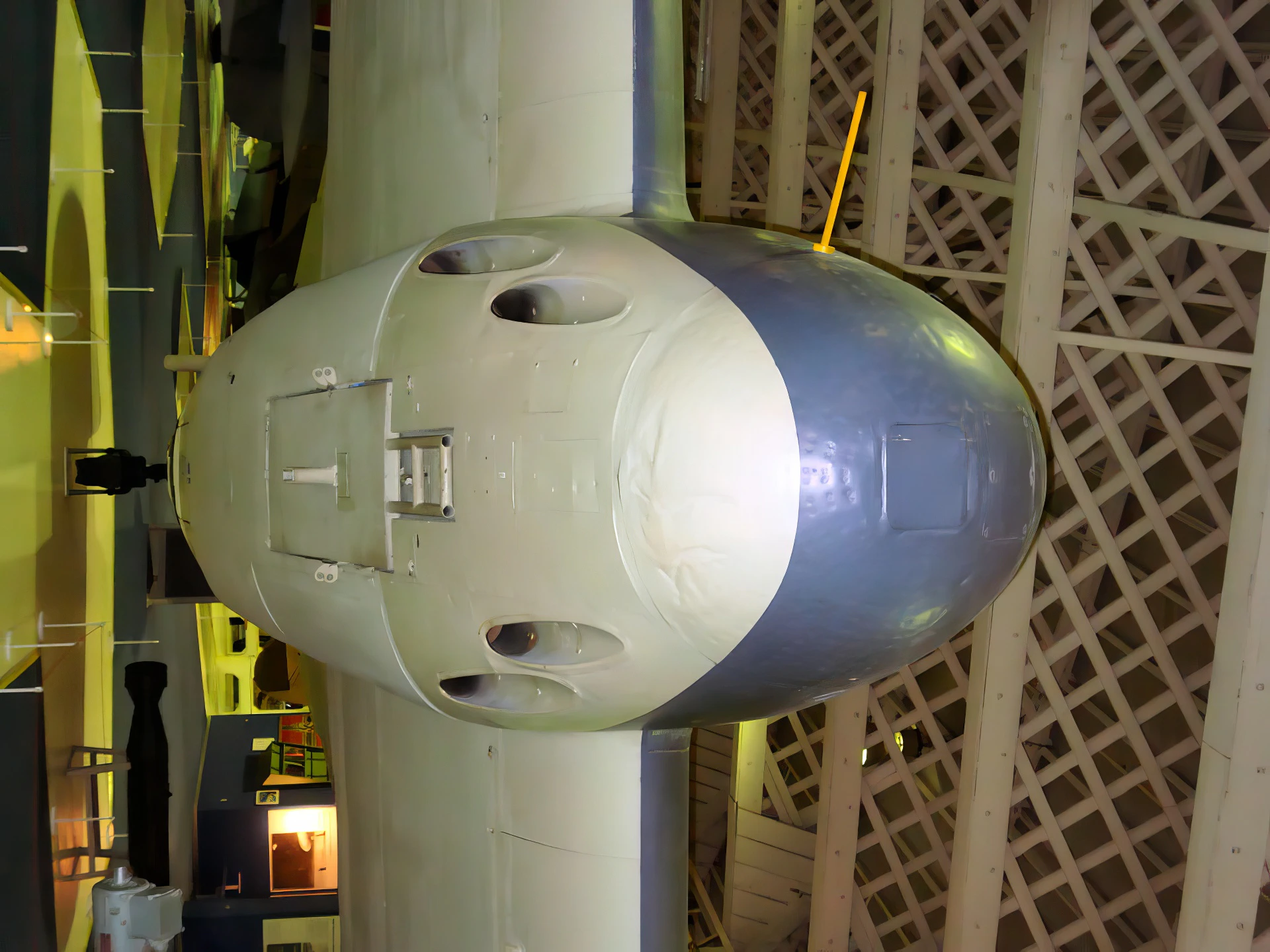
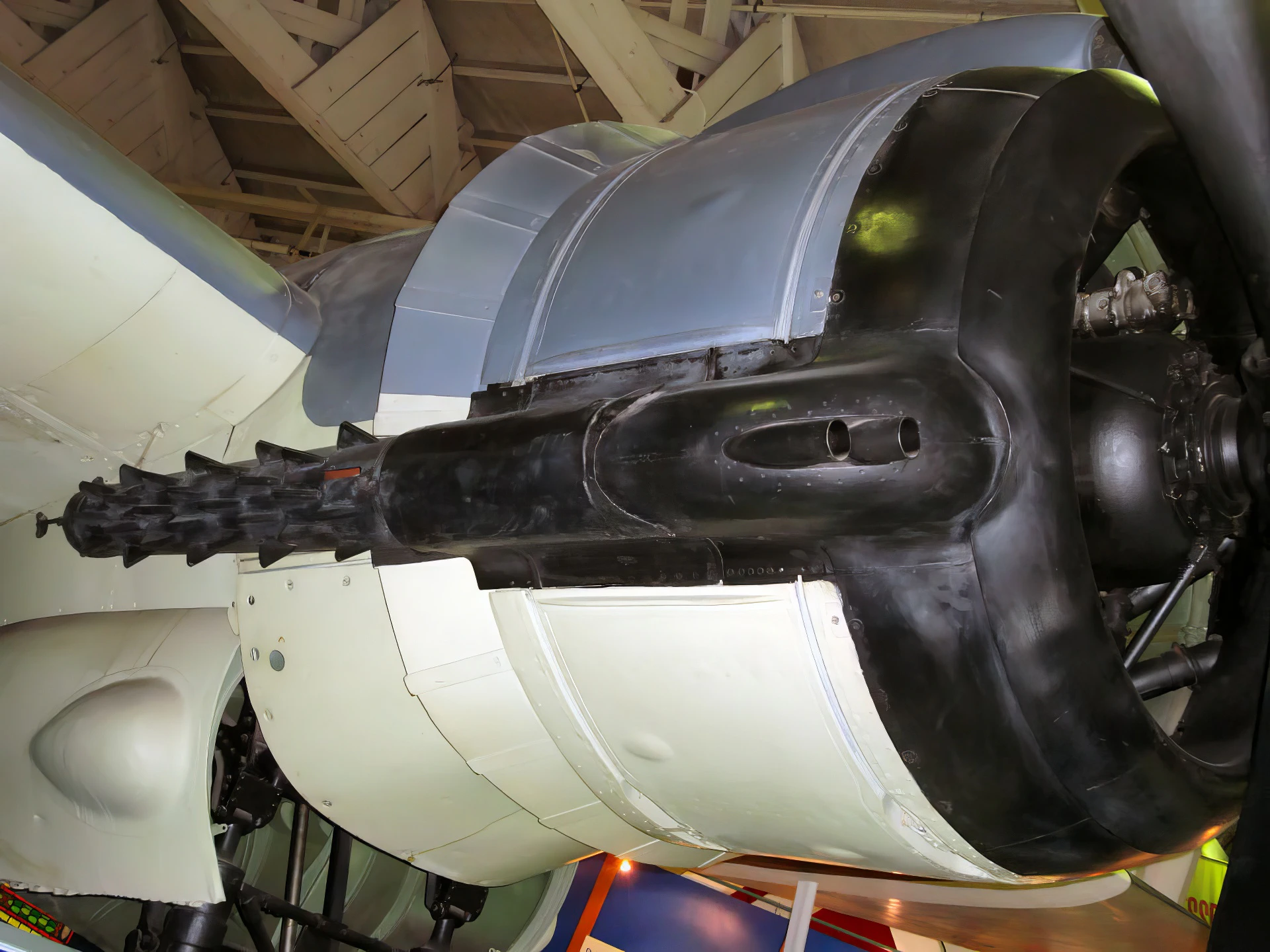
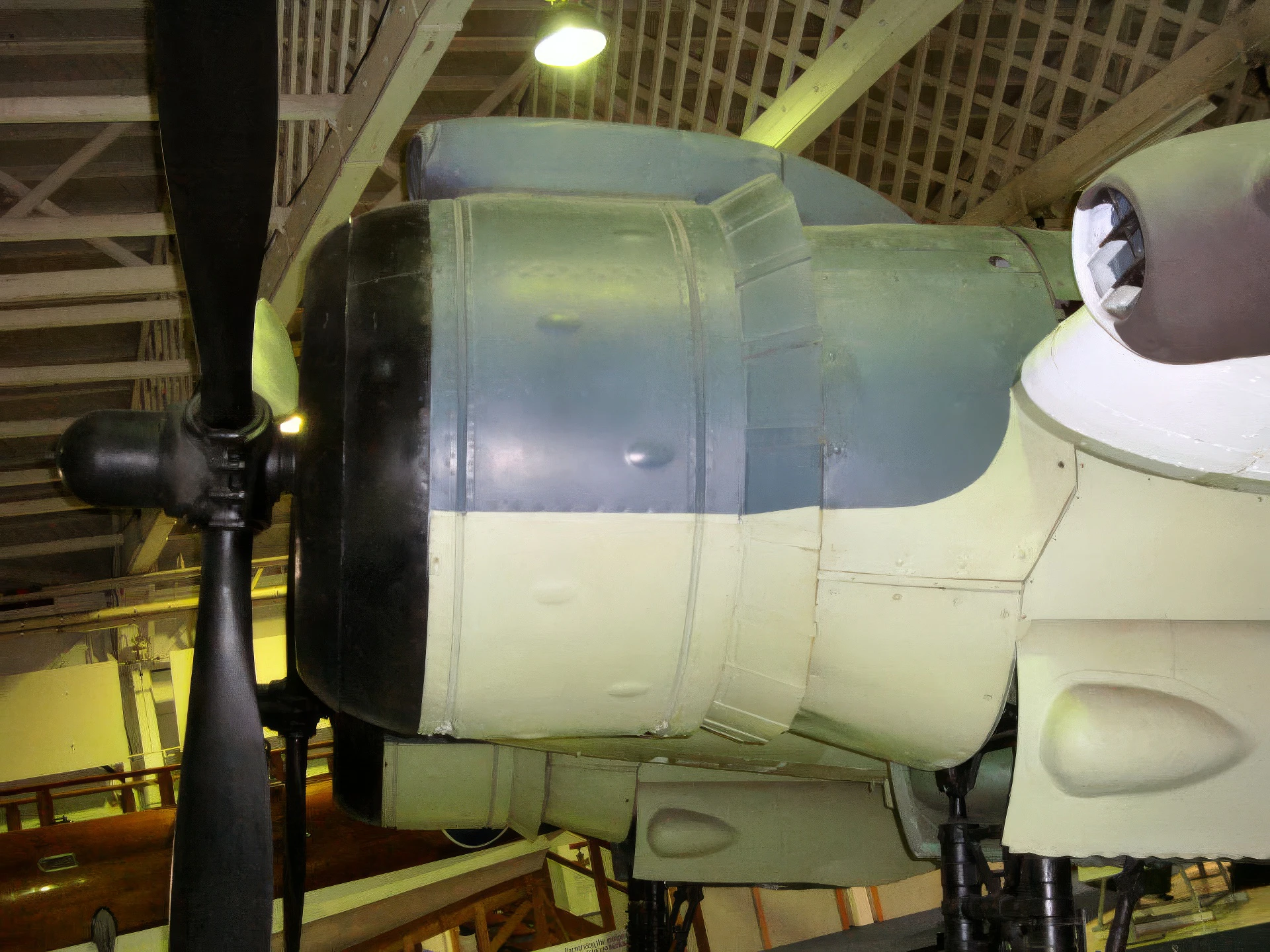
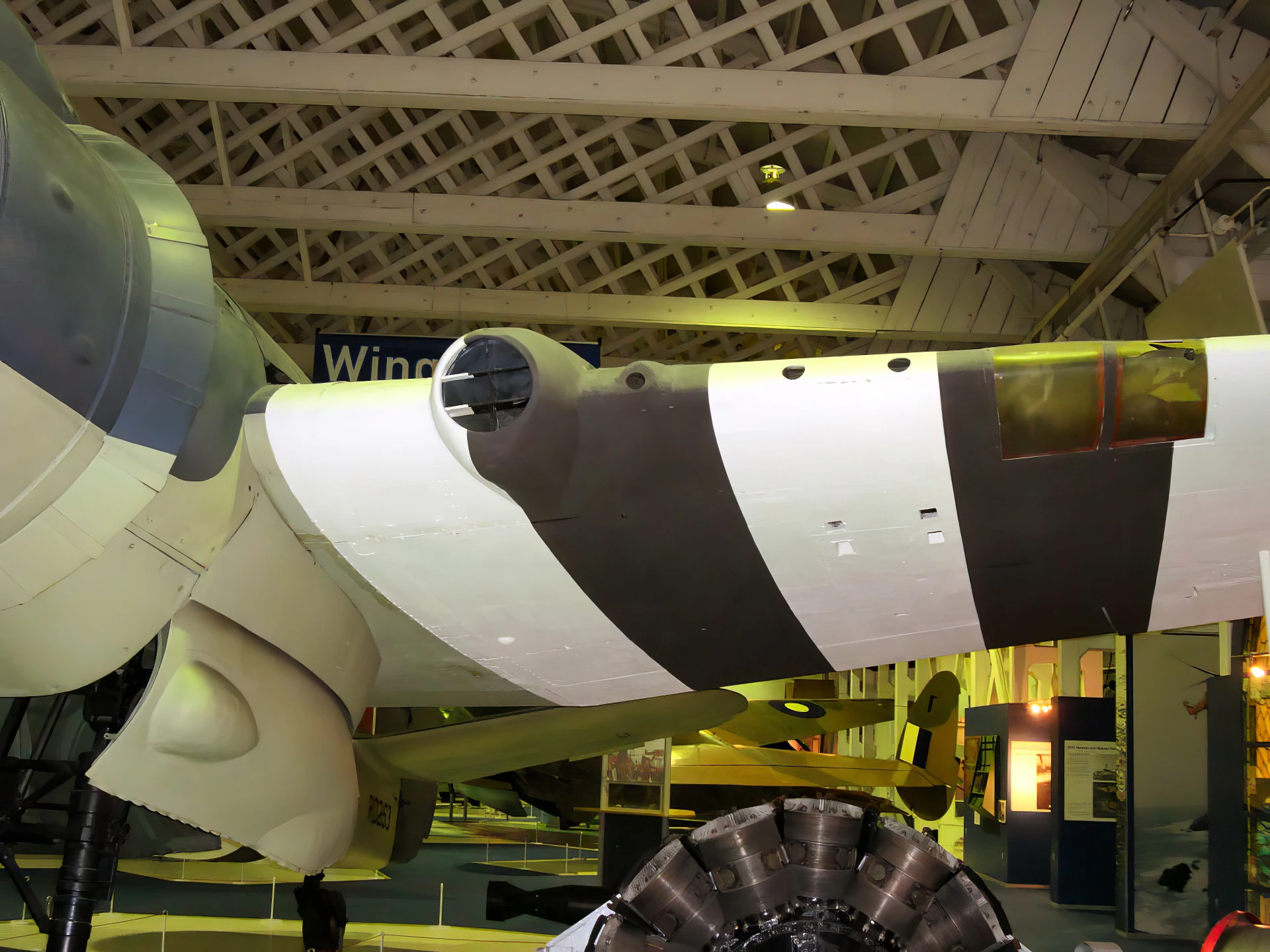
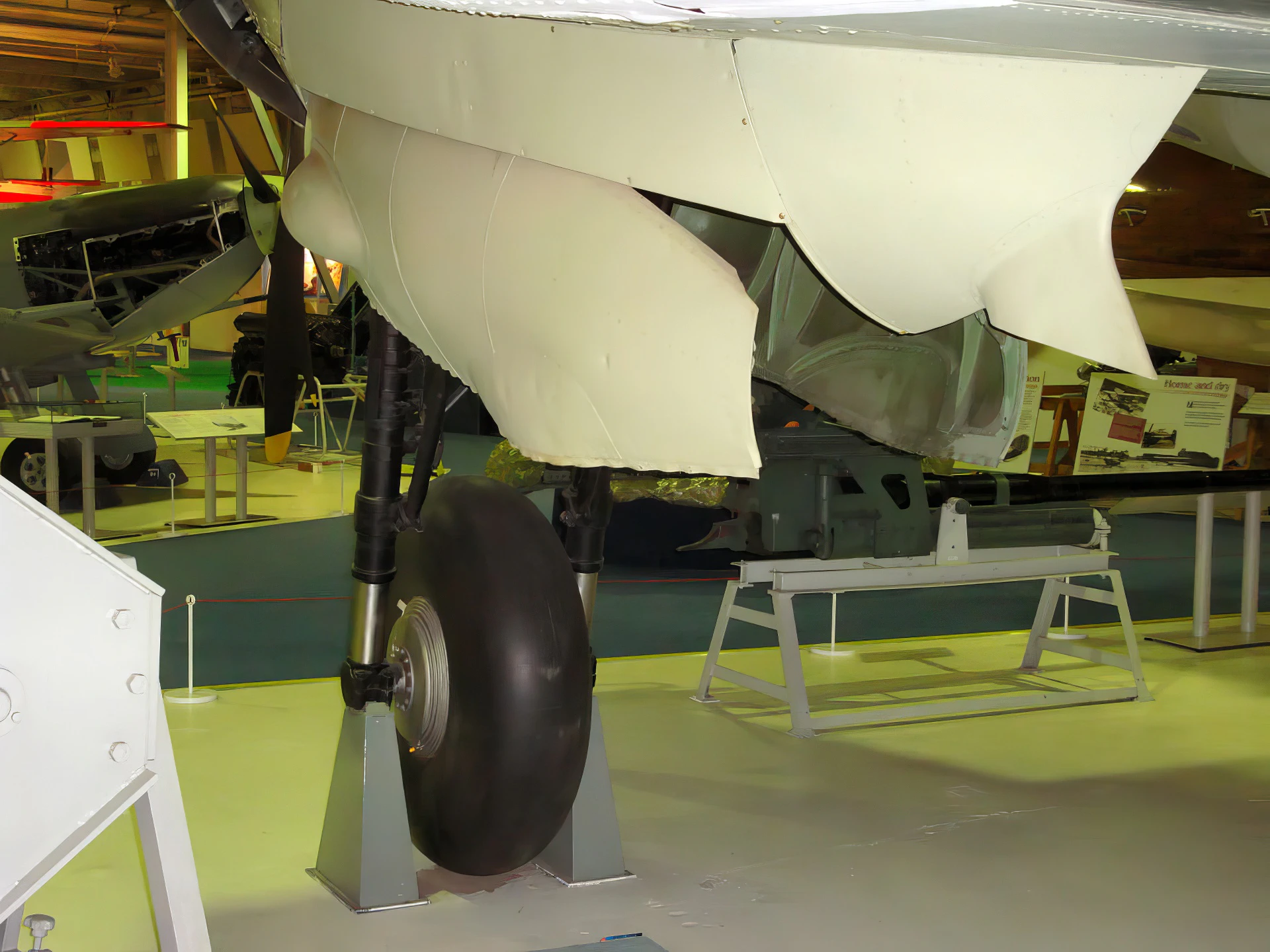
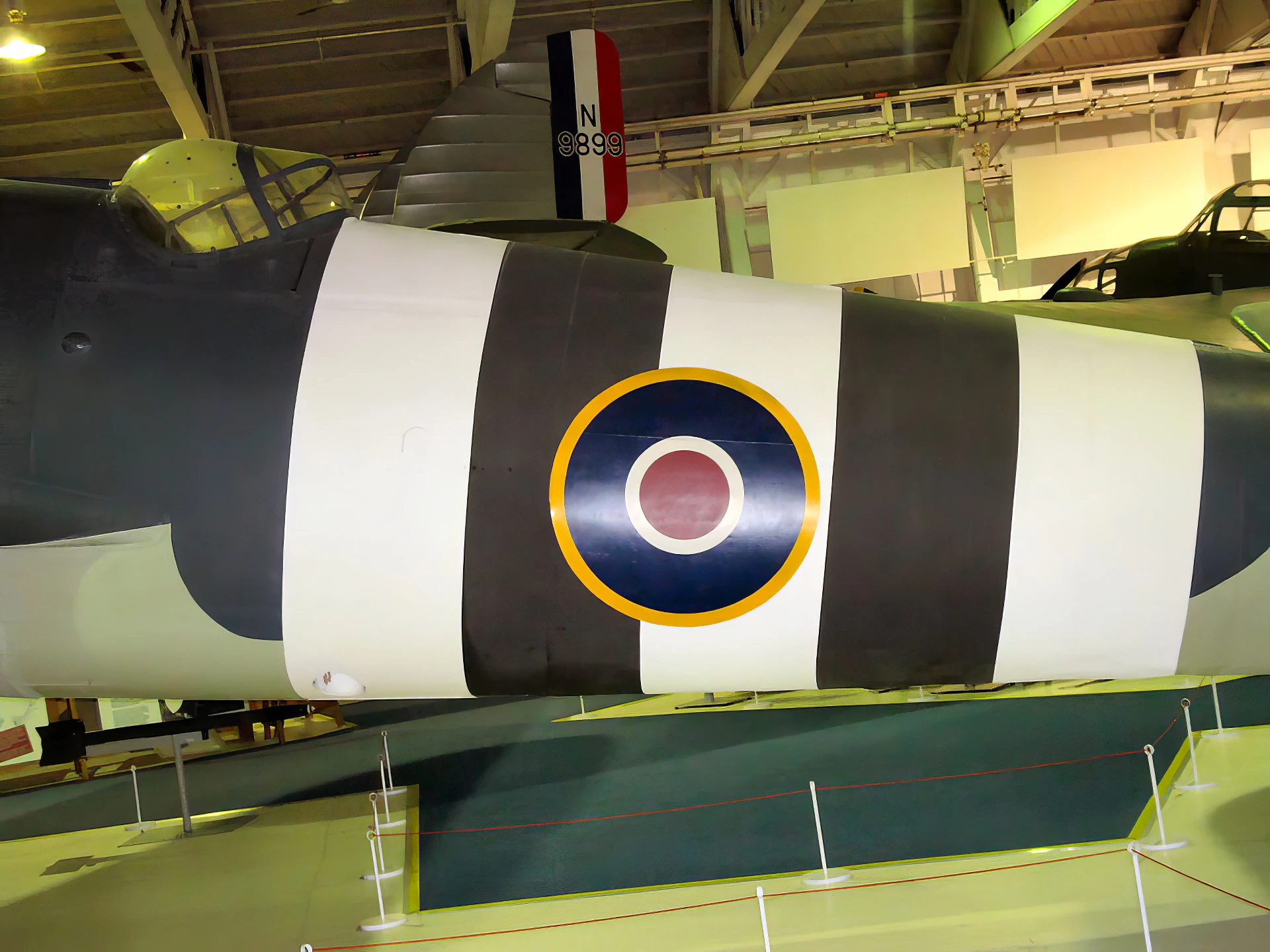
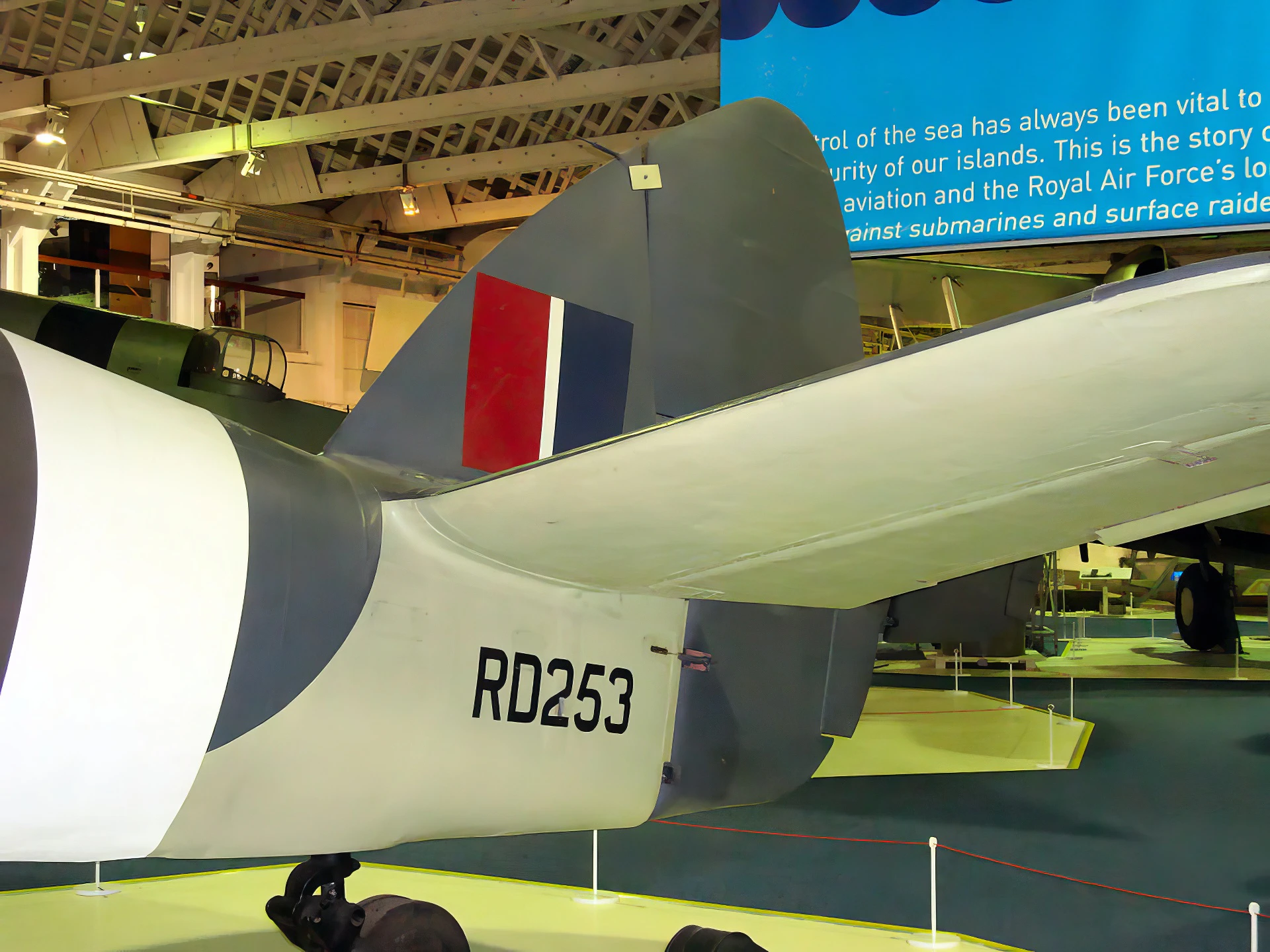
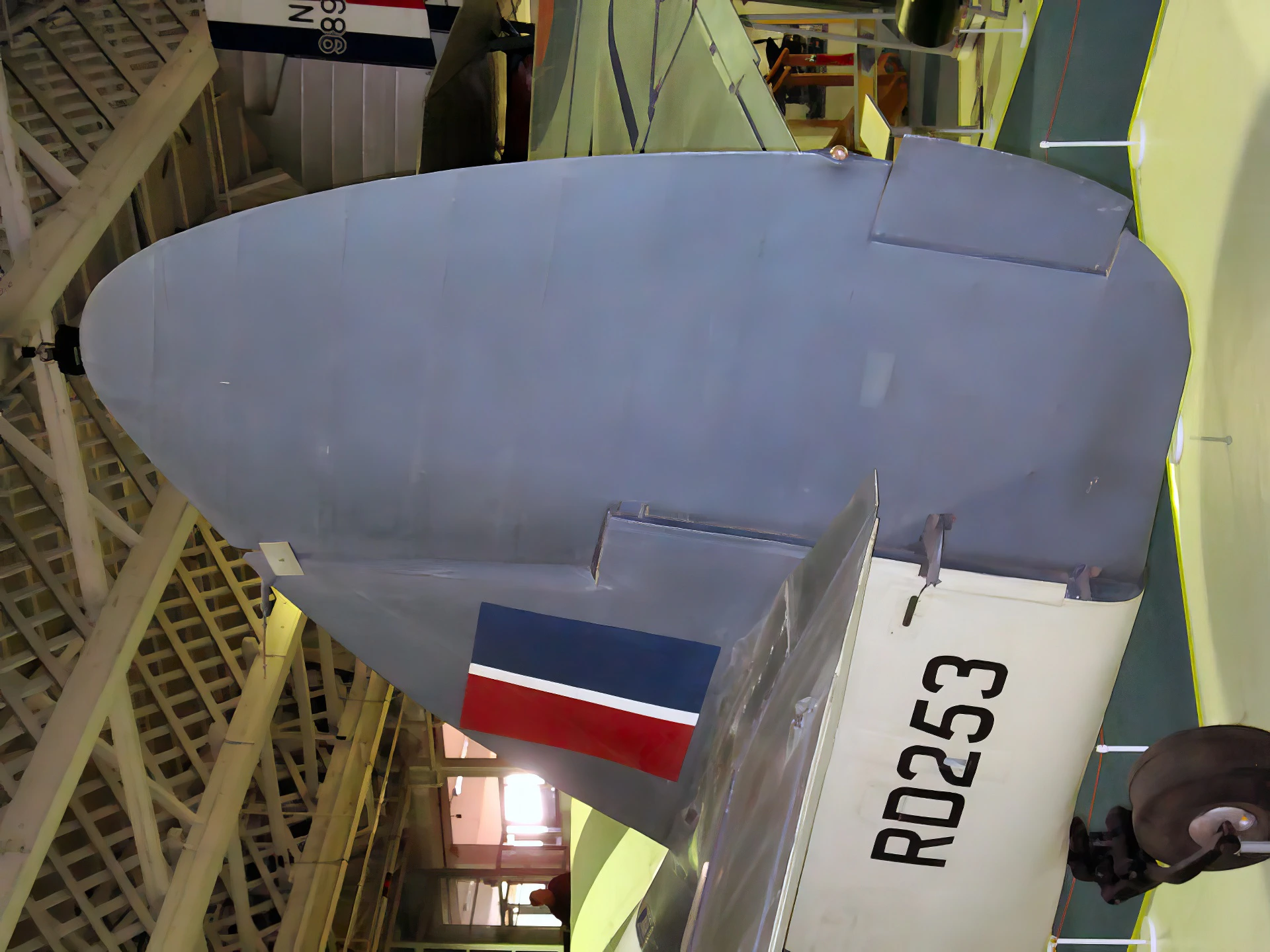

| Μπρίστολ Μπομάχερ TF. X Περπατήστε γύρω | |
|---|---|
| Φωτογράφος | Σίες Χέντρικς |
| Εντοπισμού | Αγνοώ |
| Φωτογραφίες | 20 |
| Bristol Beaufighter Mk.Ic Walk Around | |
|---|---|
| Φωτογράφος | Vladimir Yakubov |
| Εντοπισμού | Αγνοώ |
| Φωτογραφίες | 71 |
| Bristol Beaufighter Walk Around | |
|---|---|
| Φωτογράφος | Michael Benolkin |
| Εντοπισμού | Αγνοώ |
| Φωτογραφίες | 45 |
Δείτε επίσης:


| Beaufighter TF.X Walk Around | |
|---|---|
| Φωτογράφος | Michael Benolkin |
| Εντοπισμού | Αγνοώ |
| Φωτογραφίες | 31 |
| Bristol Beaufighter Mk.XXI Walk Around | |
|---|---|
| Φωτογράφος | Azrael Raven |
| Εντοπισμού | Αγνοώ |
| Φωτογραφίες | 93 |
| Bristol Beaufighter TFX Walk Around | |
|---|---|
| Φωτογράφος | Unknow |
| Εντοπισμού | Αγνοώ |
| Φωτογραφίες | 35 |
Development and Design
The Bristol Type 156 Beaufighter, often simply called the “Beau,” was a heavy, multi-role aircraft developed by the Bristol Aeroplane Company during World War II. It was cleverly derived as a fighter variant of the earlier Bristol Beaufort torpedo bomber, which sped up its design and production. This twin-engine, two-seat design allowed it to carry a substantial payload and heavy equipment, including early Airborne Interception (AI) radar systems.
The Beaufighter was a large, all-metal aircraft with a distinctly stubby appearance, resulting from its nose being shortened to accommodate the powerful twin **Bristol Hercules radial engines** and to adjust the center of gravity.
Primary Roles and Nicknames
Few aircraft of the war were as adaptable as the Beaufighter. It excelled in several critical missions across various theaters, including the European, Mediterranean, and Pacific fronts:
- Night Fighter: Early variants (Mk I and IIF) served as formidable night fighters, using their size to carry heavy armament and radar, successfully defending Britain during the Blitz.
- Maritime Strike: It became a potent maritime attack aircraft, particularly with Coastal Command. Armed with a torpedo, it earned the popular nickname “Torbeau” and was highly successful against Axis shipping.
- Ground Attack: Equipped with rockets, it performed devastating low-level ground attack missions, sometimes referred to as the “Rockbeau.”
Intimidating Armament
The Beaufighter was famous for its heavy and concentrated firepower. Its standard fixed armament, mounted in the lower nose section, was exceptionally potent for the era:
- Cannons: Typically four 20 mm Hispano cannons, giving it a concentrated “punch” unparalleled by many contemporary fighters.
- Machine Guns: Various models also carried several machine guns in the wings or a defensive machine gun for the observer/navigator in the rear cockpit.
- External Stores: It could carry bombs, depth charges, unguided rockets, or an 18-inch torpedo, depending on the mission variant.
Views : 8264
Νέο σύνολο 20 φωτογραφιών