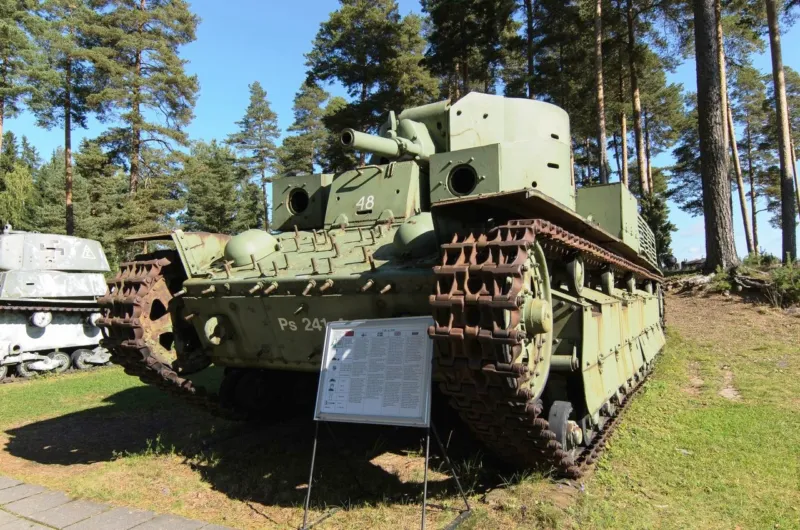
Tank T-28 | |
|---|---|
| Страны | Советский Союз |
| Роль | Средний танк |
| В эксплуатации | 1933–45 |
| Построен | 503 |
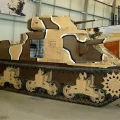
Т-28 — советский многотысяный средний танк. Прототип был завершен в 1931 году, а производство началось в конце 1932 года. Это был танк поддержки пехоты, предназначенный для прорвать укрепленную оборону. Т-28 был разработан в дополнение к более тяжелым Т-35 (также многогранный), с которым он разделяет конструкции башни. Тип не всегда всегда был успешным в бою, но играл важную роль в качестве проекта развития для советских танкоконструкторов. Ряд новых идей и решений, которые были опробованы на Т-28 были позже включены в будущих моделях.
Источник: Т-28 в Википедии
| Tank T-28 | |
|---|---|
| Фотограф | Неизвестная |
| Локализации | Неизвестная |
| Фотографии | 52 |

Читайте также:


The Multi-Turreted Dreadnought of the Interwar Red Army
Teh Т-28 was an ambitious, multi-turreted medium tank developed by the Soviet Union in the early 1930s under the direction of engineer Semyon Ginzburg. Intended to serve as an infantry support breakthrough vehicle capable of breaching heavily fortified defensive lines, the T-28 was heavily influenced by the British Vickers Independent concept. Unlike the revolutionary, streamlined T-34 that later replaced it, the T-28 looked like a rolling fortress, boasting one large central gun turret flanked by two smaller independent machine gun turrets. For its time, it was an incredibly advanced and formidable machine, featuring standard internal radios and highly advanced suspension. However, it was built on an obsolete tactical philosophy. By the outbreak of World War II, its complex multi-turret design made it an industrial nightmare to maintain, a tactical challenge to coordinate, and highly vulnerable to modern high-velocity anti-tank guns.
| Attribute | Technical Specification (Soviet T-28 Medium Tank Standard) |
|---|---|
| Роль | Medium Breakthrough Tank |
| Экипажа | 6 (Commander/Gunner, Loader, Driver, Two Aux-Turret Gunners, Radio Operator) |
| Силовая установка | 1 × Mikulin M-17L V12 liquid-cooled gasoline engine (450–500 hp) |
| Максимальная скорость | 37 km/h (23 mph) on roads | ~20 km/h (12 mph) cross-country |
| Combat Weight | ~28 metric tons (31 short tons) | Late up-armored versions reached 32 metric tons |
| Рабочий диапазон | ~180 km (110 miles) on roads | ~120 km (75 miles) cross-country |
| Primary Armament | 1 × 76.2mm short-barrel KT-28 howitzer L/16.5 (Later upgraded to the longer L-10 L/26 gun) |
| Вспомогательное вооружение | 4 to 5 × 7.62mm DT machine guns (one in each front auxiliary turret, one coaxial, one rear-facing turret ball mount) |
| Armor Thickness | Early: 20mm to 30mm front | Late (T-28E): Up-armored with applique plates to 50mm–80mm front |
| Production Total | 503 units manufactured at the Kirov Plant in Leningrad between 1933 and 1941 |
Design Engineering: The Multi-Turret Orchestrator and the Aero-Engine Heart
- The Chaos of the Multi-Turret Architecture: The T-28 was engineered to suppress infantry in 360 degrees. The commander and main gunner sat in the heavy central turret, operating the 76.2mm main gun. Down below them in the front hull sat two isolated, individual machine gunners, each housed in their own fully rotating miniature turret armed with a DT machine gun. While this gave the tank massive anti-infantry firepower, it created absolute chaos for the commander, who had to frantically yell instructions to two separate sub-gunners he couldn’t easily see.
- Adapting an Aircraft Motor (The Mikulin M-17): To push a massive 28-ton steel vehicle through thick terrain, the Soviets retrofitted the Mikulin M-17L engine, which was originally an adaptation of a German BMW V12 aircraft motor. Producing up to 500 horsepower, this massive engine gave the T-28 excellent speed and agility for an interwar tank. However, because it was a highly fine-tuned gasoline aviation engine, it required meticulous mechanical maintenance and was incredibly prone to catching fire if hit.
- The Horseshoe Radio Antenna Array: Long before standard tanks carried wireless communications, early T-28s were fitted with advanced radio sets. You could instantly spot these command models by a prominent, distinctive “horseshoe” or clothesline-style radio antenna cage built entirely around the upper rim of the main central turret. While ahead of its time, this massive metal ring served as a giant beacon for enemy anti-tank gunners, telling them exactly which vehicle was the platoon leader’s tank.
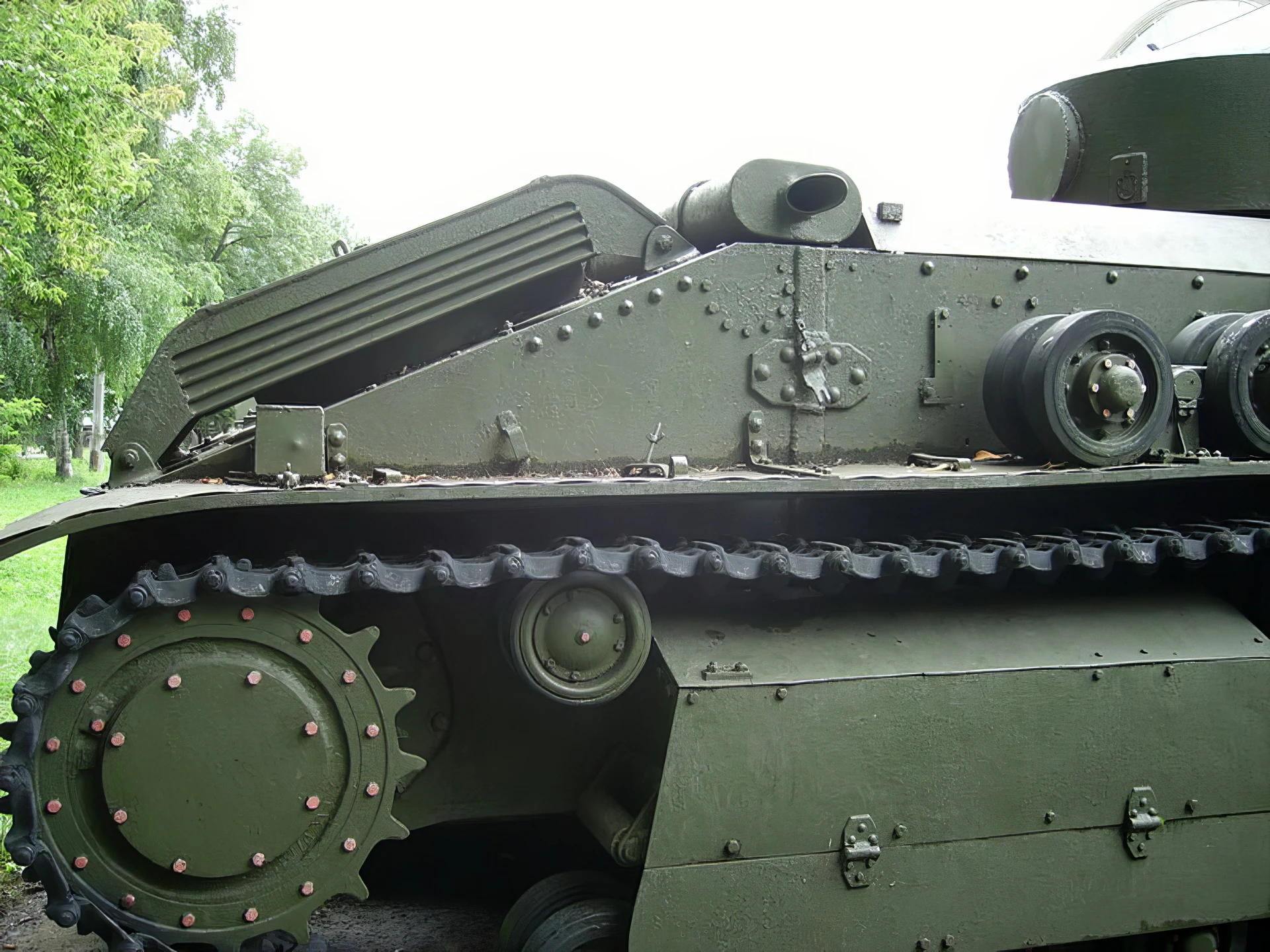
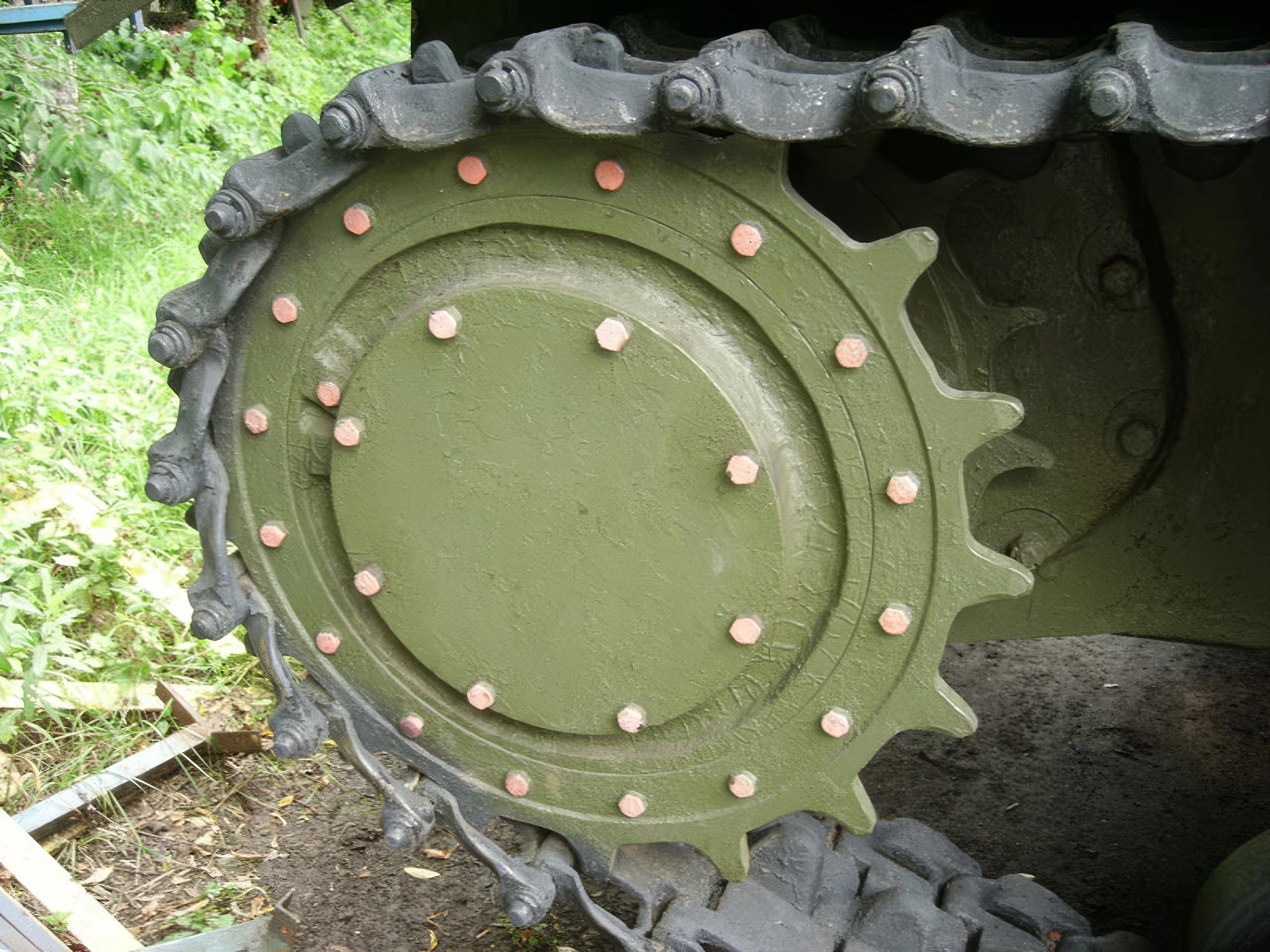
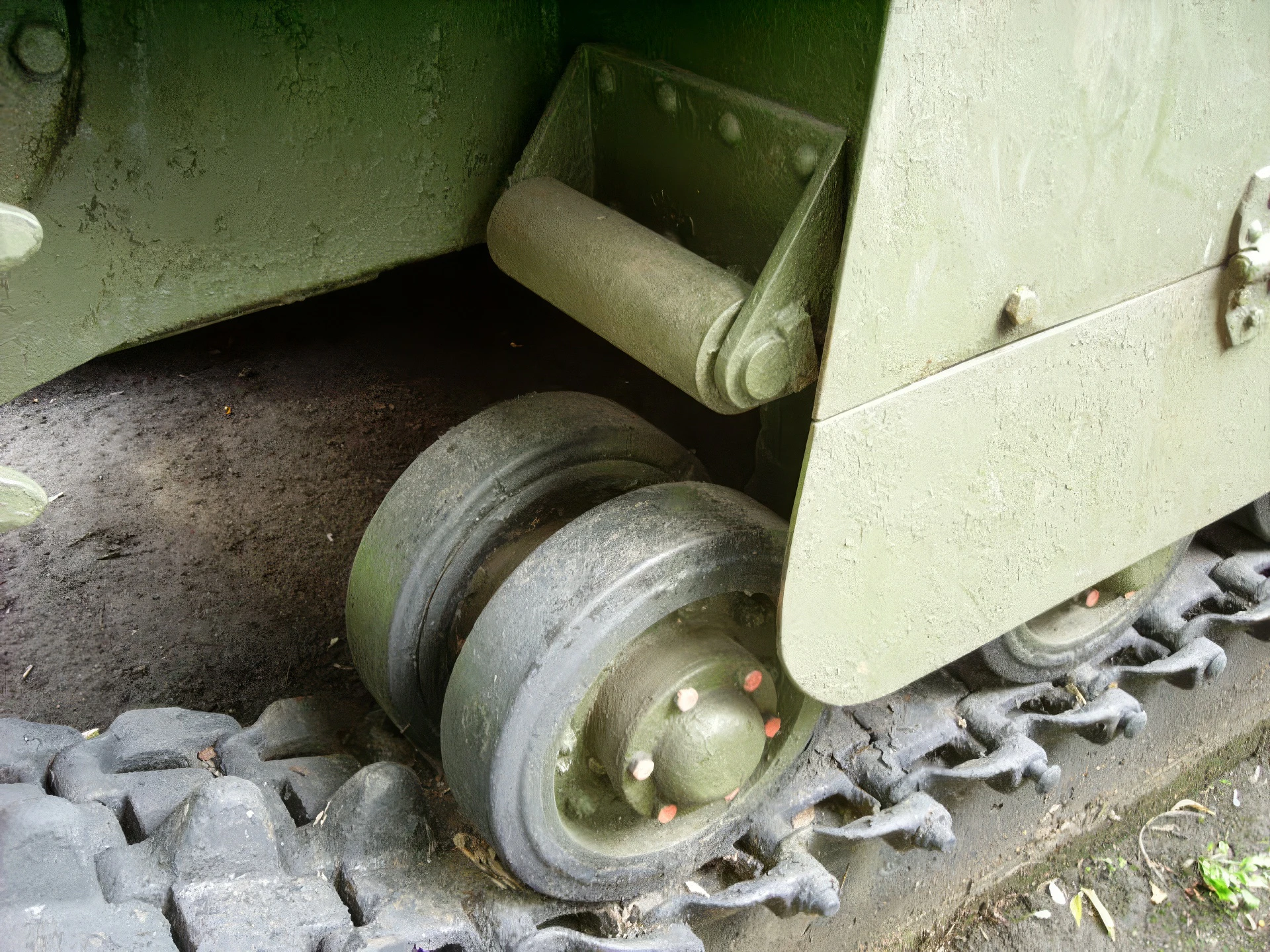
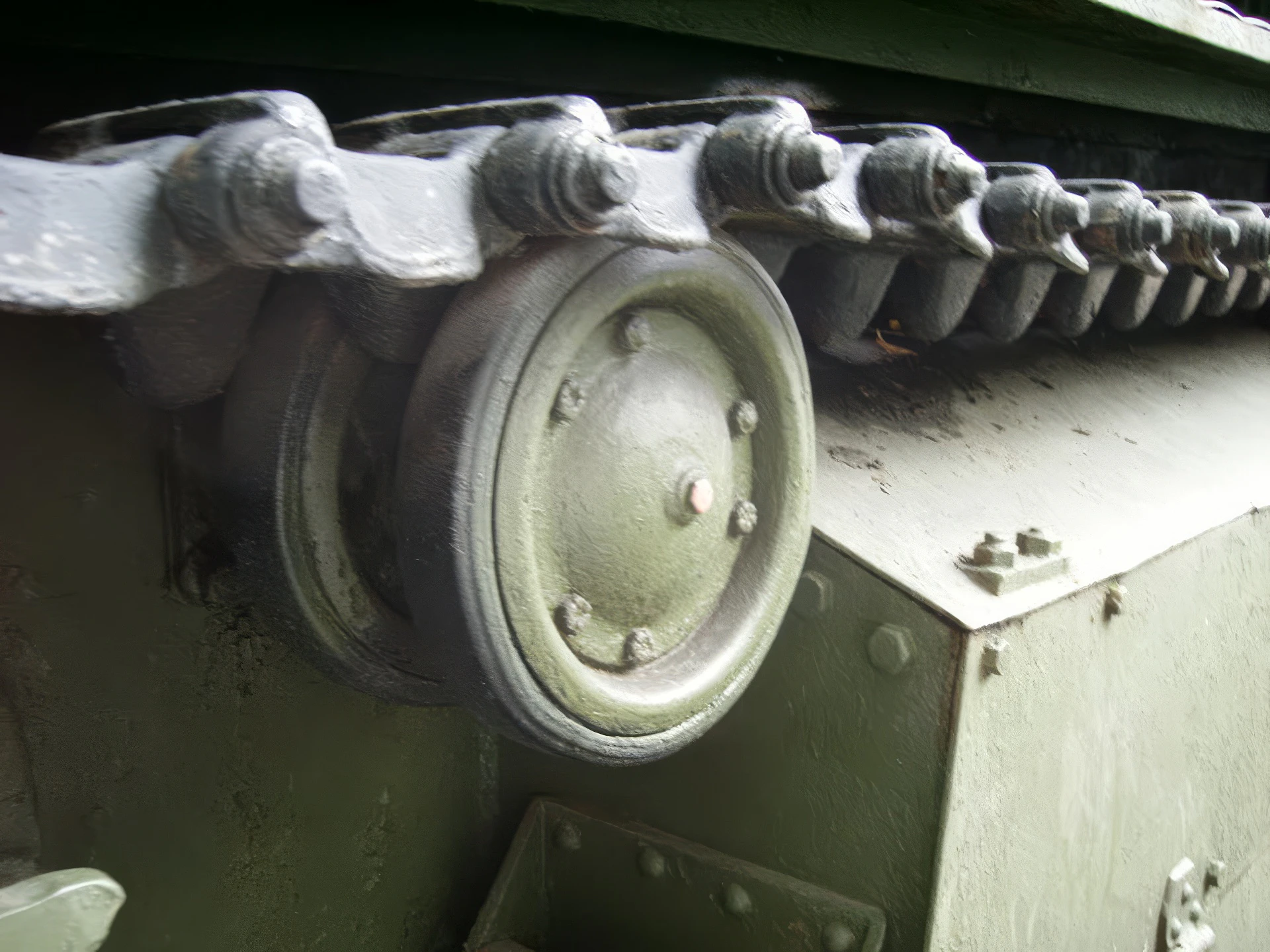
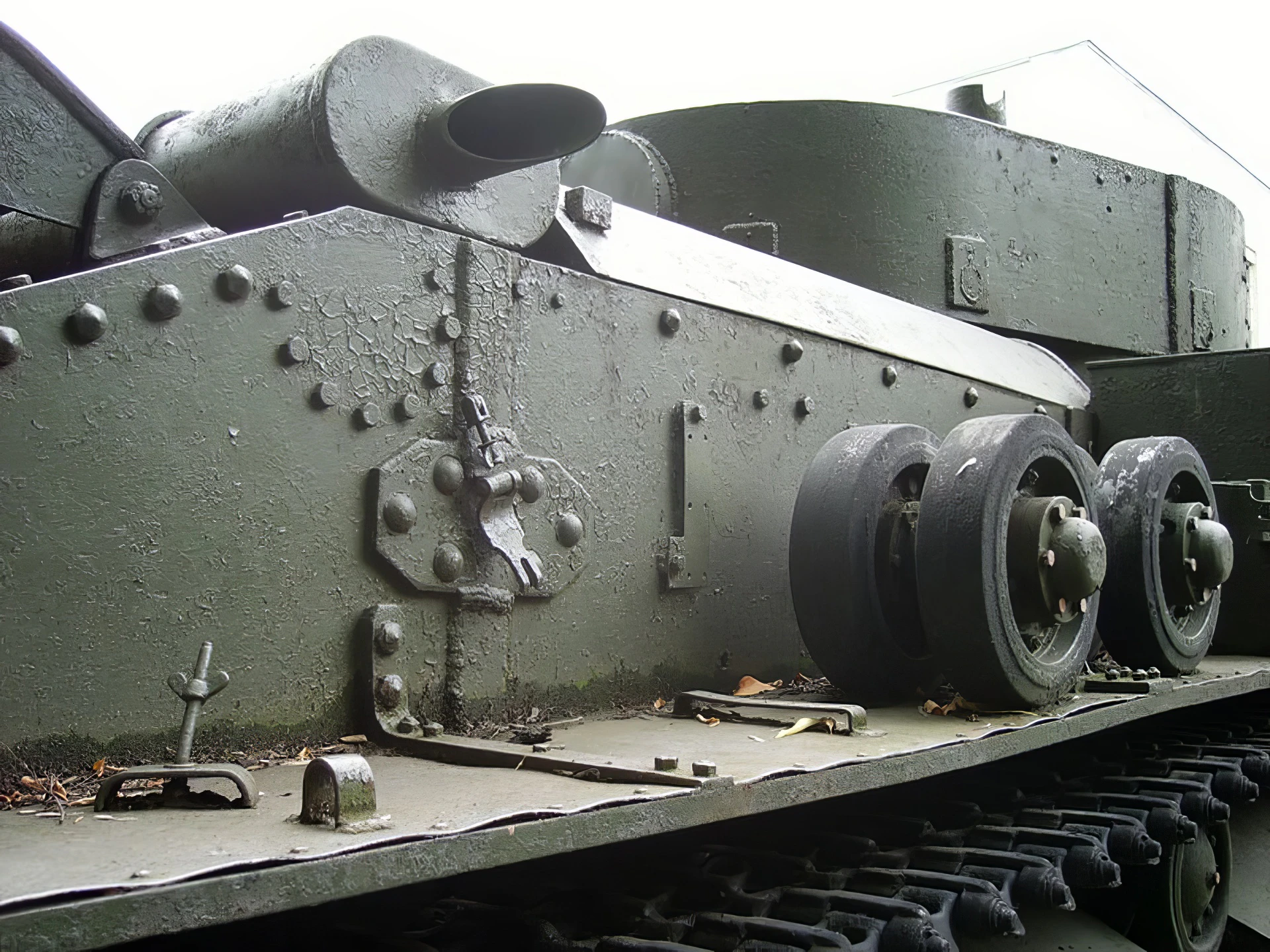
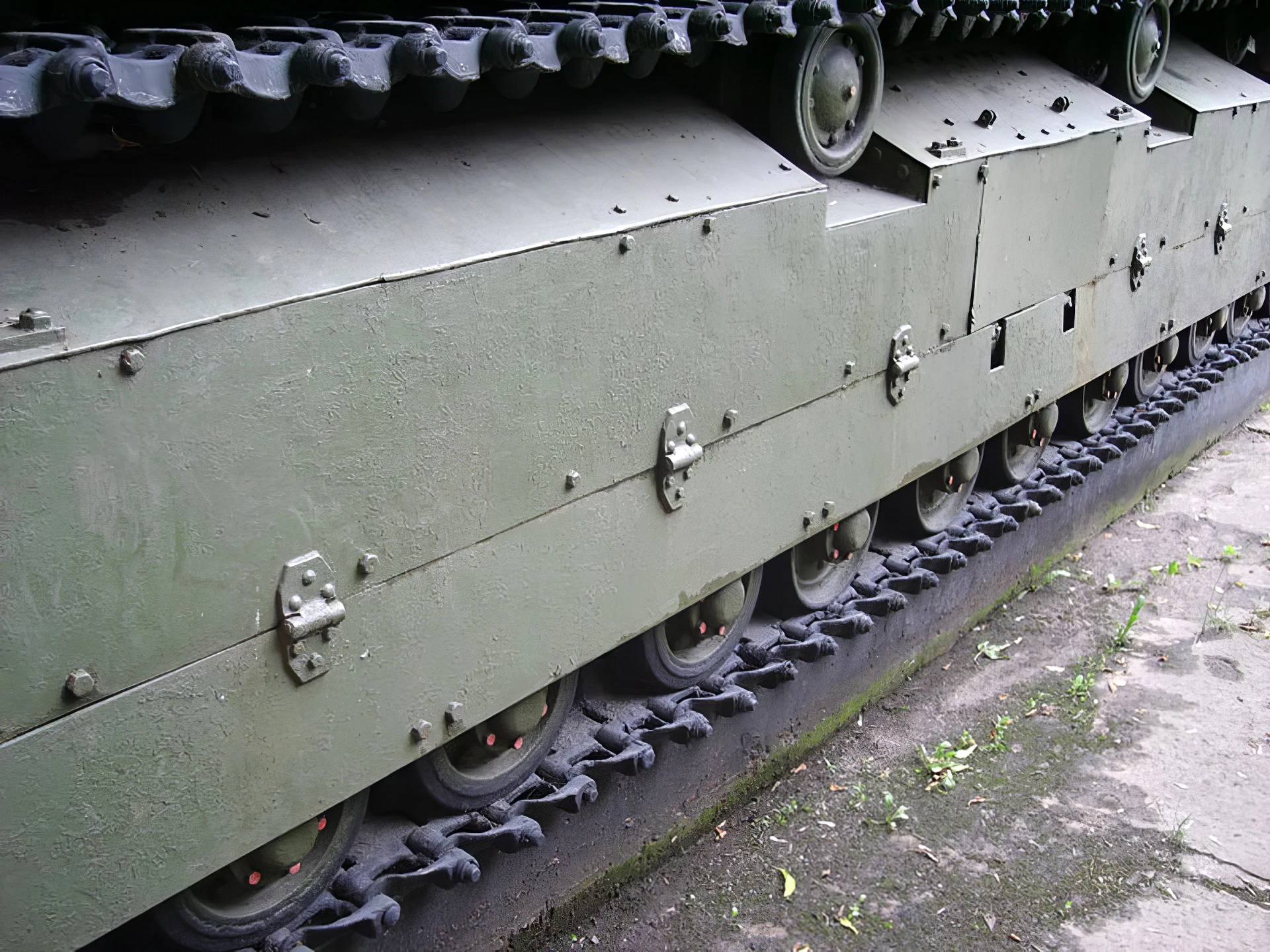
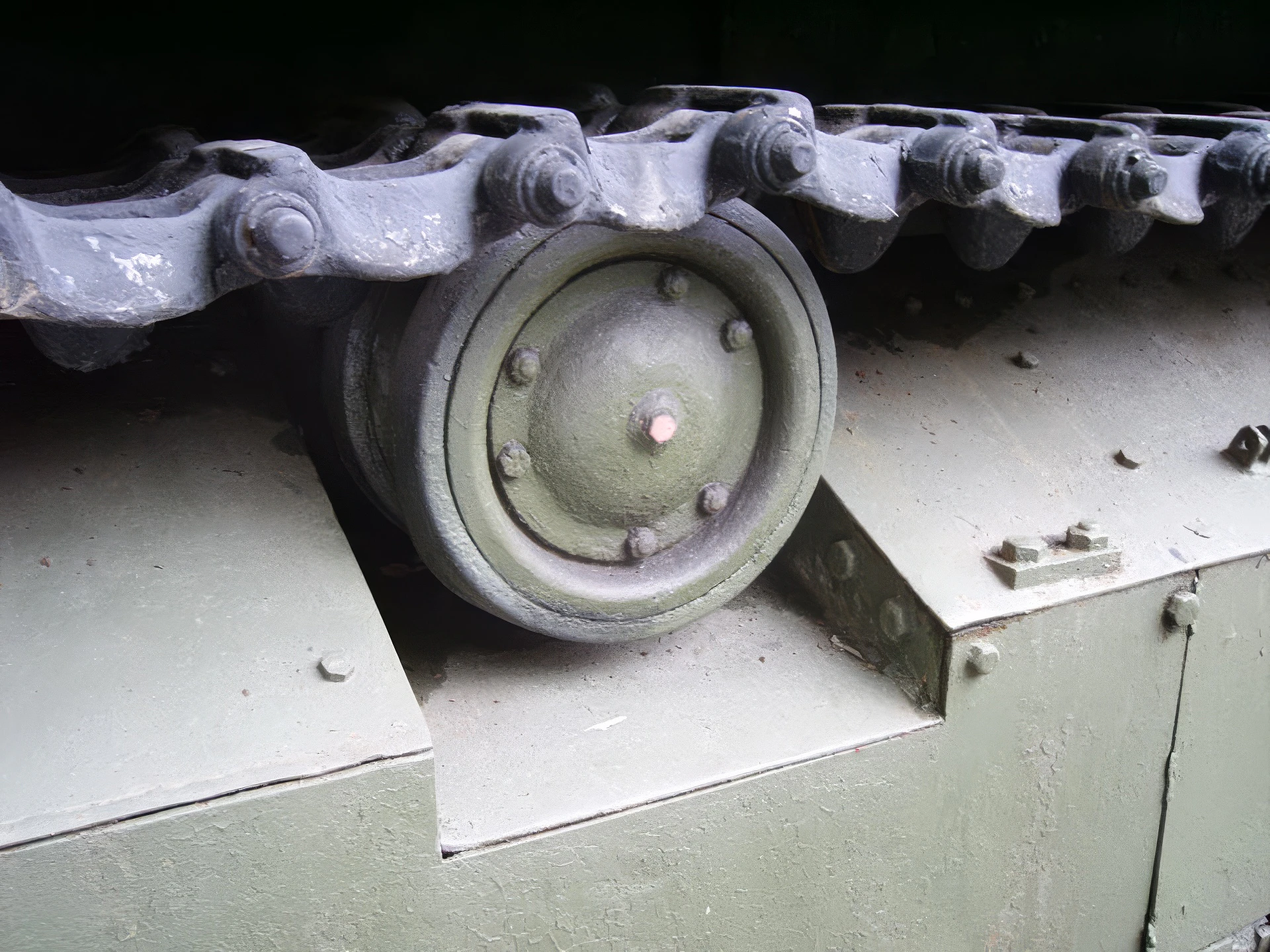
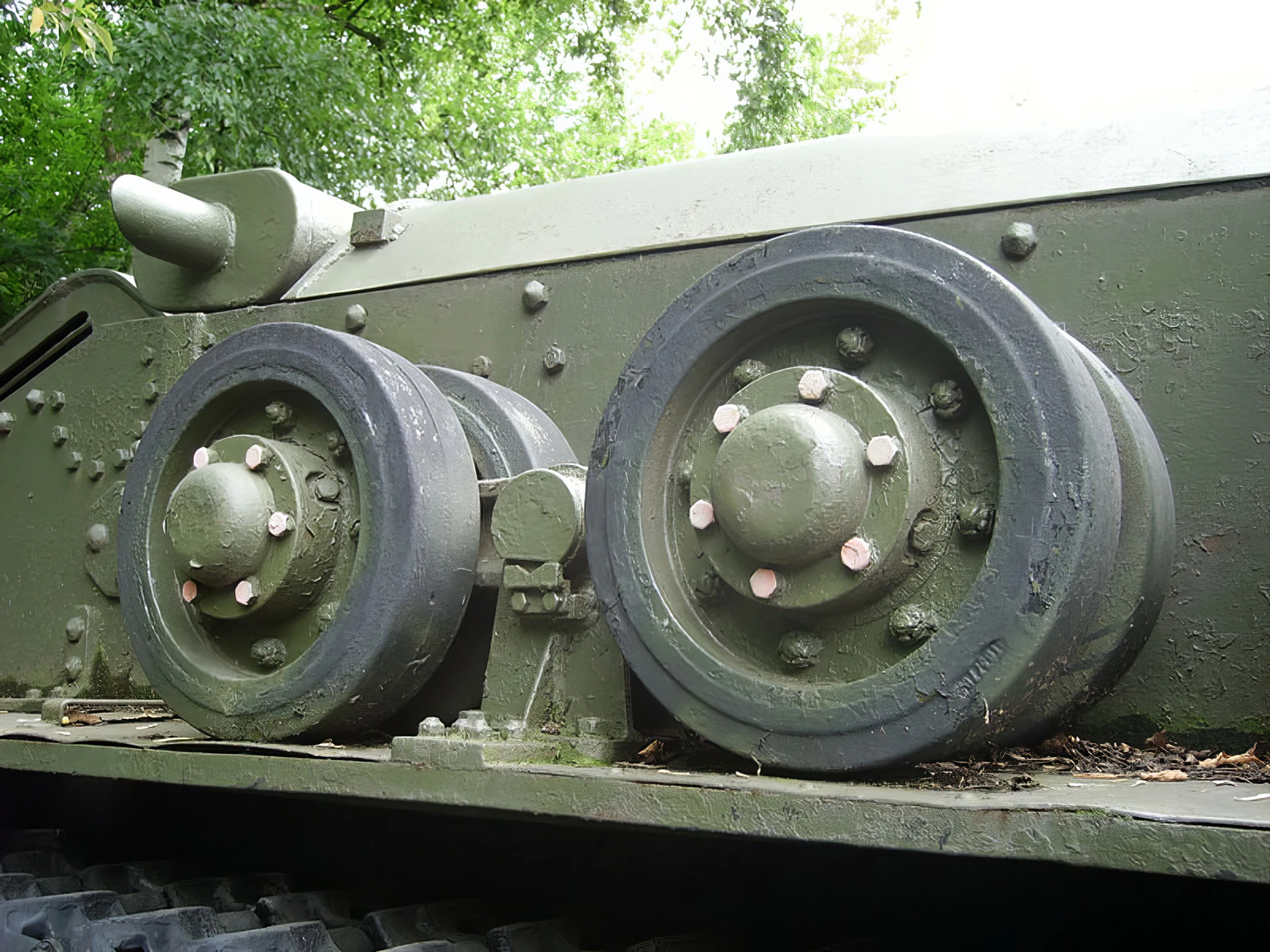
- Intricate Bogie Suspension and Internal Plumbing: The T-28 rode on an incredibly complex suspension network consisting of 24 small, dual-wheeled rollers on each side, linked by springs into intricate pivoting bogie assemblies, completely shrouded by protective steel side skirts. While it provided an incredibly smooth ride over bumps, the tiny wheels and exposed mechanical arms packed easily with frozen mud and rocks, often seizing up entirely during winter operations.
Operational History: The Winter War Breaker and the Disasters of 1941
- The Deep Bleeding of the Winter War (1939–1940): The T-28 saw extensive frontline combat during the Soviet invasion of Finland. Tasked with breaking through the concrete bunkers of the Finnish Mannerheim Line, the T-28s took catastrophic losses from hidden Finnish anti-tank guns, which easily punched right through the tank’s thin, un-sloped 30mm side armor. The Soviets were forced to frantically pull the tanks back and weld heavy applique steel blocks to the front and sides, creating the heavily armored, 32-ton *T-28E* variant.
- The Forgotten Mechanical Catastrophe of Barbarossa: When Germany invaded the Soviet Union in June 1941, there were still over 400 T-28 tanks in active service near the borders. On paper, they outgunned almost every German Panzer III and IV they faced. In reality, they were completely wiped out in a matter of weeks. The vast majority were not destroyed by German tanks, but rather by their own aging drivetrains. Suffering from a total lack of spare parts, worn-out clutches, and empty fuel tanks, retreating Soviet crews simply blew up their broken T-28s and left them on the roadsides.
- The Legendary “Ghost Tank” Rampage of Minsk: Amid the chaos of the 1941 retreat, a single repaired T-28 performed one of the most daring rogue actions of the early war. A mix of a veteran driver and recently escaped Red Army mechanics drove a lone T-28 directly into the German-occupied city of Minsk. Blindsiding the occupiers, they charged through the city streets, using their three turrets to destroy German fuel trucks, infantry columns, and artillery pieces before finally running out of fuel and being overwhelmed.
- Captured Service Under the Blue Swastika: The Finnish Army, desperate for heavy armor, captured several operational T-28 tanks during both the Winter War and the Continuation War. Dubbed the *”Postivaunu”* (The Mail Coach) by Finnish soldiers due to their massive, boxy size, these captured Soviet giants were up-armored, repainted with Finnish insignia, and successfully turned against their creators, remaining in active Finnish defensive reserve units until the final stages of the war in 1944.
Просмотров : 6609
Блестящий набор. Благодарю. Получил все детали, которые мне были нужны.. Ты