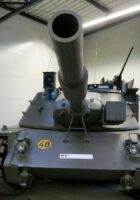
Kampfpanzer 70

MBT-70 Experimental

PaísAlemanha/EUA
TipoTanque de batalha principal
peso50t
tripulação3
Construído14

Foto galery de um MBT-70 Experimental, The MBT-70 (German: KPz 70) was a 1960s German-U.S. joint project to develop a new main battle tank, which was to be equipped with a number of advanced features. It utilized a newly developed hydropneumatic “kneeling” suspension and housed the entire crew in the large turret. The MBT-70 was armed with a 152mm XM150 gun/launcher, which could use conventional ammunition and the Shillelagh missile for long range combat. By 1969 the project was well over budget and Germany withdrew from the effort, developing a new main battle tank on their own instead (the Leopard 2). In the US the development continued for a short time, until in 1971 when Congress cancelled the program. The MBT-70 is the failed predecessor of the Leopard 2 and the M1 Abrams, the current main battle tanks of both countries.

Fonte: Wikipédia

Continue lendo

Views : 4846

Mark V Mockup

Marcos V

PaísReino unido
TipoTanque pesado

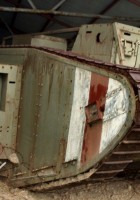
Galeria de Fotos de um Marcos V Mockup, The Mark V was a British heavy tank project from the First World War. After having made plans for the continued development of the Mark I into the Mark IV, the Tank Supply Committee (the institute planning and controlling British tank production) in December 1916 ordered the design of two new types: the Mark V and the Mark VI. The Mark V should embody the most advanced features that could still be incorporated into the Mark I hull. The Mark VI should abandon the old hull entirely, reflecting only some general principles of the older tank.

Fonte: Wikipédia

Continue lendo

Views : 2322

Mundo dos Tanques - M24 CHAFFEE - ITALERI 36504

Italeri

Ref 36504
sérieMundo dos Tanques
Escala1/35
Tópico

M24 CHAFFEE

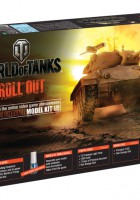
THE BOX CONTAIN: 1 MODEL KIT – 1 LIQUID CEMENT – 1 TANK GUIDE – WORLD oF TANKS DECALS – 3 INVITE CODES – 1 BONUS CODE

Officially designated as the Light Tank M24, the British gave this tank the service name ‘Chaffee’. Arguably the best light tank of the war, the vehicle was intended as a replacement for the M5 Stuart. The design departed quite a lot from those of earlier light tanks. Twin Cadillac engines and Hydramatic transmission enabled the vehicle to achieve high speeds, while torsion-bar suspension granted it good cross-country capabilities. A new lightweight 75mm gun packed decent firepower into the tank’s turret which, coupled with its low silhouette, was a nice advantage for a light tank. The M24 was used during the later part of World War II and in several post-war conflicts, from the Korean War to the First Indochina War.

Fonte: Italeri

Continue lendo

Visualizações: 1608

AMX 10 RCR

AMX-10RC

PaísFrança
TipoVeículo de reconhecimento leve
Produção1981 - presente

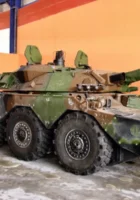
Photo Gallery of a AMX-10RC, The AMX-10RC is a light reconnaissance vehicle built by GIAT. Over 300 are in service in the French Army. In addition, 108 vehicles were sold to Morocco and 12 to Qatar. RC stands for Roues-Canon, or wheeled gun. The AMX-10RC should not be confused with the AMX-10P; they share automotive components but otherwise have completely different battlefield roles. The AMX-10RC is amphibious and has very good mobility. It is usually used for reconnaissance missions in dangerous environments or for fire support.

Fonte: Wikipédia

Continue lendo

Visualizações : 5123

Panzerwrecks vol 3

Panzerwrecks

IdiomaInglês
AssuntoArmadura alemã 1944-45
Páginas129 pages
ISBN-13978-0-9754183-2-1

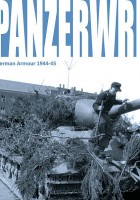
-Unique images of Jagdpanzer 38s coming in to surrender -One of a kind conversion: StuG III as ARV. Used by Polish troops in Italy -28 page feature on the surrender of s./Pz.Jg.Abt.512 at Iserlohn – Jagdtiger heaven. -Final production Panzer IV/70(V)s -Loads more

Features: Schwarzbach 7 May 1945 The end for 1./s.Pz.Jg.Abt.512 Pz.Kpfw.IV of 6./Pz.Rgt.15 Surrender at Oldenburg ISBN: 978-0-9754183-2-1 Date: 2006. Revised 2009. Reprinted 2012. No of Photos: 129 No of Pages: 96 Size: 280x210mm (L)

Fonte: Panzerwrecks

Continue lendo

Visualizações: 1287

Marder 1 A3 Fahrschule

Marder 1A3

PaísAlemanha
TipoMarder
Em serviço1971–presente
Construído2136

Foto galery de um Marder 1A3, The Marder (German for “marten”) is a German infantry fighting vehicle operated by the German Army as the main weapon of the Panzergrenadiere (mechanized infantry) from the 1970s through the present day. Developed as part of the rebuilding of Germany’s armoured fighting vehicle industry, the Marder has proven to be a successful and solid infantry fighting vehicle design. While it does include a few unique features, such as the fully remote machine gun on the rear deck, it is overall a simple and conventional machine with rear exit hatch and side gun ports for mounted infantry to fire through. The Marder is currently being replaced by its successor, the Puma.

Fonte: Wikipédia

Continue lendo

Views : 2995

TANQUE PESADO RUSSO KV-1 - Forças de Valor 80094

Forças de Valor

Ref 80094
TipoTanque pesado
Escala1/32
Tópico

RUSSIAN HEAVY TANK KV-1

Um kit da marca Forças de Valor o kit : TANQUE PESADO RUSSO KV-1 – Forças de Valor 80094.

The Kliment Voroshilov (KV) tanks were a series of Soviet Red Army heavy tanks, named after the Soviet defense commissar and politician Kliment Voroshilov. The KV series were known for their extremely heavy armour protection during the early part of World War II, especially during the first year of the invasion of the Soviet Union. Almost completely immune to the 3.7 cm KwK 36 and howitzer-like, short barreled 7.5 cm KwK 37 guns mounted respectively on the early Panzer III and Panzer IV tanks fielded by the invading Nazi forces; until better guns were developed by the Germans it was often the case that the only way to defeat a KV was with a point-blank shot to the rear. Prior to the invasion, about 500 of the over 22,000 tanks then in Soviet service were of the KV-1 type. When the KV-1 appeared, it outclassed the French Char B1, the only other heavy tank in operational service in the world at that time. Yet in the end it turned out that there was little sense in producing the expensive KV tanks, as the T-34 medium tank performed better (or at least equally) in all practical respects. Later in the war, the KV series became a base of development for the Joseph Stalin (Iosif Stalin, or IS) series of tanks.

-Constructed of both die cast metal and plastic. -Rotating turret -Elevating gun -Moveable tracks -Opening turret hatch -Includes a commander figure -Accurate markings and insignia. -Comes with assorted accessories. -New packaging for 2012 no ties or screws, double blister construction.

Fonte: TANQUE PESADO RUSSO KV-1 sobre forças de valor

Continue lendo

Visualizações : 2275

Caça-tanques francês AMX-10RCR - TIGER MODEL 4602

Modelo Tigre

Ref 4062
sérieBalança Panzer
Escala1/35
Tópico

Caça-tanques francês AMX-10RCR

O comprimento total (frente do canhão do tanque) do modelo de montagem de plástico do caça-tanques móvel AMX-10RCR do Exército Francês com a proporção de 1/35 é de 261 mm e a largura é de 88 mm. A torre pode ser girada livremente. Todas as tampas das escotilhas podem ser abertas ou fechadas. O periscópio, o equipamento óptico e as lâmpadas são componentes transparentes. Os componentes adicionais da blindagem percebem os detalhes da carroceria do veículo e da divisão da torre. As seis rodas são rotativas e feitas de estrutura de borracha TPE com delicados detalhes gravados. A rede à prova de explosões da entrada de ar do motor, a placa de matrícula traseira e a barreira de colisão do localizador de comprimento do veículo são feitas de acessórios de metal gravados com foto de metal. O modelo está equipado com delicadas fundas de metal. A suíte pode ser feita no estilo do Exército Francês e revestimento tricolor da OTAN, incluindo dois tipos de número de registro. Ele contém um pedaço de adesivo de água abundante e manual colorido no revestimento colorido

A carroceria e a torre do veículo são estrutura de alumínio de soldagem completa. É pesquisado, desenvolvido e produzido pelo Grupo GIAT para atender aos requisitos de substituição do veículo blindado pesado Panhard pelo Exército Francês. O Exército Francês comprou 284 peças do AMX-10RC desde a década de 1980. Marrocos e Catar também estão equipados com este veículo. O AMX-10RC está envolvido na Guerra Civil do Chade, na Guerra do Golfo, na Guerra da Bósnia e na Guerra do Afeganistão, onde o Exército Francês se juntou. O AMX-10RCR é um novo tipo aprimorado em relação ao antigo AMX-10RC pela French em 2000, onde o equipamento de carregamento do veículo e a blindagem de aço são adicionados, o aspersor traseiro e o quebra-mar dianteiro são removidos e a finalidade anfíbia é omitida. O Exército Francês concluiu a melhoria de todo o veículo em 2010. O novo AMX-10RCR deve ser colocado em serviço por mais tempo no Exército Francês.

Fonte: TIGRE MODELO 4602

Continue lendo

Visualizações: 2585

Tipo 59

Italeri

Ref 36508
sérieMundo dos Tanques
Escala1/35
Tópico

Tipo 59

THE BOX CONTAIN: 1 MODEL KIT – 1 LIQUID CEMENT – 1 TANK GUIDE – 1 POSTER (42×59,4cm) – WORLD oF TANKS DECALS – 3 INVITE CODES – 1 BONUS CODE

O Tipo 59 é um lendário tanque de batalha principal produzido pela primeira vez pela República Popular da China a partir de 1957. Começou a servir em 1959 (daí o seu nome) e permanece em uso por várias nações até hoje. Ostensivamente uma cópia da série soviética de tanques T-54, o Tipo 59 recebeu várias modificações e simplificações em sua configuração. No entanto, ninguém pode contestar a eficácia deste tanque e seu pedigree de combate, mesmo sem toda a fantasia engenhoca soviética. Montando um canhão de 100 mm, que eventualmente foi trocado por um de 105 mm em variantes posteriores, o Tipo 59 era uma força a ser considerada - um tanque confiável e flexível para uso em todos os tipos de situações militares.

Fonte: Italeri

Continue lendo

Visualizações : 1540

M52A1

M52A1

PaísEua
TipoObus de 105 mm com esteiras completas
FotógrafoVladimir Yakubov
LocalizaçãoMuseu Patton
Tópico

Álbum de 80 fotos de um M52A1

Photo galery of a M52A1, This was the first U.S. self-propelled artillery piece to have a fully enclosed turret. The beginning of the Cold War with the Soviet Union drove the Army to require overhead protection for the crew from enemy artillery and small arms fire, as well as nuclear and chemical warfare.

Fonte: Wikipédia

Continue lendo

Visualizações : 3141