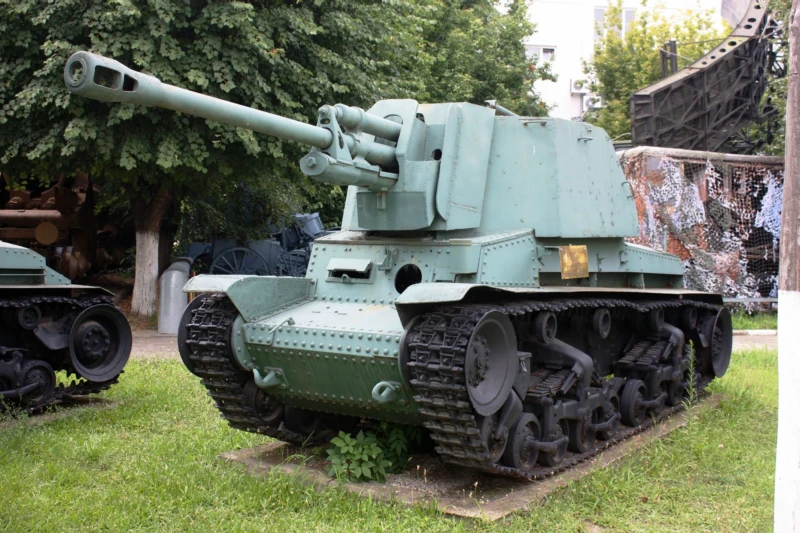
TACAM R-2 | |
|---|---|
| Land | Roemenië |
| Type | Zelfrijdend antitankkanon |
| In gebruik | 1944—45 |
| Gebouwd | 20 |
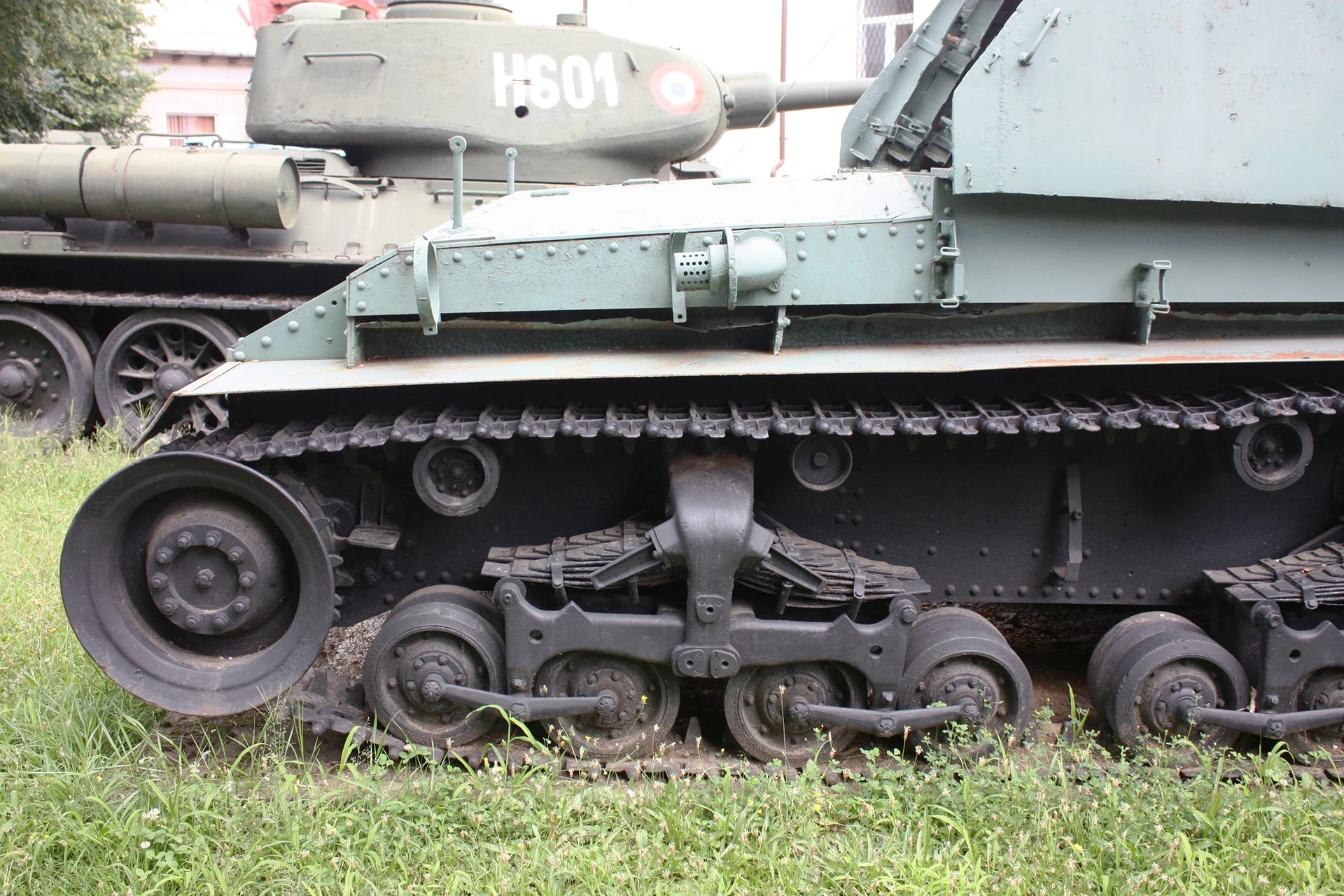
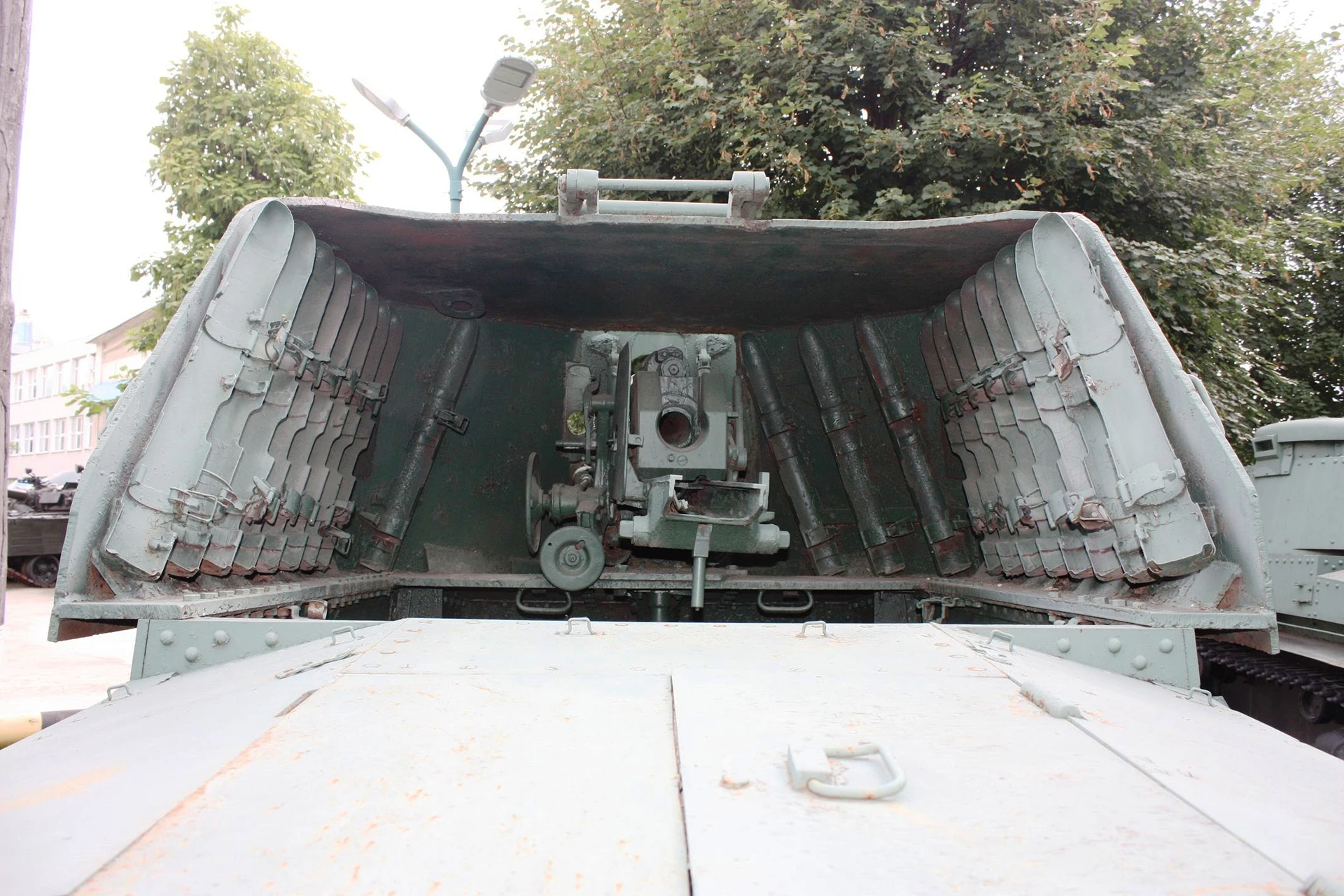
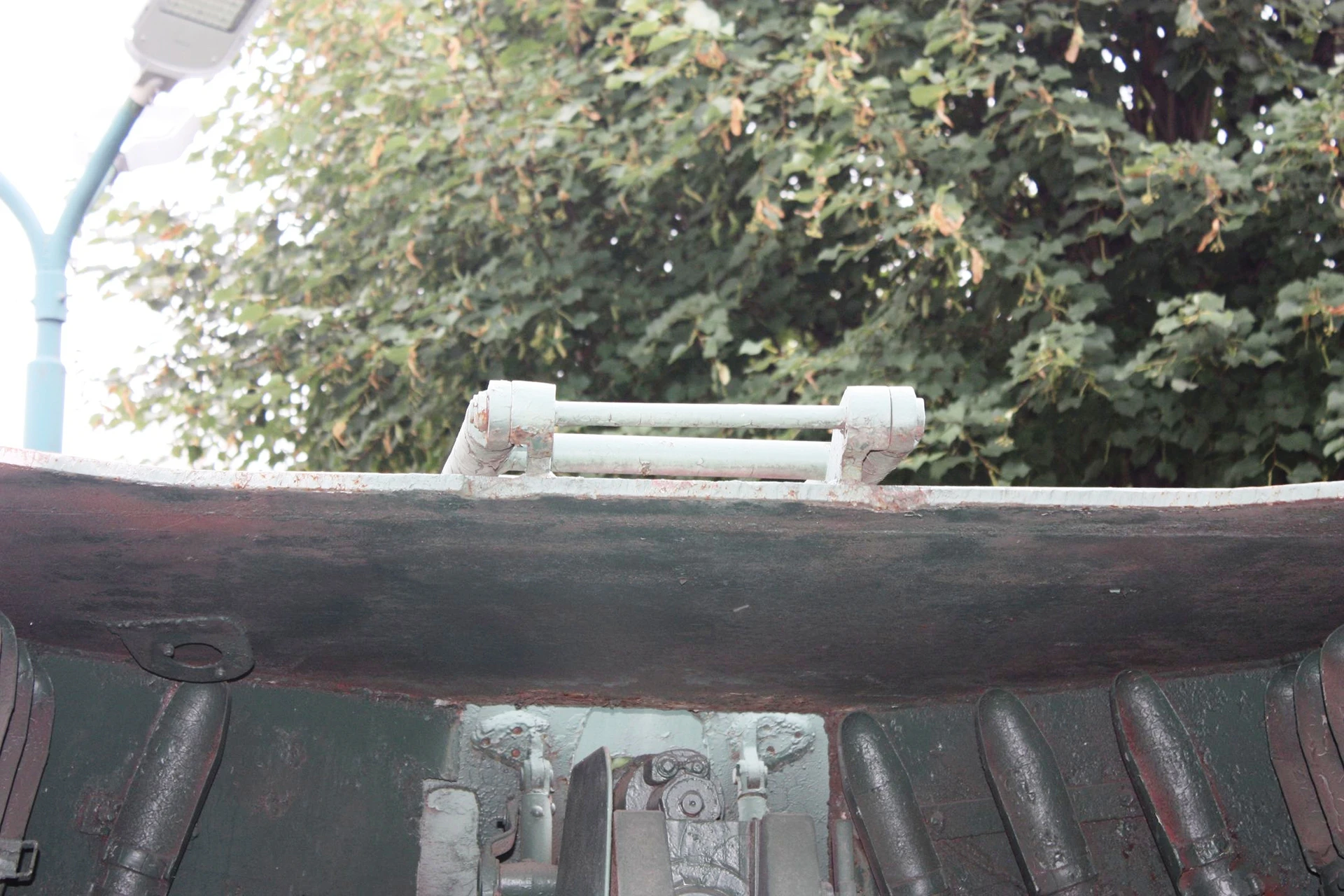
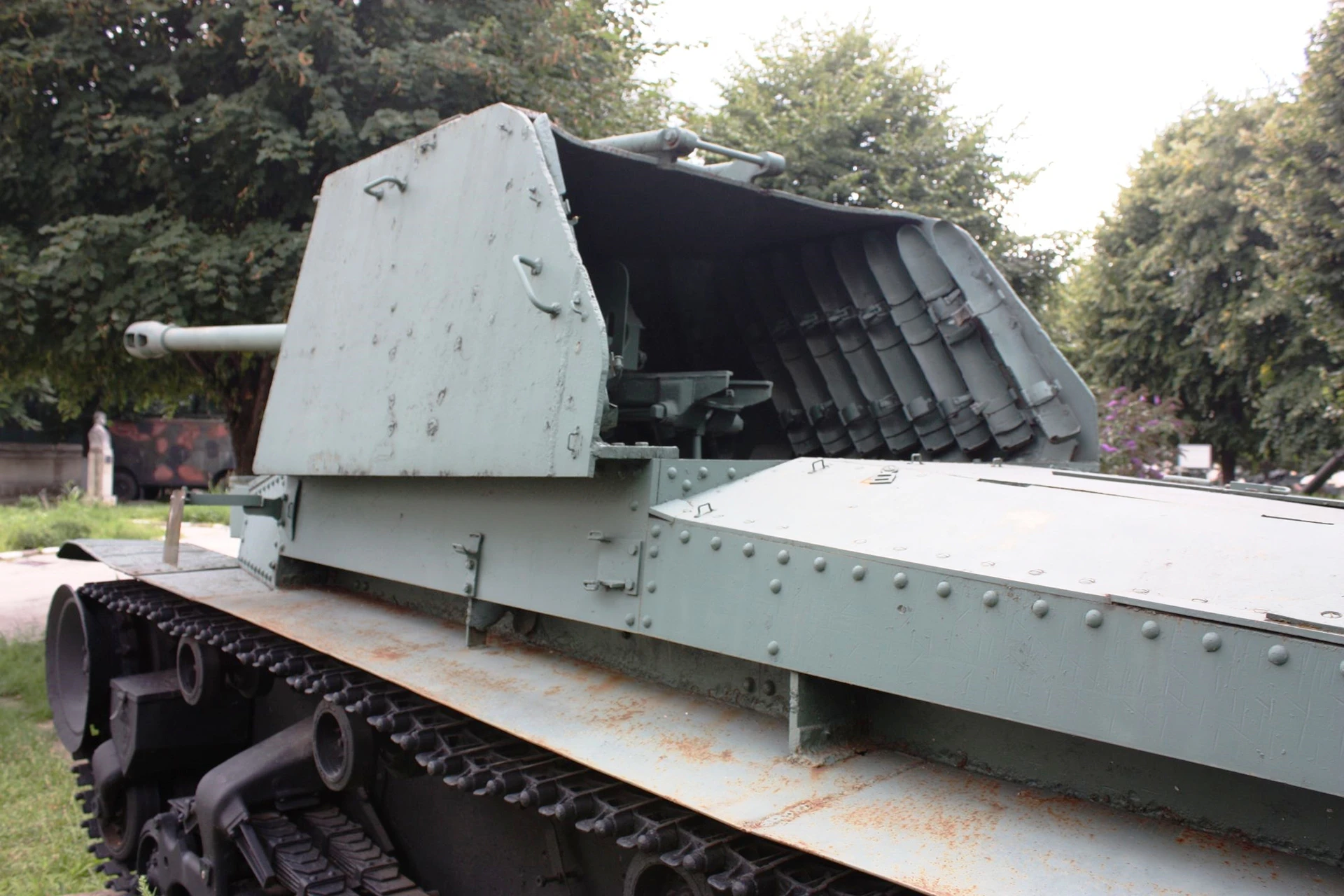
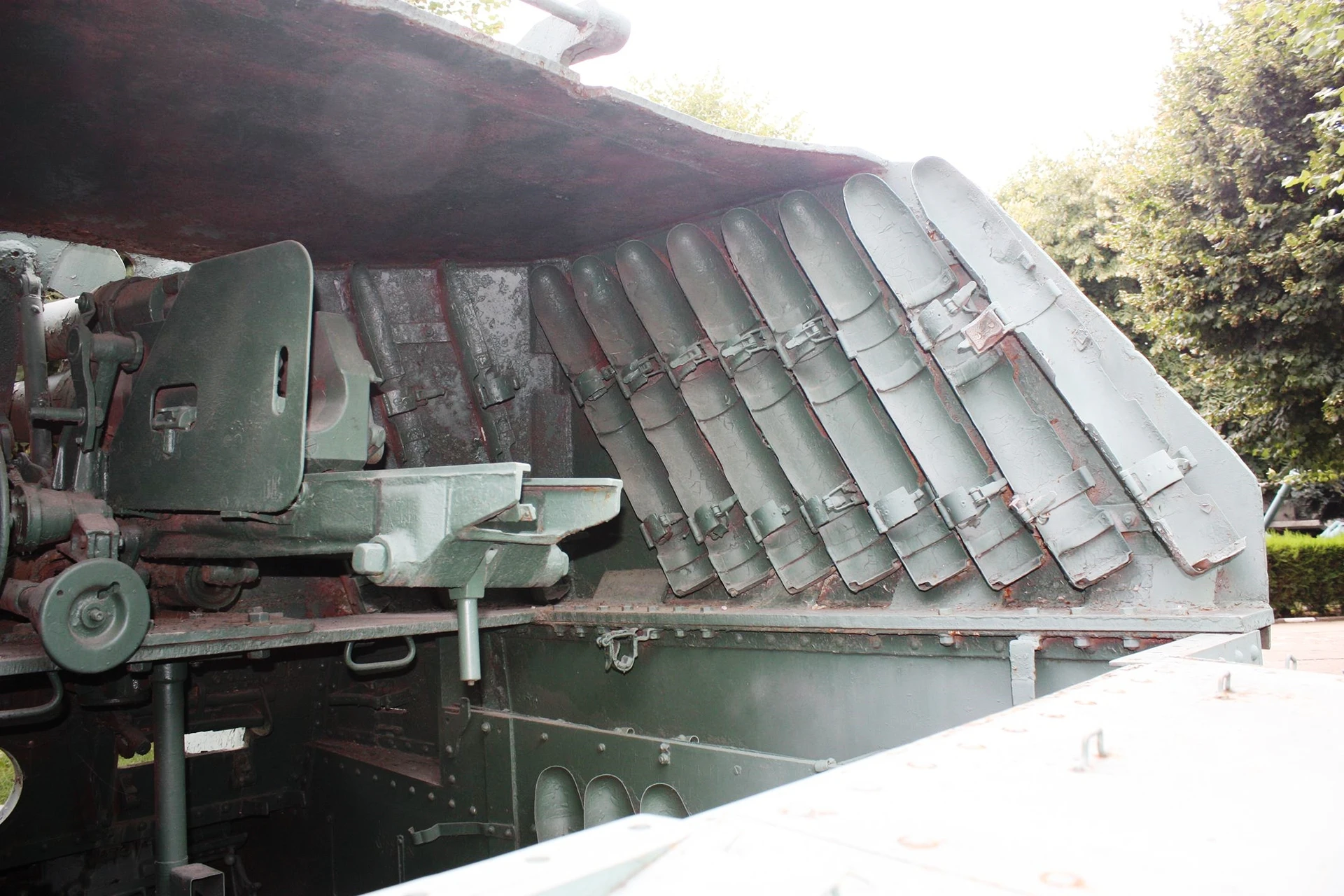
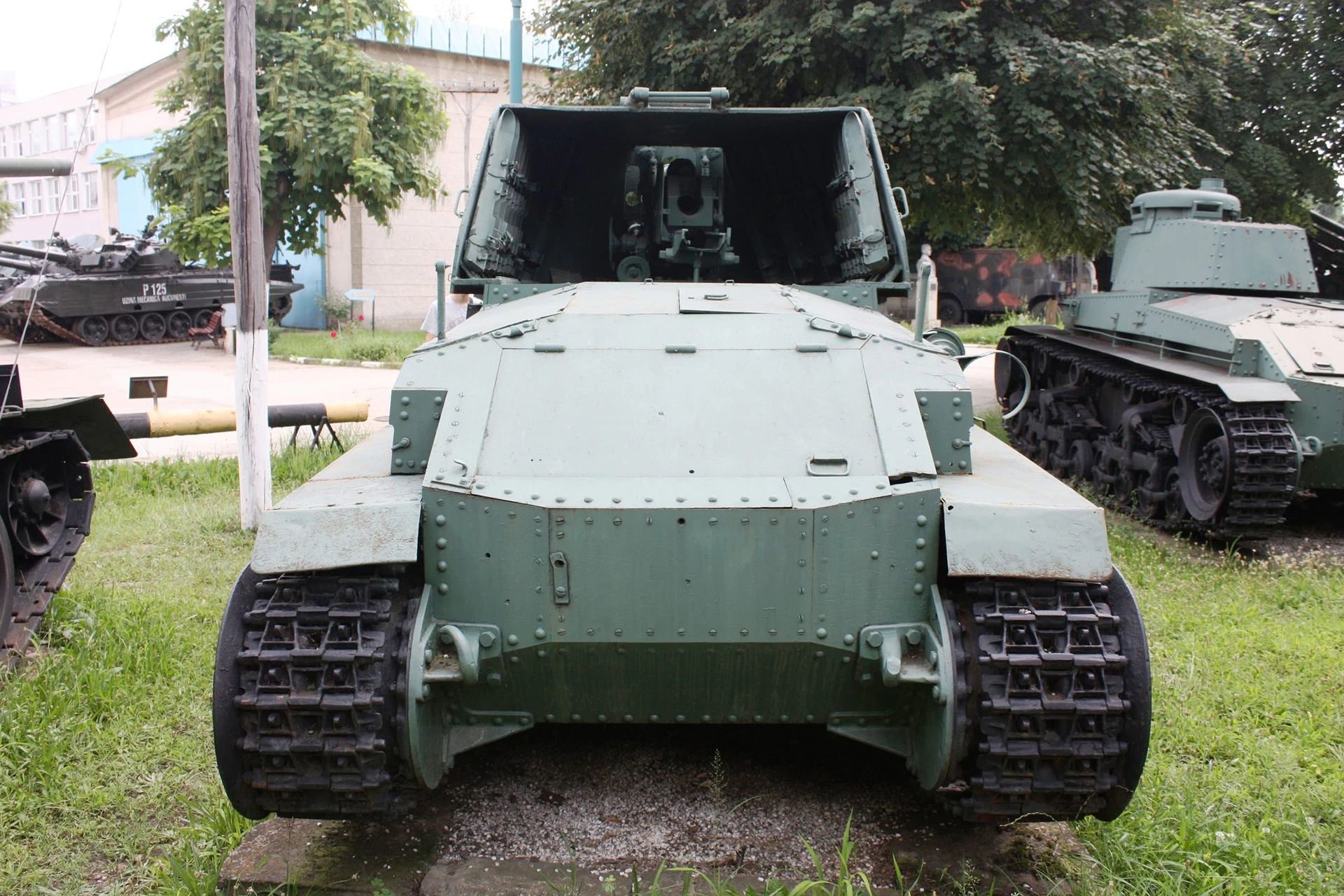
Fotogalerij van een TACAM R-2, The TACAM R-2 (Tun Anticar pe Afet Mobil – Self-propelled Anti-tank Gun) was a Romanian tank destroyer used during World War II. It was built by removing the turret of the R-2 light tank and building a pedestal to mount an ex-Soviet 76.2 mm (3.00 in) ZiS-3 field gun in its place. A three-sided fighting compartment was built to protect the gun and its crew. Twenty were built in 1944, but only one is known to exist today. It participated in the Budapest Offensive and the Prague Offensive.
Bron: TACAM R-2 op Wikipedia
| TACAM R-2 | |
|---|---|
| Fotograaf | Daniël Fliundrak |
| Lokalisatie | Onbewust |
| Foto 's | 49 |

| TACAM R-2 Walk Around | |
|---|---|
| Fotograaf | Onbewust |
| Lokalisatie | Onbewust |
| Foto 's | 23 |
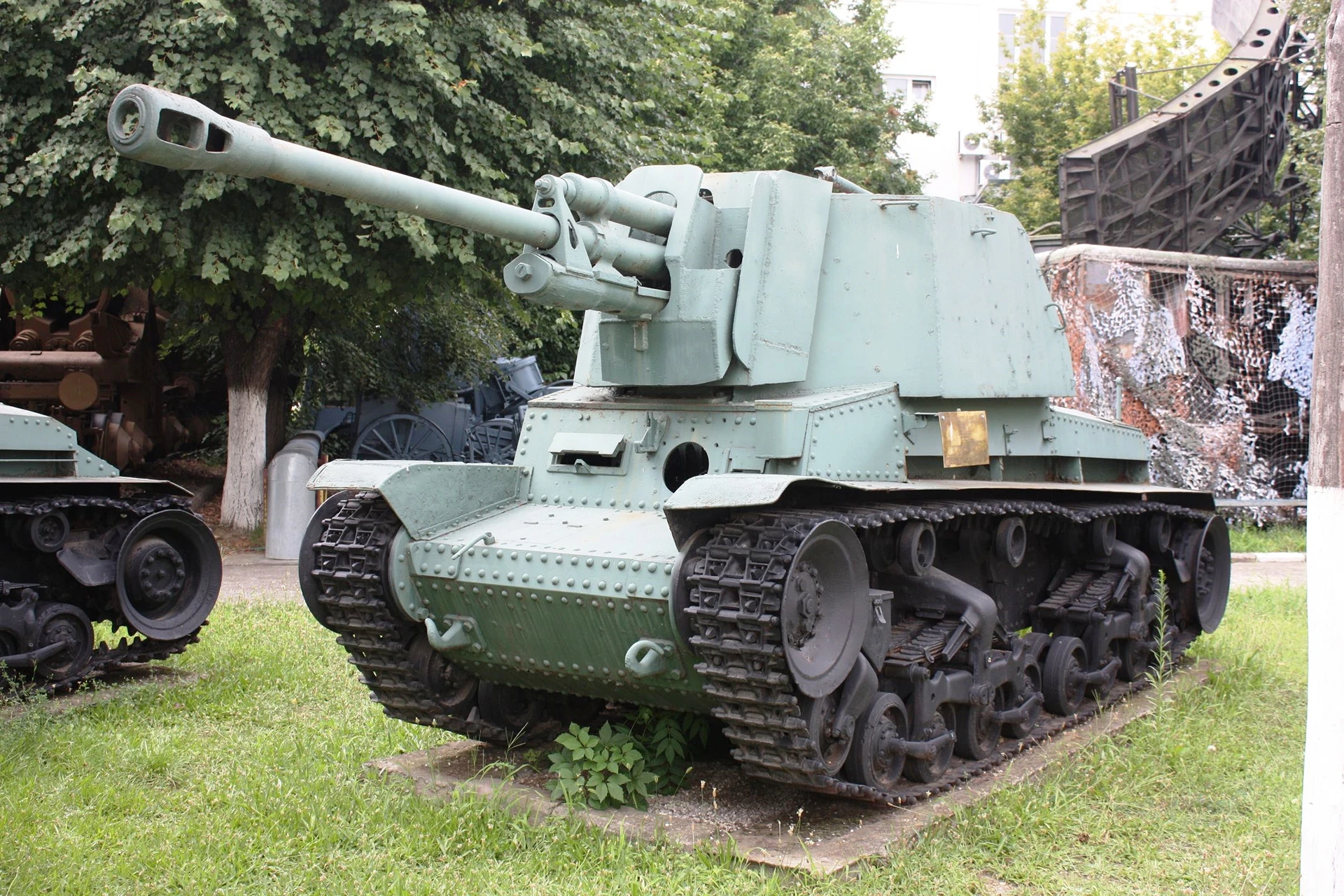
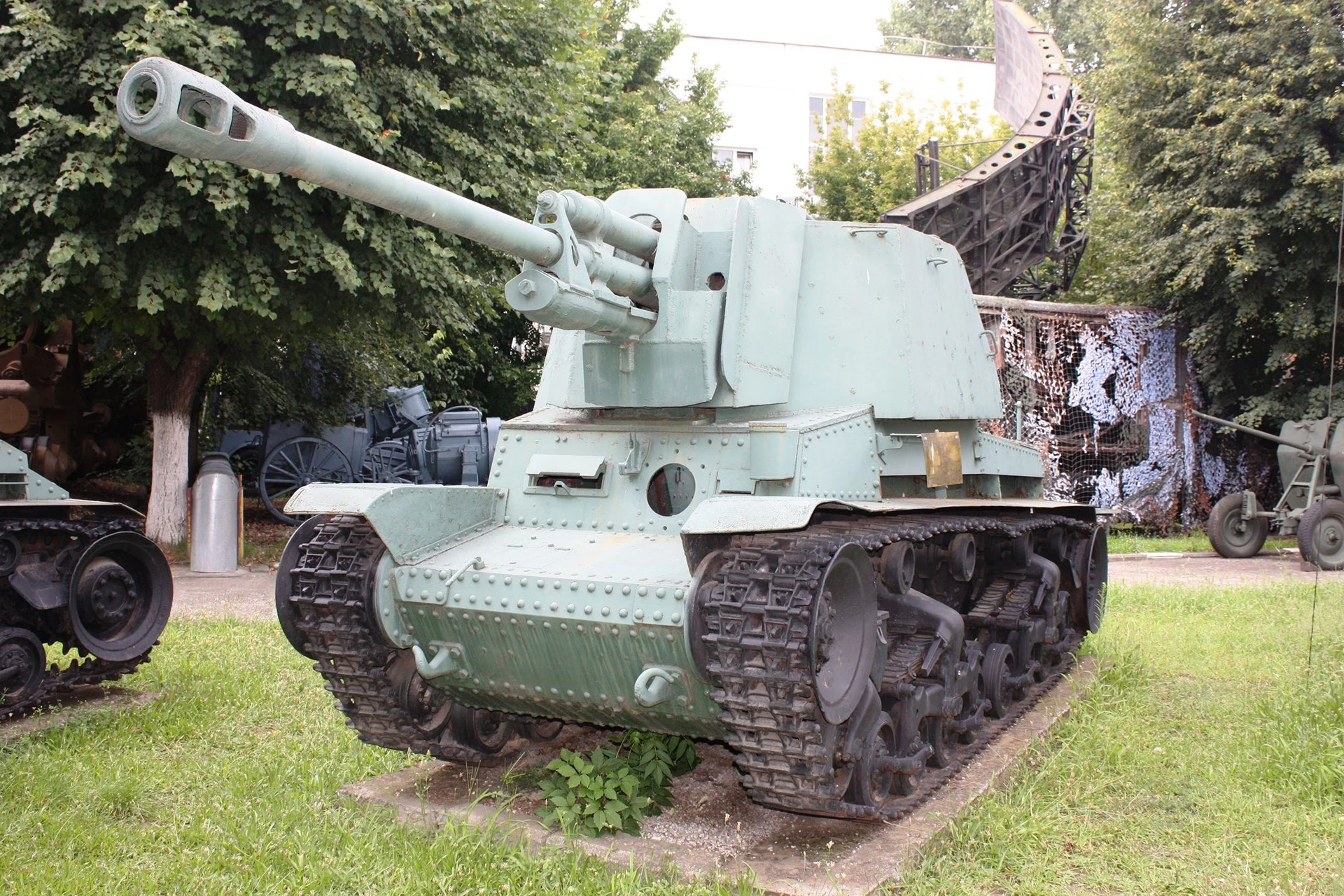
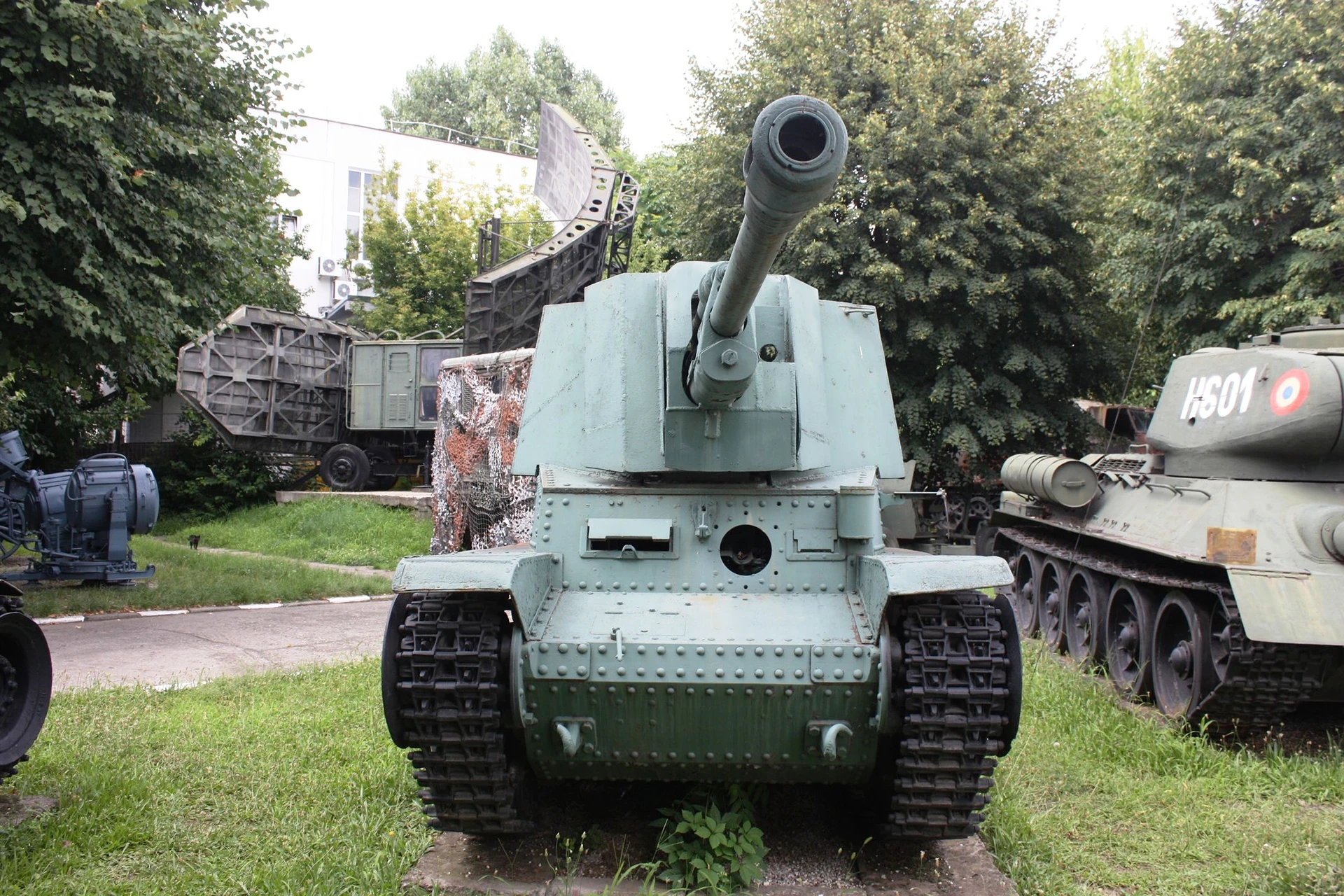
Zie ook:


Romania’s Scrappy, Salvaged Tank Hunter
De TACAM R-2 (Tun Anticar pe Afust Mobil R-2 – Anti-tank Gun on R-2 Mobile Mount) was a highly creative, desperate piece of battlefield engineering built by the Kingdom of Romania during World War II. Facing waves of heavily armored Soviet T-34 and KV-1 tanks on the Eastern Front, the Romanian army quickly realized their primary light tank, the R-2 (a license-built Czechoslovak LT-38/Panzer 38t variant), was completely obsolete. Lacking the industrial power to design and mass-produce a brand-new modern tank from scratch, Romanian Lieutenant Colonel Constantin Ghiulai engineered a brilliant salvage plan. By stripping the turrets off obsolete R-2 hulls and mounting captured Soviet 76.2mm ZiS-3 guns inside a three-sided fighting compartment built from captured Soviet tank plating, Romania successfully built a cheap, effective tank destroyer that could actually stand a fighting chance on the Eastern Front.
| Attribute | Technical Specification (TACAM R-2 Production Standard) |
|---|---|
| Role | Light Tank Destroyer (Tun Anticar pe Afust Mobil) |
| Bemanning | 3 (Commander/Gunner, Loader, Driver) |
| Krachtbron | 1 × Praga EPA 6-cylinder liquid-cooled gasoline engine (125 hp) |
| Maximum Speed | 40 km/h (25 mph) on roads | ~15 km/h (9 mph) cross-country |
| Combat Weight | 11.5 metric tons (12.6 short tons) |
| Operational Range | ~160 km (100 miles) on roads | ~95 km (59 miles) cross-country |
| Primary Armament | 1 × 76.2 mm ZiS-3 L/42.2 divisional gun (30 rounds carried) |
| Secondary Armament | 1 × 7.92mm ZB-53 (MG 37t) machine gun (typically mounted inside the hull) |
| Armor Thickness | Hull Front: 25mm | Superstructure Casemate: 10mm to 17mm (built from salvaged armor) | Top & Rear: Open |
| Production Total | 21 units converted at the Leonida Works in Bucharest between late 1943 and mid-1944 |
Design Engineering: Frankenstein Armor, Captured Cannons, and Light Suspensions
- A Superstructure Born from Defeated Foes: Romania’s domestic steel industry was severely limited during the war. To build the armored shield (casemate) around the TACAM R-2’s gun crew, engineers literally cut up the hulls and turrets of damaged, captured Soviet BT-7 and T-26 light tanks. This salvaged, high-quality steel plating—ranging from 10mm to 17mm thick—was welded into a three-sided, open-topped and open-backed protective box, making the TACAM a true “Frankenstein” of military engineering.
- The Captured Soviet ZiS-3 Weaponry: For its primary weapon, Romania relied on captured stockpiles of the highly effective Soviet 76.2mm ZiS-3 divisional gun (the same weapon used on the Soviet SU-76). The gun was mounted directly inside the open-topped compartment. Modified to fire Romanian-manufactured “Costinescu” armor-piercing ammunition, this gun allowed the TACAM R-2 to reliably penetrate up to 80mm of armor at 500 meters, allowing it to threaten the sloped armor of the Soviet T-34.
- Stretching the Lightweight Praga Chassis: Underneath the improvised gun shield was the chassis of the Czechoslovak-designed R-2 light tank. It was an exceptionally reliable, highly mobile platform with a smooth Praga EPA engine. However, mounting the heavy 76.2mm gun pushed the lightweight suspension to its absolute limit, slightly reducing its off-road performance and making the vehicle heavily front-weighted.
- The Open-Air Combat Environment: Much like the Soviet SU-76 and the German Marder series, the TACAM R-2 left the crew completely exposed from the rear and top. While this kept the overall weight of the vehicle under 12 tons and ensured that toxic gun smoke cleared away instantly, it offered the three-man crew zero protection against mortar fire, shrapnel, or infantry close-assault weapons.
Operational History: The Defensive Stand in Bessarabia to the Liberation of Budapest
- Defending the Fatherland (Jassy-Kishinev): The TACAM R-2s were assigned to the *Compania 1 TACAM* of the Romanian 1st Armored Division. In July 1944, they were thrown into desperate defensive positions in Bessarabia and Northern Moldavia to block the massive Soviet Jassy-Kishinev Offensive. Despite their tiny numbers, their low profile and effective gun made them potent defensive ambush weapons in the hilly Romanian countryside.
- The Dramatic Axis Switch of August 1944: On August 23, 1944, Romania underwent a sudden coup, deposing the pro-Axis government and joining the Allies. The TACAM R-2s suddenly found themselves pointed in the opposite direction. Instead of fighting the Red Army, the Romanian tank destroyers were deployed alongside Soviet forces, driving west to push German and Hungarian forces out of Romanian territory.
- The Campaign into Hungary and Slovakia: Operating as part of the Romanian 2nd Armored Regiment, the surviving TACAM R-2s fought through the brutal, cold campaigns of late 1944 and early 1945. They supported Allied infantry advances during the bloody Siege of Budapest and pushed deep into the rugged, mountainous terrain of Slovakia, proving incredibly useful at knocking out German fortified machine gun bunkers.
- The Sole Survivor of a Forgotten Legacy: Of the 21 TACAM R-2s built, almost all were destroyed, worn out, or scrapped during the final, grueling months of the war. Only one single vehicle survived the conflict. Today, this rare monument of Romanian wartime resourcefulness sits preserved at the National Military Museum in Bucharest, standing as a testament to the scrappy ingenuity of engineers under extreme industrial pressure.
Views : 3586
U ook zien :
 Valentine Archer – Foto's & Video's
 ASU-85 – Foto's & Video
 2S1 Gvozdika – Foto's & Video
 Merkava Howitzer Sholef – Foto's & Video
 M55 Zelfrijdende Houwitser – Foto's & Video
 Airborne 6pdr Anti-tank pistool – Walk Around
 Ordnance QF 6-ponder - Rond te lopen
 50mm PaK 38 – WalkAround
 Pak 38 – WalkAround
 45mm model 1934 – WalkAround