Mi-piste M2 | |
|---|---|
| Pays | Usa |
| Type | Demi-piste |
| Description | Album photo de 108 photos walk-around d’un M2 HalfTrack |
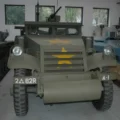
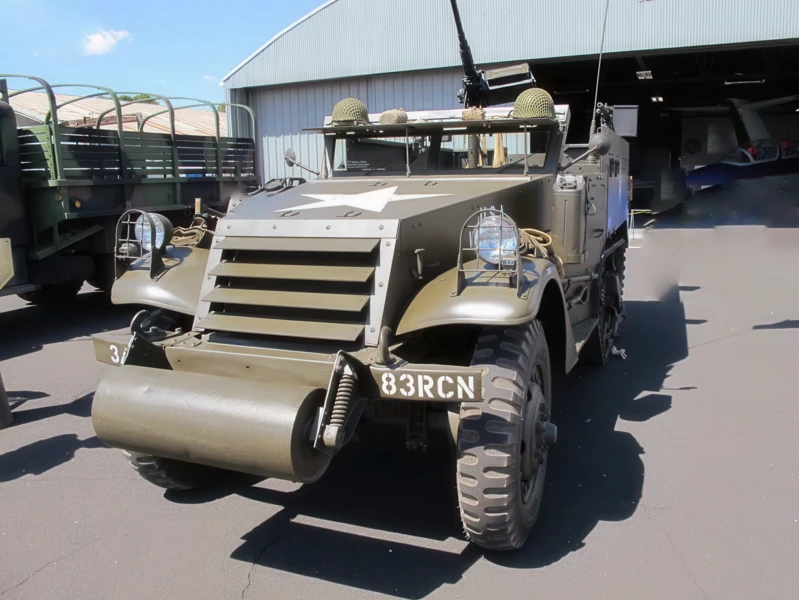
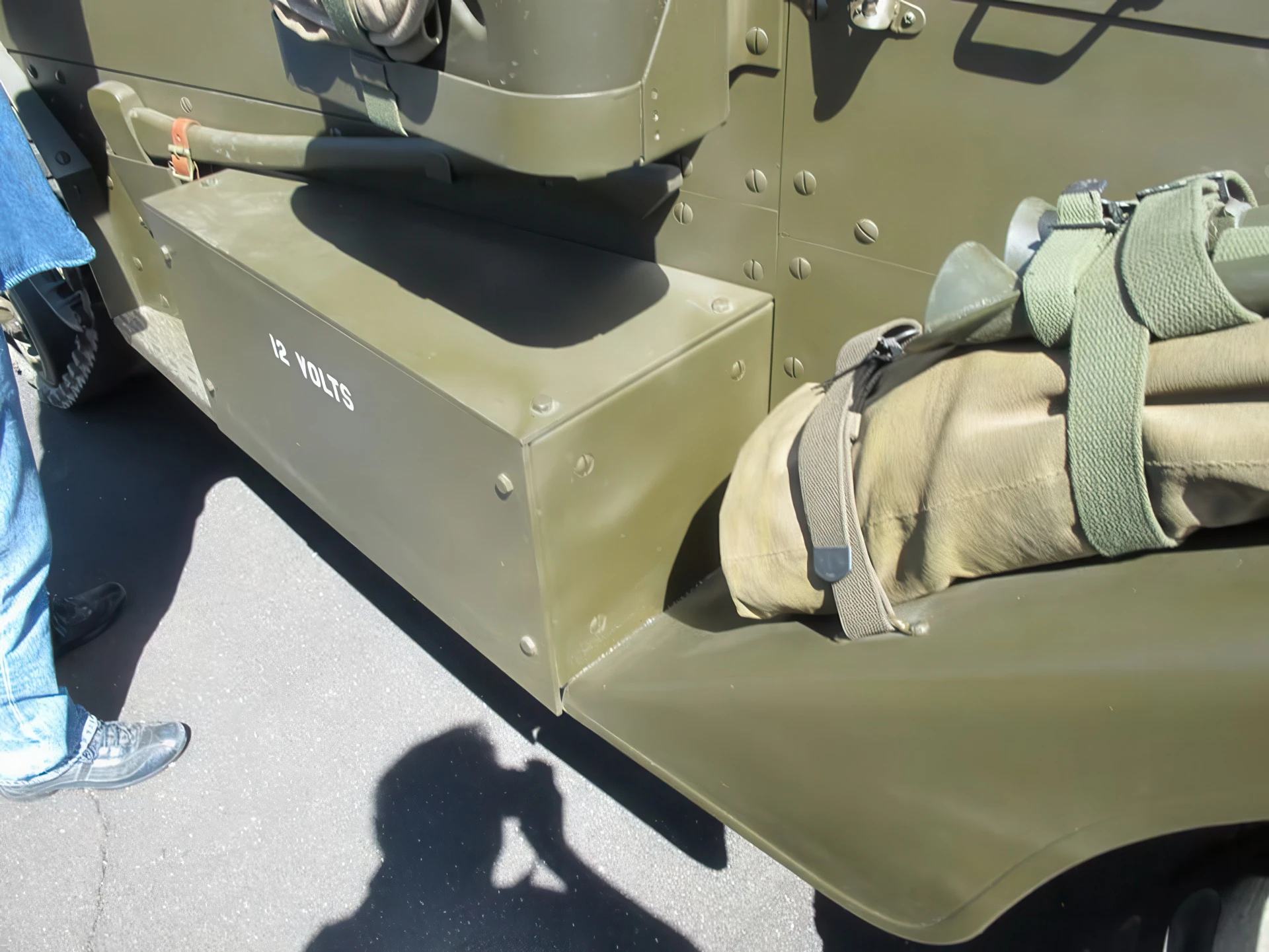
Galerie Photo d’une demi-piste M2, Le Demi-piste M2 était un véhicule blindé produit par les États-Unis pendant la Seconde Guerre mondiale
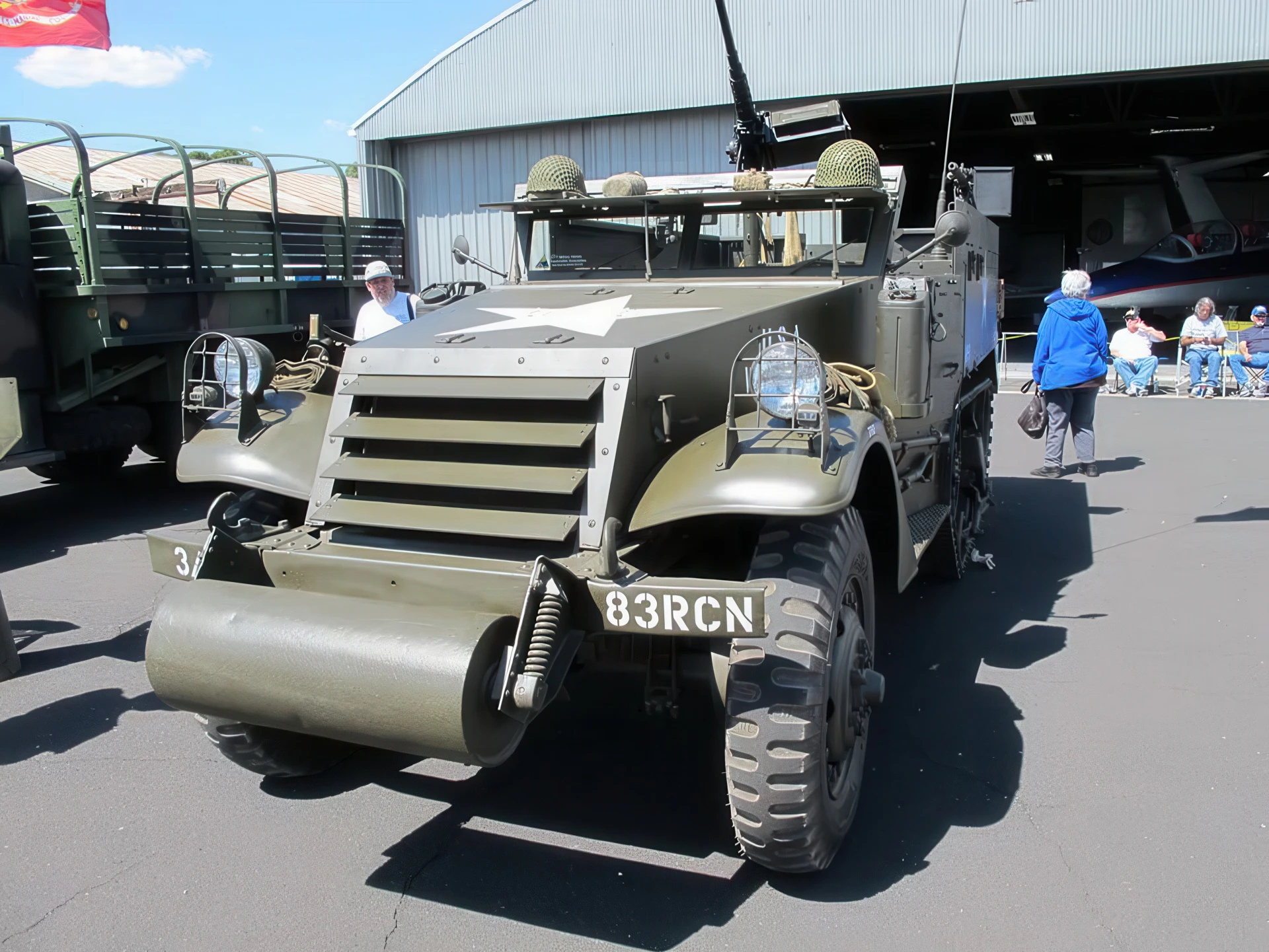
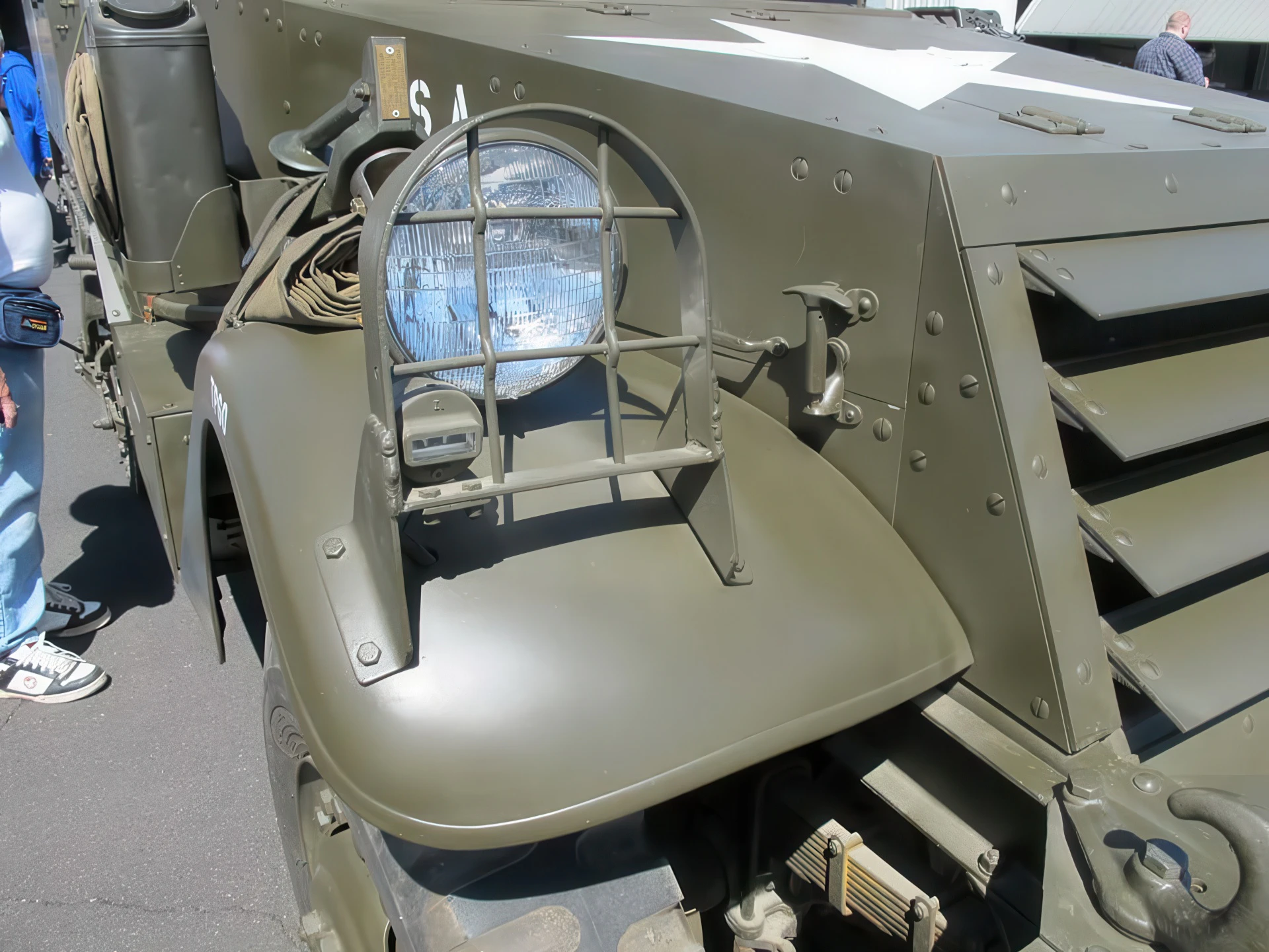
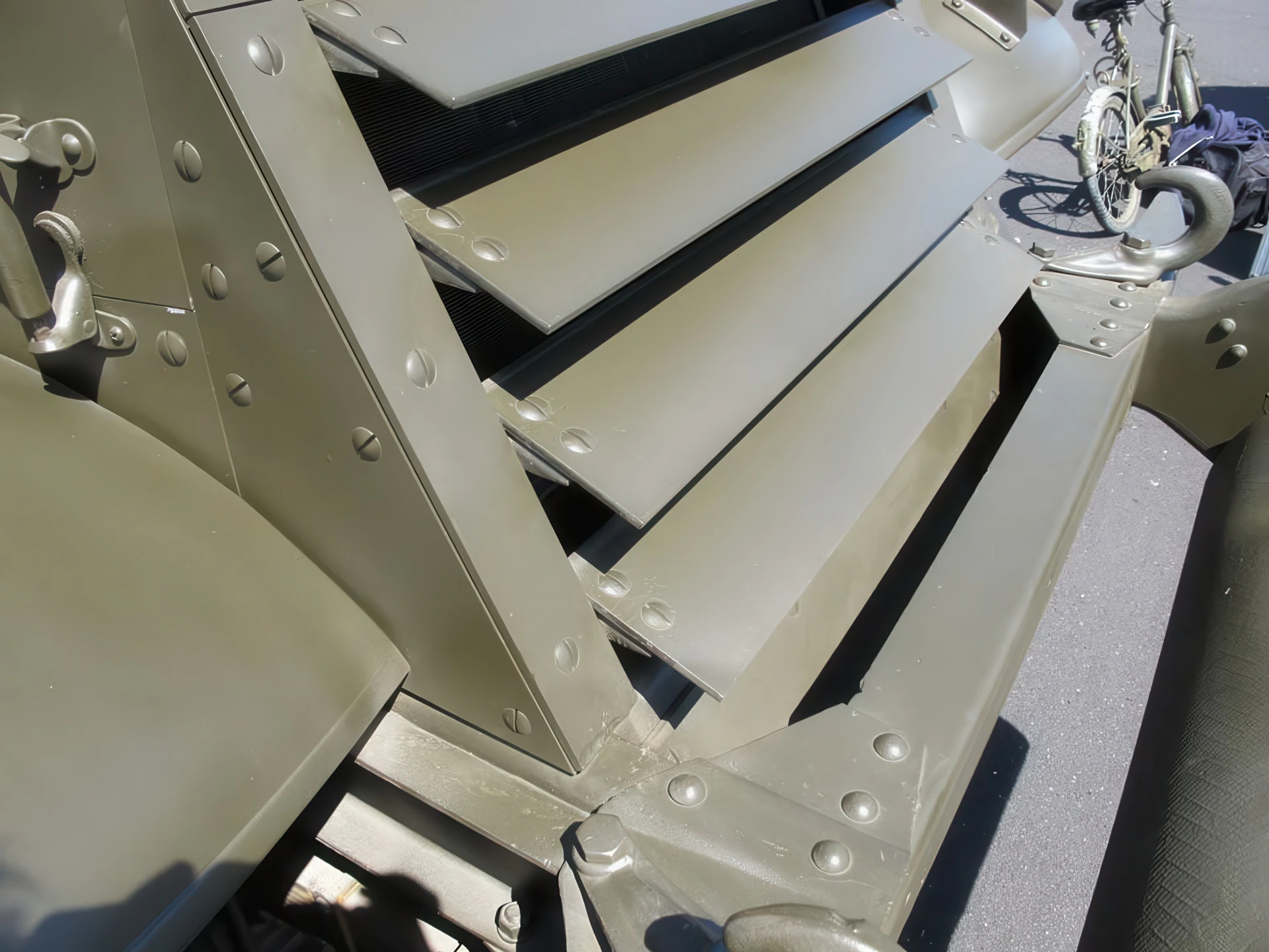
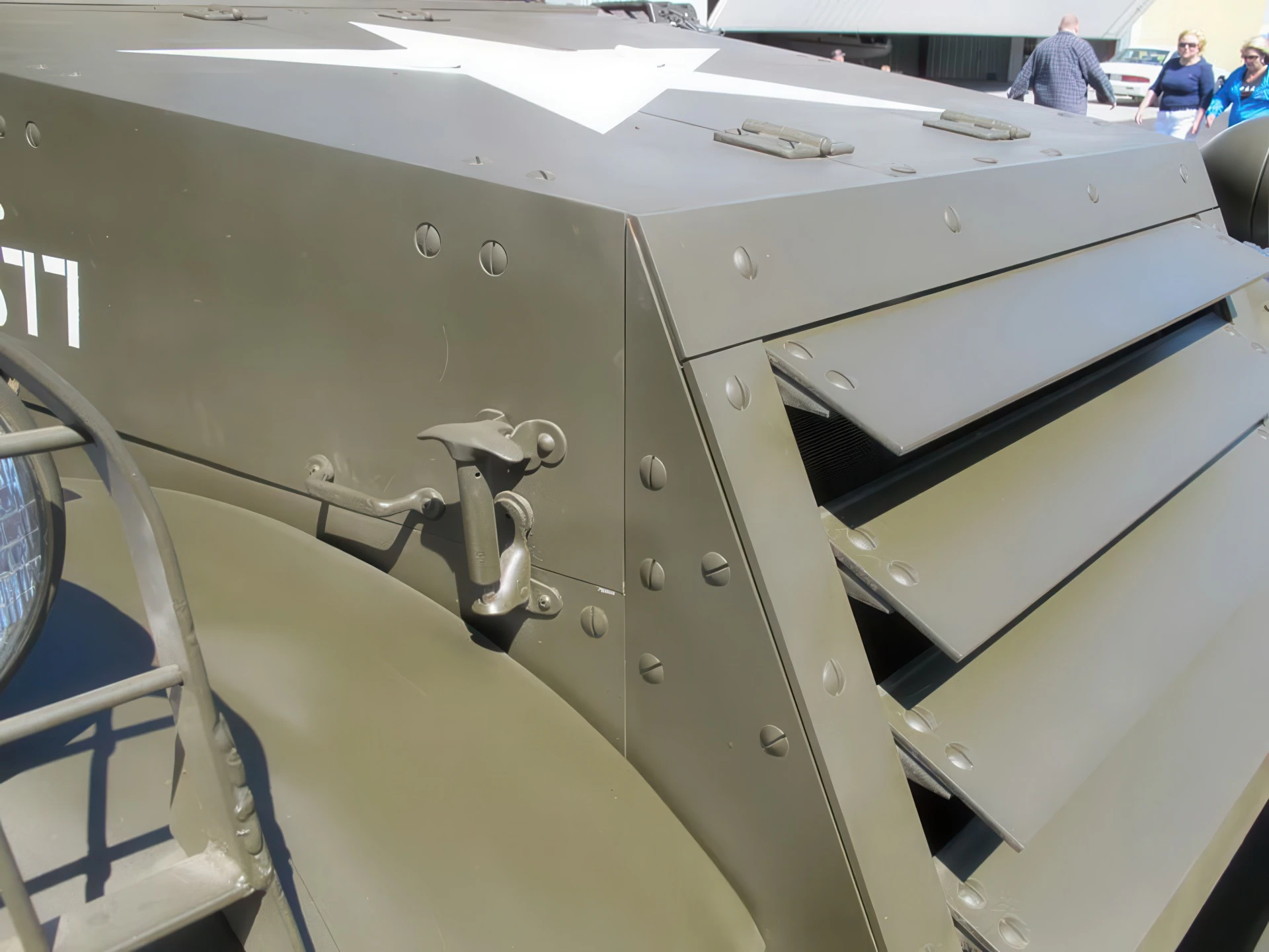
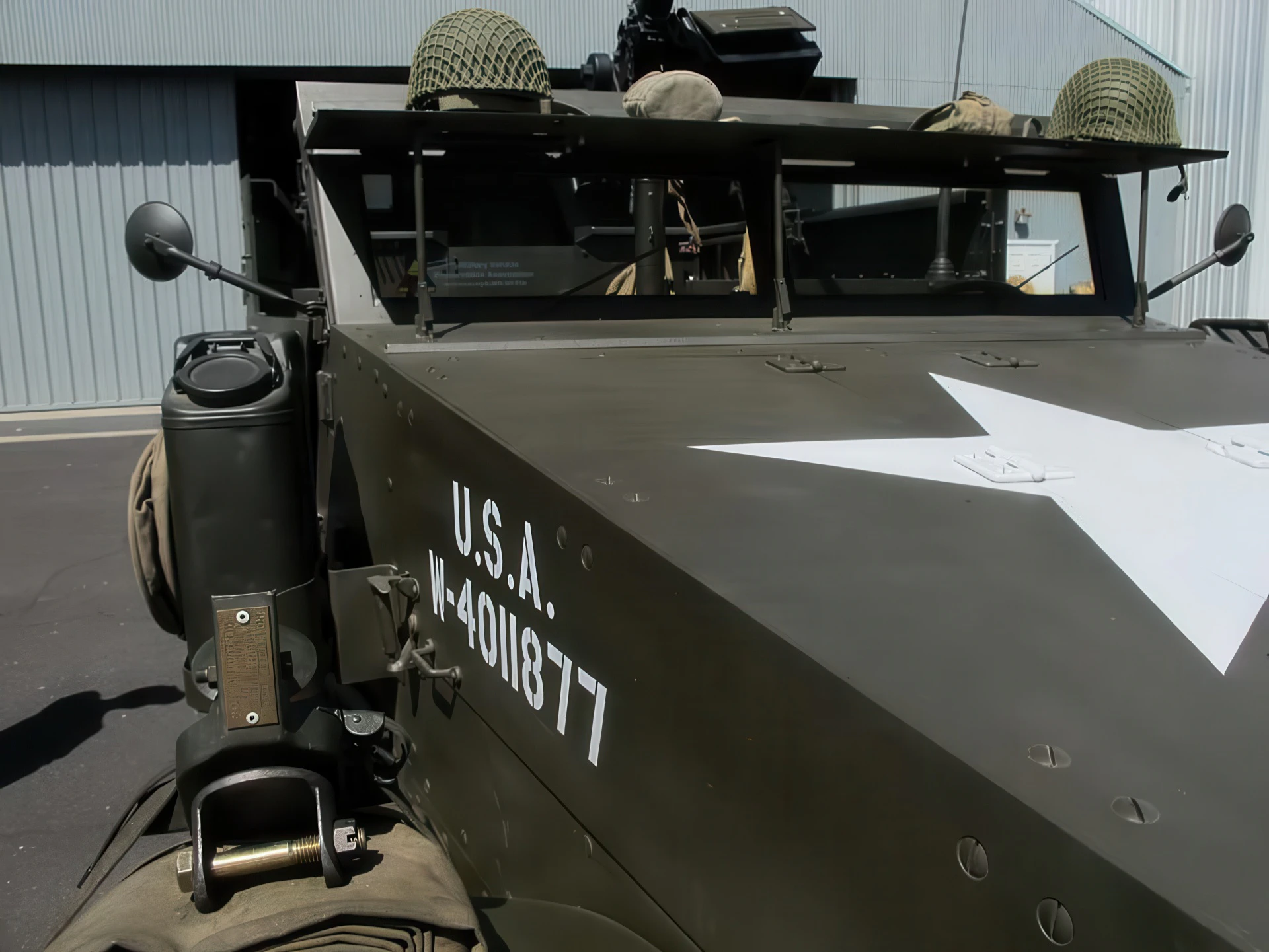
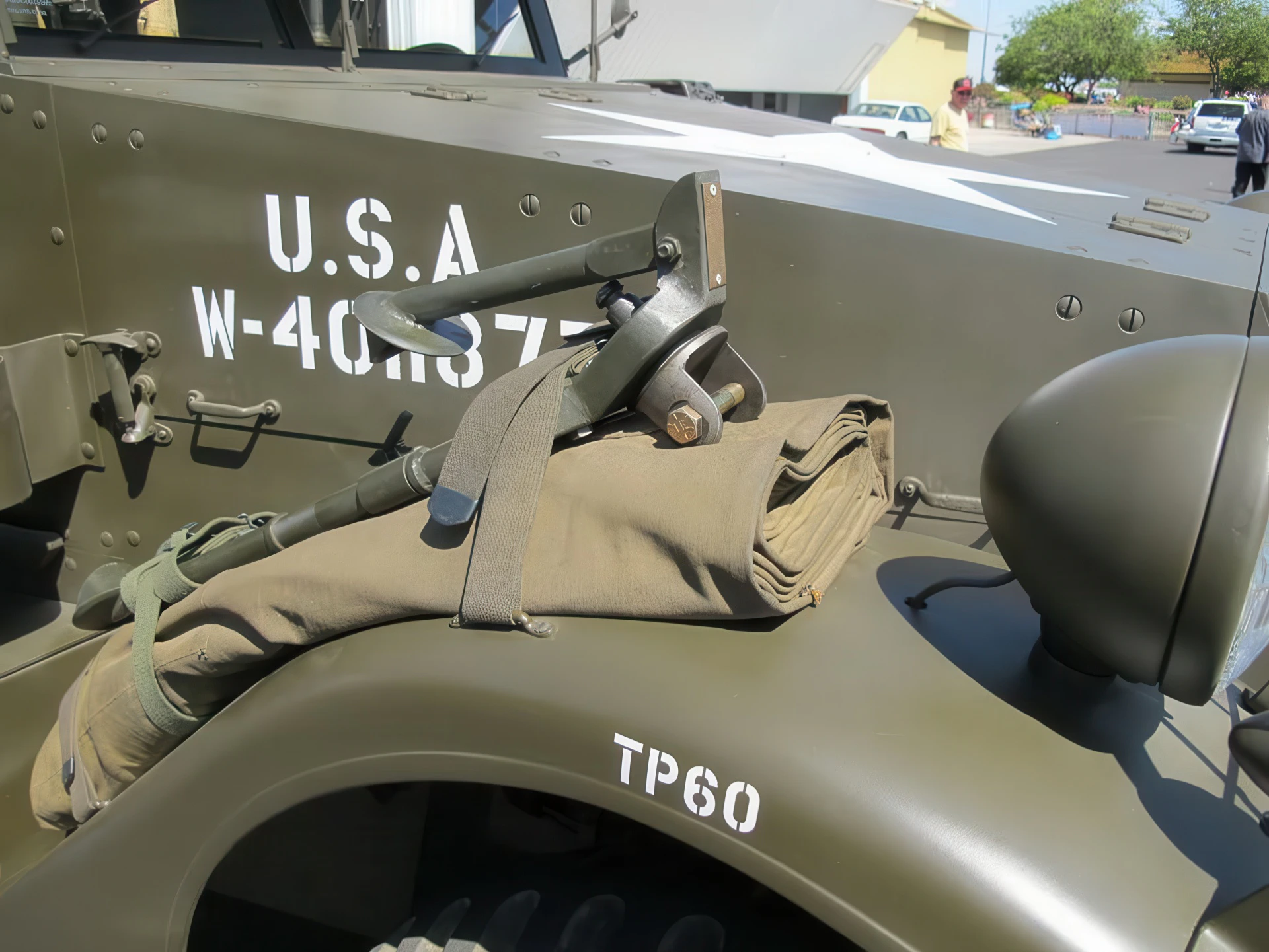

Spécifications techniques : Poids : 9 tonnes Longueur : 5,96 m (19 pi 7 po) Largeur : 2,2 m (7 pi 3 po) Hauteur : 2,26 m (7 pi 5 po) Personnel : 2 + 7 passagers Blindage : 6 – 12 mm Armement : 0,5 pouces arme Browning M2 machine à Moteur : Blanc 160AX 147 ch (110 kW) Suspension : Essieu avant à roues, voie arrière Autonomie : 200 miles (320 km) Vitesse : 40 mph (64 km / h)
Voir aussi :


Lla M2 Half-Track Car was an armored military vehicle produced by the United States during World War II. It was a rugged and versatile design that blended the speed and steering of a wheeled vehicle with the superior off-road traction of a tracked vehicle.
Design and Role
Developed from the earlier M3 Scout Car, the M2 was one of the foundational vehicles in the American mechanized army, serving in virtually every theater of the war.
- Half-Track Configuration: The vehicle was driven by a tracked bogie assembly at the rear for propulsion and off-road mobility, while a conventional wheeled axle at the front was used for steering. This hybrid configuration allowed it to travel faster on roads than a full-track while maintaining better cross-country capability than a wheeled truck.
- Primary Roles: The M2 was initially designed for two main tasks:
- Reconnaissance Vehicle: Used by armored cavalry units for scouting and screening.
- Artillery Prime Mover: Used to tow and carry ammunition for light artillery pieces, such as the 105 mm howitzer.
- Capacité: The M2’s troop compartment was relatively short, designed to carry a crew of 2 (driver and assistant driver) plus up to 7 passengers, typically a machine gun or mortar squad. This limited capacity differentiated it from the longer M3 Half-Track, which was built to carry a full infantry squad.
Caractéristiques clés
- Armure: It featured light armor (typically 6 mm to 13 mm of face-hardened steel) designed to protect the crew and passengers from small arms fire and artillery shell fragments. However, its open top left the occupants vulnerable to overhead shrapnel or plunging fire.
- Moteur: Powered by a White 160 AX inline six-cylinder gasoline engine, giving it a road speed of around $45\text{ mph}$.
- Armement: The standard defensive armament was a .50 caliber M2 Browning heavy machine gun, typically mounted on a flexible « skate rail » that ran around the rim of the troop compartment. Many vehicles were also fitted with one or more .30 caliber machine guns. Later models (M2A1) often replaced the skate rail with a fixed M49 ring mount for the .50 caliber machine gun over the co-driver’s seat.
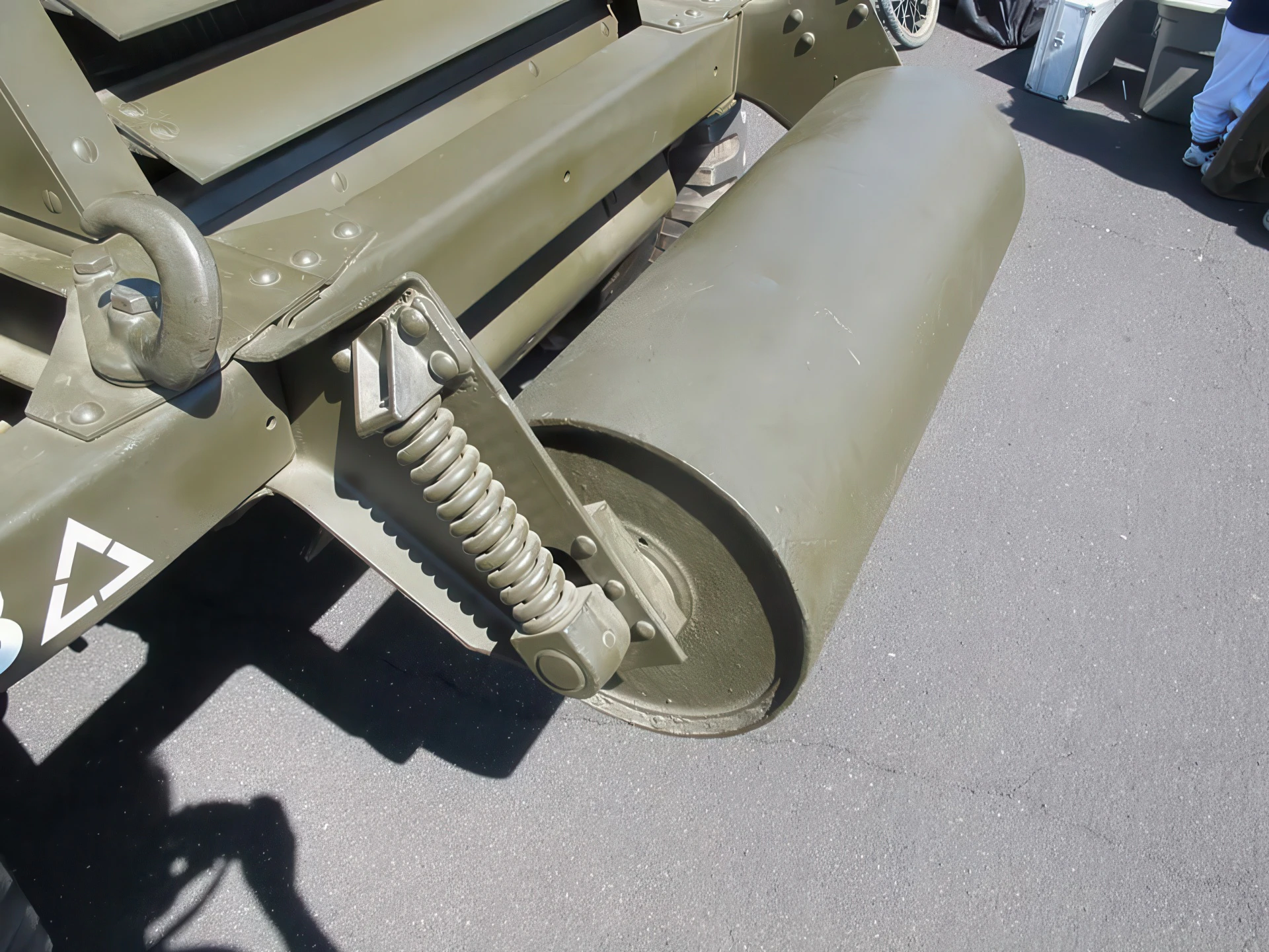
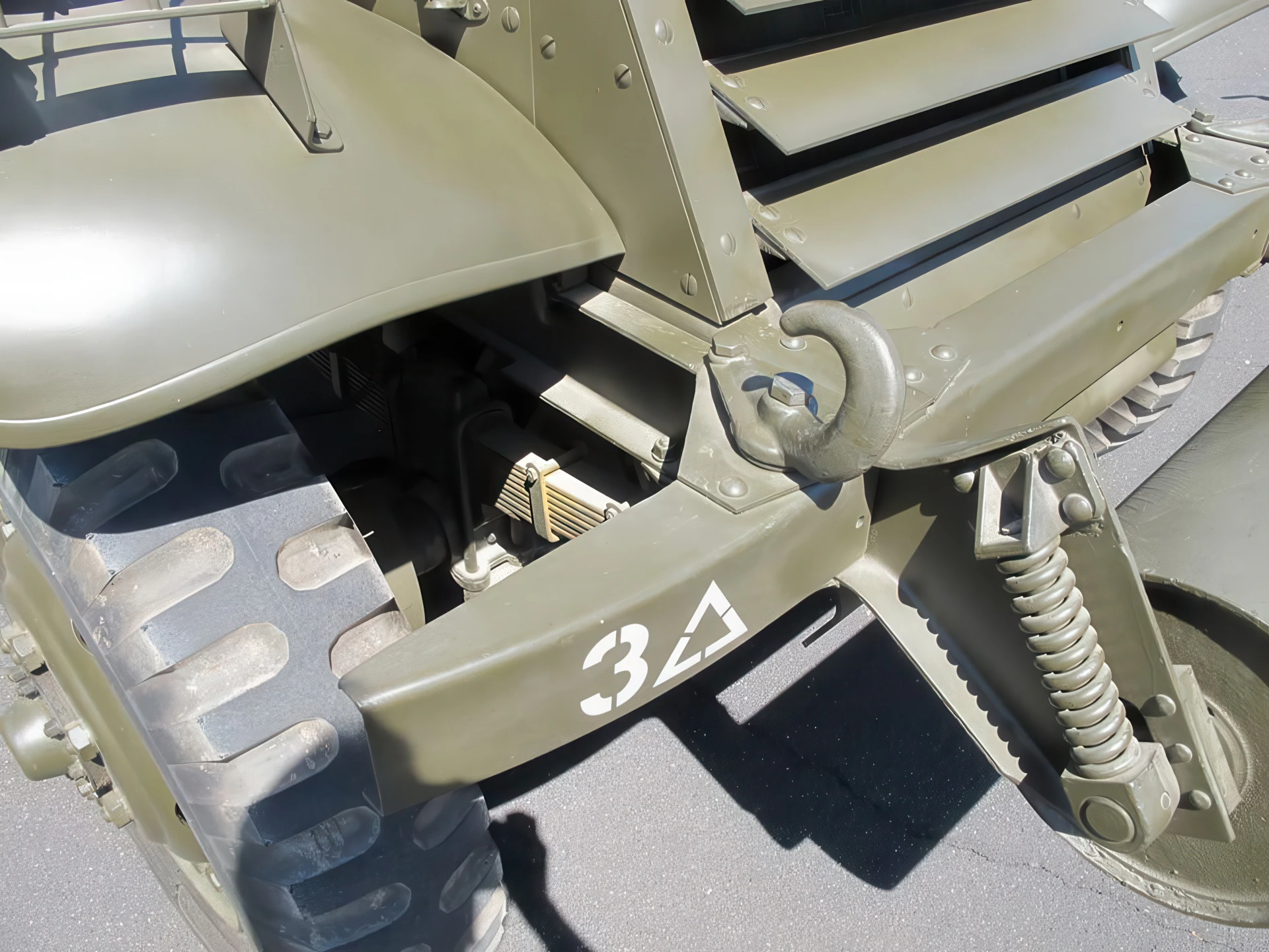
- Front Roller: Many M2s were equipped with an anti-ditching roller mounted on the front bumper. This roller helped the vehicle cross trenches and steep obstacles by preventing the front end from digging into the ground.
Variantes
The M2 chassis served as the basis for several specialized variants, including:
- M4 MMC: An 81 mm Motor Mortar Carrier.
- Self-Propelled Artillery: Tested with various anti-tank and anti-aircraft weapons, though many of the dedicated fighting variants were built on the longer M3 chassis.
Due to its shared components and simplified design, the M2 was mass-produced by manufacturers like White Motor Company, Autocar, and Diamond T, ensuring the rapid motorization of the US Army early in the war.
Vues : 5447