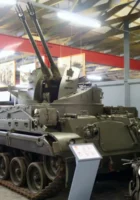
M42 Duster

M42 Duster

RolliIseliikuv õhutõrjekahur
RiikUSA
Ehitatud3200

2007 M42 40 mm Self-Propelled Anti-Aircraft Gun, or “Duster,” is an armored light air-defense gun built for the U.S. Army from 1952 until December 1959. Production of this vehicle was performed by the tank division of the General Motors Corporation. It used components from the M41 light tank and was constructed of all welded steel. A total of 3,700 M42s were built. The vehicle has a crew of six and weighs 22,500 kg (49,500 lb) fully loaded. Maximum speed is 45 mph with a range of 100 miles. Armament consists of fully automatic twin 40 mm M2A1 Bofors, with a rate of fire of 2×120 rounds per minute (rpm) and either a .30 caliber Browning M1919A4 or 7.62mm M60 machine gun. The 500 hp, six-cylinder, air-cooled, gasoline engine is located in the rear of the vehicle. Although the M42 Duster was initially designed for an anti-aircraft role, it proved highly successful when used in the Vietnam War against unarmored ground forces.

Allikas: M42 Duster vikis

Jätka lugemist

Views : 5558

Vene merevägi Alfa klass SSN - HOBBY BOSS 83528

Hobiboss

Teema

Russian Navy Alfa Class SSN

Skaala1/350
Ref83528

Brändi mudel HobbyBoss komplekt : Russian Navy Alfa Class SSN – HOBBY BOSS 83528

Funktsioonid : The kit consists of over 30 parts , includes over 10 Photo etched parts – Photo Etched parts for nameplate and propeller etc. – contains display stand

Nõukogude Liidu/Vene mereväe projekt 705 (Лира/Lira, "Lüüra") oli allveelaevade klass jahimeeste/tapjate tuumajõul töötavatest laevadest (lühendatult PLA: Podvodnaja lodka atomnaya, tuumaallveelaev). Klassi tuntakse ka NATO aruandlusnime Alfa all. Need olid ehitatud sõjaallveelaevade kiireim ja sügavaim sukeldumisklass, ainult prototüüp K-278 Komsomolets (NATO "Mike" klass) ületas purustussügavuse ja prototüüp K-222 (NATO "Papa" klass) ületas sukeldumiskiiruse.

Allikas: Vene mereväe Alfa klass SSN hobi bossil

Jätka lugemist

Vaadatud : 1756

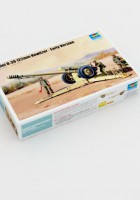
Nõukogude D-30 122mm Howitzer - Varajane versioon - Trompet 02328

Trompetist

Ref 02328
TüüpMudelid
Skaala1/35
Teema

Soviet D-30 122mm Howitzer – Early Version

Brändi mudel Trumpeter komplekt: Soviet D-30 122mm Howitzer – Early Version – Trumpeter 02328.

Features : The kit consists of 150+ parts ,1 pieces of Photo Etched parts – Details finely represented by newly tooled parts – Rubber tires

The D-30, or 122-mm howitzer D-30 (GRAU index 2A18), is a Soviet howitzer that first entered service in the 1960s. It is a relatively light and handy weapon despite being heavy enough for sustained long range fire in the field. The D-30 has a maximum range of 15.4 kilometers, or over 21 km using RAP ammunition. With its striking three-leg stabilising system the D-30 can be rapidly traversed through 360 degrees. Although no longer manufactured in FSU nations the D-30 is still manufactured internationally and is in service in more than 60 countries’ armed forces. The 2A18 gun is the primary weapon of the 2S1 self-propelled howitzer. There are also Egyptian, Chinese, and Syrian Self-propelled variants and conversions. The Syrian conversion utilizes the hull of a T-34 tank.

Allikas: Soviet D-30 122mm Howitze by Trumpeter

Jätka lugemist

Views : 1373

AH-1F Cobra gunship plastist mudelikomplekt - Revell 85-5321

Revell

Ref 85-5321
TüüpHelikopter
Skaala1/48
Teema

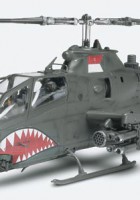
AH-1F Cobra Gunship

Brändi mudel Revell komplekt: AH-1F Cobra Gunship – Revell 85-5321.

Favored by the U.S. Army, the AH-1F Cobra is a purpose-built attack heli with extreme firepower. Its nose-mounted, 20 mm Gatling gun delivers devastating destruction with extreme accuracy. Kit features a moveable, nose-mounted Gatling gun, side-mounted mini-guns, side-mounted rocket pods, Weapons Officer and pilot figures, plus decals for 1. AH-1F Cobra, 67-15771, First Air Calvary, C Troop “Jaws of Death;” 2. AH-1F, 67-15883 “Trigger and Boomer’s Excellent Adventure, Operation Desert Storm and 3. AH-1F, 67-15843, N Troop, 4th Squadron, 2nd Armored Cavalry Regiment, U.S. Army, Iraq, 1991.

Allikas: AH-1F Cobra Gunship on Revell

Jätka lugemist

Views : 1503

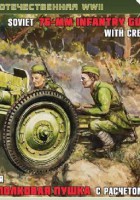
Soviet 76-mm Gun - Zvezda 6145

Zvezda

Ref6145
TeemaMudel
Skaala1/72
Kirjeldus

«Soviet 76-mm Gun»

Brändi mudel Zvezda komplekt: Soviet 76-mm Gun – Zvezda 6145.

The 76-mm divisional gun M1936 (F-22) was a Soviet divisional semi-universal gun, adopted for Red Army service in 1936. This gun was used in conflicts between the USSR and Japan on the Far East, in the Winter War and in World War II. Many F-22s were captured by Wehrmacht, modernized by the Germans and used against Soviet forces.

Allikas: Zvezda

Jätka lugemist

Vaadatud: 811

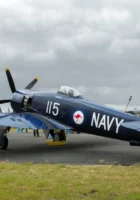
Hawker Sea Fury

Hawker Sea Fury

RiikUk
RolliHävituslennukid
Esimene lend21 February 1945
Ehitatud864

2007 Hawker Sea Fury is a British fighter aircraft designed and manufactured by Hawker. It was the last propeller-driven fighter to serve with the Royal Navy, and one of the fastest production single piston-engined aircraft ever built. Developed during the Second World War, the Sea Fury entered service two years after the war ended. The Sea Fury proved to be a popular aircraft with a number of overseas militaries, and was used during the Korean War in the early 1950s, as well as against the 1961 Bay of Pigs Invasion of Cuba.

Allikas: Hawker Sea Fury Vikipeedias

Jätka lugemist

Vaadatud : 4551

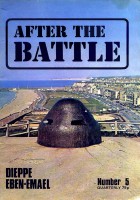
Débarquement de Dieppe - Pärast lahingut 005

Pärast lahingut

SeeriaPärast lahingut
Réf005
PerioodiTeine maailmasõda

Livre signé Pärast lahingut raamat "D-päeva maandumine Dieppe'is – pärast lahingut 005".

Maandumine Dieppe või operatsioon Jubilee fut une tentative ratée de débarquement des Alliés en France occupée, menée le 19 août 1942 sur le port de Dieppe. Cette opération laisse un goût amer aux Canadiens car les troupes engagées furent décimées alors que la tournure des opérations aurait dû faire annuler l’opération rapidement et que l’on parle encore d’un second front en Europe, qui est totalement absurde à cette date. Dans l’aube brumeuse d’un jour d’août 1942, une armada de 250 navires de toutes tailles se dirige vers les côtes françaises de la Manche. Elle mobilise près de 8 000 hommes dont plus de 2 000 y laisseront leur vie, pour ce qui sera le plus grand raid de la Seconde Guerre mondiale. 74 escadrilles de chasseurs et de bombardiers en assureront la couverture aérienne. Pour la première fois dans la Seconde Guerre mondiale, des hommes vont se ruer à l’assaut de ce que les Nazis appellent Festung Europa, la « Forteresse Europe. »

Allikas: Débarquement de Dieppe sur Wikipedia

Jätka lugemist

Views : 1277

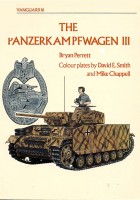
Panzerkampfwagen III - VANGUARD 16

Vanguard

AutorBryan Perrett
Réf16
Sujet

Panzerkampfwagen III

Livre signé Osprey Kirjastus raamat "Panzerkampfwagen III – VANGUARD 16".

2007 SdKfz 141 Panzerkampfwagen III (PzKpfw III) ehk Panzer III on Saksa tank, mis loodi 1930. aastate lõpus ja mida kasutati laialdaselt Teise maailmasõja esimeses faasis. See töötati välja vaenlase soomusmasinate vastu võitlemiseks (algul 3,7 cm KwK 36 L/45 tankitõrjekahuriga, seejärel alates 1940. aasta oktoobrist 5 cm KwK 38 L/42, seejärel 5 cm L/60 juunis 1942), samas kui kaasaegne Panzer IV oli mõeldud jalaväevägede toetamiseks 7,5 cm KwK 37 L/24-ga. Kuid üha paremini kaitstud liitlaste tankide ilmumisega suutis ainult Panzer IV kanda relvi, mis olid võimelised neid hävitama (7,5 cm KwK 40 L/43 suurtükiga 1942. aasta märtsist) ja see asendas Panzer III Wehrmachti peatankina. Kuid hoolimata asjaolust, et Panzer III oli 1942. aasta algusest täiesti vananenud, oli see siiski massiliselt seotud Kurski lahingu ajal 1943. aasta juulis.

Allikas: Vikipeedia

Jätka lugemist

Vaatamisi : 941

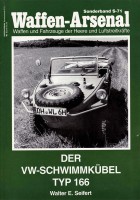
Schwimmküpel - Waffen Arsenal Sonderband 71

Waffen Arsenal

Sujet

Schwimmküpel typ 166

RéfS-71

Allkirjastatud dokumentatsioon Waffen Arsenal la revue «Schwimmküpel – Waffen Arsenal Sonderband 71» .

Créée par l’ingénieur Porsche, la VW 166 Schwimmwagen est une voiture amphibie montée sur des éléments mécaniques ressemblant au ceux de la Volkswagen Coccinelle. Des réducteurs de roues augmentent la garde au sol et le couple de propulsion et une prise de force transmet le mouvement au différentiel de l’avant train, donnant la capacité 4X4 en première et marche arrière seulement. Les différentiels sont du type auto-bloquant à galets. Ce train de roulement et cette transmission ont été aussi installés sur les carrosseries de Kübelwagen et de “Coccinelle” (Kommandeurwagen”). Un embout d’hélice relevable, connecté au moteur en position basse, permet la propulsion dans l’eau en marche avant seulement. Elle était particulièrement bien adaptée au front russe où les chemins étaient trop boueux pour être accessibles par d’autres véhicules.

Allikas: Vikipeedia

Jätka lugemist

Vaadatud : 720