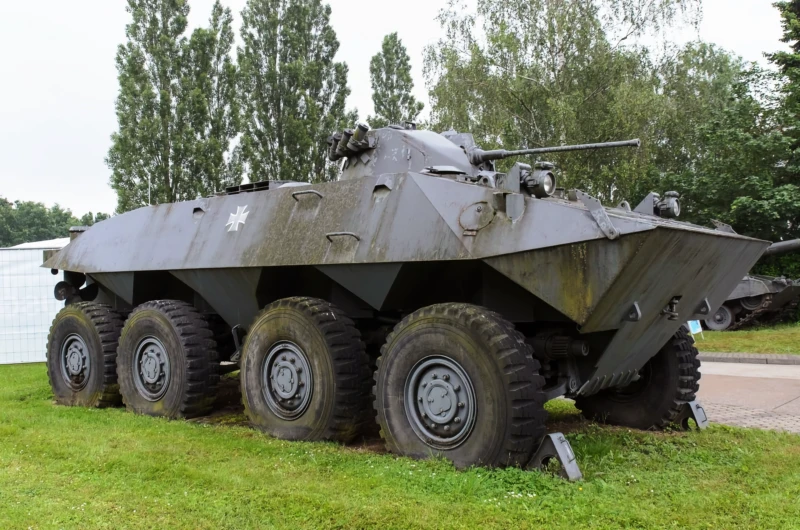
Spahpanzer 2 | |
|---|---|
| Χώρα | Δυτική Γερμανία |
| Πληκτρολογήστε | Αναγνωριστικό όχημα |
| Παράγεται | 1975–1977 |
| Χτισμένο | 408 |
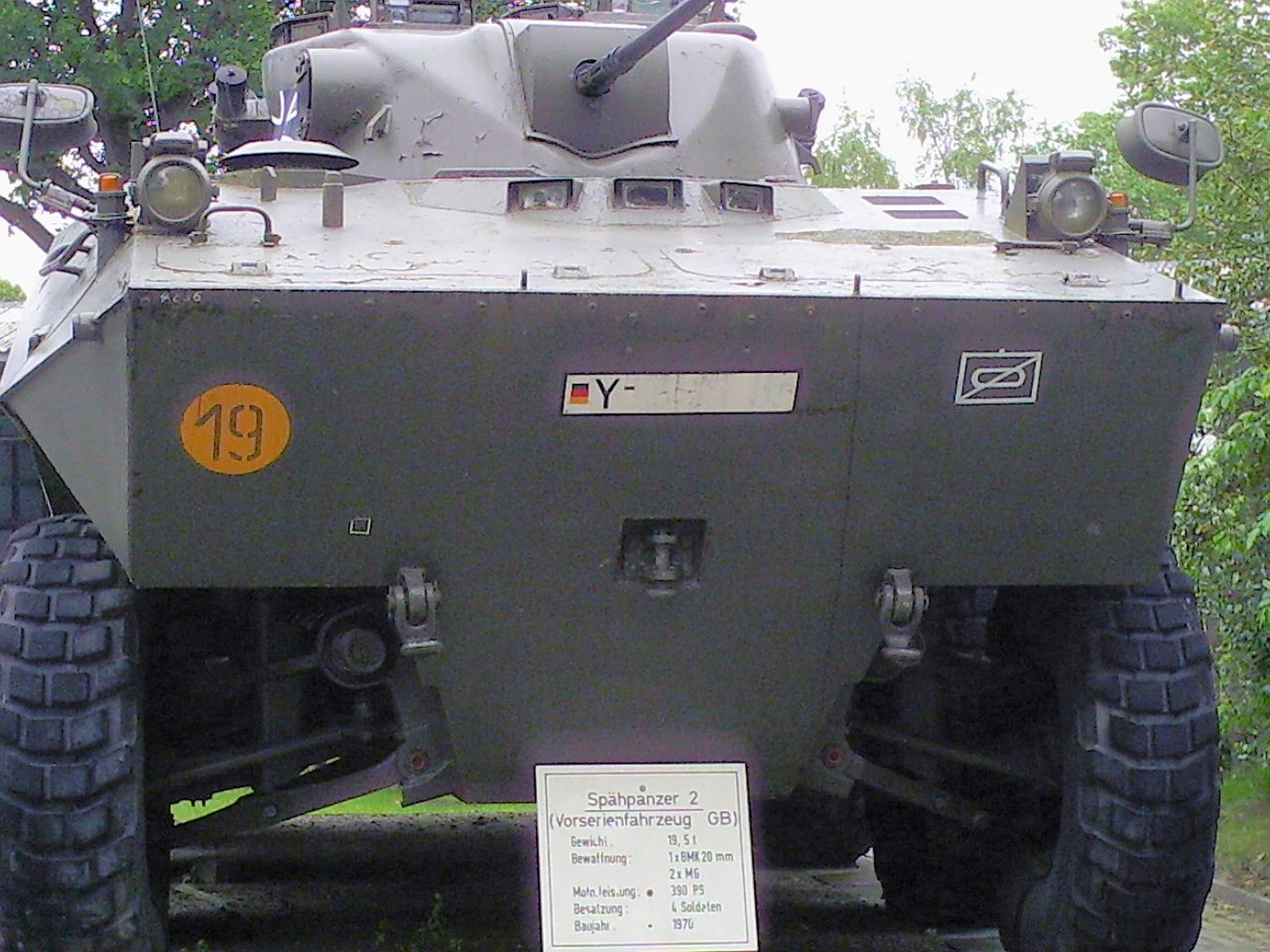
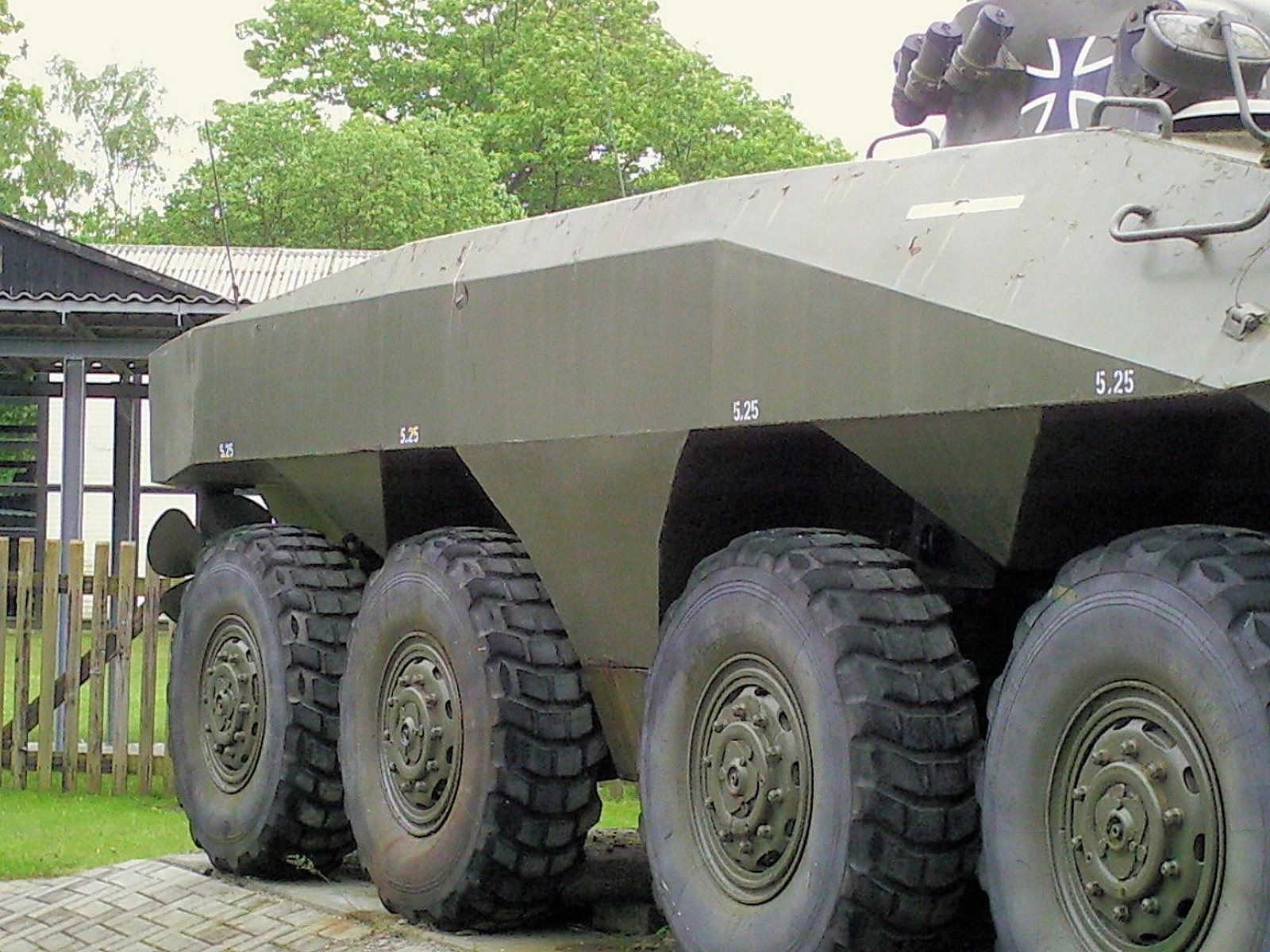
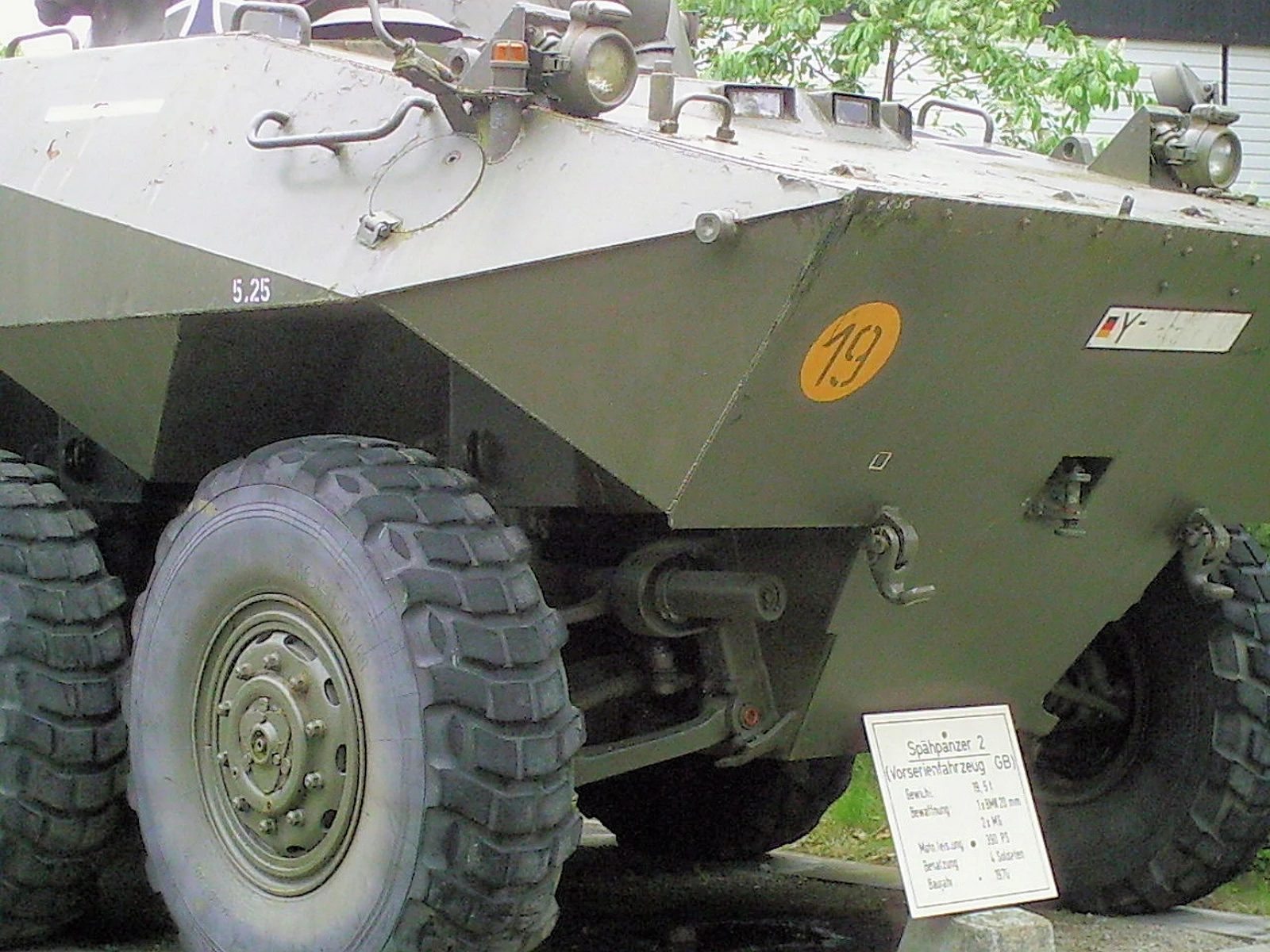
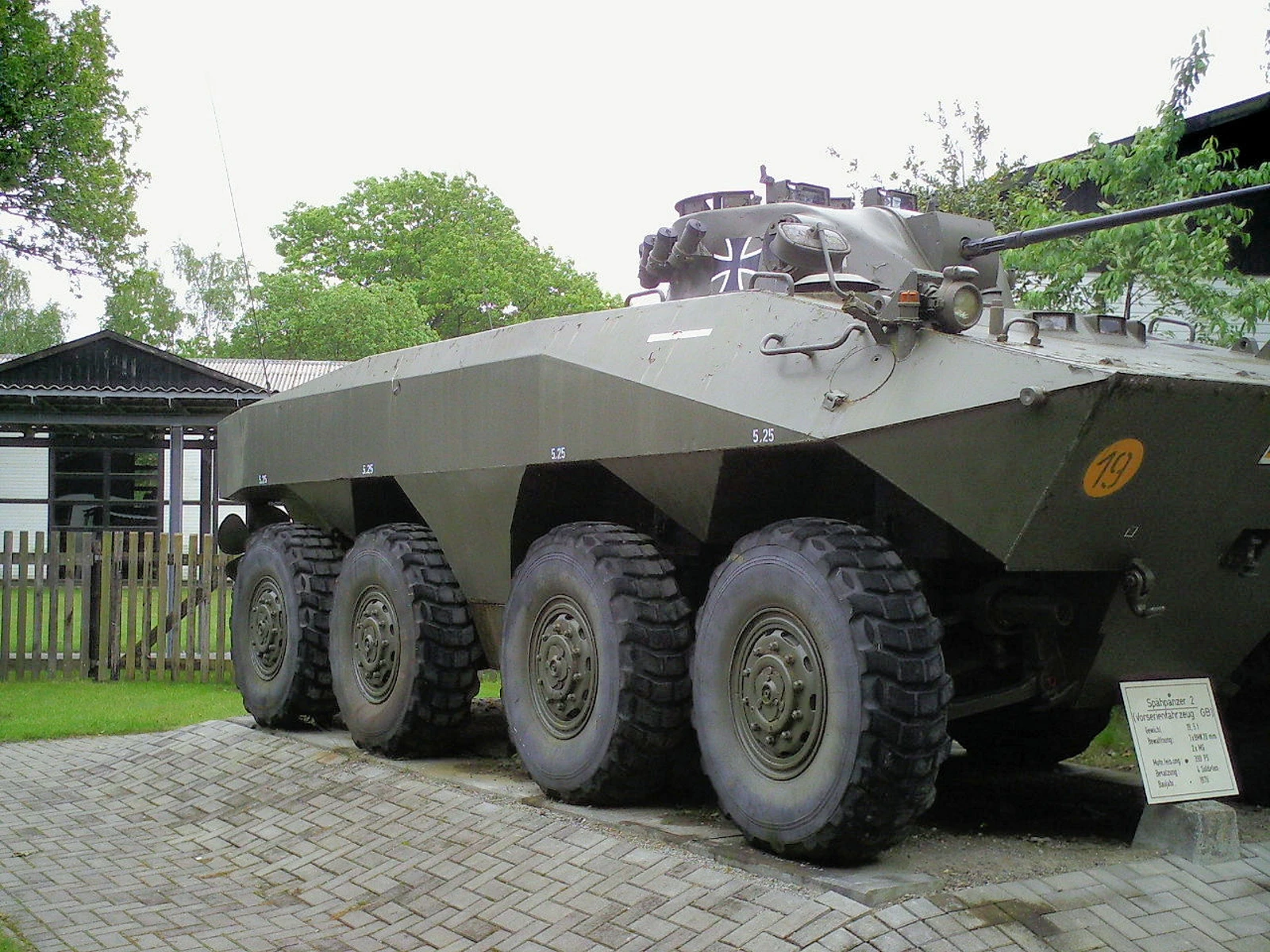
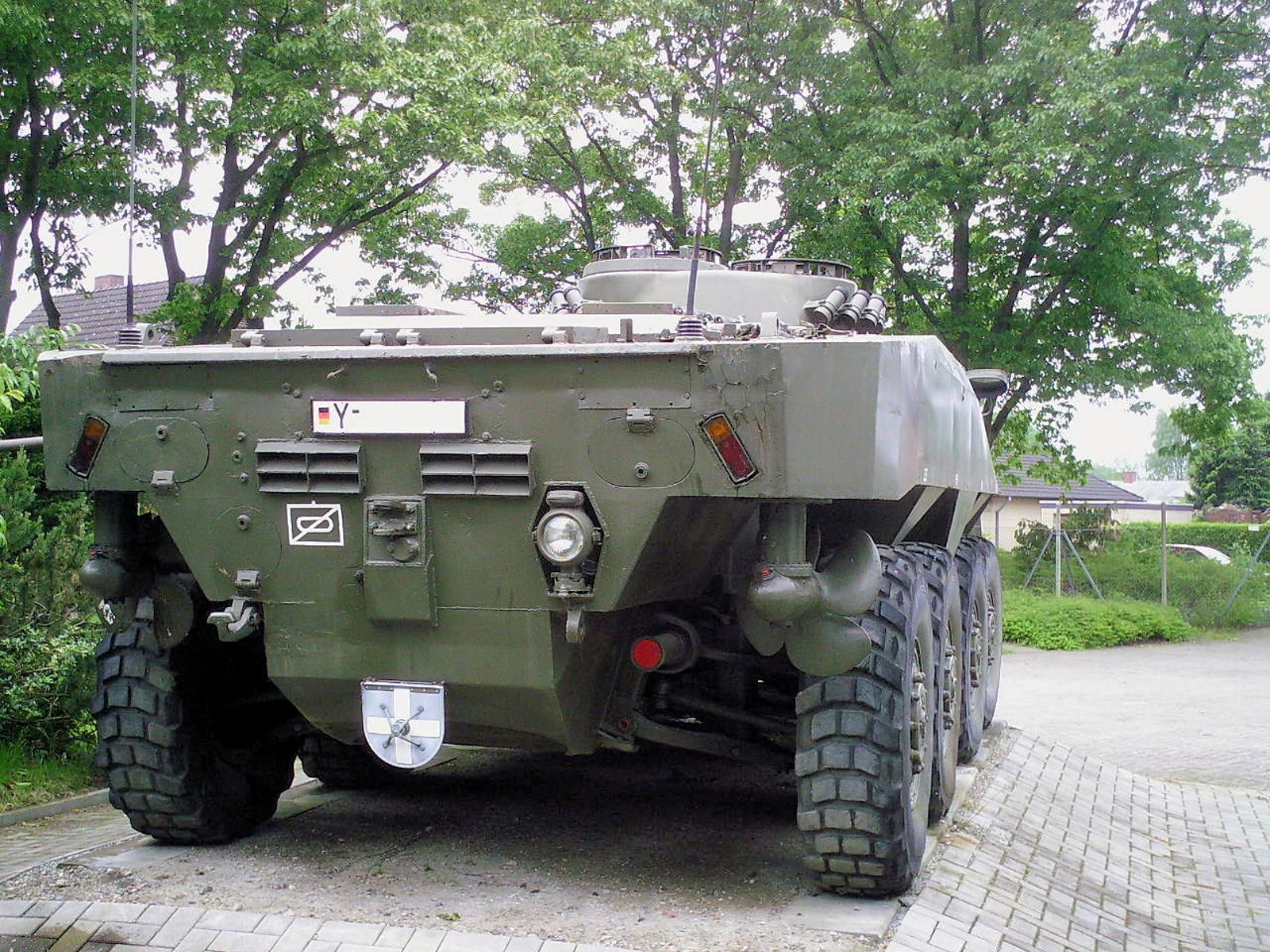
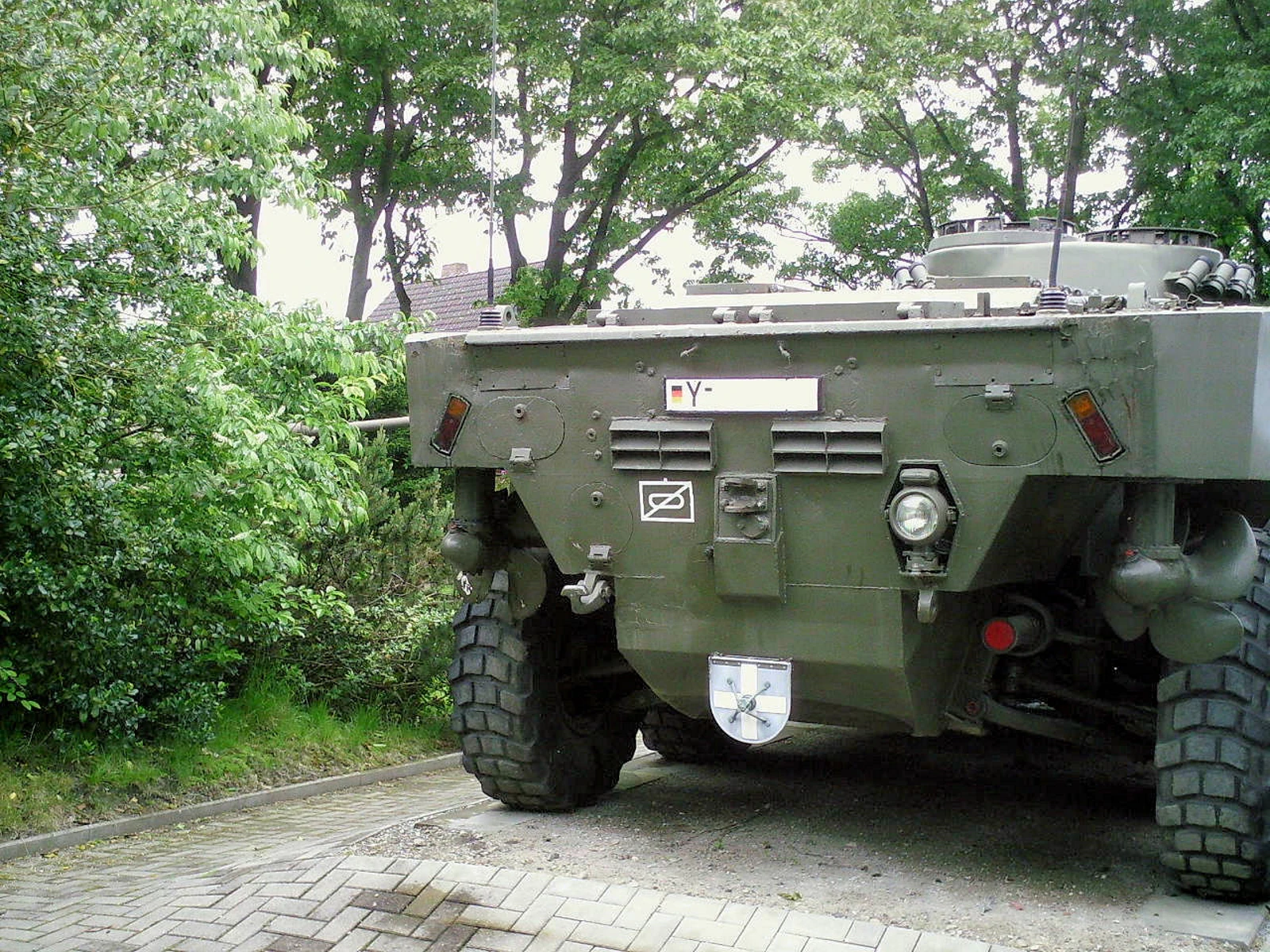
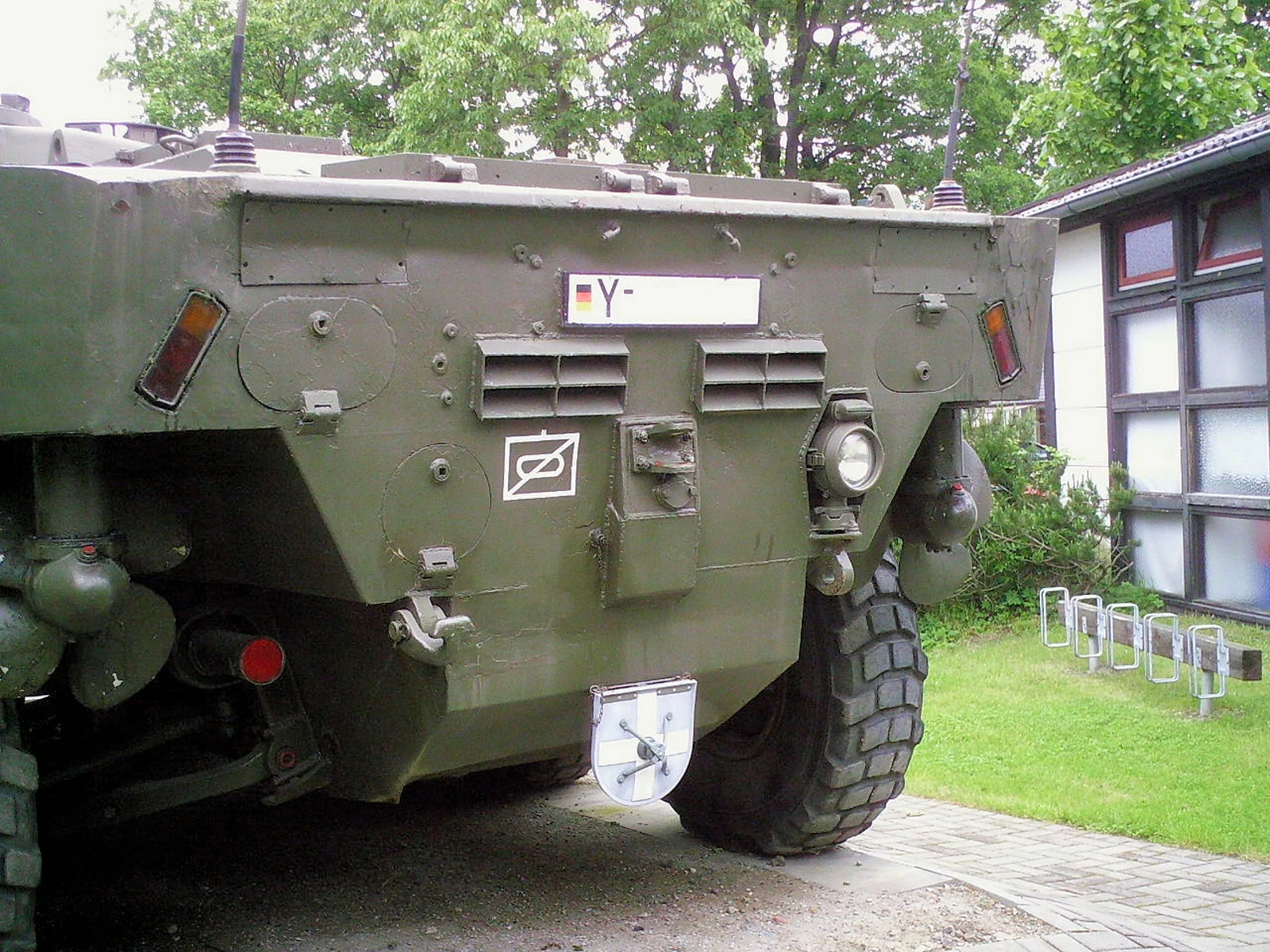
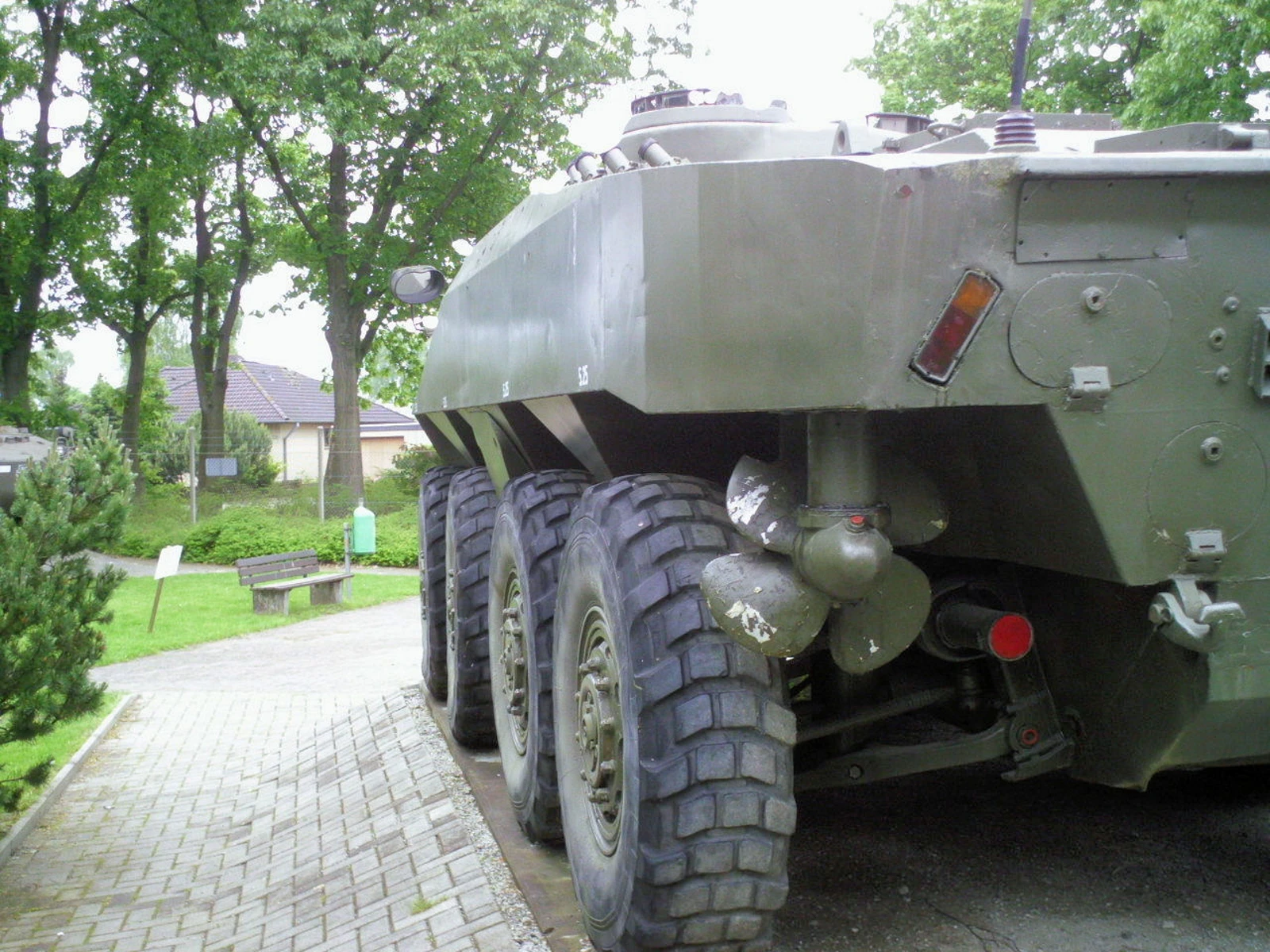
Teh Αναγνωριστικός λύγκας δεξαμενών (English: Lynx) is a German 8×8 amphibious reconnaissance armoured fighting vehicle (Spähpanzer) in service since 1975 with the German Army, who used 408 in their armoured reconnaissance battalions. It was developed by Daimler-Benz between 1968 and 1975, replacing the M41 and the Schützenpanzer SPz 11-2 Kurz. The all-wheel drive Luchs made by Thyssen-Henschel (now: Rheinmetall) is well armoured, has an NBC protection system and is characterized by its low-noise running. The eight large low-pressure tyres have run-flat properties. At speeds up to about 50 km/h, all four axles can be steered. As a special feature, the vehicle is equipped with a rear-facing driver with his own driving position. Up to the first combat effectiveness upgrade in 1986, the Luchs was fully amphibious and could surmount water obstacles quickly and independently using propellers at the rear and the fold back trim vane at the front.
| Spahpanzer 2 Prototype | |
|---|---|
| Φωτογράφος | Ulrich Wrede |
| Εντοπισμού | Αγνοώ |
| Φωτογραφίες | 18 |

 Αγόρασέ μου έναν καφέ
| Luch Spahpanzer 2 Walk Around | |
|---|---|
| Φωτογράφος | Thomas Hartwig |
| Εντοπισμού | Αγνοώ |
| Φωτογραφίες | 54 |
Δείτε επίσης:


The Ultimate Reconnaissance Platform
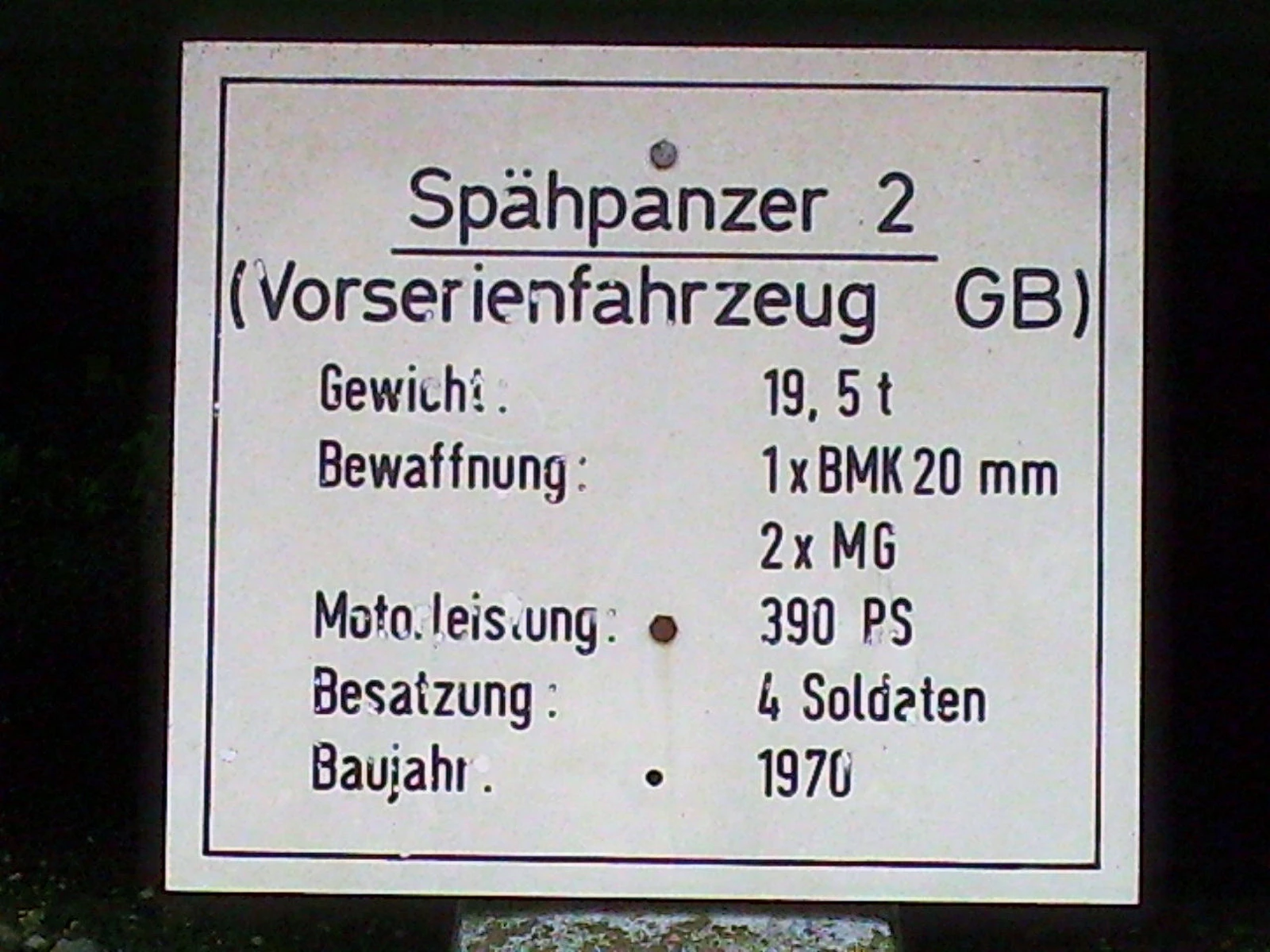
Teh Spähpanzer 2 Luchs (Lynx) was the primary amphibious reconnaissance vehicle of the German Army during the Cold War. Introduced in the mid-1970s to replace the French-built Hotchkiss scouts, the Luchs was designed for stealth, speed, and exceptional mobility. It is famously quiet; its engine and tires were engineered to allow it to sneak up on enemy positions with almost no acoustic signature. For decades, it served as the “eyes and ears” of the West German Panzer divisions, patrolling the Iron Curtain.
| Attribute | Technical Specification (Luchs A2) |
|---|---|
| Ρόλο | 8×8 Armored Reconnaissance Vehicle |
| Πλήρωμα | 4 (Commander, Gunner, Driver, Rear Driver/Radio Op) |
| Πλάστης ισχύος | Multi-fuel Daimler-Benz OM 403A V10 Diesel |
| Horsepower | 390 hp |
| Maximum Speed | 90 km/h (56 mph) / Water: 10 km/h |
| Οπλισμός | 1 × 20mm Rheinmetall MK 20 Rh 202 autocannon |
| Steering | All-wheel (8-wheel) steering |
| Operational Range | 800 km (500 miles) |
Design Engineering: Symmetry and Stealth
- Bi-Directional Driving: Like many elite scout cars, the Luchs has a second driver facing the rear. In an ambush, the rear driver can take control instantly, allowing the vehicle to flee at full speed in reverse without turning around.
- Extreme Stealth: The Luchs was engineered with noise-reduction technology that was revolutionary for its time. At low speeds, the V10 engine is nearly inaudible from a distance, and its specialized large-volume tires minimize ground vibration.
- All-Wheel Steering: All eight wheels can turn, giving this massive 19-ton vehicle a turning radius smaller than many passenger cars. This makes it incredibly agile in dense European forests or narrow village streets.
- Fully Amphibious: The Luchs is propelled through water by two steerable propellers (schottel-type) at the rear. It can transition from land to water with almost no preparation, crucial for crossing the many rivers of Northern Germany.
Service History: Vigilance on the Inner German Border
- The Cold War Sentry: The Luchs spent the majority of its life in the Panzeraufklärungsbataillone (Armored Reconnaissance Battalions), tasked with finding Soviet tank concentrations and calling in air strikes or artillery.
- Peacekeeping in the Balkans: After the Cold War, the Luchs saw active service with KFOR in Kosovo and SFOR in Bosnia. Its high road speed and intimidating presence made it an excellent convoy escort and patrol vehicle.
- Thermal Upgrade (A2): The original Luchs used an infrared searchlight. The A2 upgrade replaced this with a passive thermal imaging system, allowing the crew to see in total darkness without emitting any light that might give away their position.
- Retirement: The Luchs was officially retired by the Bundeswehr in 2009. It has been replaced by the Φένεκ, a much smaller, 4×4 high-tech scout vehicle that emphasizes electronics over the Luchs’ heavy-duty mobility.
Views : 3010
Μπορείτε επίσης να δείτε:
 EBRC Jaguar – Φώτο & Βίντεο
 Panhard EBR – Φώτο & Βίντεο
 Αμφίβιο όχημα επίθεσης – Φώτο &; Βίντεο
 Panhard M3 – Φωτογραφίες & Βίντεο
 Landsverk L180 – Φώτο & Βίντεο
 FV180 Combat Engineer Τρακτέρ – Φώτο & Βίντεο
 MT-LB Sjvpbv 4024 – Φώτο & Βίντεο
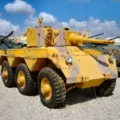 Saladin Armored Car – Φώτο &; Βίντεο
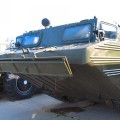 PTS-M Ερπυστριοφόρα Αμφίβια Μεταφορά – Φώτο &; Βίντεο
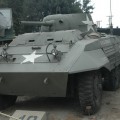 M8 Λαγωνική φως θωρακισμένο αυτοκίνητο - Περπατήστε γύρω