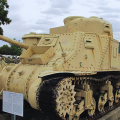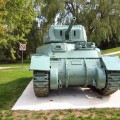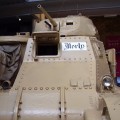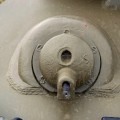
Panzer 35(t) | |
|---|---|
| Land | Tyskland |
| Type | Mellemstor tank |
| Produceret | 1936–1940 |
| Bygget | 434 |
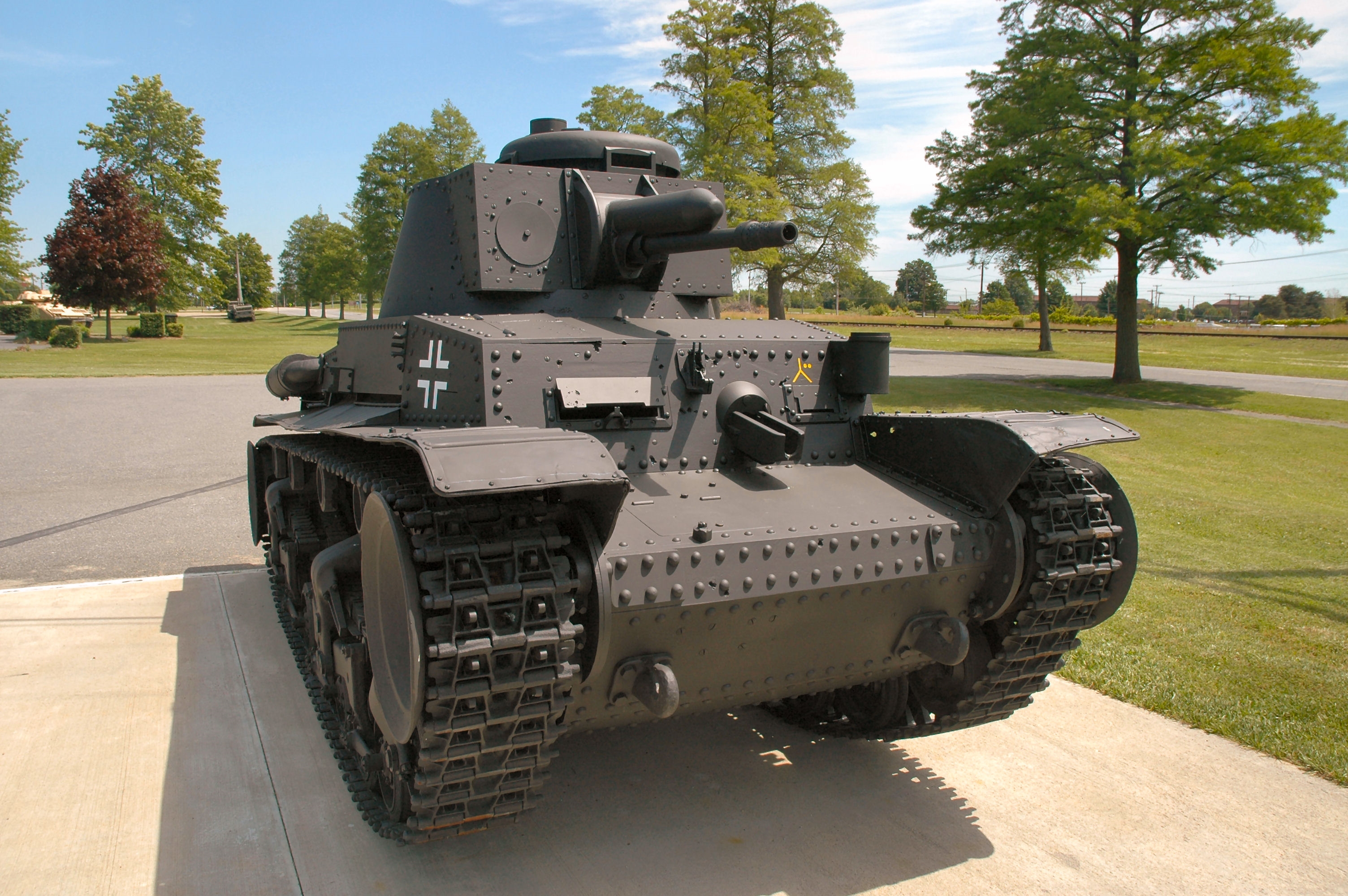
The Panzerkampfwagen 35(t), commonly shortened to Panzer 35(t) or abbreviated as Pz.Kpfw. 35(t), was a Czechoslovak-designed light tank used mainly by Nazi Germany during World War II. The letter (t) stood for tschechisch (German: “Czech”). In Czechoslovak service, it had the formal designation Lehký tank vzor 35 (Light Tank Model 35), but was commonly referred to as the LT vz. 35 or LT-35. Four hundred and thirty-four were built; of these, the Germans seized two hundred and forty-four when they occupied Bohemia-Moravia in March 1939 and the Slovaks acquired fifty-two when they declared independence from Czechoslovakia at the same time. Others were exported to Bulgaria and Romania. In German service, it saw combat during the early years of World War II, notably the Invasion of Poland, the Battle of France and the invasion of the Soviet Union before being retired or sold off in 1942. It was used for the remainder of the war by other countries and as a training tank in Bulgaria into the 1950s.
Kilde: Panzer 38(t) on Wikipedia
| Panzer 35(t) | |
|---|---|
| Fotograf | Dmitry Kiyatkin |
| Lokalisering | Unknow |
| Billeder | 15 |

 Køb mig en kop kaffe
Relaterede sæt:
Find kits på eBay:
The Panzer 35(t) was a light tank of Czechoslovak origin that was used by Nazi Germany during World War II. It was originally designed and produced by Skoda as the LT vz. 35, but was captured by the Germans after they occupied Czechoslovakia in 1939. The tank had a four-man crew and was armed with a 37 mm gun and two machine guns. It had a maximum speed of 34 km/h and a range of 190 km on roads. The tank had a riveted steel hull with armor ranging from 8 to 35 mm thick. It was powered by a Skoda gasoline engine that produced 120 hp.
The Panzer 35(t) saw action in several campaigns, including the invasion of Poland, the Battle of France and the invasion of the Soviet Union. It performed well in the early stages of the war, but became obsolete as more advanced tanks appeared on the battlefield. The tank suffered from mechanical problems, especially in cold weather, and had limited ammunition storage. The Germans stopped using the Panzer 35(t) in 1942 and sold or transferred most of them to their allies, such as Romania, Bulgaria and Slovakia. Some of these tanks continued to fight until the end of the war, while others were used for training or scrapped.

Views : 3095